
 8D / 7N
6% OFF


Plan Your Sri Lanka Trip Around What You Want To Do
The best activities in Sri Lanka are climbing Sigiriya at opening time, a jeep safari for leopards in Yala, the hill-country train into Ella, blue-whale watching off Mirissa and white-water rafting at Kitulgala. Most cost between ₹1,500 and ₹7,000 per person. Indians pay less than most visitors at the big heritage sites because of the SAARC rate. Sigiriya is USD 20 for SAARC passport holders against USD 35 for other foreigners, per the Central Cultural Fund. The catch is timing. Sri Lanka has two monsoons, so the south coast and the east coast peak in opposite halves of the year, and a few activities (balloon flights, the Adam’s Peak climb, whale season) only run for a few months. This guide gives the cost, season and booking route for each of 25 activities.
Key takeaways
- Book Sigiriya, Yala and the hill-country train first. They sell out or fill up between December and March.
- Budget about ₹1,750 for Sigiriya on the SAARC rate, ₹4,400 to ₹7,900 for a shared Yala safari and ₹22,000 or more for a balloon flight.
- Go to the south and west coasts from December to April, and to Trincomalee and Arugam Bay from May to September.
- Board the scenic train at Nanu Oya, not Kandy, until the Kandy section reopens after Cyclone Ditwah.
- Apply for the free 30-day ETA at eta.gov.lk before you fly. It has been free for Indians since 25 May 2026.
The 25 activities at a glance
Use this table to shortlist. Cost is per person and rounded, and each section below has the detail.
| Activity | Region | Best months | Cost per person (approx.) | Time needed |
|---|---|---|---|---|
| Sigiriya climb + Pidurangala sunrise | Cultural Triangle | Jan to Apr, Jul to Sep | ₹1,750 SAARC + ₹290 | Half day |
| Hill-country train, Nanu Oya to Ella | Hill country | Dec to Apr | ₹50 to ₹2,300 | 3 to 4 hours |
| Little Adam’s Peak, Ella Rock, Nine Arch Bridge | Ella | Dec to Apr | Free; Ella Rock about ₹270 | 1 to 2 days |
| Yala leopard safari | South | Feb to Jul | ₹4,400 to ₹7,900 shared | Half day |
| Wilpattu safari | North-west | Feb to Oct | ₹5,000 to ₹9,000 shared | Full day |
| Minneriya or Kaudulla elephant gathering | Cultural Triangle | Jul to Oct | ₹3,500 to ₹6,500 | 3 to 4 hours |
| Udawalawe safari + Elephant Transit Home | South | Year-round | ₹4,000 to ₹7,000 | Half day |
| Blue-whale watching | Mirissa | Dec to Mar | ₹4,400 to ₹6,200 | 4 to 5 hours |
| Cycle ancient Polonnaruwa | Cultural Triangle | Jan to Sep | Entry + bike hire | Half day |
| Adam’s Peak night climb | Hill country | Dec to May | Free | Overnight |
| Horton Plains to World’s End | Hill country | Jan to Mar | From ₹1,750 SAARC + VAT, vehicle fee | 3 to 4 hours |
| Ramayana trail | Nuwara Eliya, Ella | Year-round | Mostly free | 1 to 2 days |
| Kitulgala white-water rafting | Kelani River | Year-round, not peak rain | ₹2,600 to ₹3,500 | 2 to 3 hours |
| Surf lessons | Weligama, Arugam Bay | Nov to Apr / Apr to Oct | ₹2,200 to ₹3,100 | 2 hours |
| Snorkel Pigeon Island | Trincomalee | May to Sep | Park fee + boat | Half day |
| Dive or snorkel Hikkaduwa | South-west | Nov to Apr | Varies by dive | Half day |
| Madu River boat + Bentota water sports | South-west | Nov to Apr | Per ride | Half day |
| Kitesurf Kalpitiya | North-west | May to Oct, Dec to Feb | Lesson packages | 2 to 5 days |
| Hot-air balloon | Dambulla | Dec to Mar | ₹22,000 to ₹24,000 | Dawn, 3 hours |
| Tea factory, Lipton’s Seat, high tea | Hill country | Year-round | Low to moderate | 1 day |
| Temple of the Tooth + Kandyan dance | Kandy | Year-round; Perahera Jul/Aug | ₹530 show + ₹730 temple (SAARC) | Half day |
| Galle Fort rampart walk | South coast | Nov to Apr | Free | 2 to 3 hours |
| Cooking class | Ella, Galle | Year-round | ₹1,150 to ₹1,750 | 3 hours |
| Ayurveda treatment | Bentota, Beruwala | Year-round | Day spa to 14-day stay | 1 to 14 days |
| Tuk-tuk + Galle Face street food | Colombo | Year-round | ₹300 to ₹900 | Evening |
Entry fees in this guide come from the Central Cultural Fund and Department of Wildlife Conservation rate lists where published, and tour prices from operator listings, checked in October 2026. Rupee figures use about ₹88 to the US dollar.
Sri Lanka
Sri Lanka
Safaris, hikes, surf, whales and the Ramayana trail, with 2026 costs in rupees and the right month for each
Best Time
December - April
Select Package Type
Best Selling Packages


25 Sri Lanka Activities, With Costs, Seasons And How To Book
These 25 activities run from the Cultural Triangle down through the hill country to both coasts, roughly in the order most Indian travellers rank them.
-
Climb Sigiriya Rock And Watch Sunrise From Pidurangala
-
Ride The Hill-Country Train From Nanu Oya To Ella
-
Hike Little Adam's Peak, Ella Rock And See The Nine Arch Bridge
-
Track Leopards On A Yala Jeep Safari
-
Go Quieter At Wilpattu For Leopards Without The Jeep Queue
-
Watch The Elephant Gathering At Minneriya Or Kaudulla
-
See Elephant Calves Fed At Udawalawe, Then Safari The Park
-
Watch Blue Whales Off Mirissa
-
Cycle Through Ancient Polonnaruwa
-
Climb Adam's Peak Overnight For Sunrise
-
Walk Horton Plains To World's End
-
Follow The Ramayana Trail Through Nuwara Eliya And Ella
-
Raft The Kelani River At Kitulgala
-
Learn To Surf At Weligama Or Ride Arugam Bay
-
Snorkel With Reef Sharks At Pigeon Island
-
Snorkel With Turtles And Dive At Hikkaduwa
-
Take A Madu River Boat Safari And Try Water Sports In Bentota
-
Kitesurf The Kalpitiya Lagoon
-
Fly A Hot-Air Balloon Over Dambulla At Dawn
-
Tour A Tea Factory, Stand At Lipton's Seat, Take High Tea
-
See The Temple Of The Tooth And A Kandyan Dance Show
-
Walk The Galle Fort Ramparts At Sunset
-
Cook Rice And Curry In A Sri Lankan Home Kitchen
-
Book An Ayurveda Treatment In Bentota Or Beruwala
-
Ride A Tuk-Tuk And Eat Street Food At Galle Face Green
Explore Popular Destination In Sri Lanka
01
Climb Sigiriya Rock And Watch Sunrise From Pidurangala
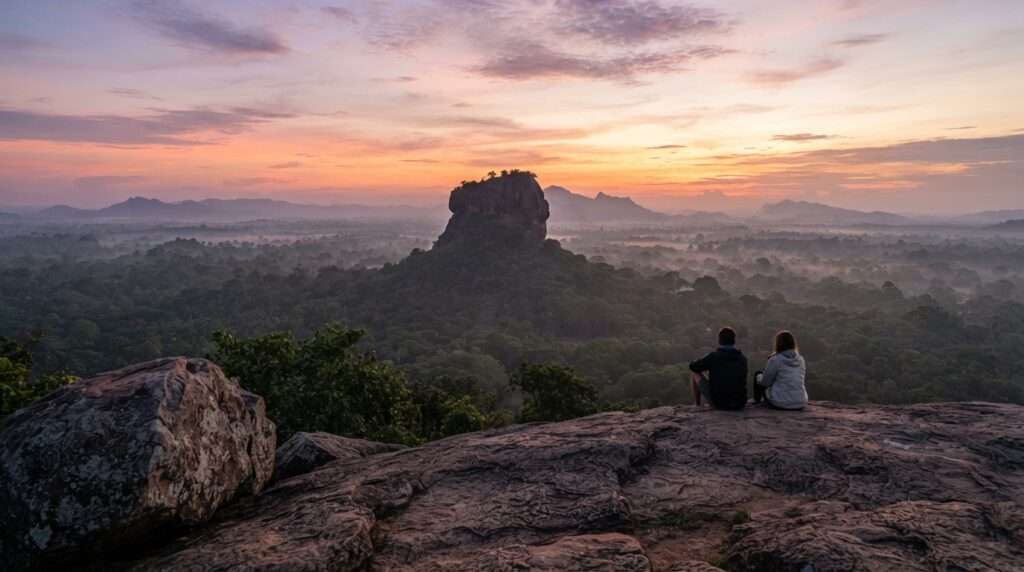
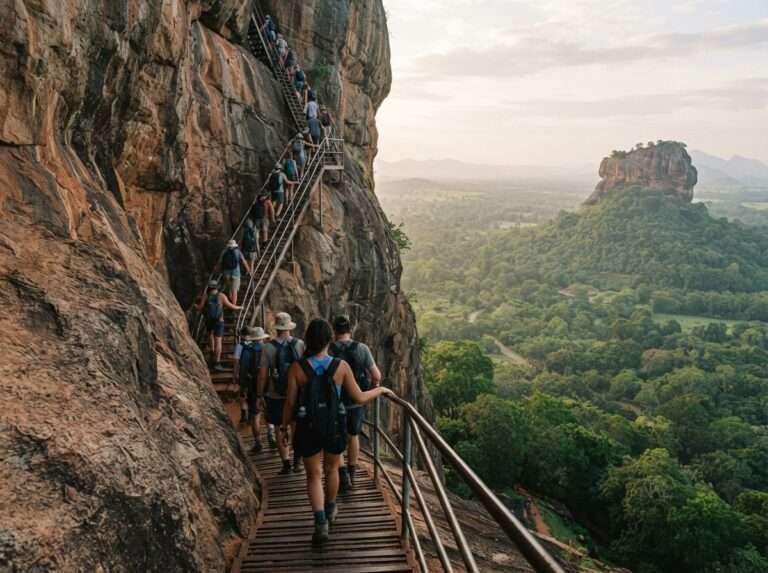
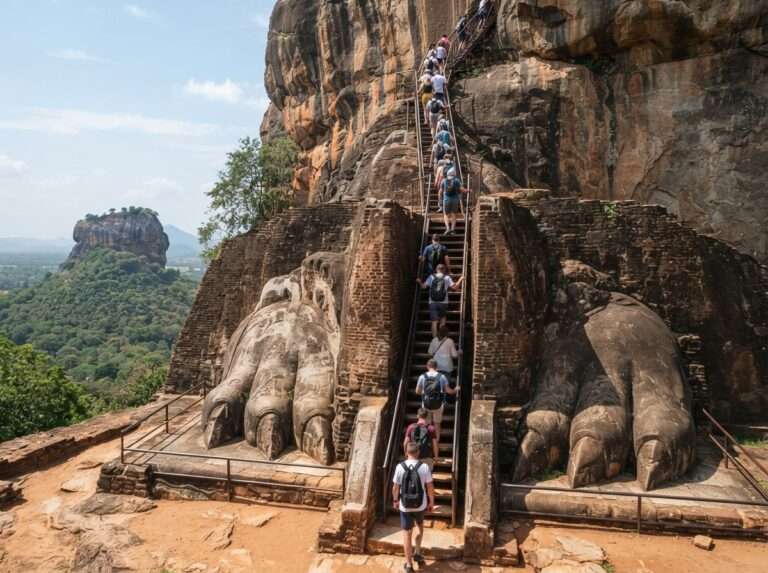
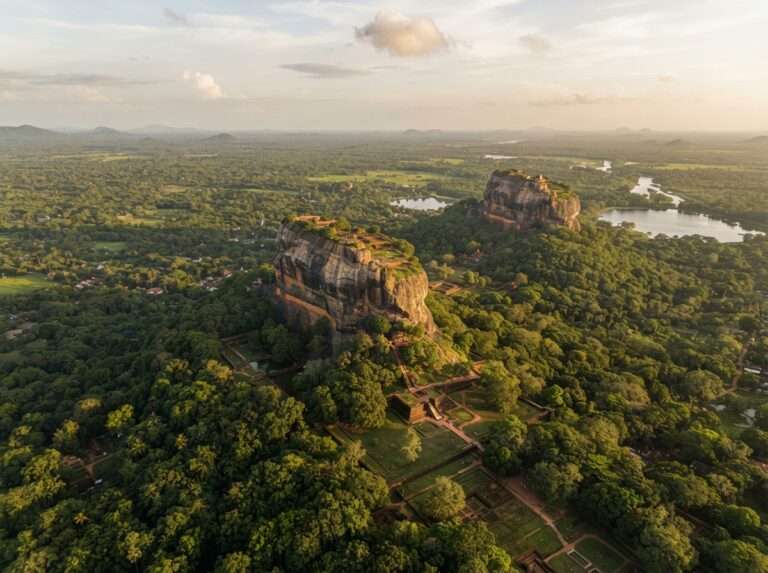
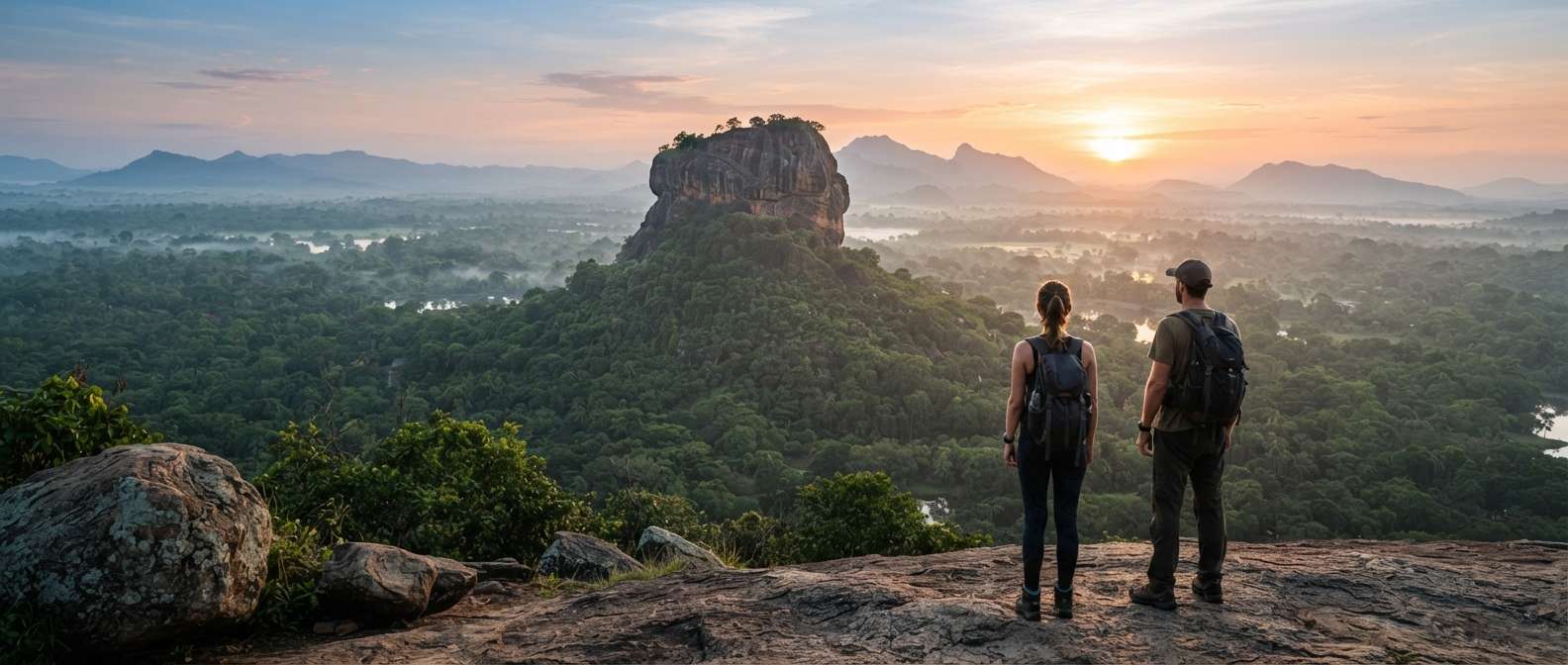
Sigiriya is the 5th-century rock palace of King Kashyapa, and the climb is about 1,200 steps past the frescoes and the giant lion paws to the ruins on the summit. Photography of the frescoes is banned to protect the pigments, and guards on the spiral staircase enforce it. It is a UNESCO World Heritage Site and the most-booked activity on the island for good reason. Get to the gate at opening time. By 9 am between January and April, the metal staircases on the west face jam up with tour groups and the rock radiates heat. Tickets are priced in US dollars and paid in Sri Lankan rupees at the counter, and Indians pay the SAARC rate if they show a passport.
Do Pidurangala on a different slot from Sigiriya. Sunrise is around 6 to 6.20 am and Sigiriya opens at 7 am, so a sunrise on Pidurangala pushes your Sigiriya climb into the 9 am crowds and heat. The better plan is Pidurangala for sunset the evening before (or sunrise the next day) and Sigiriya at opening time. Pidurangala is the smaller rock 1 km to the north, and its summit faces Sigiriya head-on, which is why most sunrise photos of Sigiriya are taken from here. The last 10 minutes is a scramble over boulders, so wear shoes with grip. Recent guides put the fee at LKR 1,000. The path starts inside the grounds of the working Pidurangala Rajamaha Viharaya temple, so cover shoulders and knees and take shoes and hats off where the monks ask. See our Sigiriya entry fees and timings page for the full rate card.
| Where | Sigiriya, Matale District, 4 hours by road from Colombo |
| Best time | Opening time; January to April and July to September |
| Cost | USD 20 SAARC (about ₹1,750), USD 35 other foreigners; Pidurangala LKR 1,000 (about ₹290) |
| Time needed | 2 to 3 hours for Sigiriya, 1.5 hours for Pidurangala |
| How to book | Online at eservices.ccf.gov.lk or at the gate |
Related Tour Packages


❮
❯
02
Ride The Hill-Country Train From Nanu Oya To Ella
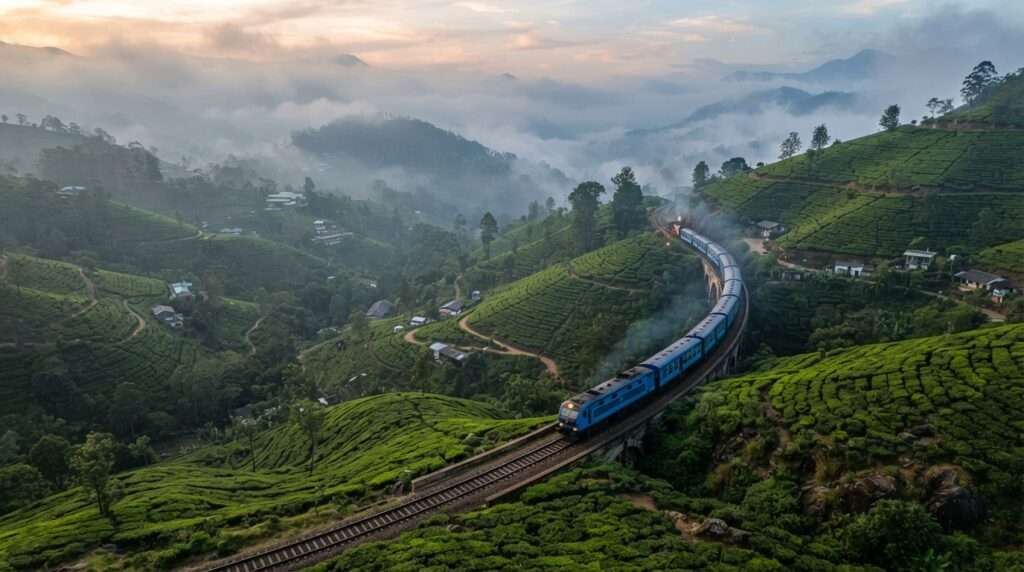
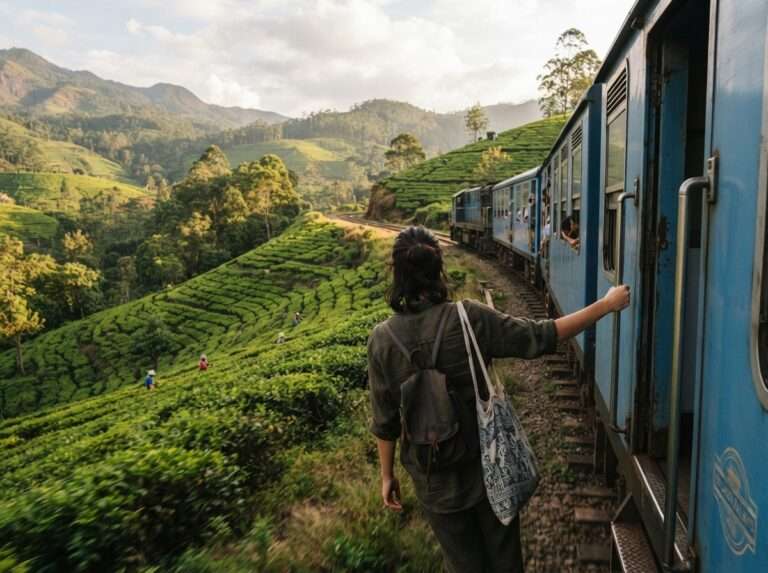
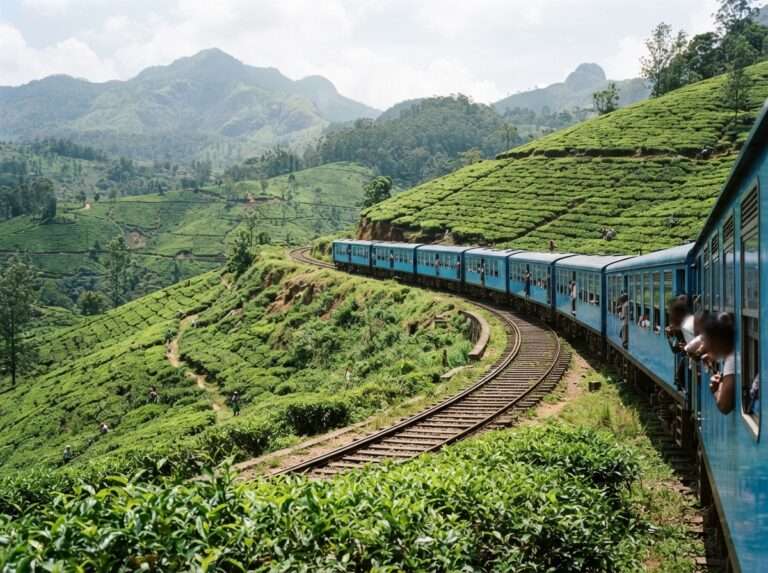
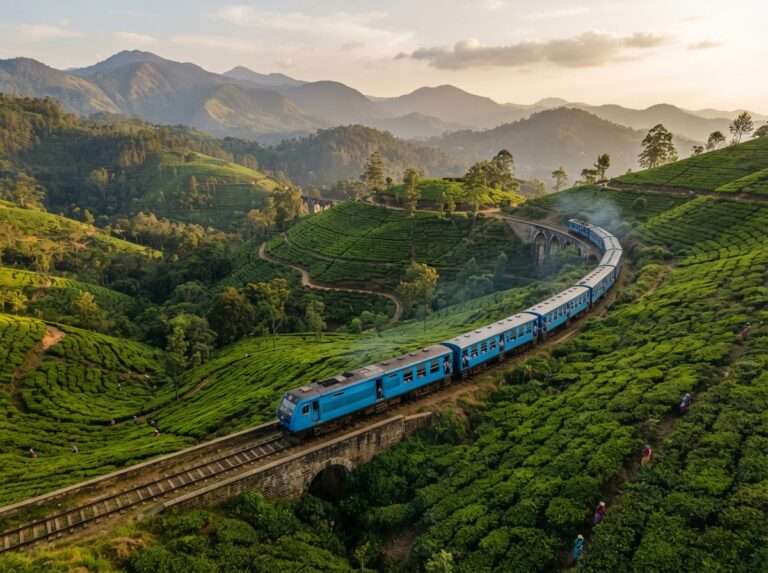
The blue train through the tea estates is the ride people come to Sri Lanka for, and in 2026 it starts at Nanu Oya, not Kandy. Cyclone Ditwah damaged the hill-country line in November 2025. Services between Nanu Oya and Badulla, which pass through Ella, resumed on 20 June 2026 after about seven months, according to Ada Derana. The Kandy to Nanu Oya section was still closed in late October 2026.
That works out fine for most itineraries. Nanu Oya is the railhead for Nuwara Eliya, about 8 km from town, and the Nanu Oya to Ella leg holds the best scenery anyway. It climbs to Pattipola, the highest station on the network, then runs along the Haputale ridge and the descent to Ella. Allow 3 to 4 hours. Claim a window seat rather than hanging out of the door, which is prohibited and has caused deaths.
Reserved seats in first and second class sell out weeks ahead between December and April. Unreserved third-class tickets are sold at the station on the day for about LKR 150 to 300 (under ₹100).
| Where | Nanu Oya (for Nuwara Eliya) to Ella, Badulla line |
| Best time | December to April for clear views |
| Cost | Unreserved from about LKR 160 (under ₹100); reseller reserved seats USD 24 to 26 |
| Time needed | 3 to 4 hours |
| How to book | Sri Lanka Railways reservations or a hotel-arranged reseller |
Related Tour Packages


❮
❯
03
Hike Little Adam's Peak, Ella Rock And See The Nine Arch Bridge
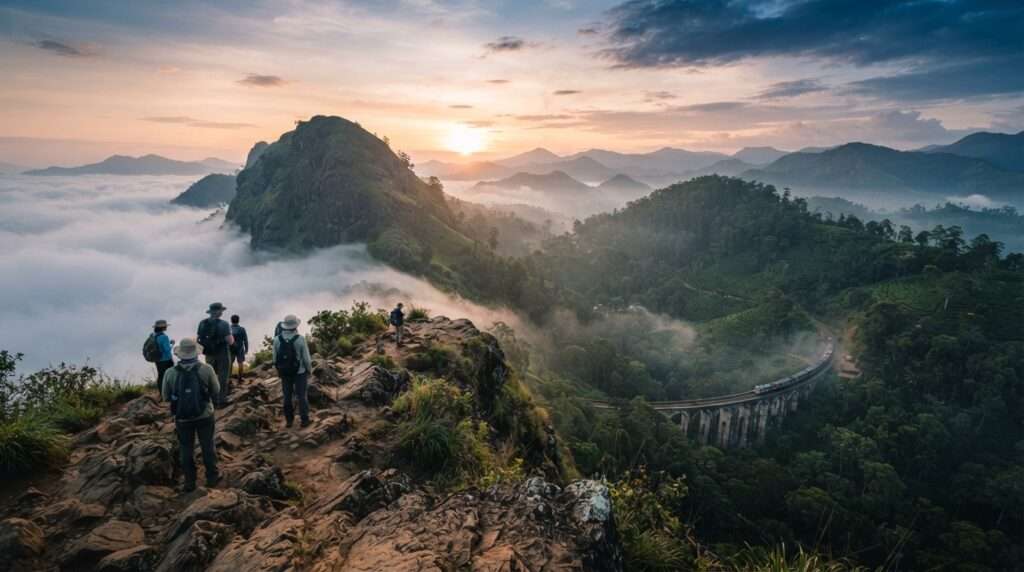
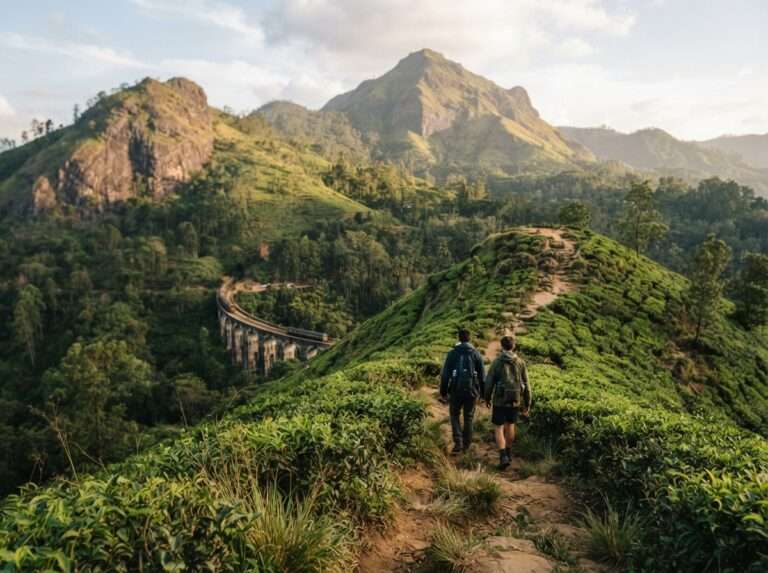
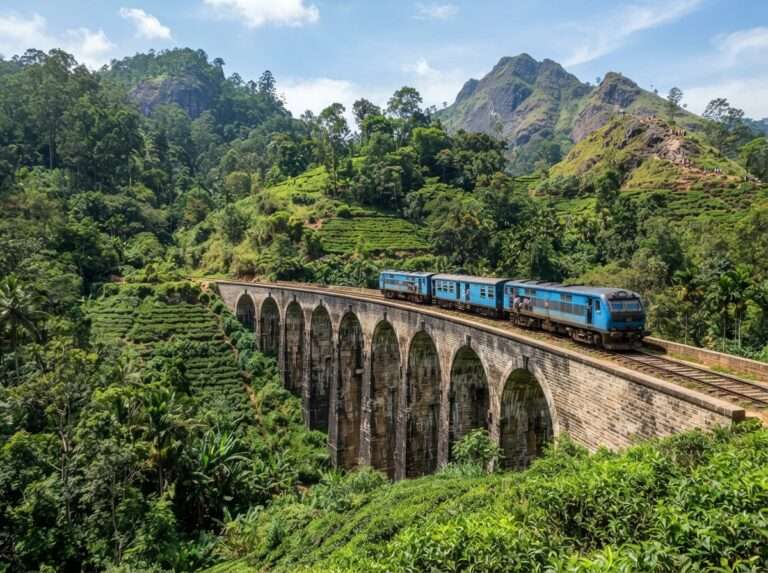
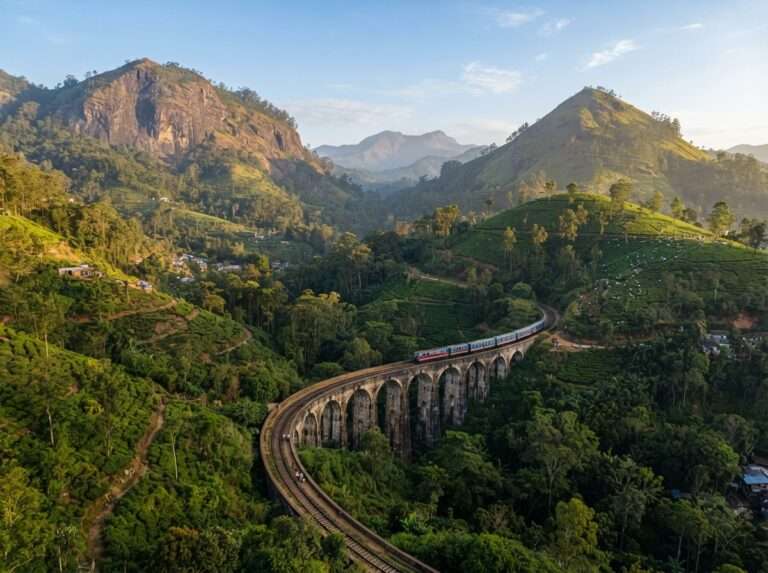
Ella is the one hill-country town where you can fill two days on foot for almost nothing. Little Adam’s Peak and the Nine Arch Bridge are free, and Ella Rock has only a small Forest Department fee. Start with Little Adam’s Peak, a 45-minute walk each way through a tea estate to a ridge facing Ella Gap. Go at 6 am. By 8 am, mist and the crowds arrive together.
The Nine Arch Bridge is a 1921 stone viaduct between Ella and Demodara, about a 30-minute walk from town along the tracks or through the tea. Check the day’s train times at Ella station and arrive 20 minutes before one is due. Seeing a blue train cross the arches is the photo everyone wants.
Ella Rock is the harder hike, about 3 to 4 hours return, with a Forest Department checkpoint near the top that charges foreigners about LKR 930, with an unmarked section through eucalyptus where many walkers get lost. Hire a local guide in town or download an offline map before you set off. Our Ella travel guide covers where to stay and eat between hikes.
| Where | Ella, Badulla District |
| Best time | December to April, 6 am starts |
| Cost | Little Adam's Peak and Nine Arch Bridge free; Ella Rock about LKR 930 (about ₹270); a local guide is optional |
| Time needed | 1 to 2 days for all three |
Related Tour Packages


❮
❯
04
Track Leopards On A Yala Jeep Safari
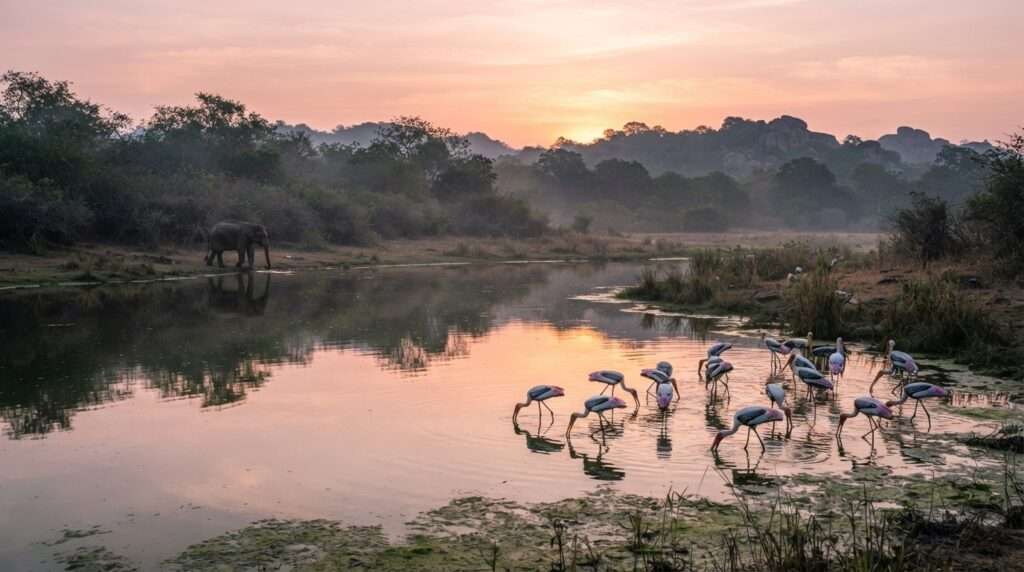
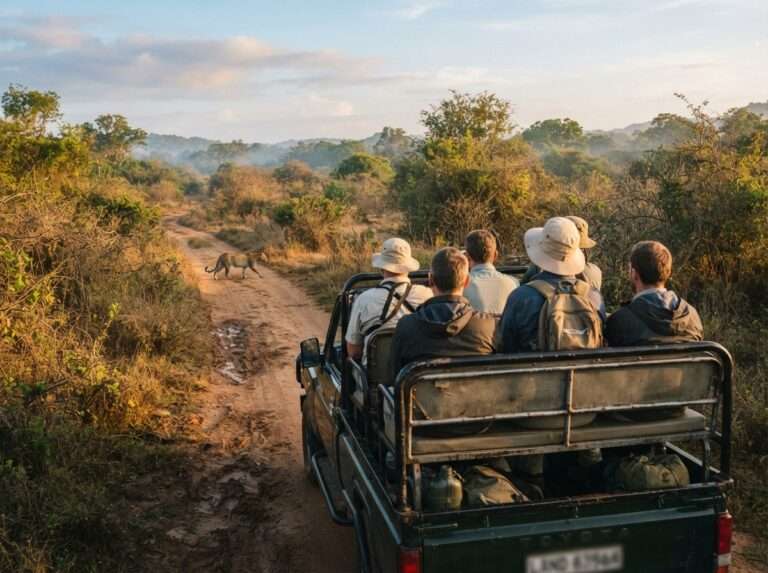
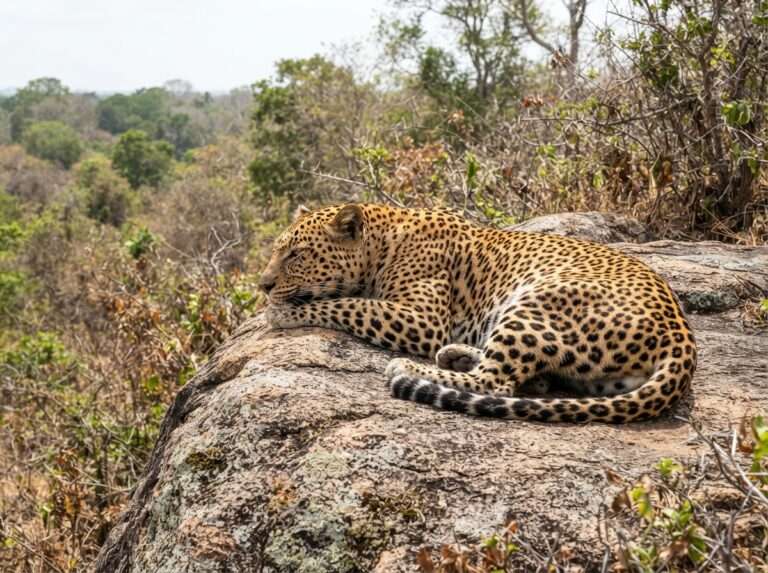
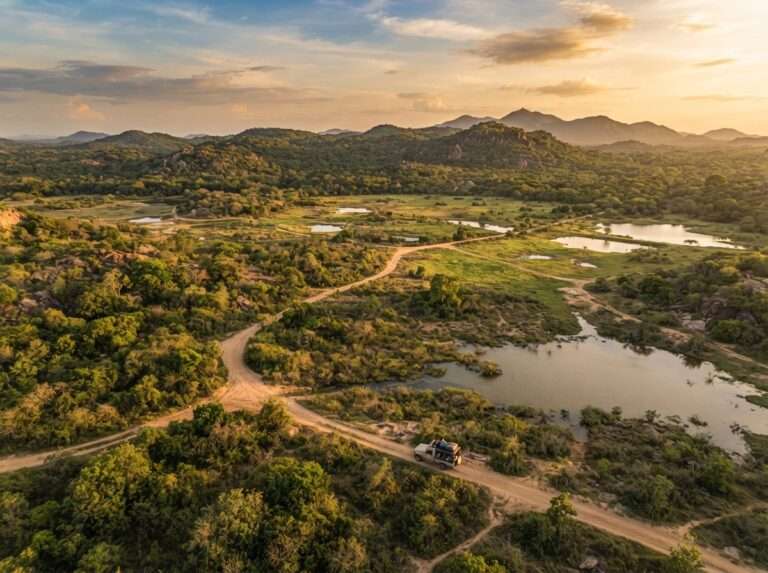
Yala National Park has one of the highest leopard densities in the world, and Block 1 is where most sightings happen. Go on the 6 am shared jeep. Leopards are most active in the first two hours, and the light is soft enough to photograph them on the rocks. Since 1 January 2024, only jeeps driven by drivers trained and licensed by the Department of Wildlife Conservation may enter Yala. Most travellers book through their hotel in Tissamaharama or Kataragama.
The best months are February to July, when the dry season pulls animals toward the waterholes. Block 1 usually closes for about six weeks from early September for the annual dry-season break, so a September trip needs a plan B such as Udawalawe. Expect sloth bears, elephants, crocodiles, painted storks and peacocks on the same drive.
Shared half-day safaris cost about USD 50 to 90 per person with park fees, driver and fuel included. A private jeep for six people runs USD 120 to 250 for a full day. Read our Yala National Park guide for blocks and gates.
| Where | Yala, Hambantota District; gate near Tissamaharama |
| Best time | February to July; avoid the September closure |
| Cost | USD 50 to 90 shared half-day (about ₹4,400 to ₹7,900) |
| Time needed | Half day (5.30 am to 10.30 am) |
| How to book | Licensed jeep via your hotel |
05
Go Quieter At Wilpattu For Leopards Without The Jeep Queue
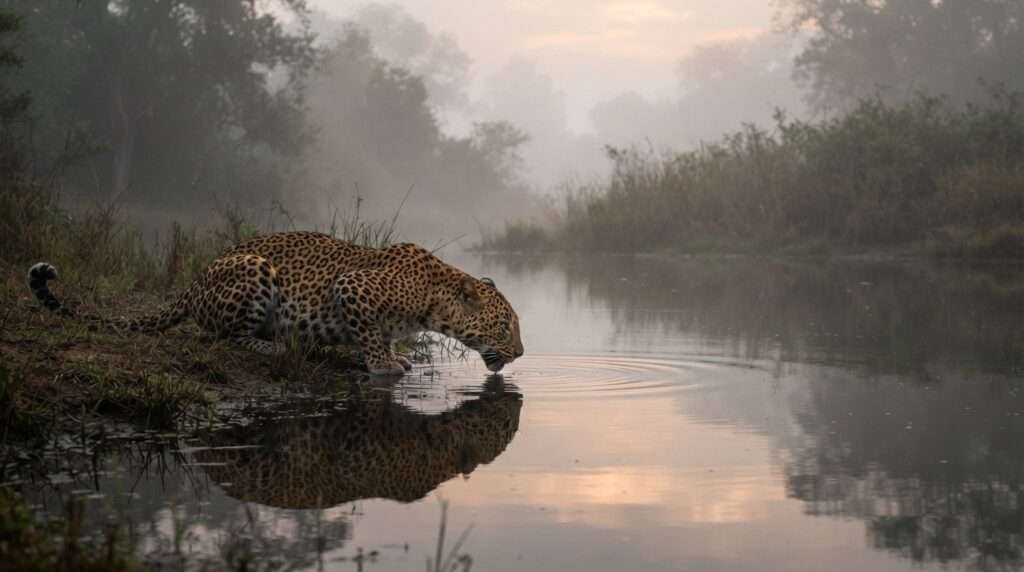
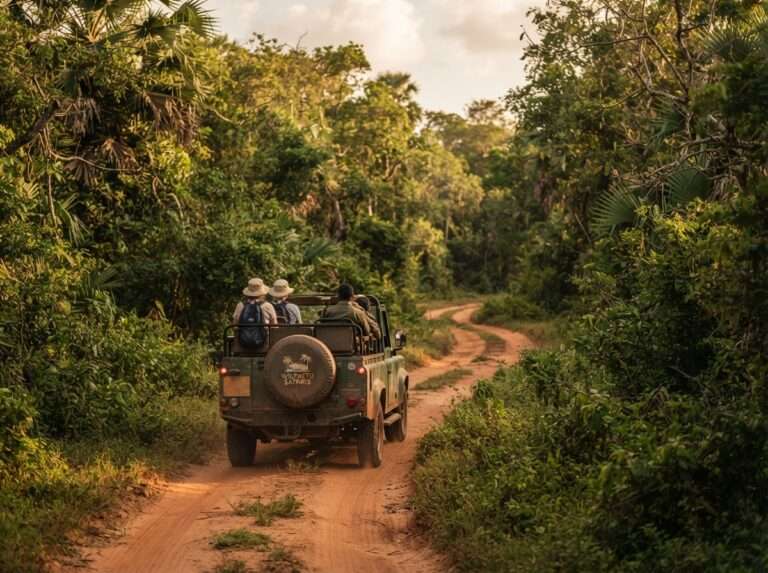
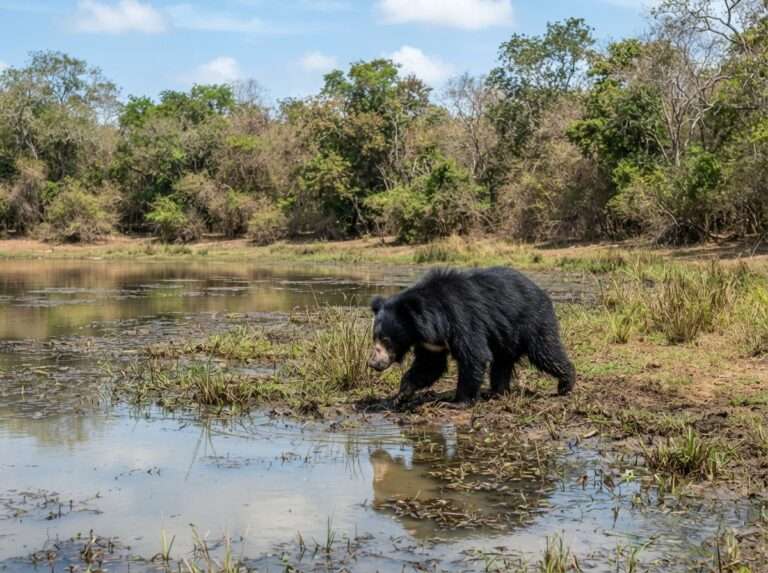
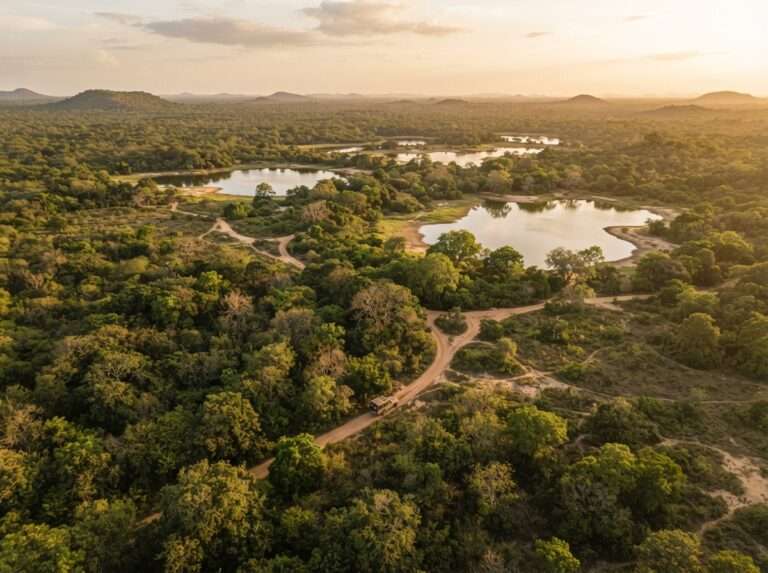
Wilpattu is Sri Lanka’s largest national park, and the reason to choose it over Yala is fewer jeeps. A leopard sighting at Wilpattu might be you and two other vehicles. At Yala on a January morning it can be 30. The park is dotted with natural lakes called villus, and leopards, sloth bears and elephants use them as waterholes.
The trade-off is lower odds per drive. The forest is denser and the park is bigger, so book a full day rather than half if leopards are the goal. Wilpattu suits a route that includes Anuradhapura (about 45 minutes away) or the Kalpitiya coast. It also stays open while Yala’s Block 1 is closed for its September break. Expect a little more than Yala, because full-day jeeps are the norm.
| Where | Puttalam and Anuradhapura Districts; Hunuwilagama gate |
| Best time | February to October |
| Cost | About ₹5,000 to ₹9,000 per person shared full day |
| Time needed | Full day |
06
Watch The Elephant Gathering At Minneriya Or Kaudulla
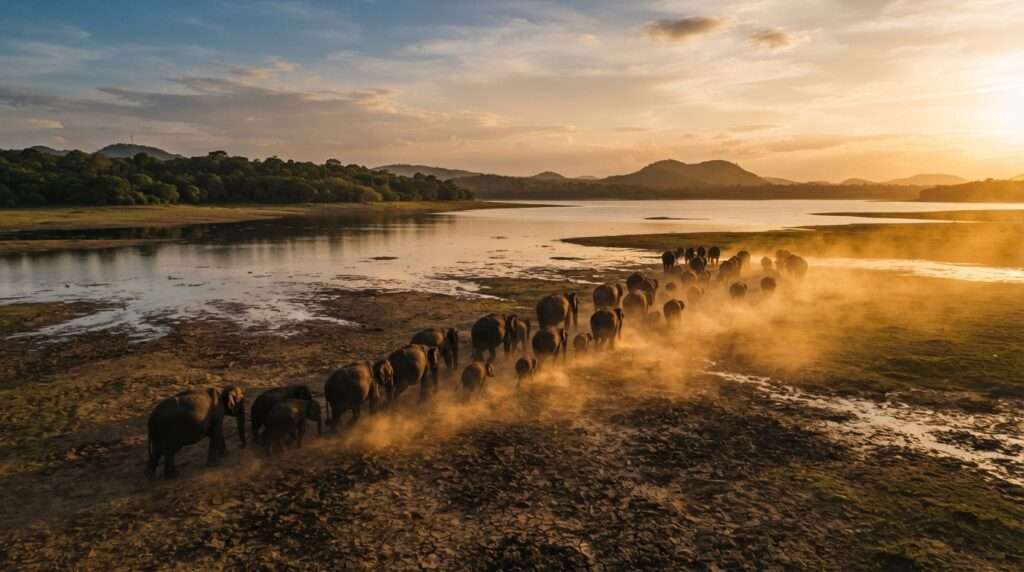
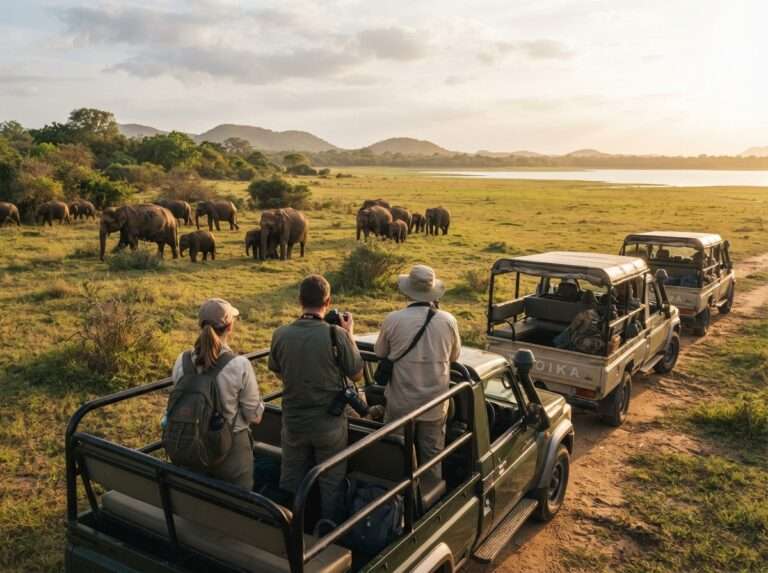
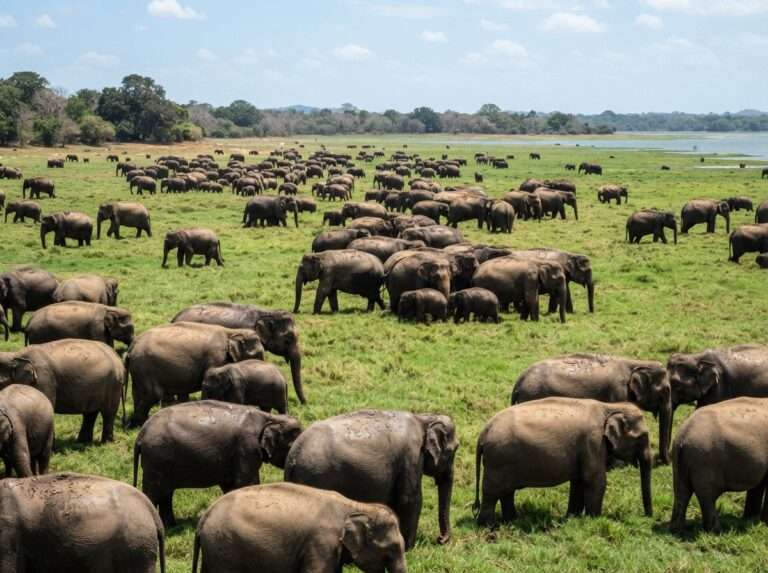
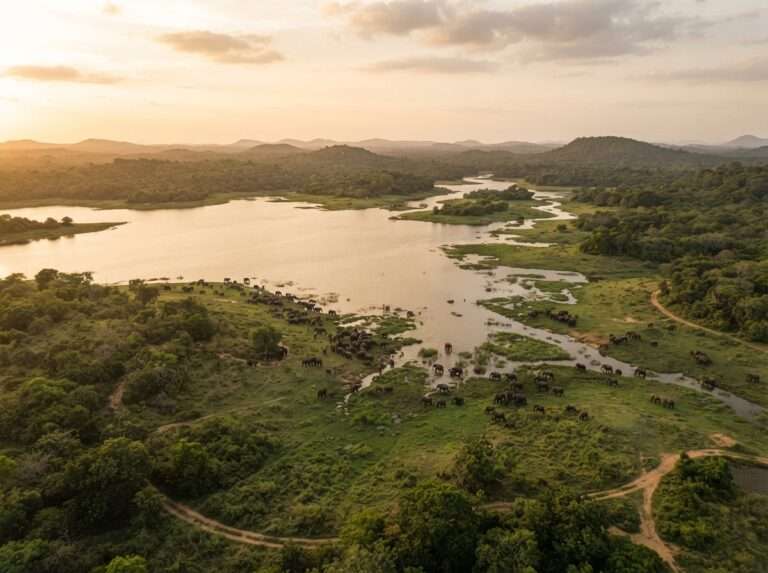
Every dry season, hundreds of wild Asian elephants converge on the shrinking Minneriya reservoir to graze the grass that grows on the exposed bed. This is “The Gathering”, and it peaks in August and September. Herds then shift toward Kaudulla around October and November. Jeep drivers in Habarana track the herds daily and will switch parks on the morning if numbers are low, so ask the day before instead of fixing a park months ahead.
Go for the 3 pm drive. Elephants come down to the water in the late afternoon. A 3-hour jeep costs about USD 40 to 75 per person, usually with the park fee billed separately. Jeeps take a maximum of six. This pairs naturally with Sigiriya, which is 30 minutes away. Our Minneriya National Park page has the gate details.
| Where | Minneriya and Kaudulla, near Habarana |
| Best time | July to October; peak August and September |
| Cost | USD 40 to 75 per person (about ₹3,500 to ₹6,500) |
| Time needed | 3 to 4 hours, afternoon |
07
See Elephant Calves Fed At Udawalawe, Then Safari The Park
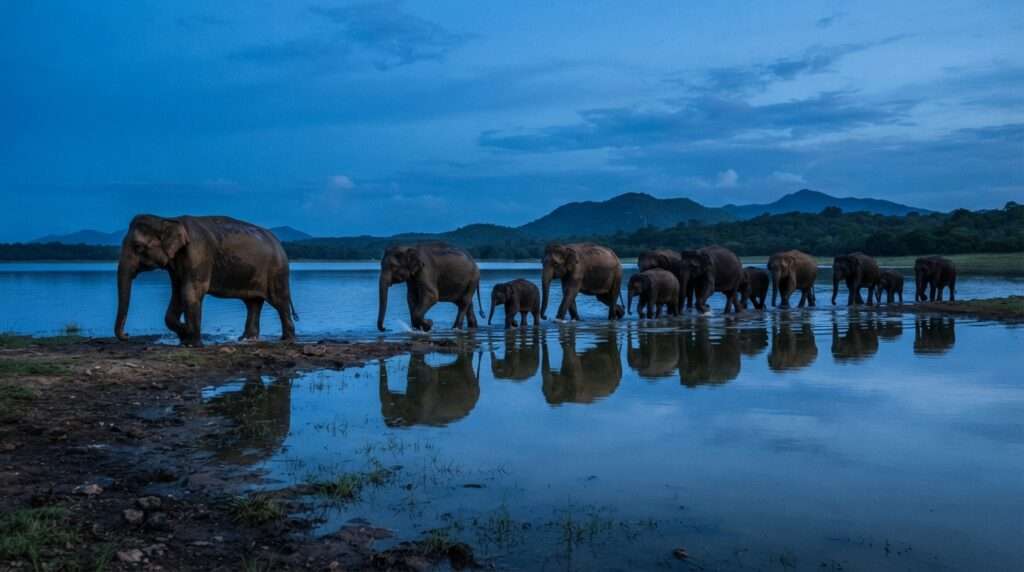
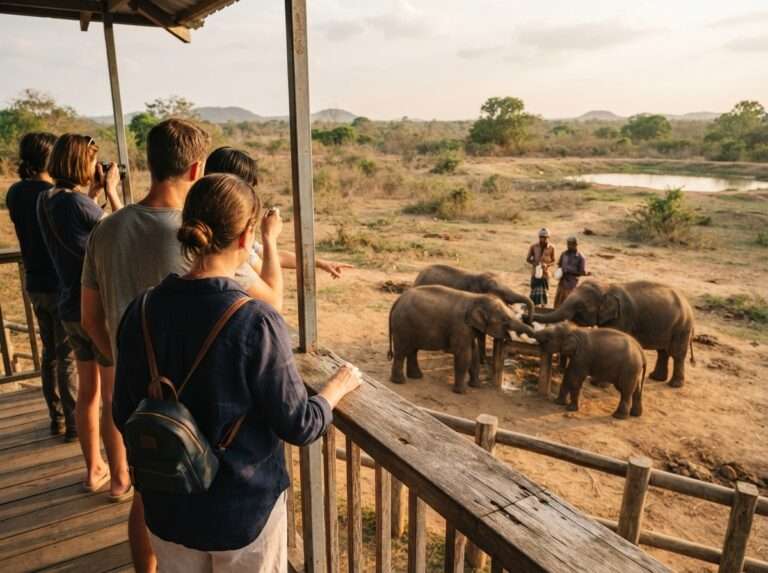
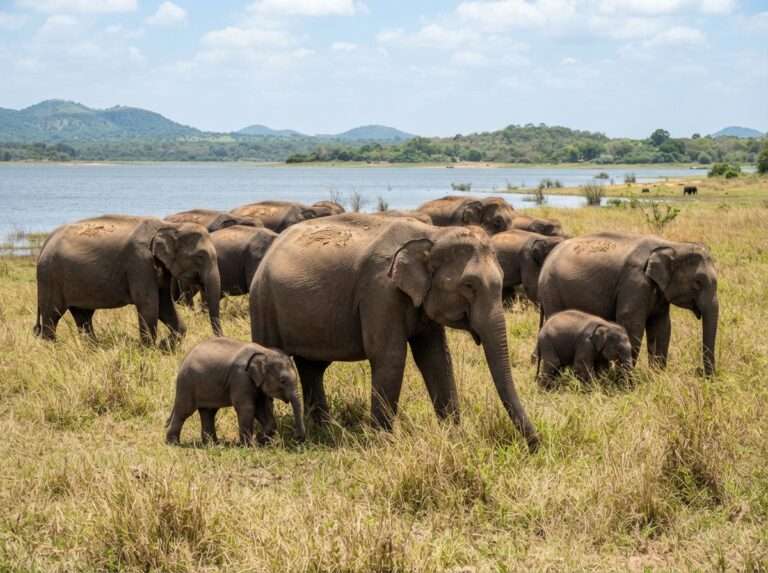
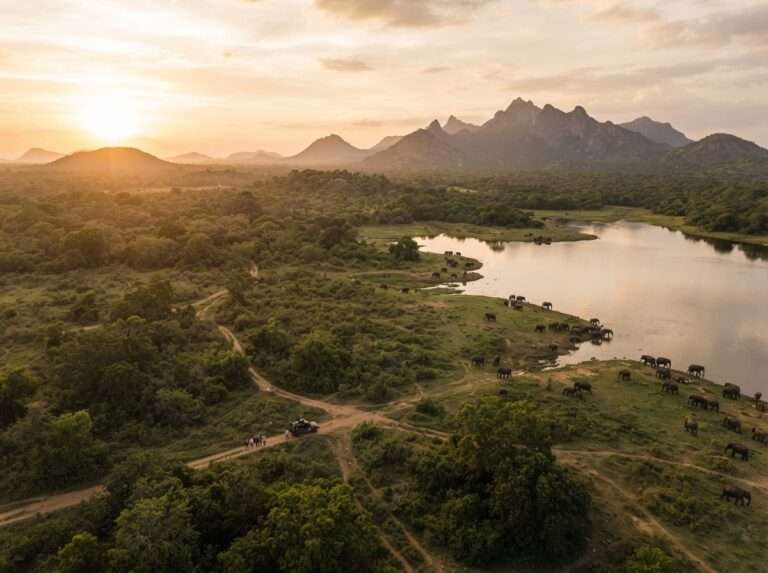
Udawalawe is the most reliable elephant safari in Sri Lanka, any month of the year. The open grassland around the reservoir means herds are visible from the jeep, and a morning drive can count 50 or more. It is also the best wildlife pick for families with young children, because sightings come fast.
Combine it with the Elephant Transit Home on the park’s edge, which raises orphaned calves for release back into the wild. Feeding times are 10.30 am, 2.30 pm and 6 pm, and you watch from a viewing platform rather than touching the calves. That is the ethical difference from Pinnawala, where elephants are kept for life. Foreigners pay USD 5 plus 18% VAT per adult at the Transit Home. Our Udawalawe National Park guide and the round-up of elephant sanctuaries in Sri Lanka compare the options.
| Where | Udawalawe, 2 hours inland from Mirissa or Tangalle |
| Best time | Year-round; morning drive plus the 10.30 am feed |
| Cost | Safari about ₹4,000 to ₹7,000; Transit Home USD 5 + VAT |
| Time needed | Half day |
08
Watch Blue Whales Off Mirissa
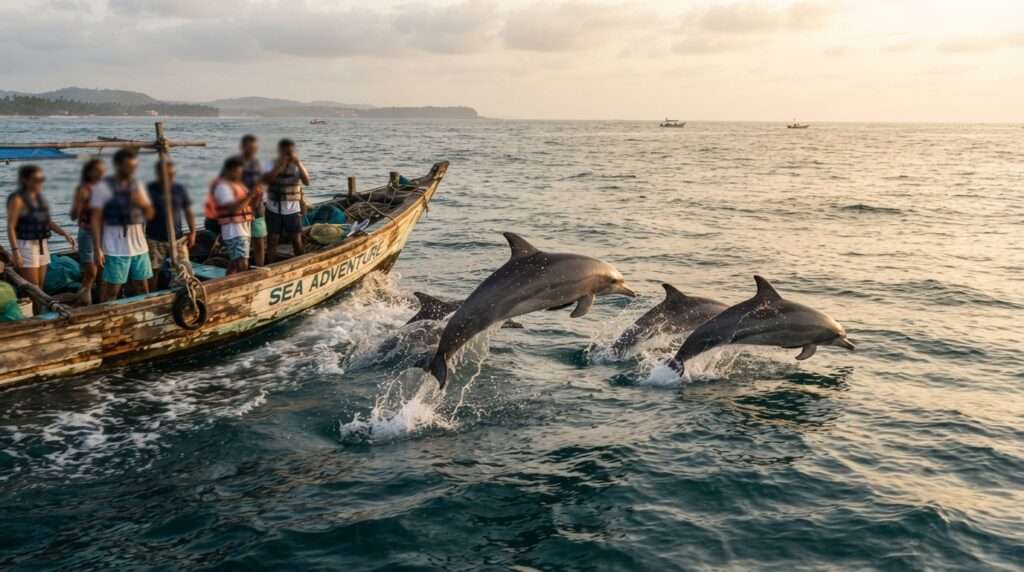
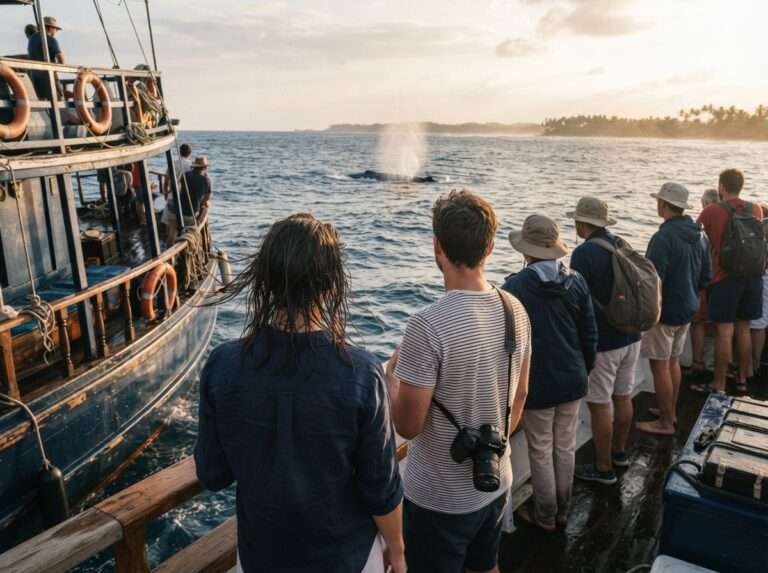
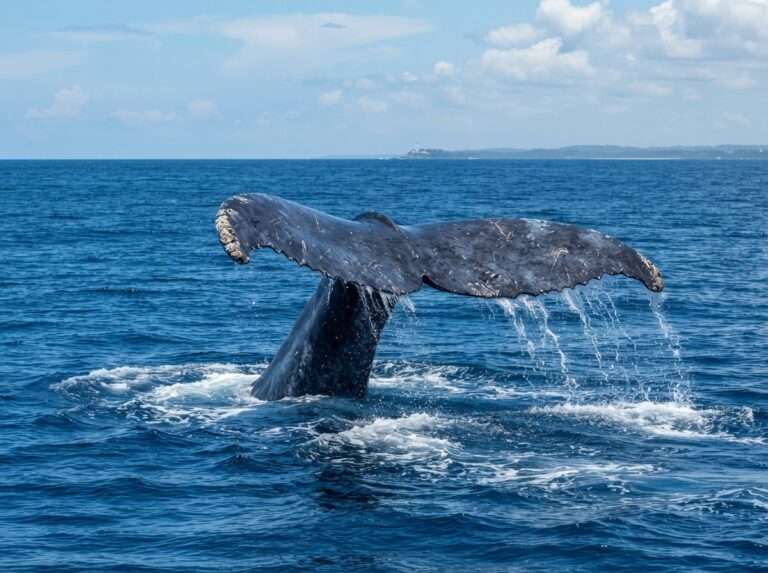
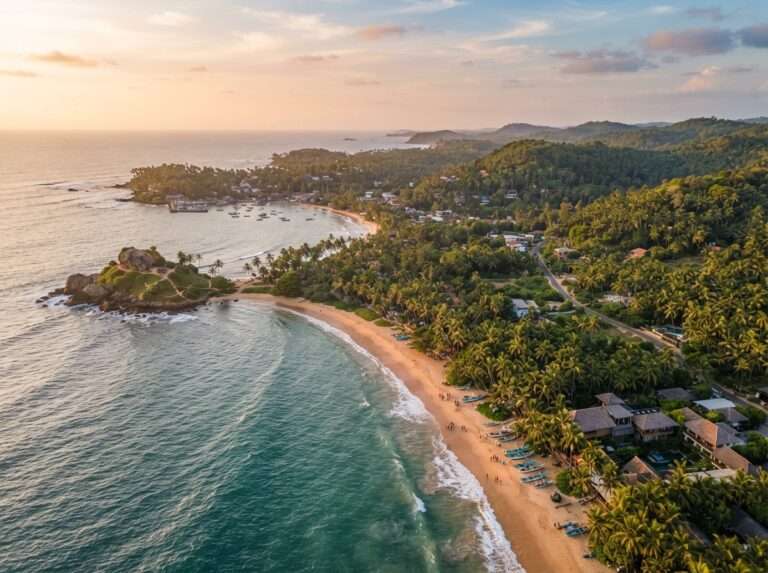
The deep shelf off Dondra Head brings blue whales within 20 to 30 km of the south coast, which makes Mirissa one of the easiest places on earth to see the largest animal that has ever lived. Boats leave the harbour at about 6.30 am and return by 11 am or noon. Spinner dolphins, sometimes hundreds of them, show up on most trips. Sperm whales turn up on some.
The season runs from November to April, with December to March the best window. Book two or three days ahead in peak season. Prices range from about USD 50 to 70 per person for a 4 to 5 hour trip with breakfast. Pick an operator that keeps its distance from the whales and limits boats per pod. The sea is rough even on calm days, so take a seasickness tablet before boarding, not after. From May to September, the whales are on the other coast, off Trincomalee.
| Where | Mirissa harbour, south coast |
| Best time | December to March (season November to April) |
| Cost | USD 50 to 70 (about ₹4,400 to ₹6,200) |
| Time needed | 4 to 5 hours, from 6.30 am |
09
Cycle Through Ancient Polonnaruwa
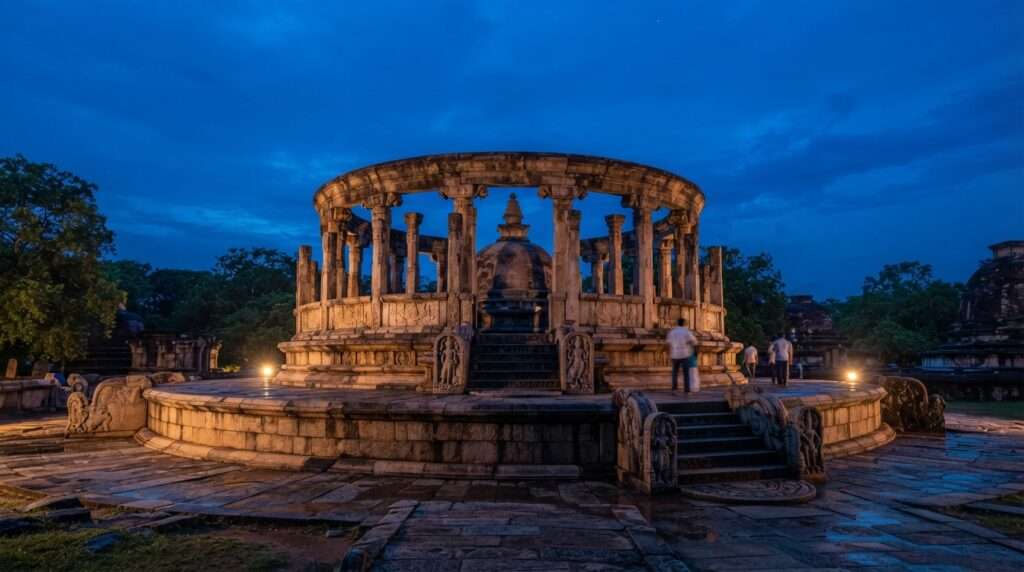
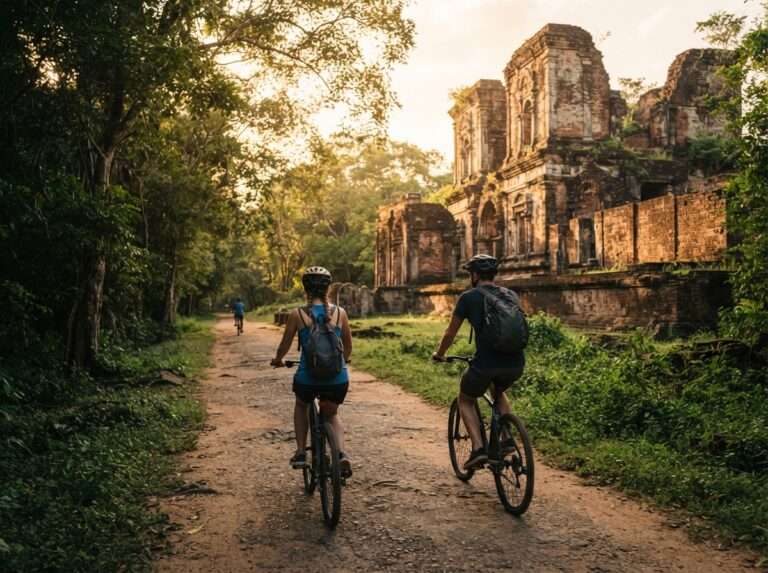
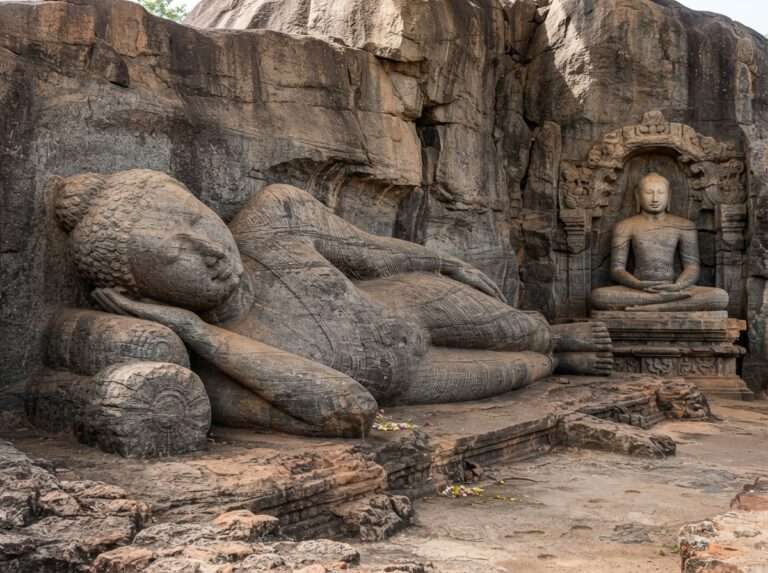
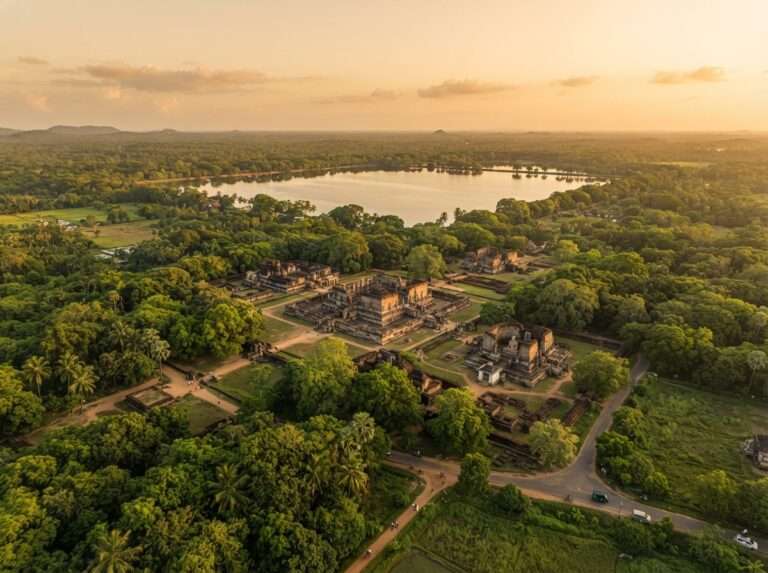
Polonnaruwa was Sri Lanka’s royal capital in the 11th and 12th centuries, and its ruins spread over a few kilometres of flat, shaded roads. Cycling is the best way to see it. Hire a bicycle in town and ride a loop through the Royal Palace, the Quadrangle with its round Vatadage, and the Gal Vihara, where four Buddha figures are carved from one granite face, including a 14-metre reclining Buddha.
Start at 7 am, take water and finish by noon. The site is a UNESCO World Heritage Site, like Sigiriya, Dambulla and Anuradhapura, and entry is priced in US dollars by the Central Cultural Fund. Remove shoes and hats at the shrines and cover shoulders and knees. Never pose with your back to a Buddha statue or touch or climb on one; it is treated as an offence in Sri Lanka.
If you have another day, Anuradhapura is older and larger, with the Sri Maha Bodhi, grown from a cutting of the tree Buddha sat under at Bodh Gaya. That link to India makes it a quiet favourite with Indian visitors.
| Where | Polonnaruwa, 1 hour east of Sigiriya |
| Best time | January to September, early morning |
| Cost | Site ticket in USD (Central Cultural Fund) plus bicycle hire |
| Time needed | Half day |
10
Climb Adam's Peak Overnight For Sunrise
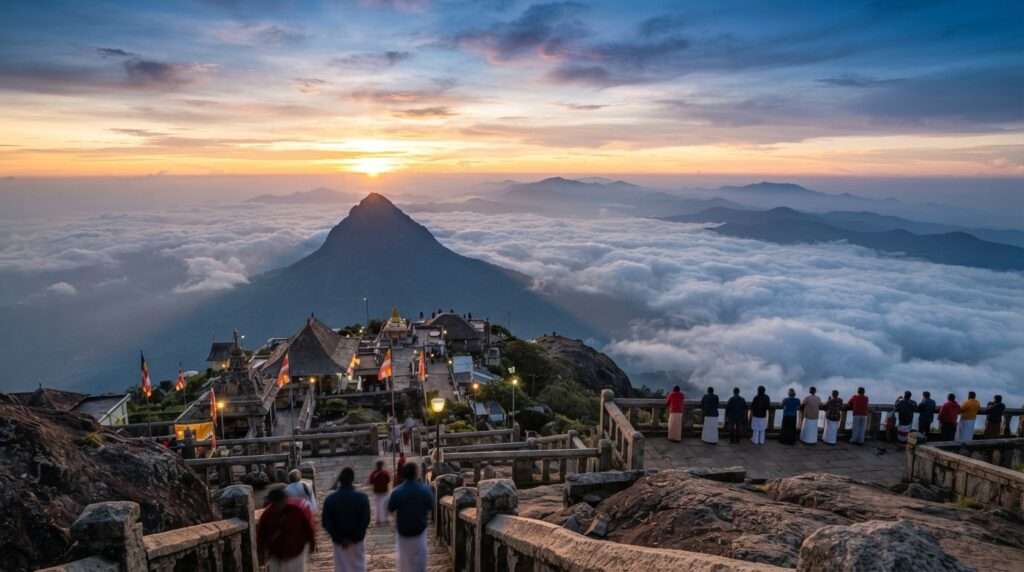
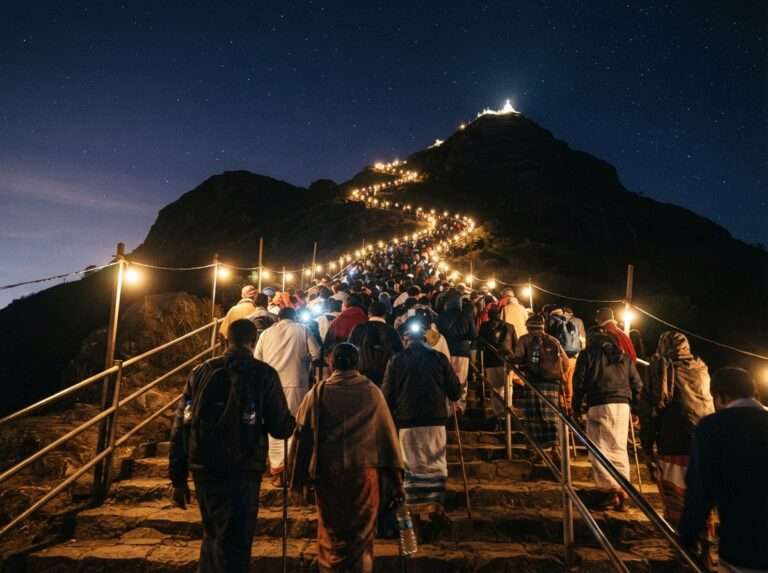
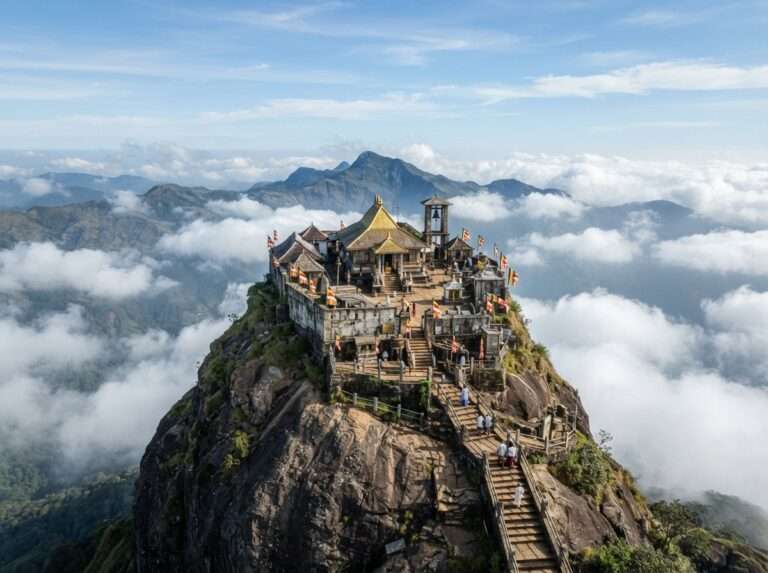
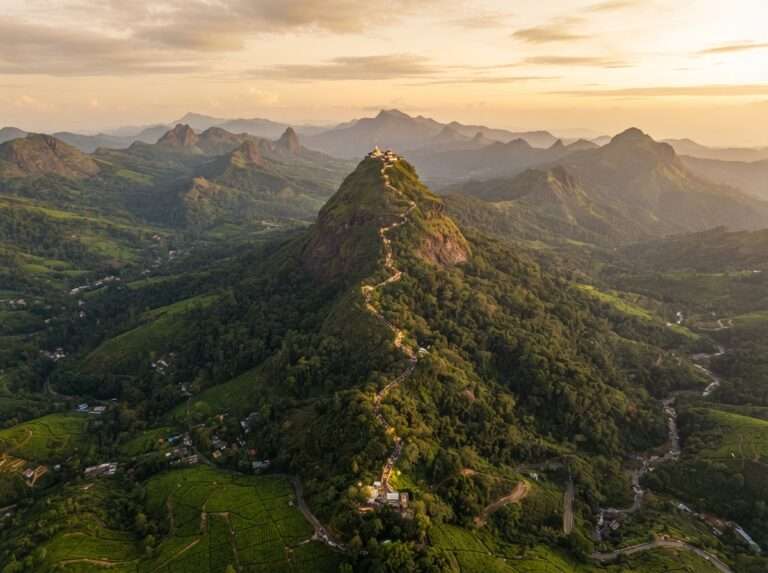
Adam’s Peak (Sri Pada) is a 2,243-metre peak sacred to Buddhists, Hindus, Muslims and Christians, each of whom read the footprint-shaped mark at the top differently. Hindus revere it as the footprint of Lord Shiva. The climb is about 5,500 steps from the village of Dalhousie (Nallathanni), and climbers start between 2 and 2.30 am to reach the top for sunrise.
The pilgrim season opens on the Unduvap full moon in December and runs to the Vesak full moon in May. During the season, the path is lit and tea stalls stay open all night. Outside it, the lights are off and the path is unsafe. Allow 3 to 4 hours up and 2 to 3 down. Avoid full-moon poya days and weekends in January and February, when the upper steps back up and the climb can take five hours or more. Take a warm layer. It is near freezing at the summit before dawn. Our Sri Pada page has route and access details.
| Where | Dalhousie (Nallathanni), Nuwara Eliya District |
| Best time | December to May, weekdays |
| Cost | Free |
| Time needed | Overnight, 6 to 7 hours total |
11
Walk Horton Plains To World's End
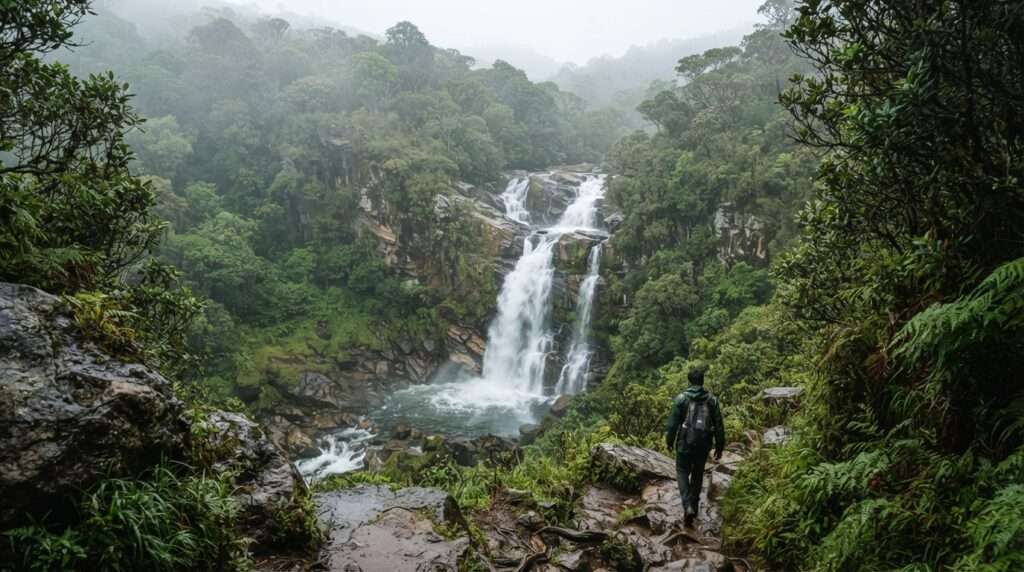
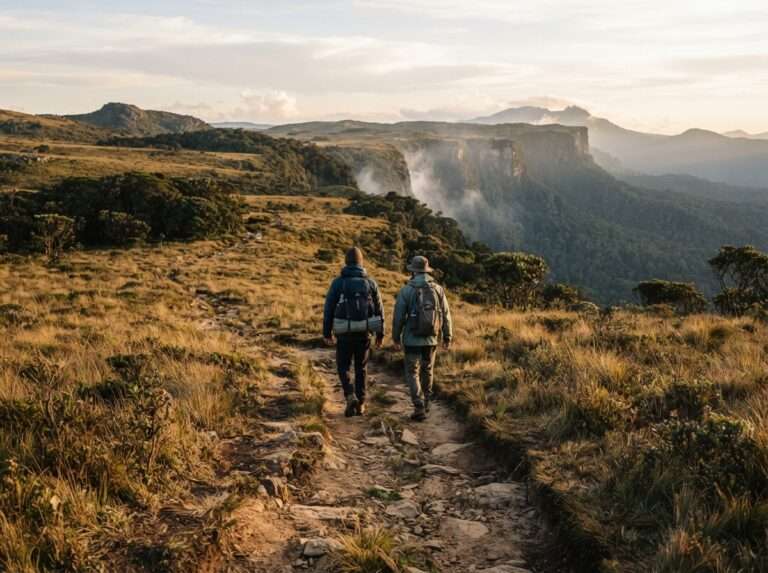
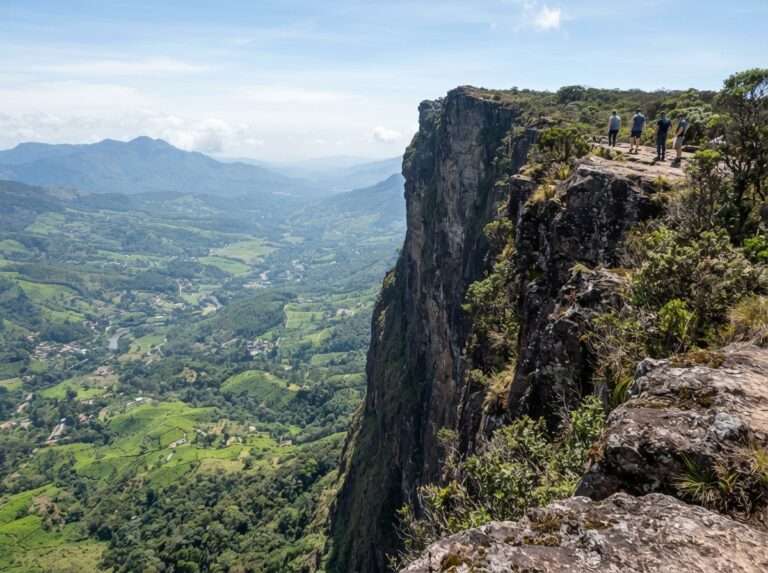
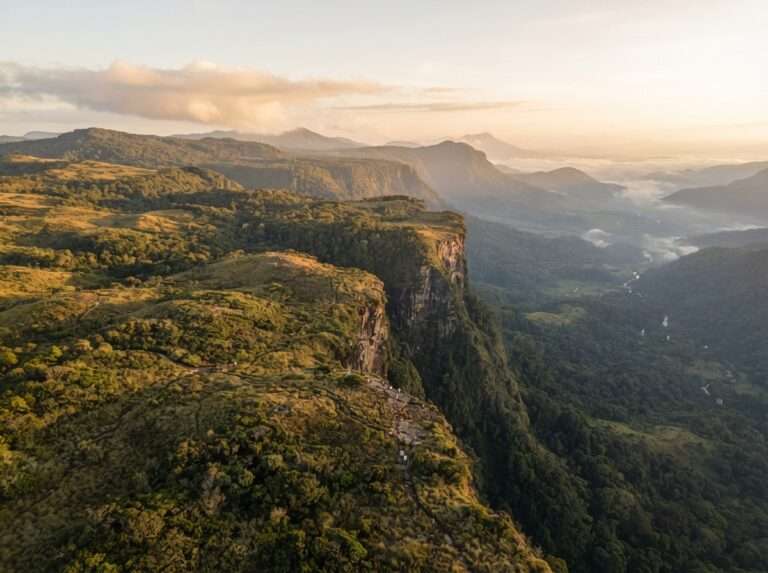
Horton Plains is a high plateau of cloud forest and grassland about an hour’s drive from Nuwara Eliya. The 9.5 km loop walk takes in World’s End, a cliff with a drop of about 870 metres, and Baker’s Falls. It takes 3 to 4 hours at an easy pace.
Timing decides everything here. The gate opens at 6 am, and by about 10 am the mist usually rolls up the escarpment and World’s End turns into a white wall. Leave Nuwara Eliya by 5 am. January to March gives the clearest mornings. Polythene is banned in the park, and rangers check bags at the gate. SAARC adults pay about USD 20 and other foreign adults USD 25 to 30, plus VAT and a separate vehicle fee, so check the current rate on the Department of Wildlife Conservation site. Read our Horton Plains guide before you go.
| Where | Horton Plains, about 1 hour from Nuwara Eliya |
| Best time | January to March; at the gate by 6 am |
| Cost | USD 20 SAARC (about ₹1,750) plus service charge, vehicle fee and 18% VAT |
| Time needed | 3 to 4 hours |
12
Follow The Ramayana Trail Through Nuwara Eliya And Ella
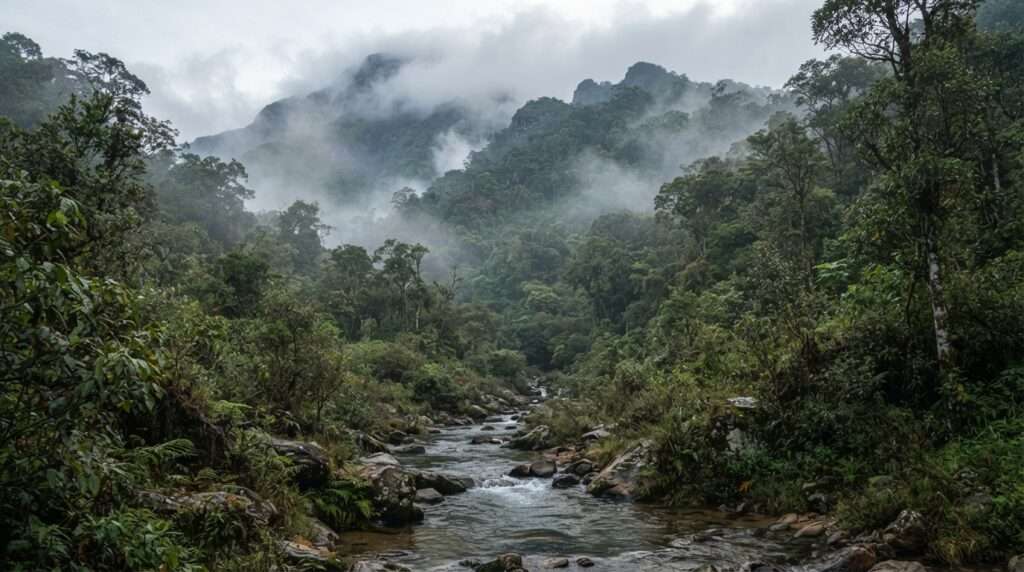
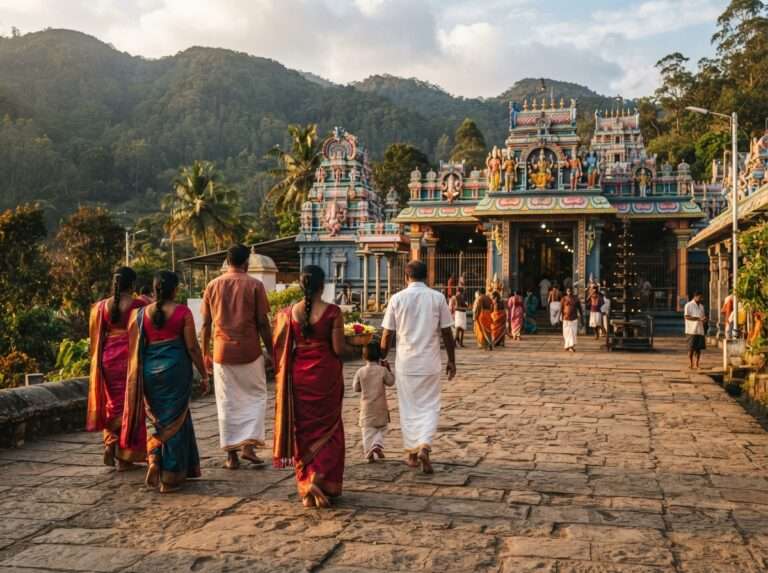
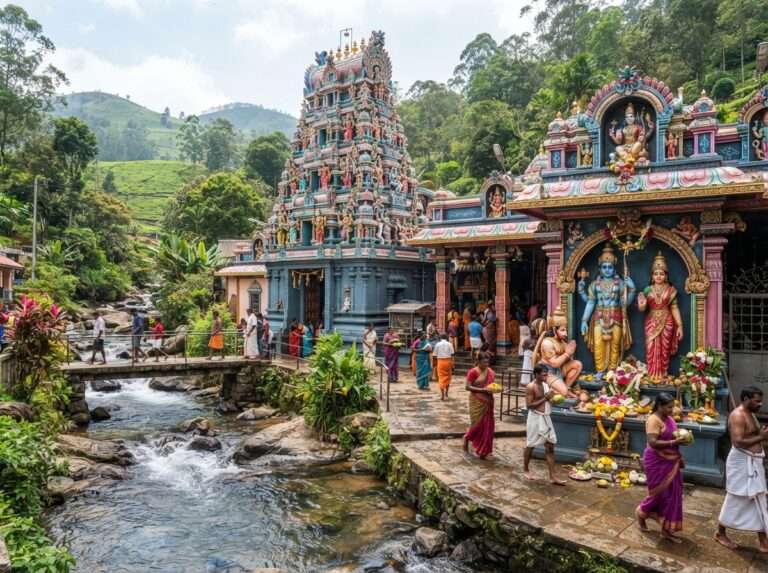
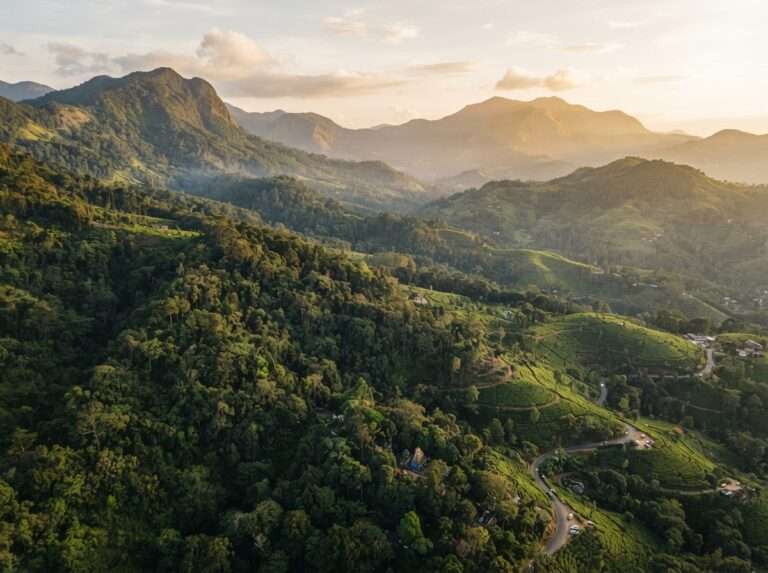
For many Indian families, this is the reason to visit Sri Lanka, and it is almost absent from Western travel guides. Tradition places Ashok Vatika, where Ravana held Sita, at Hakgala, about 10 km from Nuwara Eliya on the Badulla road. The Seetha Amman Temple stands about 1 km from Hakgala Botanical Garden, beside a stream. Devotees point to round marks on the rock nearby as Hanuman’s footprints. Pooja timings are reported as 8 am to 1 pm and 2 pm to 6.30 pm.
Further on are Divurumpola, near Welimada, linked by tradition with Sita’s agni pariksha, and near Ella, the Ravana Falls and Ravana Cave. You can see the falls from the roadside on the Ella to Wellawaya road, about 6 km from town. Most of these sites are free. A temple donation is customary.
A driver can cover the Nuwara Eliya cluster in one day. Read our Ramayana tour in Sri Lanka guide for all the sites, or see the Sri Lanka Ramayana tour packages if you want the route arranged.
| Where | Hakgala and Seetha Eliya (Nuwara Eliya), Divurumpola, Ella |
| Best time | Year-round; temple mornings |
| Cost | Mostly free; donation at temples |
| Time needed | 1 to 2 days |
13
Raft The Kelani River At Kitulgala
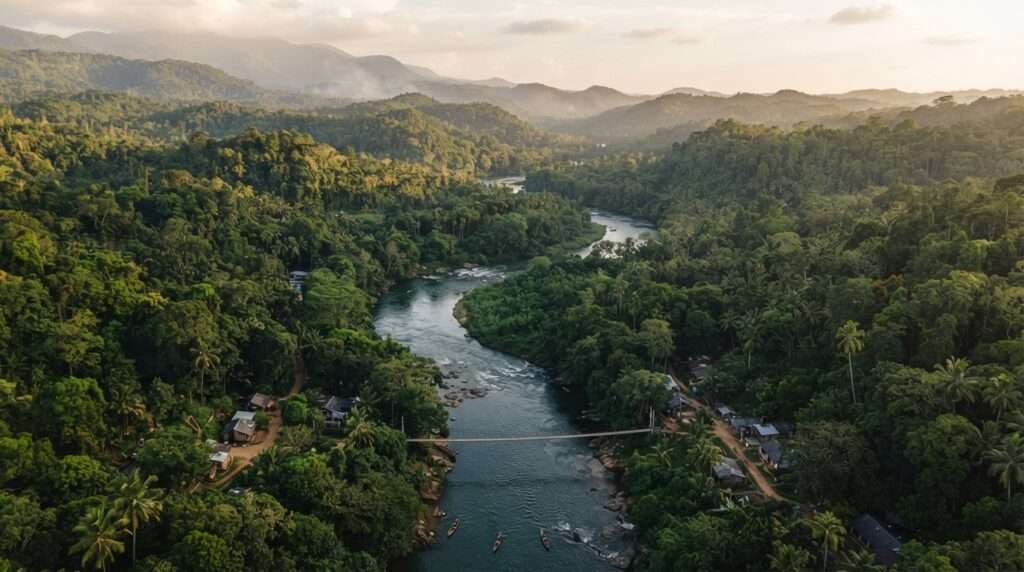
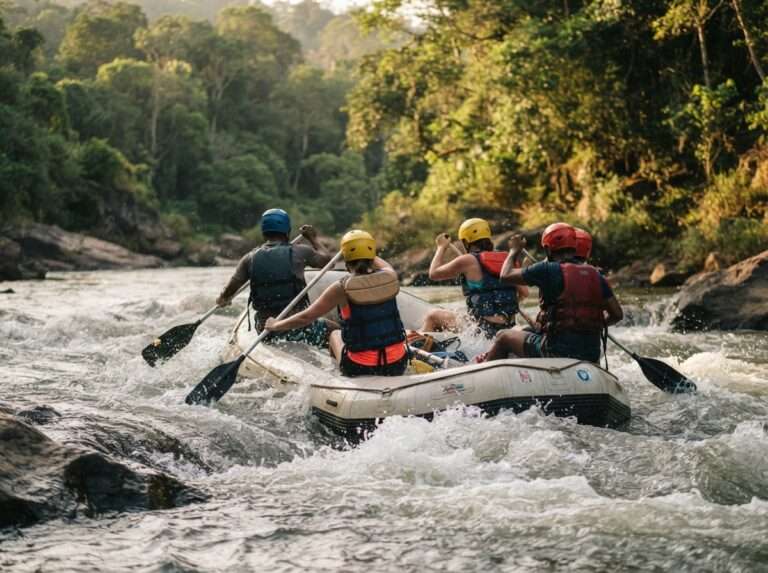
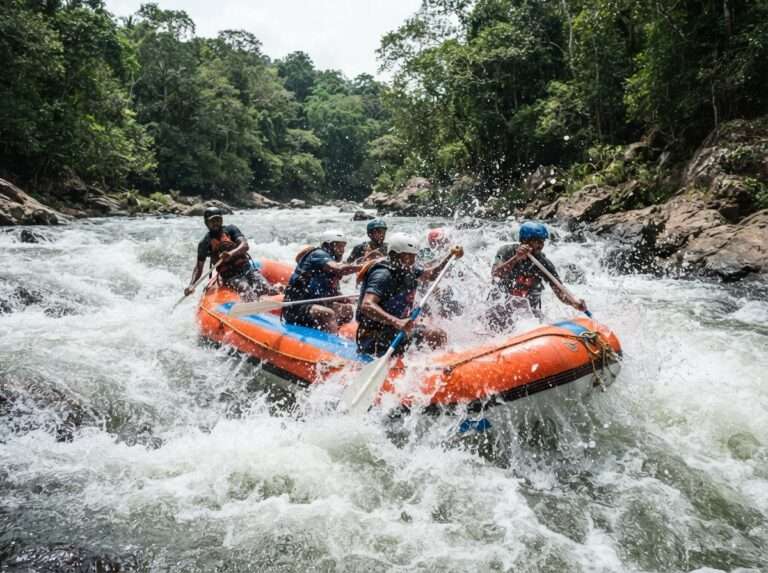
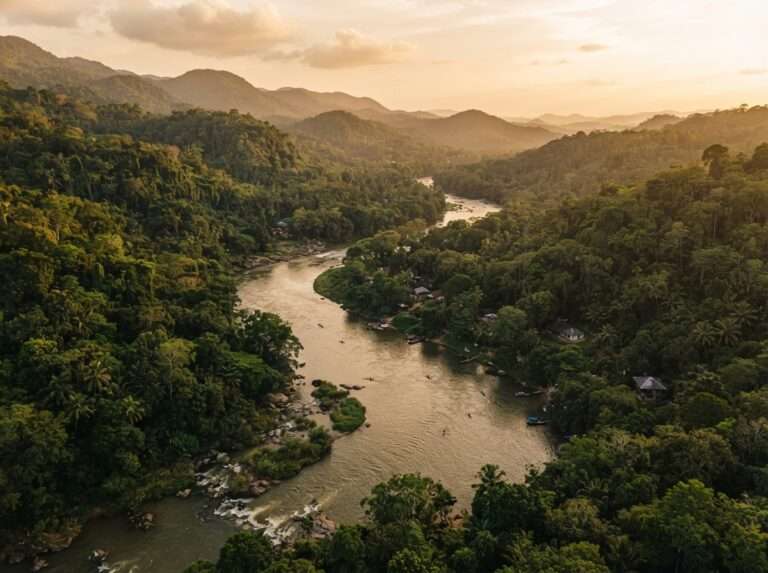
Kitulgala is Sri Lanka’s white-water centre, about 2.5 hours from Colombo on the road to the hill country. The standard run is about 5 km of grade 2 to 3 rapids on the Kelani River with names like Butter Crunch and Killer Fall. It is exciting but within reach of first-timers who can follow a guide’s paddle calls. The river here also stood in for Burma in the 1957 film The Bridge on the River Kwai, and guides will show you where the bridge was blown.
Rafting runs most of the year. Days of heavy rain can stop it, and river levels can drop low in the driest weeks. Operators include a safety briefing, helmet and life jacket. Reseller prices sit at about USD 30 for 5 km and USD 40 for 8 km. Combine it with canyoning or a jungle walk to fill the day, then continue to Nuwara Eliya. Our adventure places in Sri Lanka guide lists other options, and the Sri Lanka adventure tour packages bundle Kitulgala with transfers.
| Where | Kitulgala, Kegalle District |
| Best time | Year-round, except days of heavy rain |
| Cost | USD 30 to 40 (about ₹2,600 to ₹3,500) |
| Time needed | 2 to 3 hours on the river |
14
Learn To Surf At Weligama Or Ride Arugam Bay
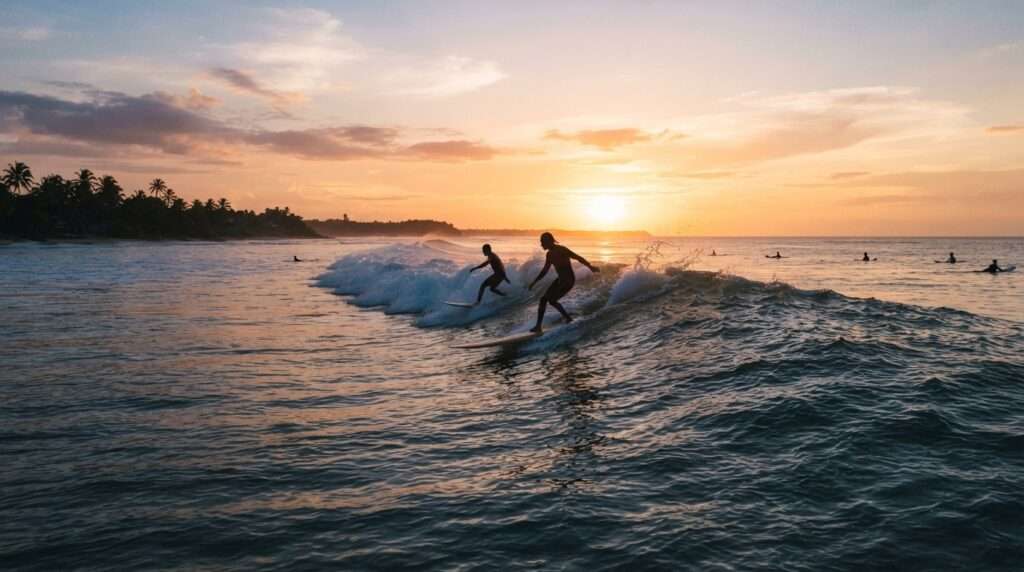
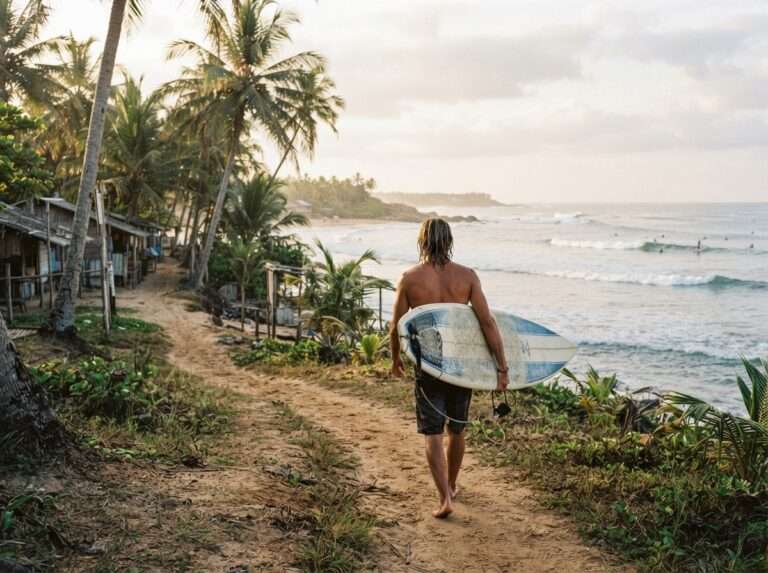
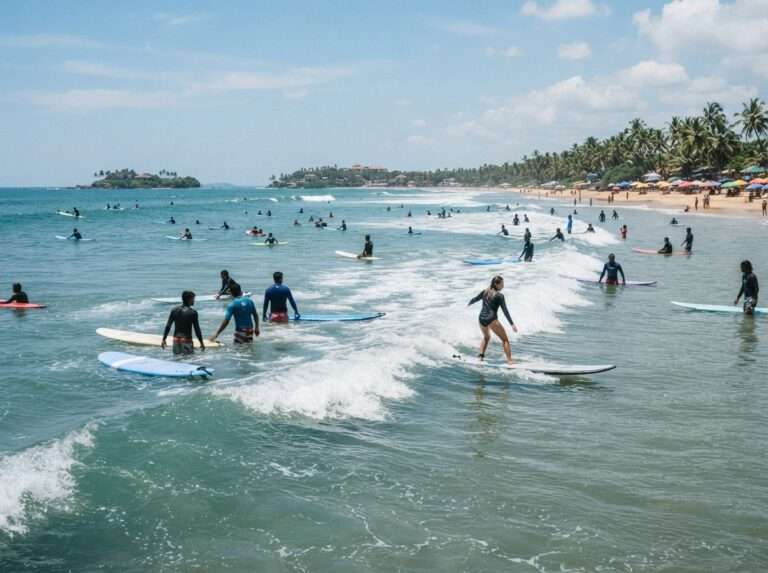
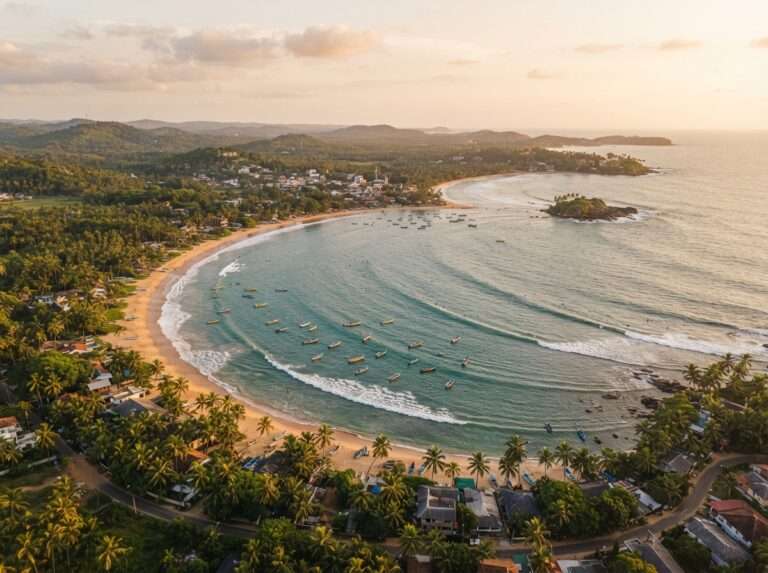
Sri Lanka has surf in every month, but on opposite coasts. From November to April, go to Weligama on the south coast. The bay is wide, sandy-bottomed and gentle, which makes it the island’s beginner school. A 2-hour lesson with a board costs about USD 25 to 35, and most first-timers stand up on their second or third wave.
From April to October, the action moves to Arugam Bay on the east coast, with its long right-hand point break. July and August are the peak months. It suits intermediate surfers, though nearby Whiskey Point and Baby Point have softer waves for learners. Rent boards by the day if you already surf. Rash vests are worth it, because the sun this close to the equator burns through within an hour on the water.
| Where | Weligama (south) or Arugam Bay (east) |
| Best time | Weligama November to April; Arugam Bay April to October |
| Cost | USD 25 to 35 per lesson (about ₹2,200 to ₹3,100) |
| Time needed | 2 hours per lesson |
15
Snorkel With Reef Sharks At Pigeon Island
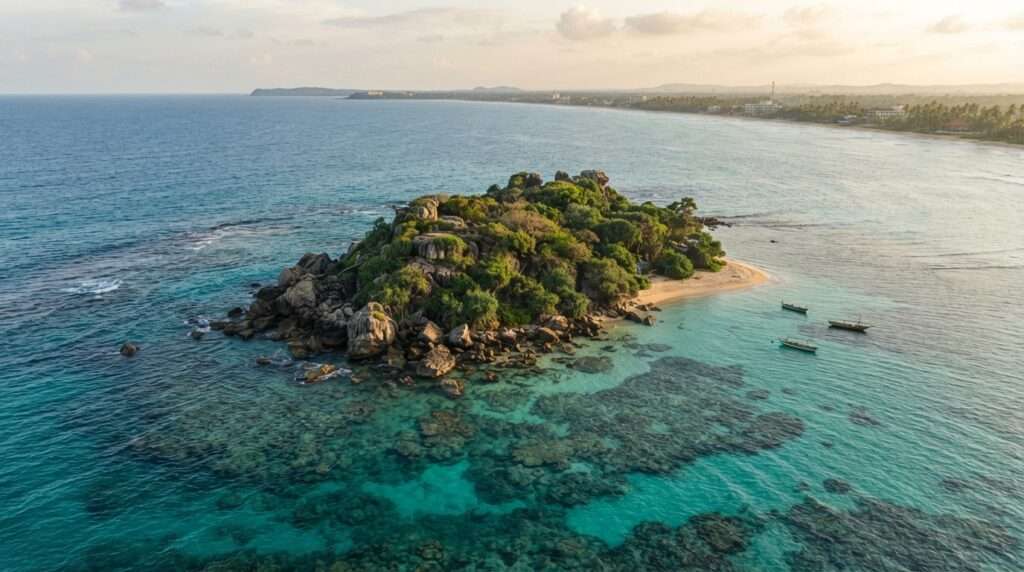
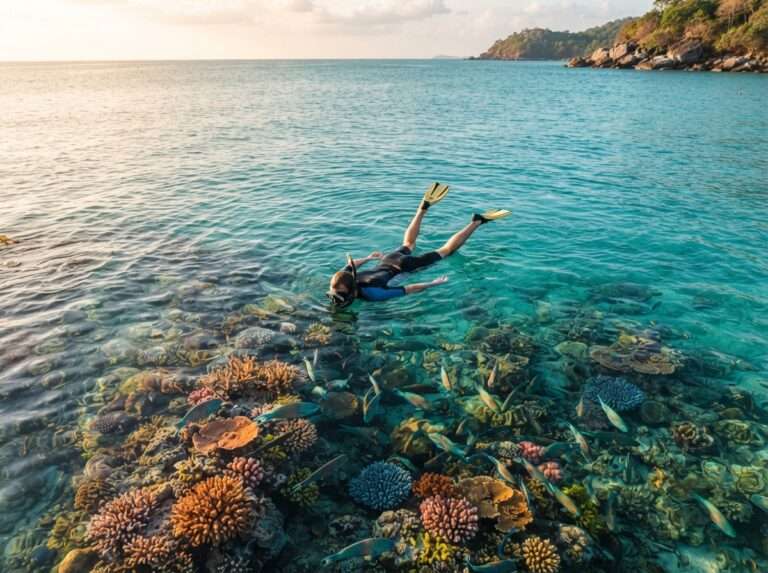
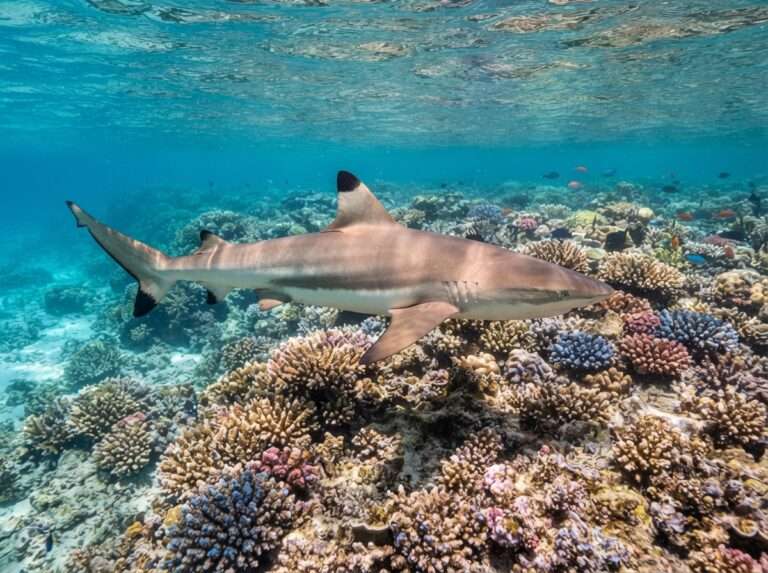
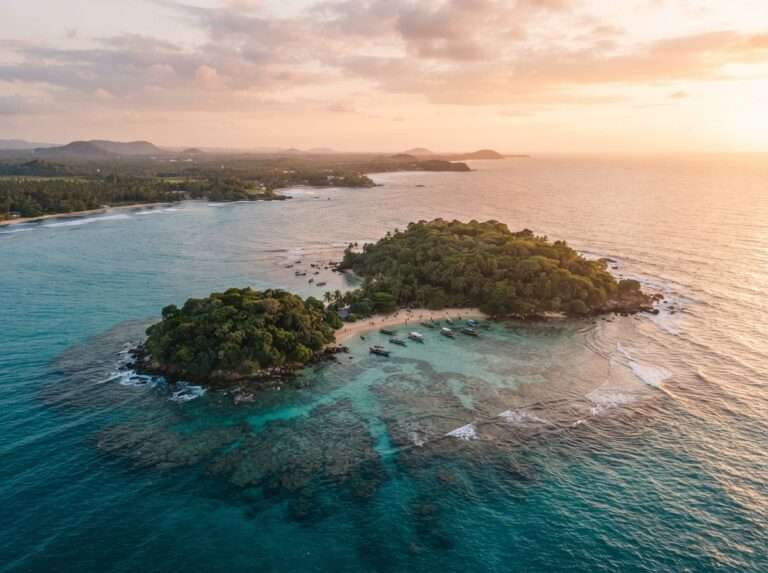
Pigeon Island is a marine national park a 15-minute boat ride off Nilaveli beach, north of Trincomalee, and the best easy snorkel in Sri Lanka. Blacktip reef sharks patrol the shallows close to the beach on the island’s seaward side, along with turtles and parrotfish over hard coral. You don’t need to dive. Most of it is visible in water you can stand in.
Go between May and September, when the east coast is dry and the sea is calm. Pay the park fee at the Nilaveli jetty before boarding. Foreign fees are in US dollars, and boats charge separately. The island is open from 7 am to 5 pm. Go early, before the day-trippers arrive around 10. Wear reef shoes and don’t stand on coral. Our snorkelling in Sri Lanka guide covers other reefs.
| Where | Off Nilaveli, Trincomalee District |
| Best time | May to September, 7 am |
| Cost | Park fee in USD plus boat hire |
| Time needed | Half day |
16
Snorkel With Turtles And Dive At Hikkaduwa
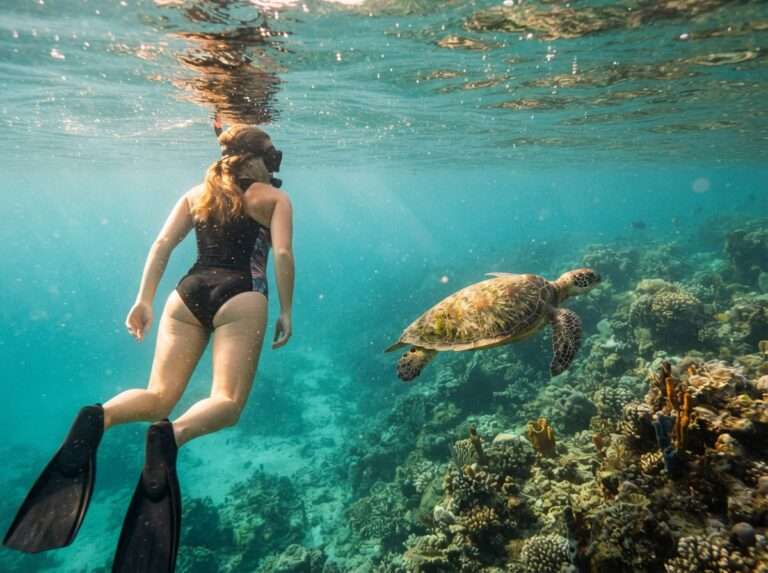
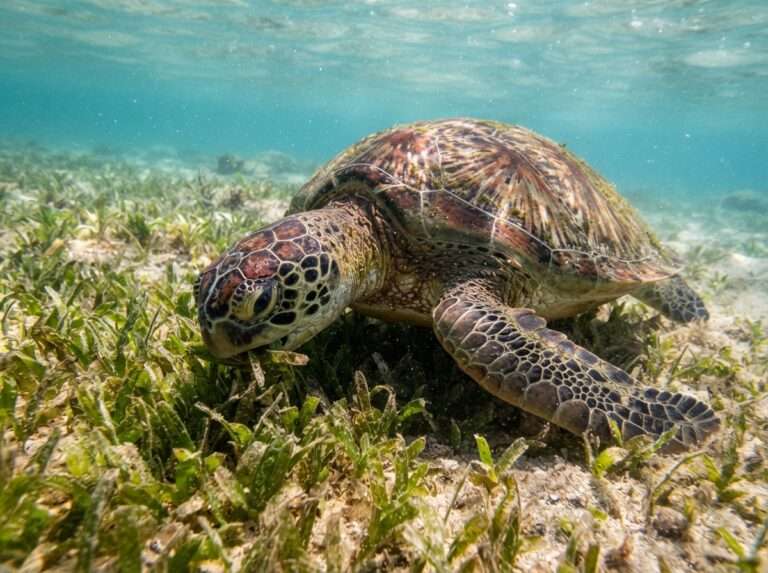
Hikkaduwa, on the south-west coast, is where Sri Lanka’s dive scene began, and it remains the easiest place to see green turtles. They graze on seagrass right off the main beach, within a few metres of swimmers. Watch from the water and don’t feed them. Hand-feeding seaweed has made some aggressive.
Divers head for the reefs and wrecks offshore, including the Gorgonian Garden with its fan corals and the SS Conch wreck, an oil tanker lost in 1903. Dive shops along Galle Road run two boat dives each morning between November and April. In the south-west monsoon (May to October), the sea is too rough and most shops close. Hikkaduwa also has a lively bar strip if you want the evening covered. See our best beaches in Sri Lanka for quieter alternatives along this coast.
| Where | Hikkaduwa, Galle District |
| Best time | November to April |
| Cost | Snorkel gear hire is cheap; boat dives priced per dive |
| Time needed | Half day |
17
Take A Madu River Boat Safari And Try Water Sports In Bentota
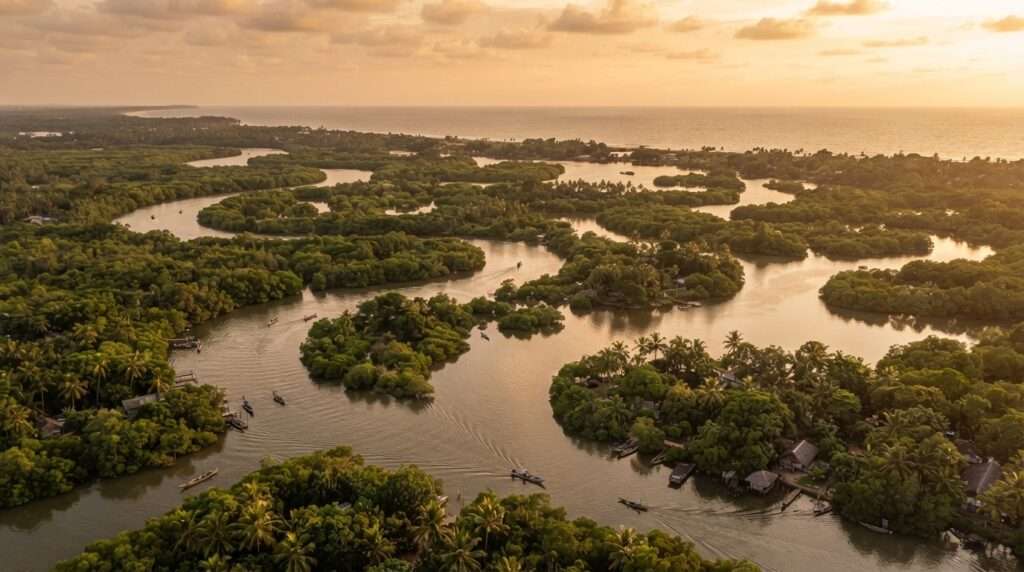
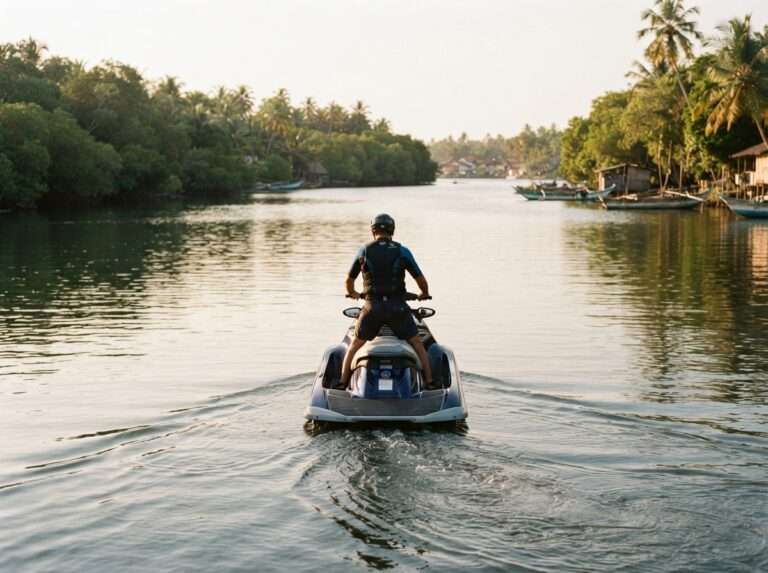
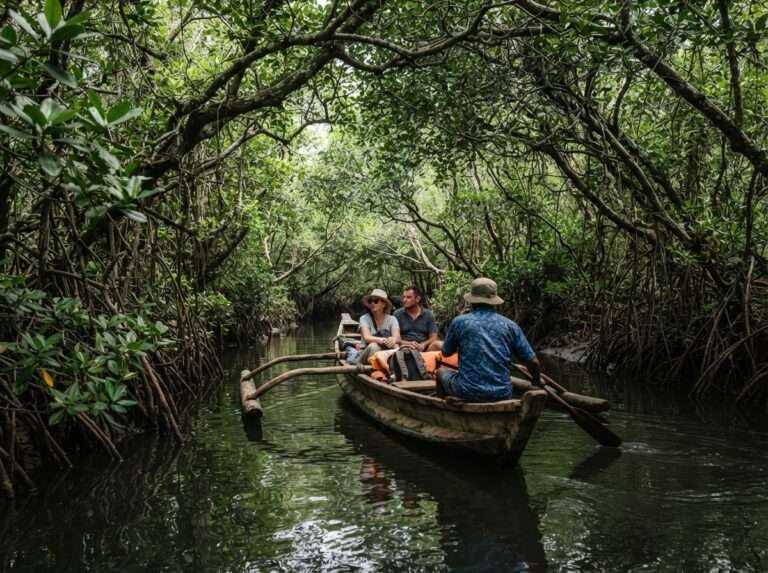
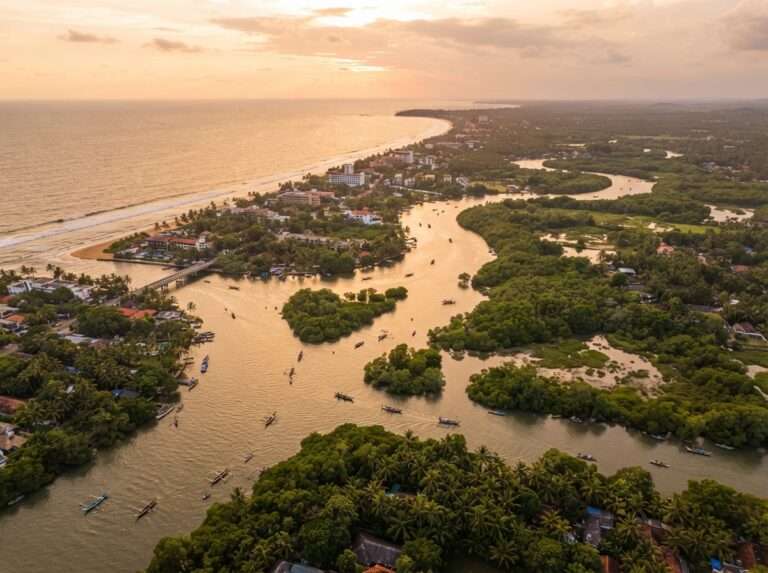
Bentota is Sri Lanka’s water-sports base, about 1.5 hours south of Colombo on the expressway. On the calm Bentota River lagoon you can jet-ski, waterski, ride a banana boat or go wakeboarding, all priced by the ride or by the 15 minutes. A few kilometres south, the Madu River boat safari is the gentler half-day, a slow run through mangrove tunnels, a stop at a cinnamon-peeling island and a fish-spa platform where small fish nibble your feet.
Kosgoda turtle hatchery is about 15 minutes south. Pick one that releases hatchlings into the sea within days rather than keeping them in tanks for tourists. The season runs November to April, when the west coast is dry. Our water sports in Sri Lanka guide compares Bentota with Hikkaduwa and Negombo.
| Where | Bentota and Balapitiya (Madu River), south-west coast |
| Best time | November to April |
| Cost | Priced per ride; boat safari per boat |
| Time needed | Half day |
18
Kitesurf The Kalpitiya Lagoon
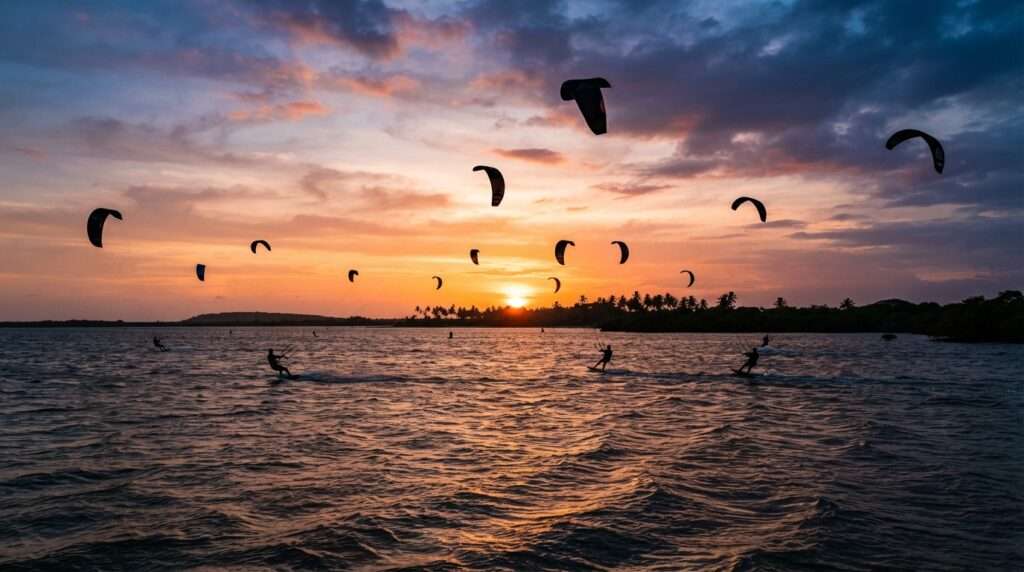
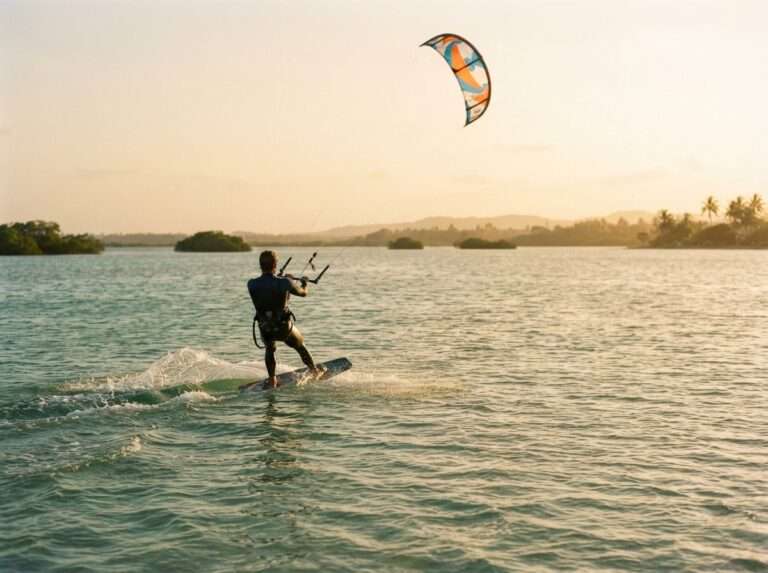
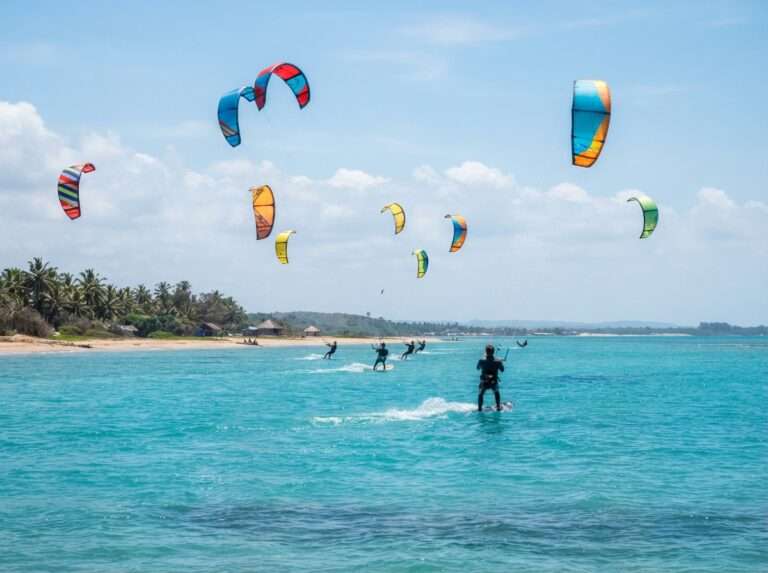
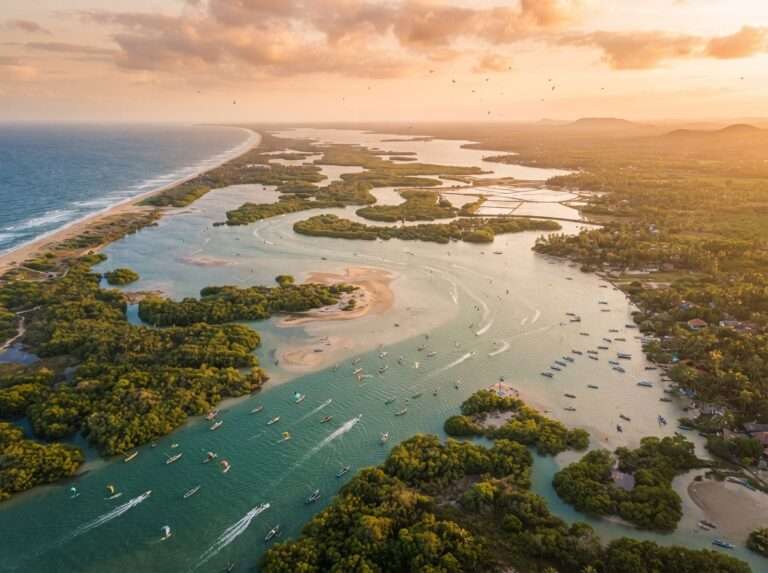
Kalpitiya, a sand peninsula three hours north of Colombo, has the strongest, most reliable wind in Sri Lanka and a flat lagoon where beginners can learn without waves. There are two seasons: May to October with the south-west monsoon, and mid-December to mid-February with the north-east. Most beginners need 3 to 5 days of lessons before riding on their own, so plan a stay rather than a day trip. Camps sell lesson packages by the hour.
Even outside the windy months, Kalpitiya is worth it for dolphins. Boats from the peninsula find large pods of spinner dolphins between November and March, often in the hundreds. Pair the trip with Wilpattu, which is just to the east.
| Where | Kalpitiya, Puttalam District |
| Best time | May to October and mid-December to mid-February |
| Cost | Lesson packages priced by hour or day |
| Time needed | 2 to 5 days |
19
Fly A Hot-Air Balloon Over Dambulla At Dawn
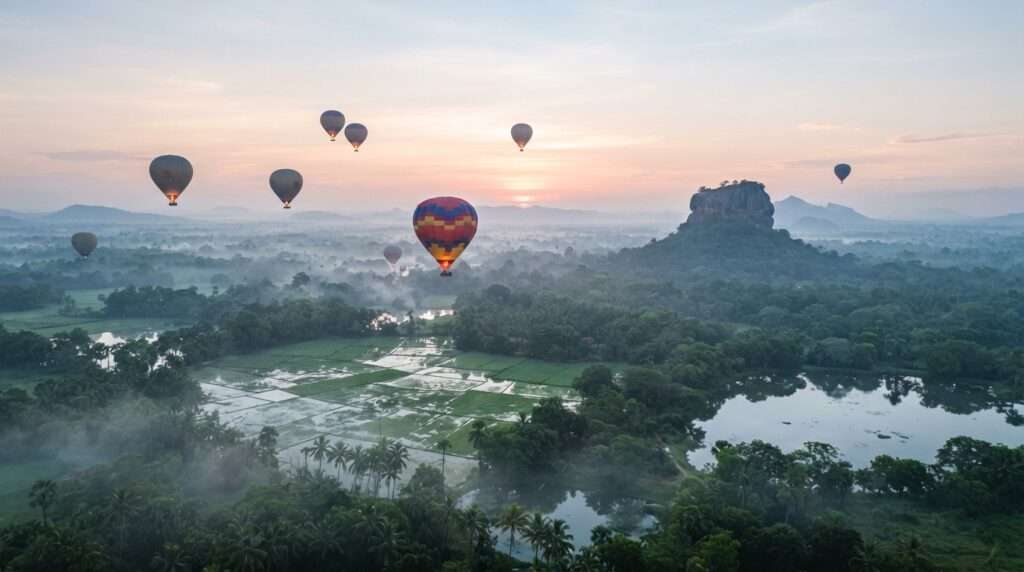
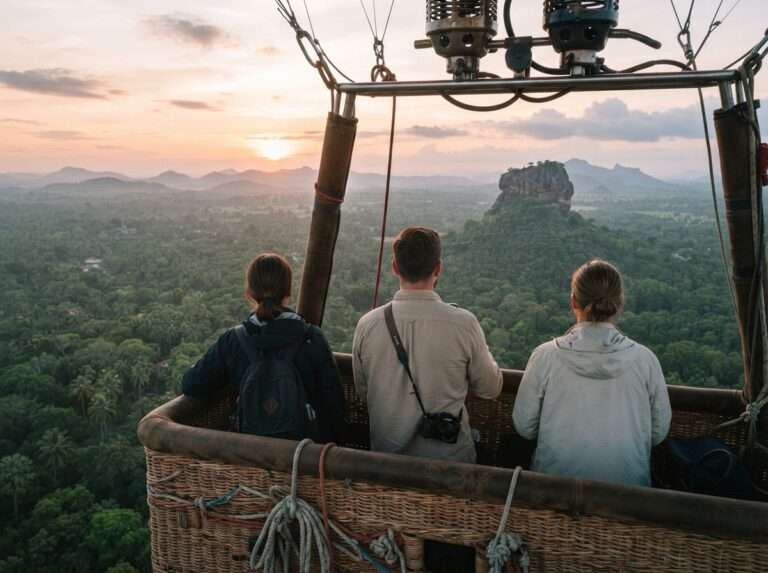
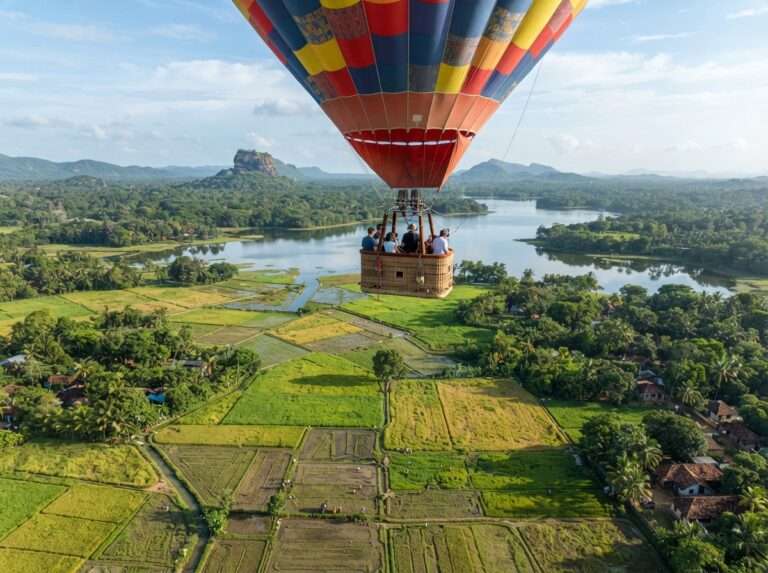
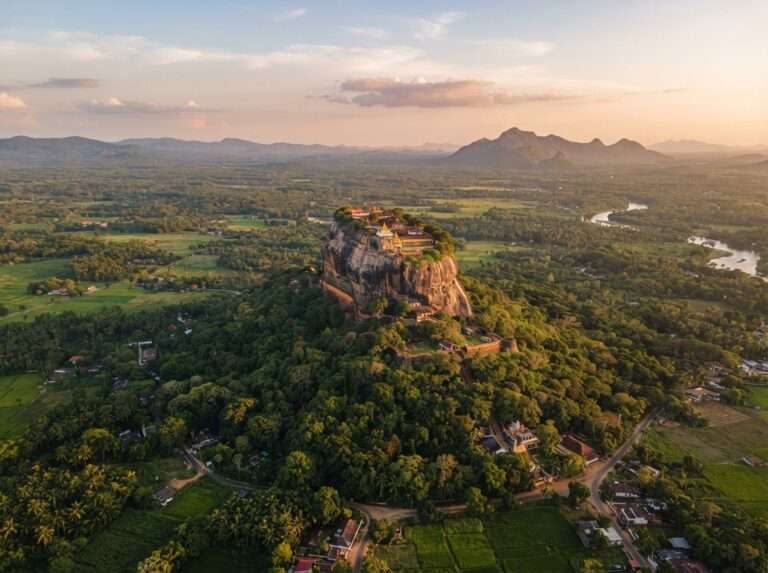
Balloons lift off at about 6 am from fields near Dambulla and Kandalama, drift for around an hour over paddy, lakes and jungle with Sigiriya in view, and land wherever the wind allows. It is the most expensive item on this list and the one guests talk about most at breakfast.
The season is short. Operators fly from about December to March, and some extend from November to April if the weather holds. Flights stop during the monsoon. Expect USD 250 to 275 per person including hotel pickup at 5 am. A flight is never guaranteed, because pilots cancel for wind on the morning itself. Book it for your first morning in the Cultural Triangle so you have a backup day. It is a popular choice for couples, and our Sri Lanka honeymoon packages can add it to the itinerary.
| Where | Dambulla and Kandalama, Cultural Triangle |
| Best time | December to March |
| Cost | USD 250 to 275 (about ₹22,000 to ₹24,000) |
| Time needed | About 3 hours including transfers |
20
Tour A Tea Factory, Stand At Lipton's Seat, Take High Tea
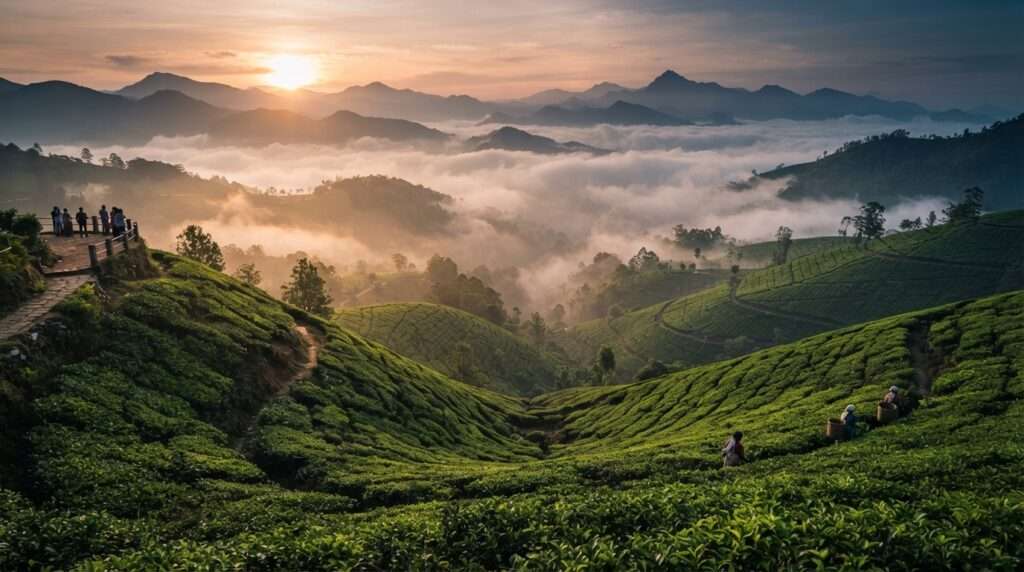
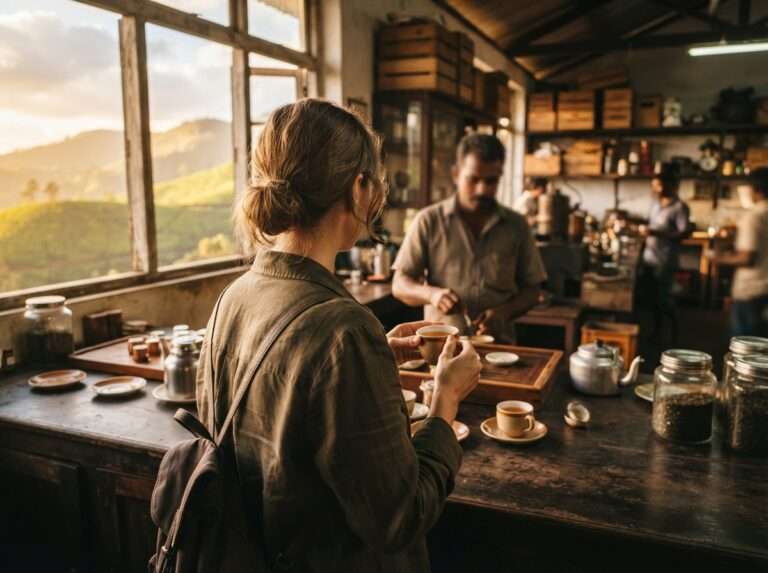
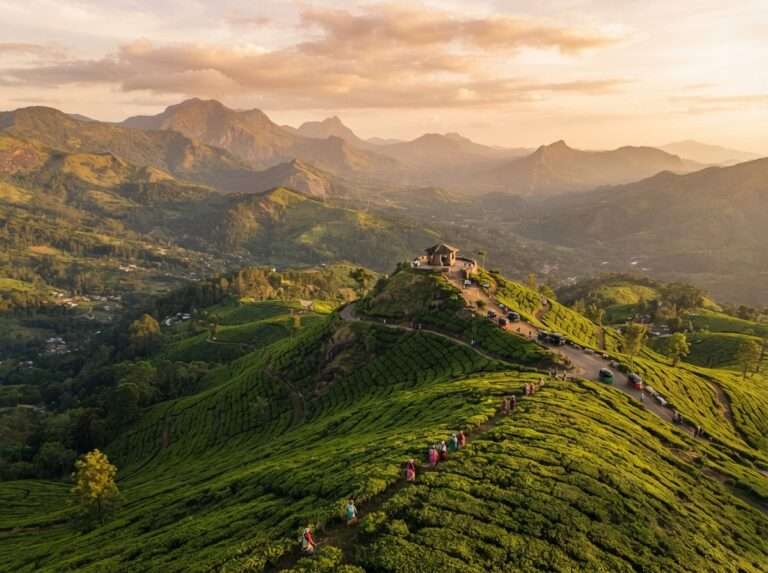
Ceylon tea is grown on the hills around Nuwara Eliya and Haputale, and a factory visit shows the whole process in 30 minutes: withering, rolling, fermenting, drying and grading. Pedro and Damro Labookellie (the former Mackwoods factory) near Nuwara Eliya are the easy stops, with a cup of the estate’s tea at the end.
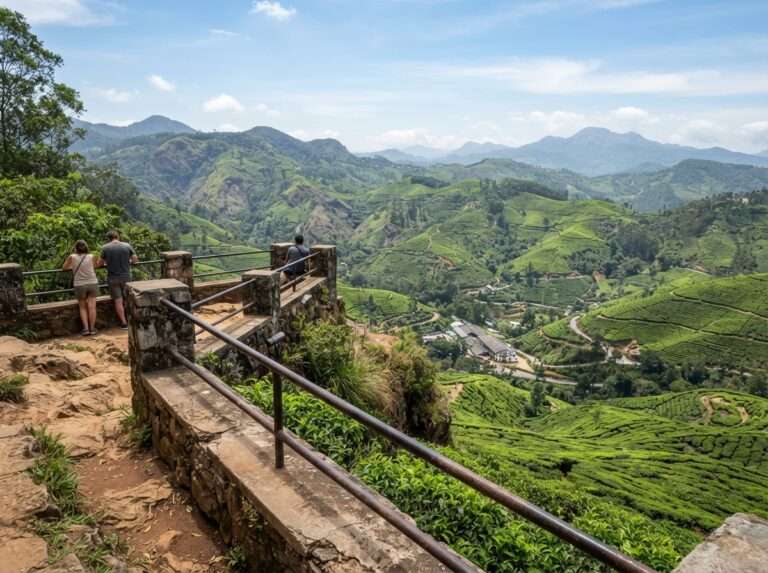
Lipton’s Seat is the bigger outing. It is the lookout above the Dambatenne estate near Haputale where Sir Thomas Lipton surveyed his land, about two hours south of Nuwara Eliya, so pair it with your Ella leg. On a clear morning you can see across several provinces. Get there by 7.30 am, before the mist, and visit the Dambatenne factory on the way down.
Finish with afternoon high tea in Nuwara Eliya, a hill town still laid out like a British one. Read more about tea plantations in Sri Lanka.
| Where | Nuwara Eliya and Haputale |
| Best time | Year-round; Lipton's Seat before 8 am |
| Cost | Factory tours free to low; high tea varies by hotel |
| Time needed | 1 day |
21
See The Temple Of The Tooth And A Kandyan Dance Show
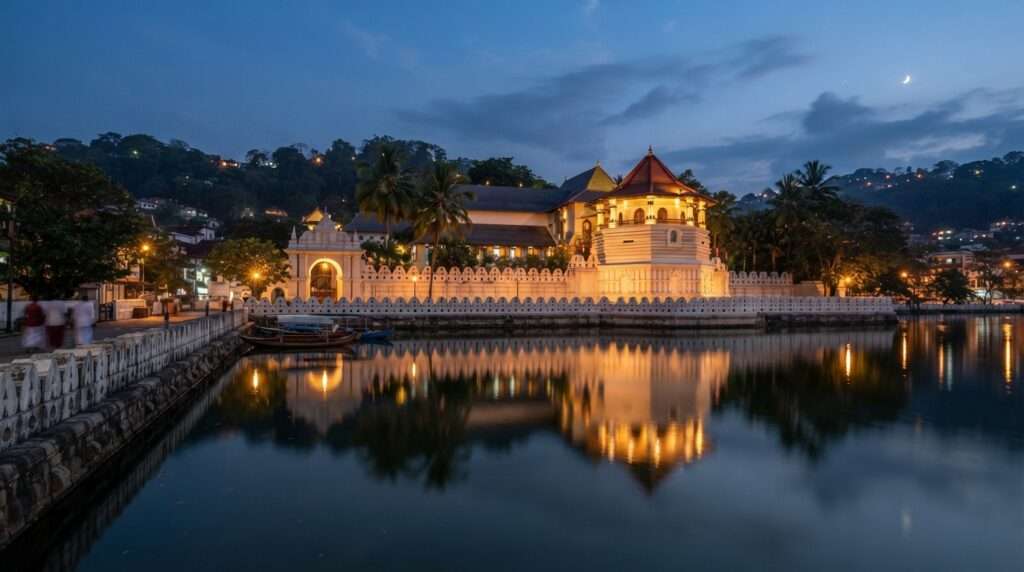
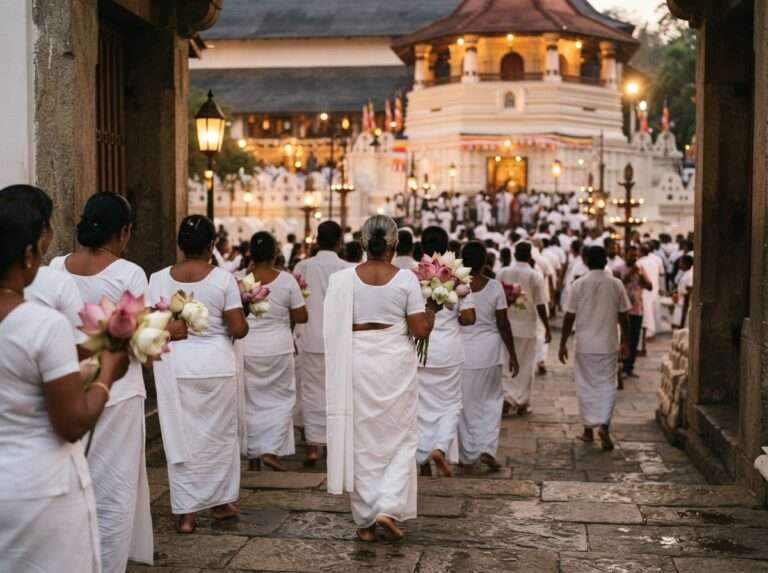
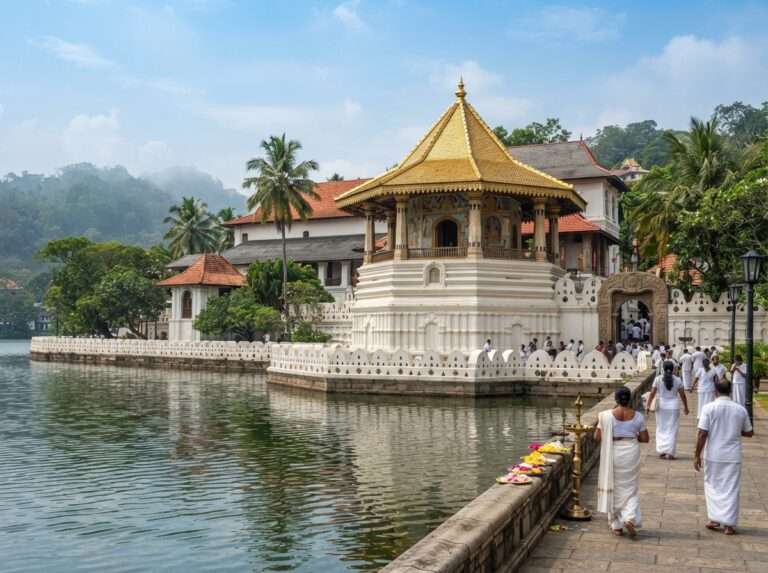
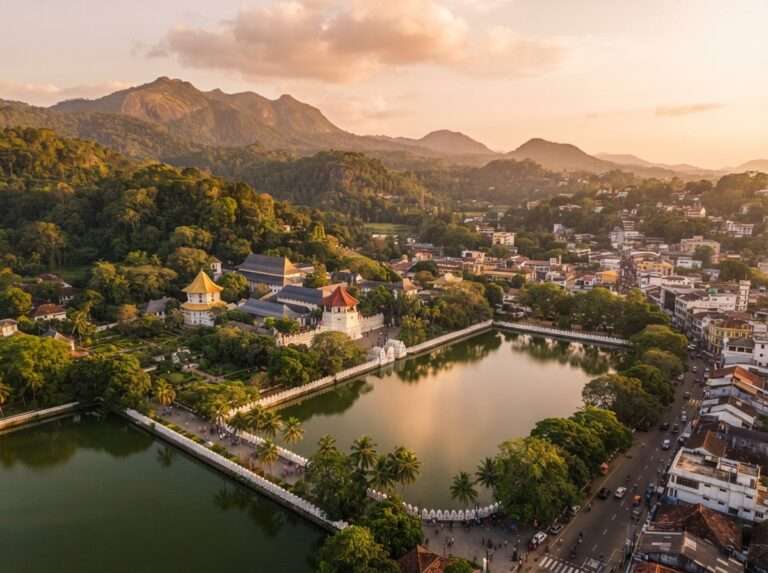
Kandy’s Temple of the Sacred Tooth Relic holds what Buddhists believe is a tooth of the Buddha, and the best time to go is for the evening pooja around 6.30 pm, when drums sound and the inner chamber opens. Wear white or light clothes that cover shoulders and knees, and leave shoes at the counter. Foreigners pay from around LKR 3,000 (about ₹870) for the temple ticket since 1 July 2026, and SAARC nationals about LKR 2,500.
Before it, catch the Kandyan dance show at the Kandy Lake Club, which starts at 5 pm and runs about an hour. Expect drummers, masked dancers and a fire-walk finale. Tickets cost about USD 6 at the door, while online resellers charge more. If you are in Kandy in July or August, the Esala Perahera brings ten nights of torch-lit processions with caparisoned elephants. Book a hotel months ahead for those dates. Our Kandy guide covers the rest of the city, and festivals in Sri Lanka has the Perahera calendar.
| Where | Kandy, around Kandy Lake |
| Best time | Year-round; Esala Perahera July or August |
| Cost | Dance show about USD 6 (about ₹530); temple ticket about LKR 3,000 for foreigners, LKR 2,500 SAARC (about ₹730 to ₹870) |
| Time needed | Half day, late afternoon into evening |
22
Walk The Galle Fort Ramparts At Sunset
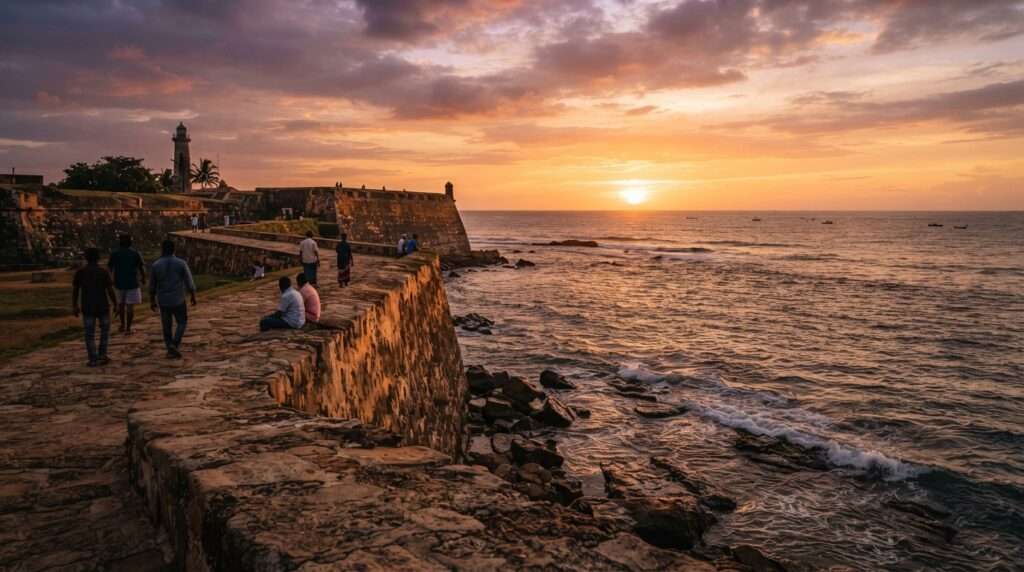
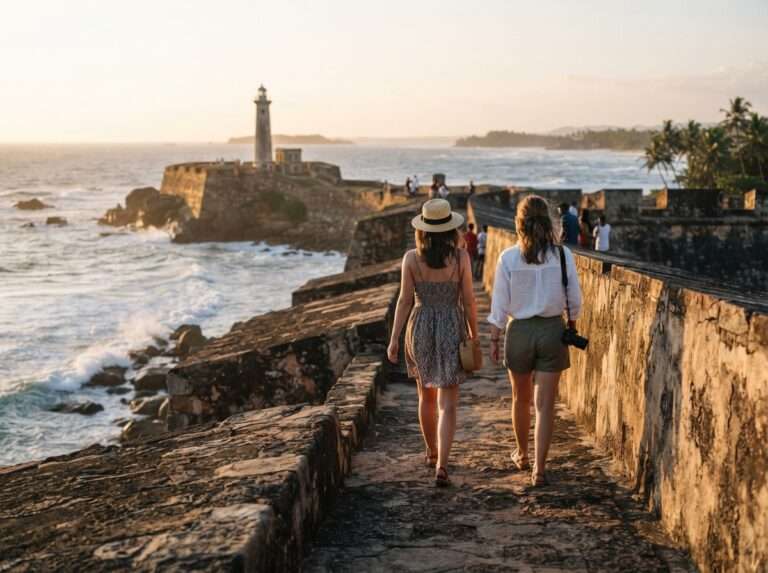
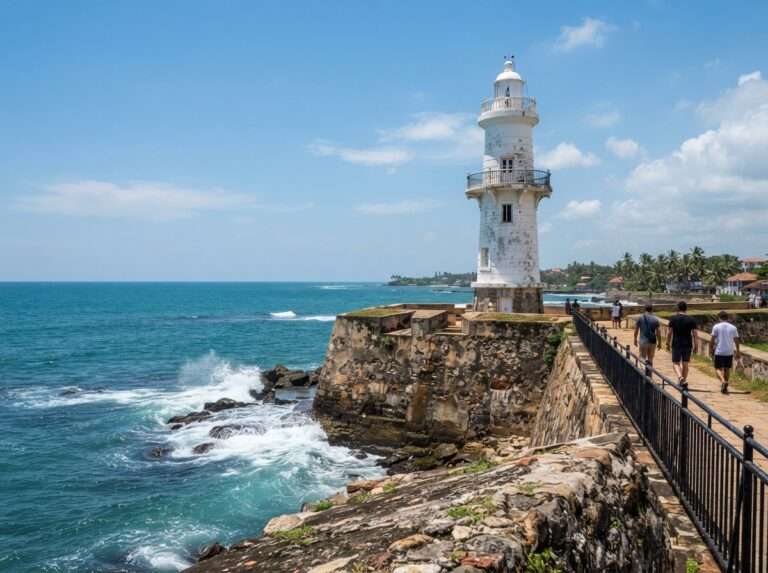
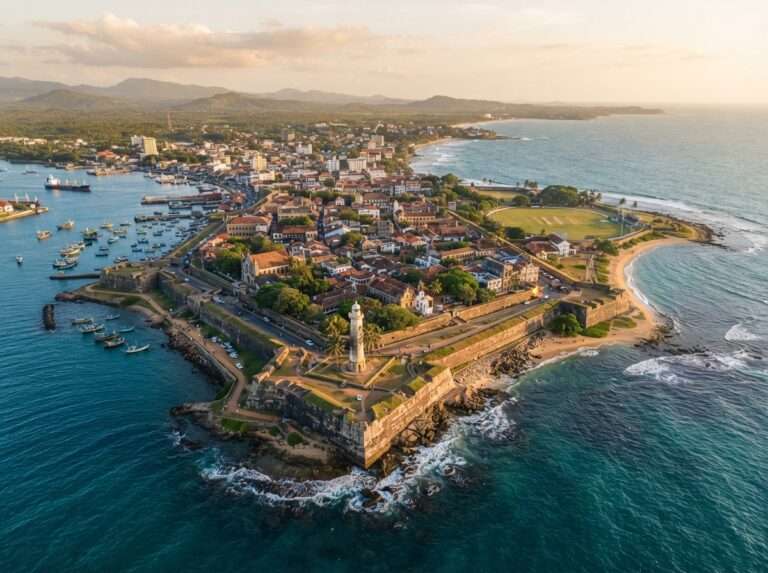
Galle Fort is a walled town the Dutch built in the 17th century on a headland, and it is still lived in. The ramparts form a 2 to 3 km circuit you can walk in an hour, past the lighthouse, Flag Rock and the old bastions, with the sea on one side and tiled roofs on the other. Start around 4.30 pm and stop at Flag Rock for sunset. Local jumpers leap off the ramparts into the sea for tips.
Inside, the lanes are good for an hour of wandering: the Dutch Reformed Church, the old warehouses and the cafes on Pedlar Street. Entry to the fort is free. It is a UNESCO World Heritage Site. Stay a night inside the walls if you can afford it. The place empties of day-trippers after 6 pm. From Galle, the stilt fishermen at Koggala are a 20-minute drive.
| Where | Galle, south coast |
| Best time | November to April, from 4.30 pm |
| Cost | Free |
| Time needed | 2 to 3 hours |
23
Cook Rice And Curry In A Sri Lankan Home Kitchen
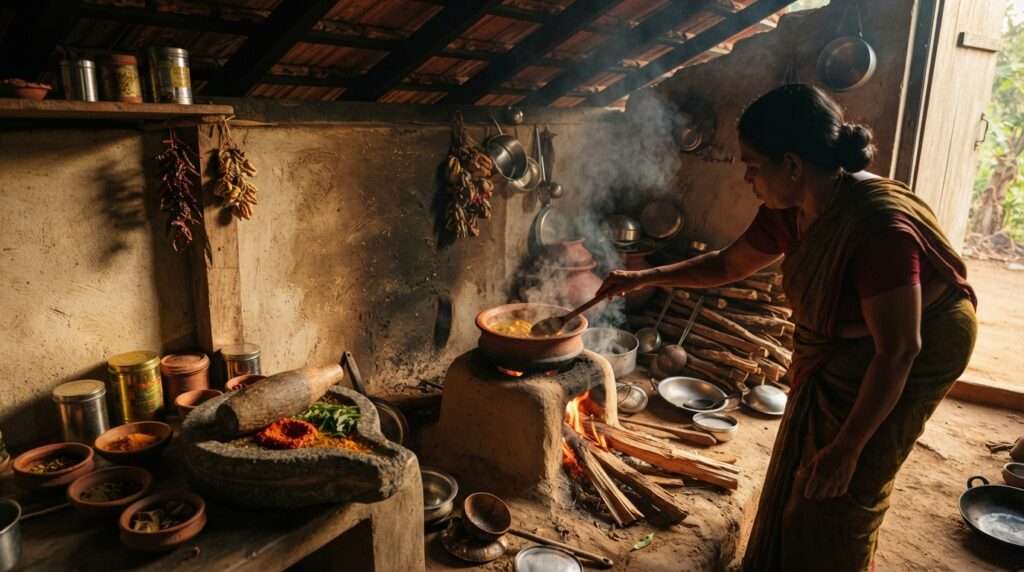
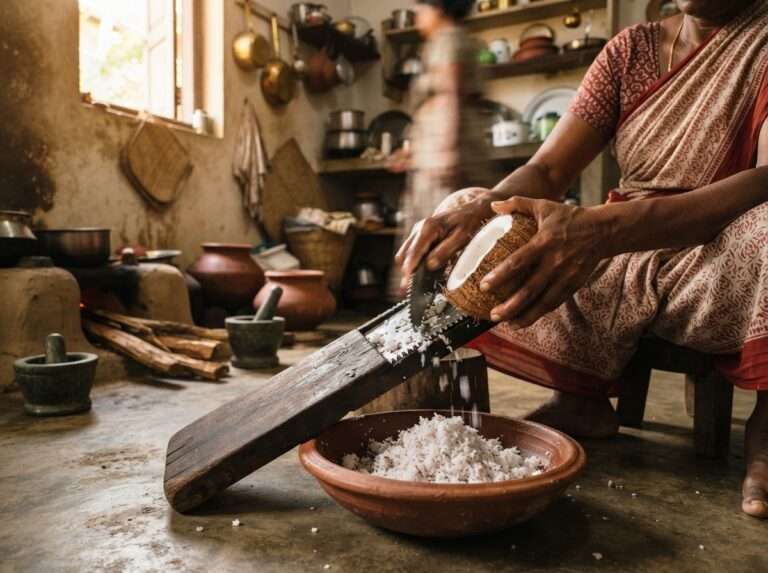
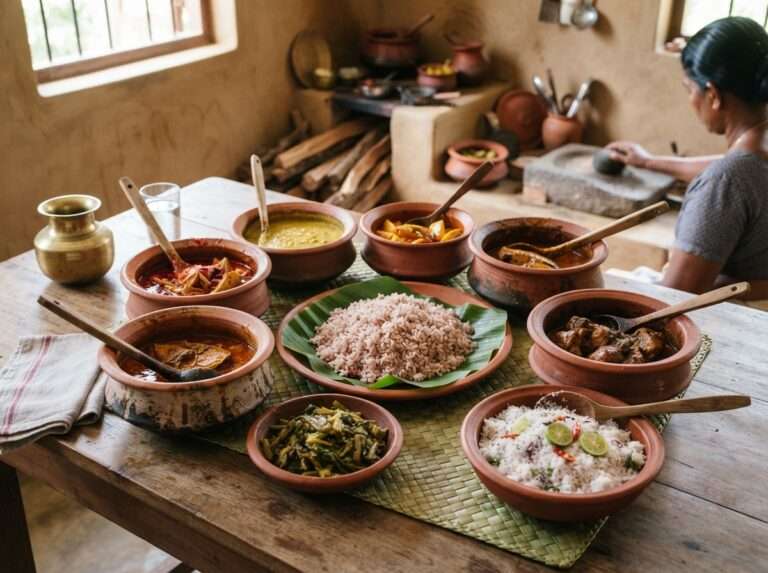
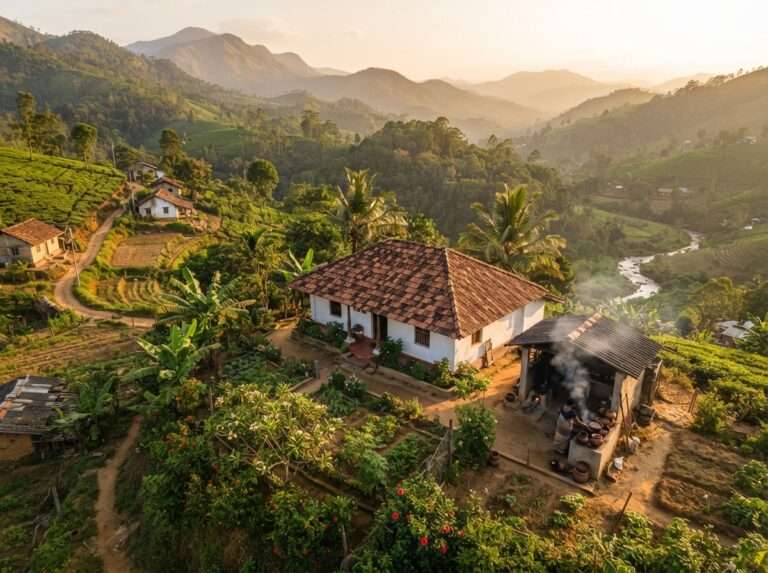
A cooking class is the fastest way into Sri Lankan food, and Ella and Galle have the most of them. In a three-hour class you grate a coconut by hand, pound spices, make three to five curries and a sambol, then eat everything you cooked. Many are run by families in their own kitchens, which is half the appeal.
Indian travellers will find the base familiar, then different: more coconut milk, Maldive fish in many dishes, and pandan and goraka (a sour fruit) where you might expect tamarind. Vegetarian classes are easy to arrange, as most kitchens cook dal (parippu), jackfruit and beetroot curries anyway. Home-run kitchens in Ella charge about LKR 4,000 to 6,000 per person including the meal. Read Sri Lankan cuisine for the dishes to know.
| Where | Ella, Galle, Kandy |
| Best time | Year-round; morning or late-afternoon classes |
| Cost | About LKR 4,000 to 6,000 (about ₹1,150 to ₹1,750) |
| Time needed | 3 hours |
24
Book An Ayurveda Treatment In Bentota Or Beruwala
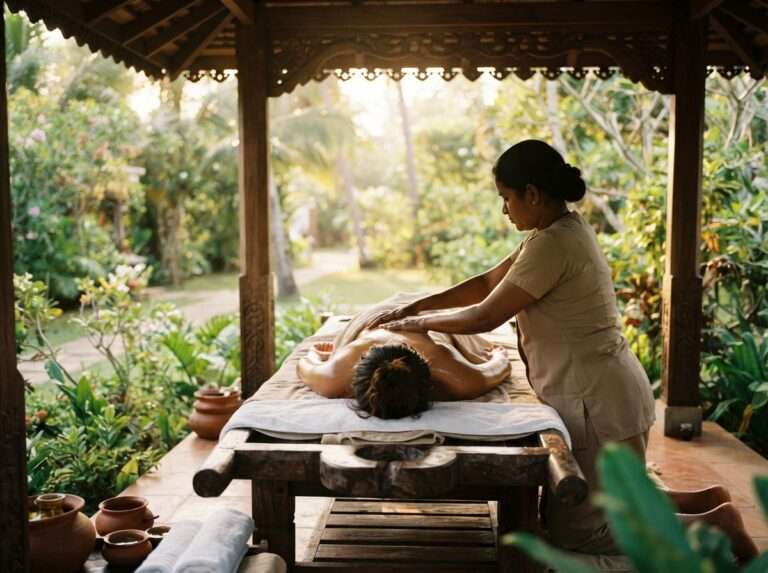
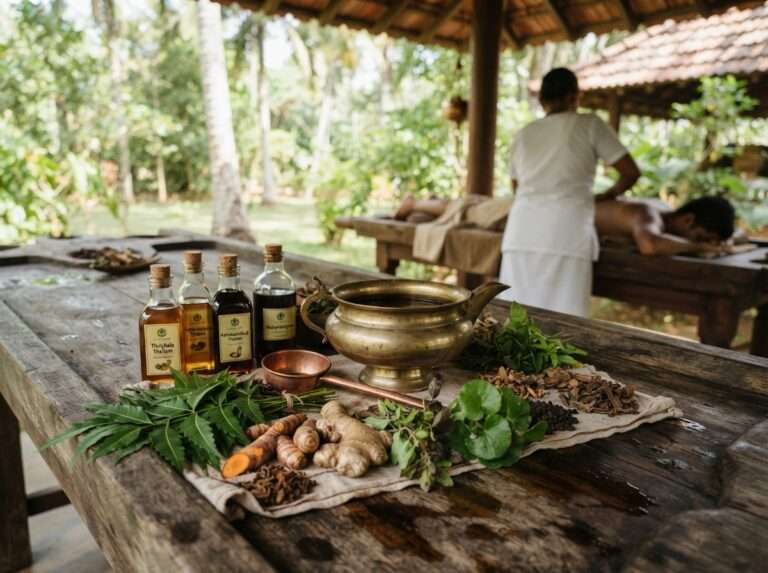
Ayurveda in Sri Lanka draws on the same texts as in Kerala, mixed with local Hela Wedakama herbal medicine, and the Bentota and Beruwala coast has the largest cluster of resorts that run full programmes. A day visit gets you an oil massage and herbal steam bath. A proper treatment course is 7 to 14 days, with a doctor’s consultation, a diet plan and daily therapies.
Choose a centre with a resident Ayurveda doctor registered with the Ayurvedic Medical Council of Sri Lanka, and be wary of roadside “Ayurveda massage” shops, which are spas with a label. Tell the doctor about any medication. If you only have a day, book a 90-minute treatment at your hotel after a beach morning.
| Where | Bentota, Beruwala, south-west coast |
| Best time | Year-round; November to April for beach weather |
| Cost | Day spa to multi-day programme |
| Time needed | 1 day to 14 days |
25
Ride A Tuk-Tuk And Eat Street Food At Galle Face Green
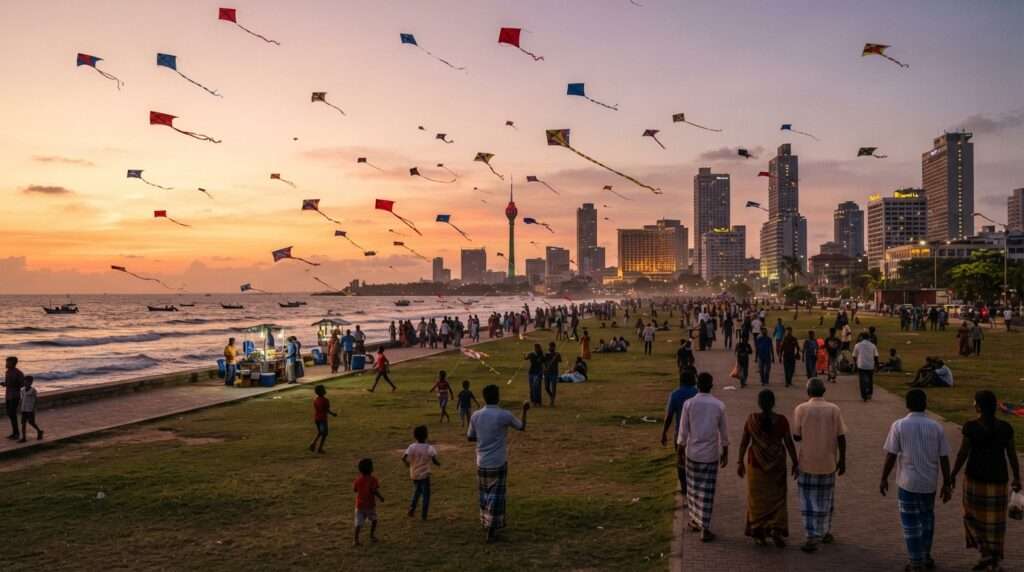
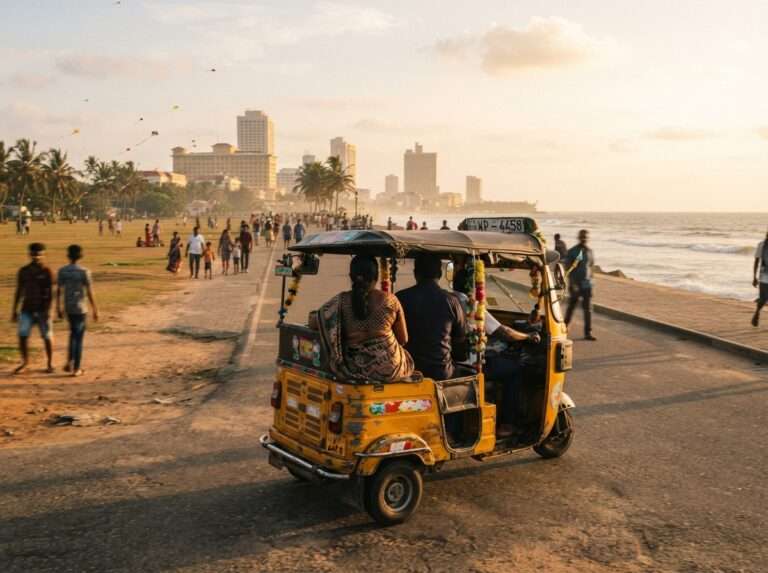
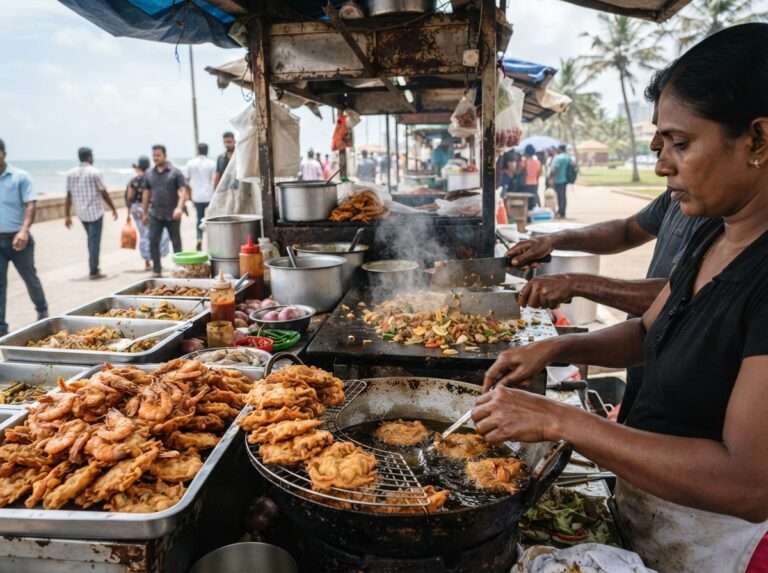
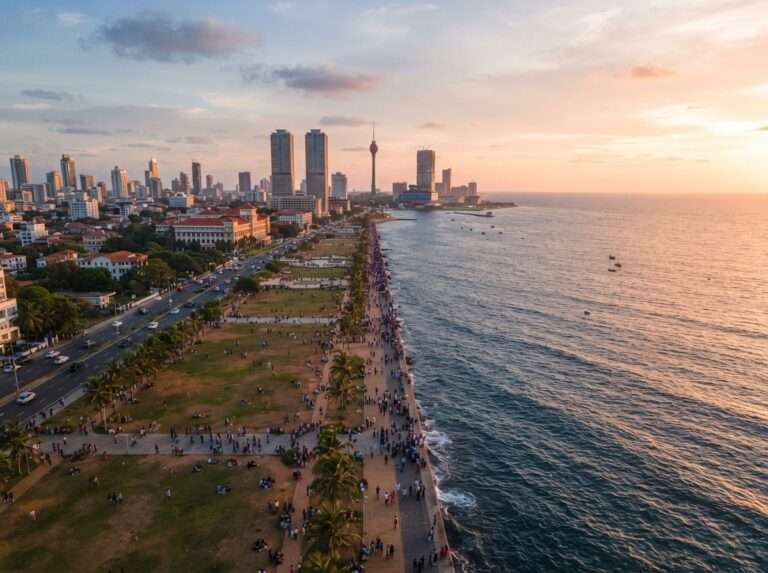
Every Sri Lanka trip includes a tuk-tuk ride, and Colombo at sunset is the best place for it. Book through the PickMe or Uber apps for a metered fare instead of haggling on the kerb. A cross-town ride costs a few hundred rupees.
Head to Galle Face Green, the seafront promenade where Colombo comes out in the evening. Stalls fry isso wade (lentil fritters topped with whole prawns), and kottu roti is chopped to order on hot plates with a rhythm you will hear before you see it. Gangaramaya Temple and Pettah Market are a short ride away for the daytime. If you want to drive a tuk-tuk yourself, rental firms in Colombo arrange the local permit foreigners need to go with their International Driving Permit. Read our Colombo tuk-tuk ride page, or nightlife in Colombo to continue the evening.
| Where | Galle Face Green, Colombo |
| Best time | Year-round, 5 pm to 9 pm |
| Cost | Tuk-tuk and street food about ₹300 to ₹900 |
| Time needed | An evening |
Which Sri Lanka Safari Should You Book?
Most Indian travellers have time for one or two safaris, and the right park depends on what you want to see and when you travel. Yala gives the best leopard odds but the most jeeps. Wilpattu is quieter but needs a full day. Udawalawe guarantees elephants in any month, and Minneriya is a once-a-year spectacle.
| Park | Best for | Best months | Shared jeep per person (approx.) | Crowds | Pairs with |
|---|---|---|---|---|---|
| Yala | Leopards, sloth bears | Feb to Jul (Block 1 shut ~Sep) | ₹4,400 to ₹7,900 | High | Mirissa, Ella |
| Wilpattu | Leopards without crowds | Feb to Oct | ₹5,000 to ₹9,000 | Low | Anuradhapura, Kalpitiya |
| Udawalawe | Elephants any month, kids | Year-round | ₹4,000 to ₹7,000 | Medium | South coast, Ella |
| Minneriya / Kaudulla | The Gathering of 100+ elephants | Jul to Oct | ₹3,500 to ₹6,500 | Medium | Sigiriya, Polonnaruwa |
Sri Lanka Activities By Month: Which Coast When
Sri Lanka’s two monsoons decide which activities work in which month. The south-west monsoon (May to September) brings rain to the west and south coasts and the hill country, while the east coast stays dry. The north-east monsoon (December to February), together with the October and November inter-monsoon rains, does the reverse. Use the table to match your travel month to activities, and see our best time to visit Sri Lanka guide for weather by region.
| Months | Best activities | Avoid or check |
|---|---|---|
| December to March | Whales at Mirissa, surf at Weligama, Galle, Hikkaduwa diving, balloon, Adam’s Peak, Horton Plains, hill-country train | East-coast beaches are wet until about February |
| April | Yala, south coast, start of Arugam Bay surf | Sinhala and Tamil New Year (mid-April) fills hotels |
| May to September | Pigeon Island, Trincomalee whales, Arugam Bay surf, Kalpitiya kite, Minneriya gathering (Jul to Sep) | West and south seas rough; Yala Block 1 shuts in September |
| October to November | Cultural Triangle, Kaudulla elephants, Kitulgala rafting between rains | Inter-monsoon rain island-wide; check daily forecasts |
How To Plan An Activity-Led Sri Lanka Trip From India
The simplest way to fit six or seven of these activities into one trip is to work backwards from your travel month. These seven steps take most travellers from India to a booked plan in under a week.
- Pick your month first. Choose December to April for the south coast, Mirissa and the hill country, or May to September for Trincomalee, Arugam Bay and the Minneriya gathering.
- Shortlist five to seven activities from the table above that suit that month. Seven to eight days covers the Cultural Triangle, the hill country and one coast at a brisk pace.
- Apply for the ETA at eta.gov.lk. It is free for Indian passport holders for stays of up to 30 days from 25 May 2026, but you still need approval before you fly. Our Sri Lanka visa for Indians guide walks through the form.
- Book the fixed-date items next. Reserve train seats from Nanu Oya to Ella, buy Sigiriya tickets online at eservices.ccf.gov.lk, and hold a balloon flight for your first Cultural Triangle morning.
- Hire a driver for the inland leg. A car and driver from Colombo connects Sigiriya, Kandy, Nuwara Eliya and Ella in an order trains and buses can’t, and drivers know the safari operators.
- Leave safaris and boats to the day before. Book Yala, Minneriya and whale trips through your hotel 24 to 72 hours ahead, when your driver and the weather can confirm.
- Carry cash in rupees. Park counters, temple donations, tuk-tuks and street stalls want LKR. Change money or withdraw at the airport in Colombo.
For a full list of sights to pair with these activities, see our main guide to things to do in Sri Lanka and the practical Sri Lanka travel tips.
Build Your Trip Around Two Or Three Big Experiences
The activities that make a Sri Lanka trip are the ones tied to a place and a season: the Sigiriya climb at opening time, a Yala dawn, the train from Nanu Oya, whales off Mirissa between December and March. Choose your month, fix two or three of those, and fill the rest of the days with the free ones like Galle’s ramparts and Little Adam’s Peak. If you would rather have the jeeps, train seats and transfers arranged around your chosen activities, our Sri Lanka tour packages can be customised day by day.
FAQs
FAQs About Things to do in Sri Lanka
Climbing Sigiriya Rock is the activity most visitors rank first. The 5th-century rock palace is a UNESCO World Heritage Site, the climb takes about two hours, and it sits at the centre of the Cultural Triangle, so it is easy to combine with Pidurangala, Dambulla and a Minneriya safari. Indians pay the SAARC rate of USD 20, against USD 35 for other foreigners, according to the Central Cultural Fund. Go at opening time to avoid the heat and the queues on the staircases.
Seven to eight days covers the main activities at a brisk pace. A common route is two nights at Sigiriya (rock climb, Minneriya safari, Polonnaruwa), one in Kandy, one in Nuwara Eliya, one in Ella (train, hikes) and two on the south coast for Yala or Mirissa. Ten to twelve days lets you add Trincomalee or Kalpitiya, depending on the season, or a slower Ayurveda stay.
Only part of it. Cyclone Ditwah damaged the hill-country line in November 2025. Trains between Nanu Oya and Badulla, through Ella, resumed on 20 June 2026, but the Kandy to Nanu Oya section was still closed in late October 2026. Board at Nanu Oya, about 8 km from Nuwara Eliya. That leg covers the best scenery anyway, including Pattipola and the descent to Ella. Check the Sri Lanka Railways site for updates before you travel.
Yala gives better leopard odds per drive, and Wilpattu gives a quieter experience. Yala's Block 1 has one of the highest leopard densities anywhere, but morning drives in peak season can mean dozens of jeeps at one sighting. Wilpattu is larger and forested, so plan a full day there to improve your chances. Yala's Block 1 usually closes for around six weeks from early September, when Wilpattu is the better choice.
The best adventure activities are white-water rafting at Kitulgala, surfing at Weligama or Arugam Bay, kitesurfing in Kalpitiya, the overnight Adam's Peak climb and the Ella Rock hike. Rafting costs about USD 30 to 40 for a 5 to 8 km run of grade 2 to 3 rapids. Divers should add Hikkaduwa between November and April and Pigeon Island between May and September.
December to March is the best time, from Mirissa on the south coast. The season runs from November to April, and boats leave around 6.30 am for a 4 to 5 hour trip costing about USD 50 to 70 per person. Blue whales and spinner dolphins are the usual sightings. From May to September the whales are off Trincomalee on the east coast instead, though trips there are fewer.
Indians need an Electronic Travel Authorisation (ETA), and it is free. From 25 May 2026, Sri Lanka waived the fee for tourists from 40 countries, including India, for stays of up to 30 days. You still have to apply on the official site, eta.gov.lk, and get approval before departure. Extending beyond 30 days carries a fee.
Couples should prioritise a hot-air balloon flight over Dambulla, a sunset walk on Galle Fort's ramparts, a stay in a tea-estate bungalow near Nuwara Eliya, a whale-watching morning off Mirissa and an Ayurveda spa day in Bentota. Balloon flights cost about USD 250 to 275 per person and run from about December to March. The hill-country train from Nanu Oya to Ella is also a favourite with couples.
Udawalawe is the best family safari, because elephants are visible in any month and the Elephant Transit Home feeds calves at 10.30 am, 2.30 pm and 6 pm. Children also enjoy snorkelling with turtles at Hikkaduwa, the Madu River boat safari, the Kandyan dance show in Kandy and the short Little Adam's Peak walk in Ella. Skip Adam's Peak and Ella Rock with young children. Both are long and steep.
The best free activities are the Galle Fort rampart walk, the Little Adam's Peak hike, watching the train cross the Nine Arch Bridge, sunset at Galle Face Green in Colombo and the Adam's Peak pilgrimage climb in season. The Ramayana trail sites around Nuwara Eliya, including the Seetha Amman Temple, are free apart from a customary donation. Seeing green turtles off Hikkaduwa beach costs only the snorkel hire.
Budget roughly ₹15,000 to ₹25,000 per person for activities on a seven-day trip, separate from hotels and transport. That covers Sigiriya on the SAARC rate (about ₹1,750), a shared Yala safari (₹4,400 to ₹7,900), a Minneriya jeep (₹3,500 to ₹6,500), whale watching (₹4,400 to ₹6,200) and a rafting run (₹2,600 to ₹3,500). Add about ₹22,000 if you want a balloon flight.
It is safe on the sheltered beaches in the right season and dangerous on the wrong coast. Swim on the south and west coasts (Mirissa, Unawatuna, Hikkaduwa, Bentota) from November to April, and on the east coast (Nilaveli, Uppuveli, Pasikuda) from May to September. Rip currents are strong in the off-season, and many beaches have no lifeguards. Ask your hotel where locals swim, and watch for red flags.