4D / 3N
17% OFF
4D / 3N
17% OFF
Manali-Kasol Tour Package by Cab for Himachal (4D/3N) - At A Glance
- Hotel
- Meals
- Sightseeing
- Entry Tickets
- Cab Transfer
₹12,688
₹10,500 /pp
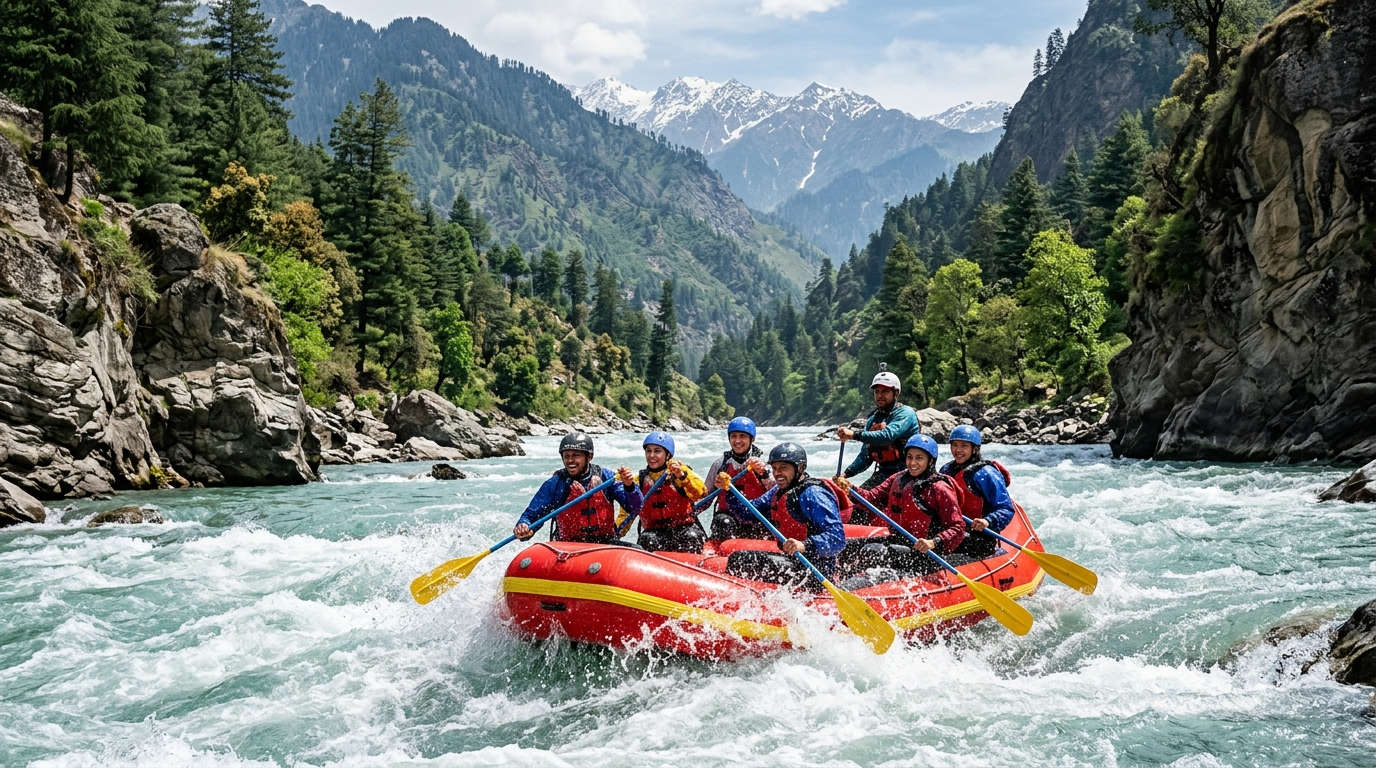


River rafting in Himachal Pradesh runs on four main snow-fed rivers, the Beas, the Sutlej, the Ravi and the Chenab, with runs graded from an easy Grade I to an expert Grade V. A single ride costs roughly Rs 500 to 2,500 per person, and the season peaks twice a year, in spring from April to June and again after the monsoon in September and October. The busiest and most beginner-friendly water is the Beas near Kullu and Manali; the wildest is the Chenab in Lahaul. This guide covers every worthwhile spot with its river, rapid grade, stretch length and real cost, plus how to reach each one, when to go, and how to raft safely.
Key Takeaways
Best Time
March - June
Select Package Type

3 Days & 2 Nights
₹9,043 /@pp
GET FREE QUOTE

9 Days & 8 Nights
₹36,484 /@pp
GET FREE QUOTE.jpg?tr=w-600,h-300)

Himachal has rafting for every nerve level, from a splash-and-float suitable for a ten-year-old to multi-day expedition water only experts should touch. The table below is the quick answer: six real spots, the river each sits on, the rapid grade, the usual stretch and what one run costs. The sections under it go deep on each.
| Spot (nearest town) | River | Grade | Usual stretch | Cost per person | Best for |
| Pirdi (Kullu-Manali) | Beas | II to IV | 4 km or 14 km | Rs 500 to 1,500 | First-timers to thrill-seekers |
| Tattapani (near Shimla) | Sutlej | III (IV in high water) | 5 km or 14 to 15 km | Rs 800 to 1,500 | Some experience, gorge scenery |
| Chamba / Dharamshala area | Ravi / Beas | II to III | Short runs | Rs 600 to 1,200 | Beginners, quieter water |
| Kasol (Parvati Valley) | Parvati | II to III | Short seasonal runs | Rs 500 to 1,000 | Backpackers, spring flow |
| Tirthan Valley | Tirthan | I to II | Gentle short runs | Rs 500 to 800 | Families, young kids |
| Lahaul (advanced) | Chenab / Chandrabhaga | IV to V | Multi-day expedition | Custom, quote-based | Experts only |
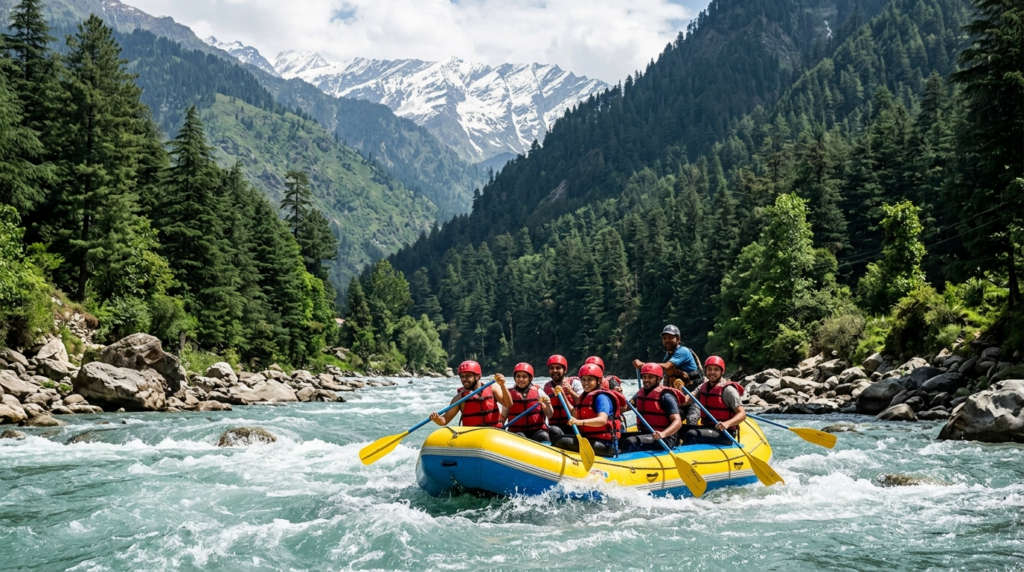
The Beas at Pirdi, about 3 km south of Kullu on the Kullu-Manali highway, is where most people in Himachal actually raft. Snowmelt keeps the river running fast and cold through the season, and the licensed stretch splits into two clean options. The short run from Pirdi to Shamshi is roughly 4 km of Grade II water: bouncy enough to feel like an adventure, calm enough for a first-timer or a fit child. The full run from Pirdi down toward Bajaura is about 14 km of Grade III to IV with seven or more named rapids, and this is the one thrill-seekers come for. Operators cluster at the Pirdi put-in, so you can compare guides on the spot.
For the full Manali angle, including operators up the valley and the Solang stretch, see our guide to river rafting in Manali. If you are basing yourself in Kullu town, our guide to river rafting in Kullu covers the Pirdi put-ins in more detail.
| Detail | Pirdi (Beas) |
| River and grade | Beas; Grade II (short) to Grade III-IV (full run) |
| Stretches | Pirdi to Shamshi about 4 km; Pirdi to Bajaura about 14 km |
| Cost per person | About Rs 500 to 700 (short) or Rs 1,000 to 1,500 (full) |
| Best months | April to June, then September to October |
| Nearest airport | Bhuntar (Kullu-Manali, KUU), about 10 km |


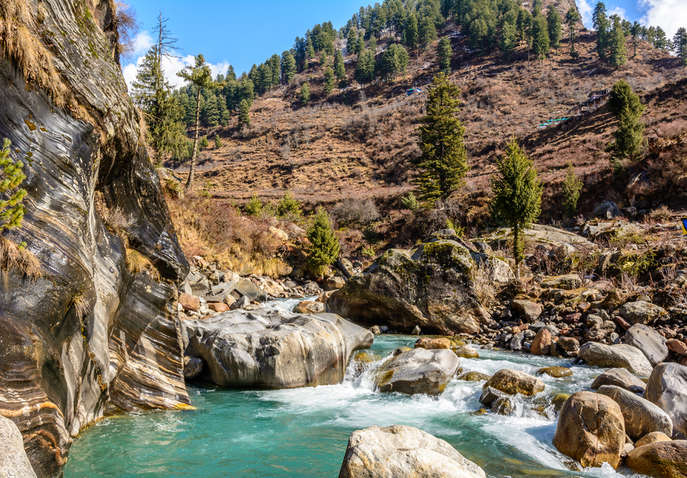
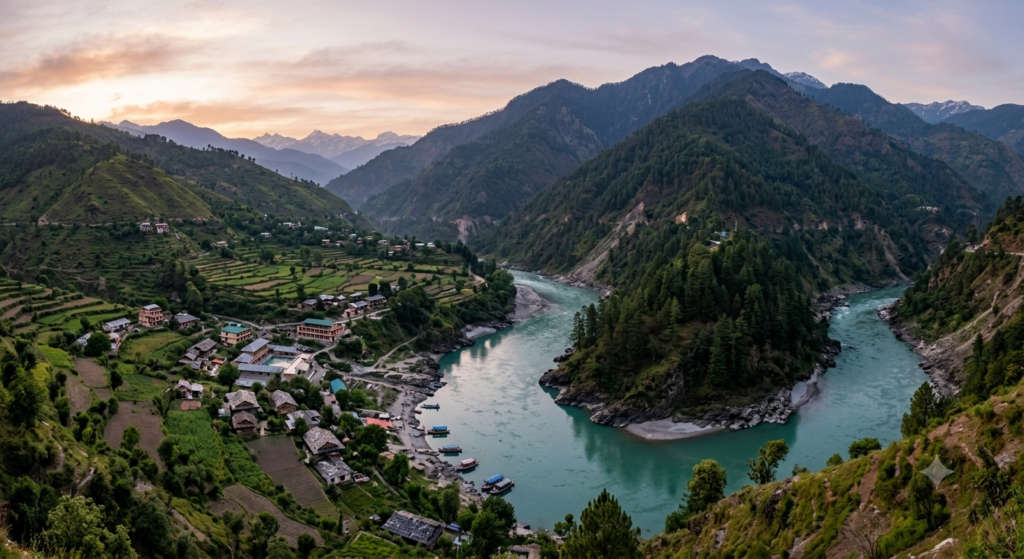
If you are staying in Shimla and do not want to drive all the way to Kullu, Tattapani is your rafting day. It sits on the Sutlej about 50 km from Shimla, roughly a two-hour drive down toward the river through pine and terraced slopes. The Sutlej here runs through a broad gorge, and the water carries more push than the Beas beginner stretch: expect solid Grade III, and Grade IV waves when the river is high in early summer. Operators run two lengths, a shorter 5 km taster and a longer 14 to 15 km descent that takes in the best of the rapids. Tattapani is also a hot-spring hamlet, so a soak after the run is part of the appeal. This is the spot that most searches for rafting near Shimla are really looking for.
| Detail | Tattapani (Sutlej) |
| River and grade | Sutlej; Grade III, up to Grade IV in high water |
| Stretches | About 5 km (short) or 14 to 15 km (full) |
| Cost per person | About Rs 800 (short) to Rs 1,500 (full) |
| Best months | April to June, then September to October |
| Reach | About 50 km / 2 hours from Shimla by road |


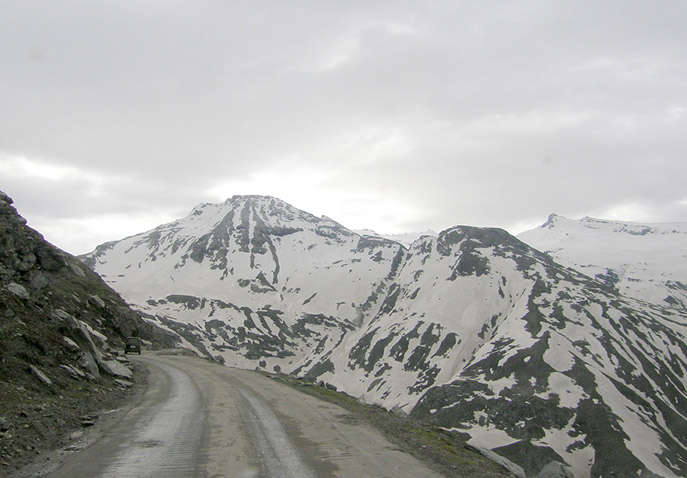


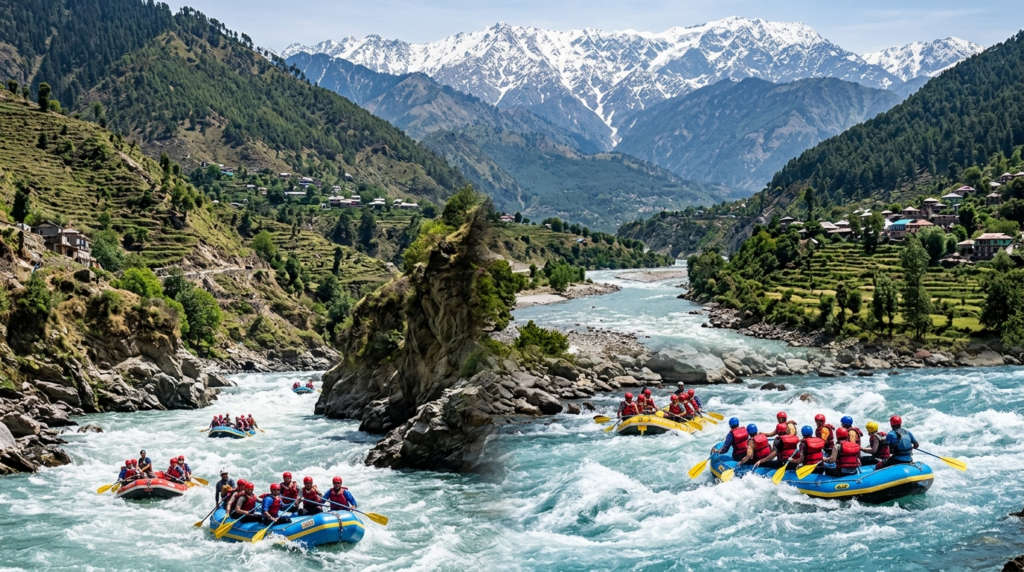
The Ravi around Chamba, in the far northwest of the state, gives you rafting without the crowds of the Kullu valley. The runs here are shorter and mostly Grade II to III, which makes them a comfortable step up for someone who has done one easy raft and wants a little more. The scenery is the draw: the Ravi cuts through the Pir Panjal foothills below old temple towns. The wider Dharamshala and Kangra belt also sees seasonal rafting on stretches of the Beas, usually gentle Grade II water suited to families. Availability here swings with the season more than at Pirdi, so confirm an operator is running before you drive out.
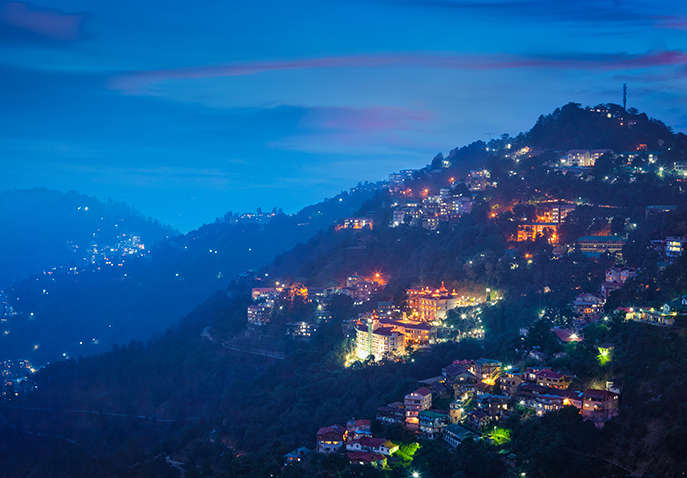


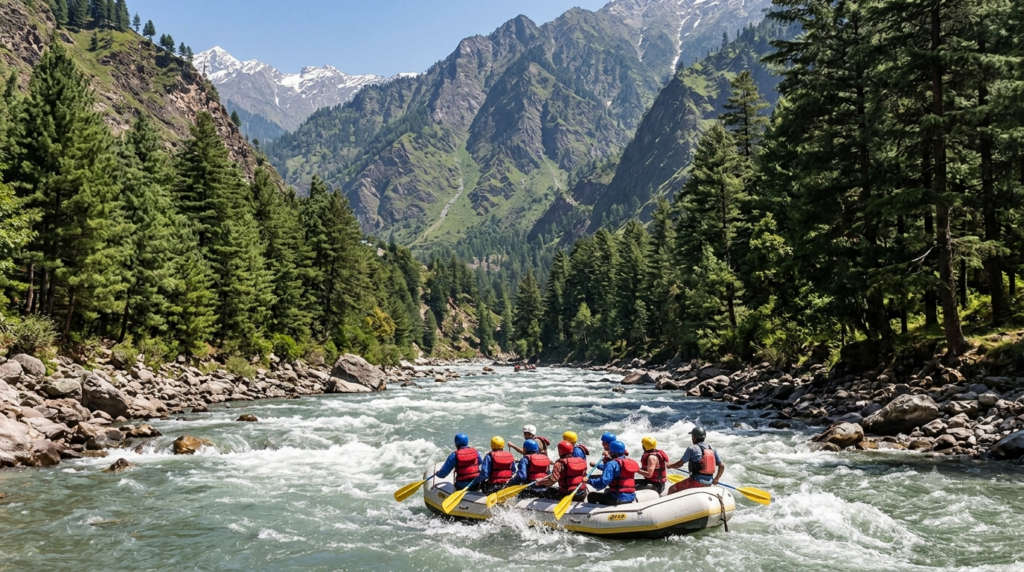
The Parvati River that runs past Kasol is small and fast, and rafting on it is a spring affair, best in the weeks when snowmelt lifts the flow but before the monsoon makes it unsafe. Runs are short and sit around Grade II to III. It is a good add-on if you are already in Kasol for the valley rather than a reason to travel there on its own, and it pairs naturally with a Parvati Valley trip. Because the window is narrow, ask locally about current water levels; the same stretch can be a fun bounce one week and closed the next.
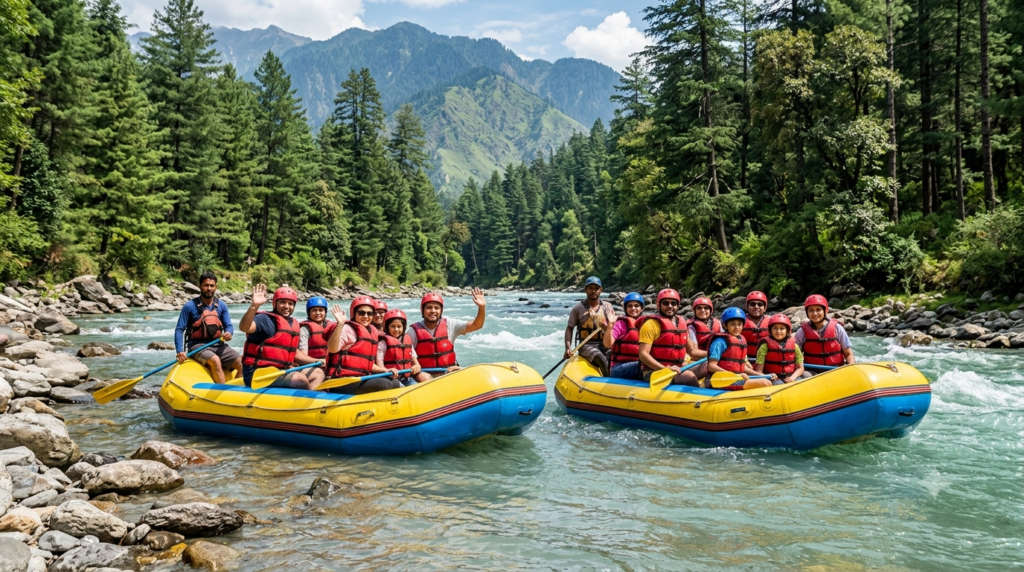
Tirthan, near the Great Himalayan National Park, is the gentlest rafting in this guide. The Tirthan River holds mostly Grade I to II water, so it is where you take young children or anyone who wants the river without the adrenaline. Runs are short and the setting is quiet trout-stream country rather than big-volume whitewater. If your group has mixed appetite for risk, Tirthan is the spot where nobody is left out.
Want the wider valley beyond the raft? Our Himachal travel guide covers where to stay and what else to do around Tirthan, Kullu and Shimla.
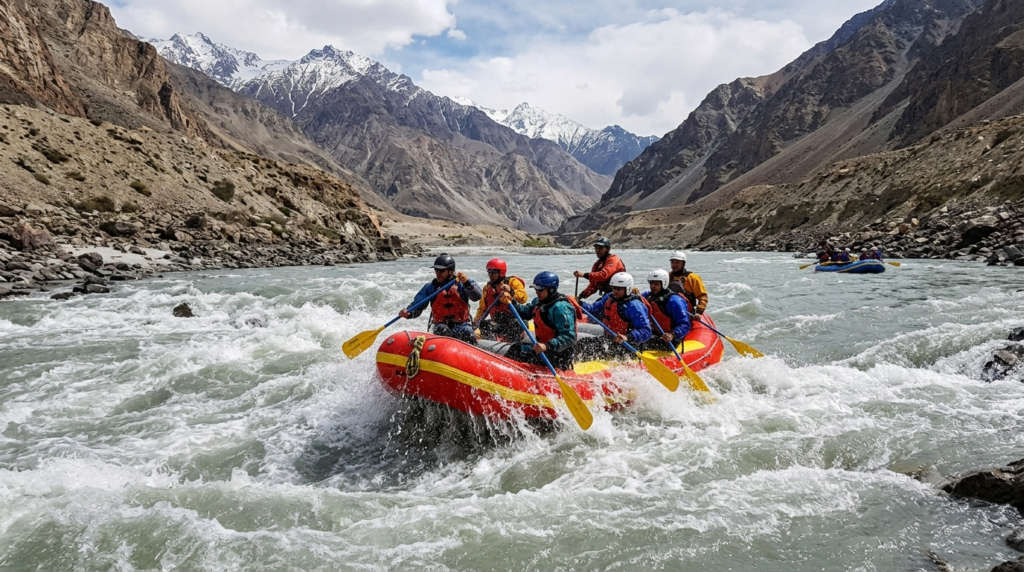
The Chenab, formed where the Chandra and Bhaga meet in Lahaul, is the serious end of Himachal rafting. This is remote, high-volume, Grade IV to V water run as multi-day expeditions, not a walk-up hour on the river. You need real whitewater experience, and you book it as a planned expedition with a specialist operator, not on the day. Most travellers will never raft here, and that is fine; it is listed so the picture is complete, because a state guide that stops at the tourist stretches is not telling you the whole story.
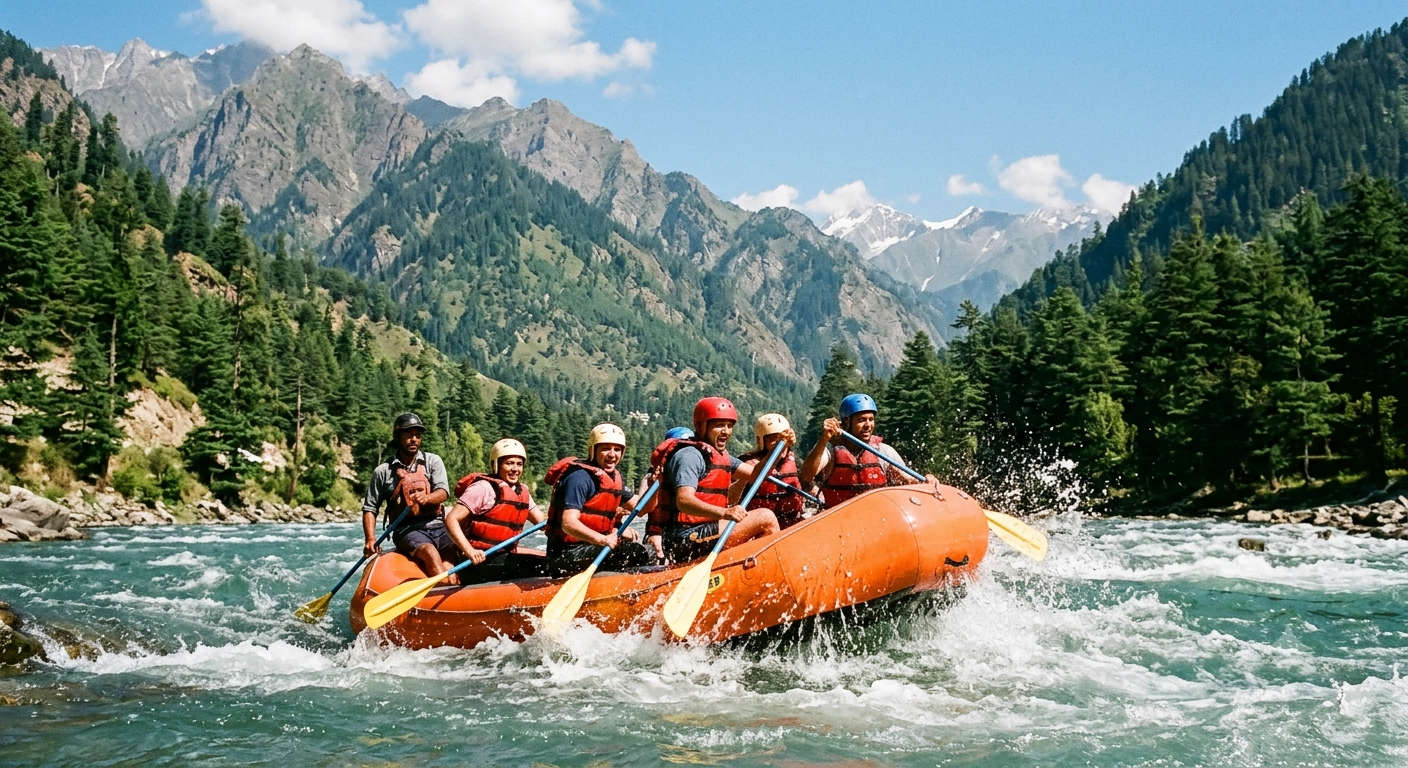
Every rafting stretch carries an international difficulty grade from I to V. It is the single most useful thing to check before you book, because it tells you honestly whether a run matches your nerve and fitness. Here is what each grade means on Himachal water and who it is for.
| Grade | What the water is like | Who it suits | Himachal example |
| Grade I | Gentle current, small ripples, no real obstacles | Anyone, including young children | Tirthan short runs |
| Grade II | Easy rapids, wide clear channels, a few waves | Beginners and families | Pirdi to Shamshi (Beas) |
| Grade III | Moderate, irregular waves that need some steering | Fit adults, first big raft is fine with a guide | Tattapani (Sutlej) |
| Grade IV | Powerful, turbulent water needing precise handling | Experienced rafters only | Pirdi to Bajaura in high flow |
| Grade V | Violent, continuous rapids with real danger | Experts, on planned expeditions | Chenab (Chandrabhaga) |
A simple rule of thumb: if it is your first time, start at Grade II and do not let an operator upsell you into Grade IV on the same day. Grade III is a genuine step up in force, and Grade IV and V are not places to learn.
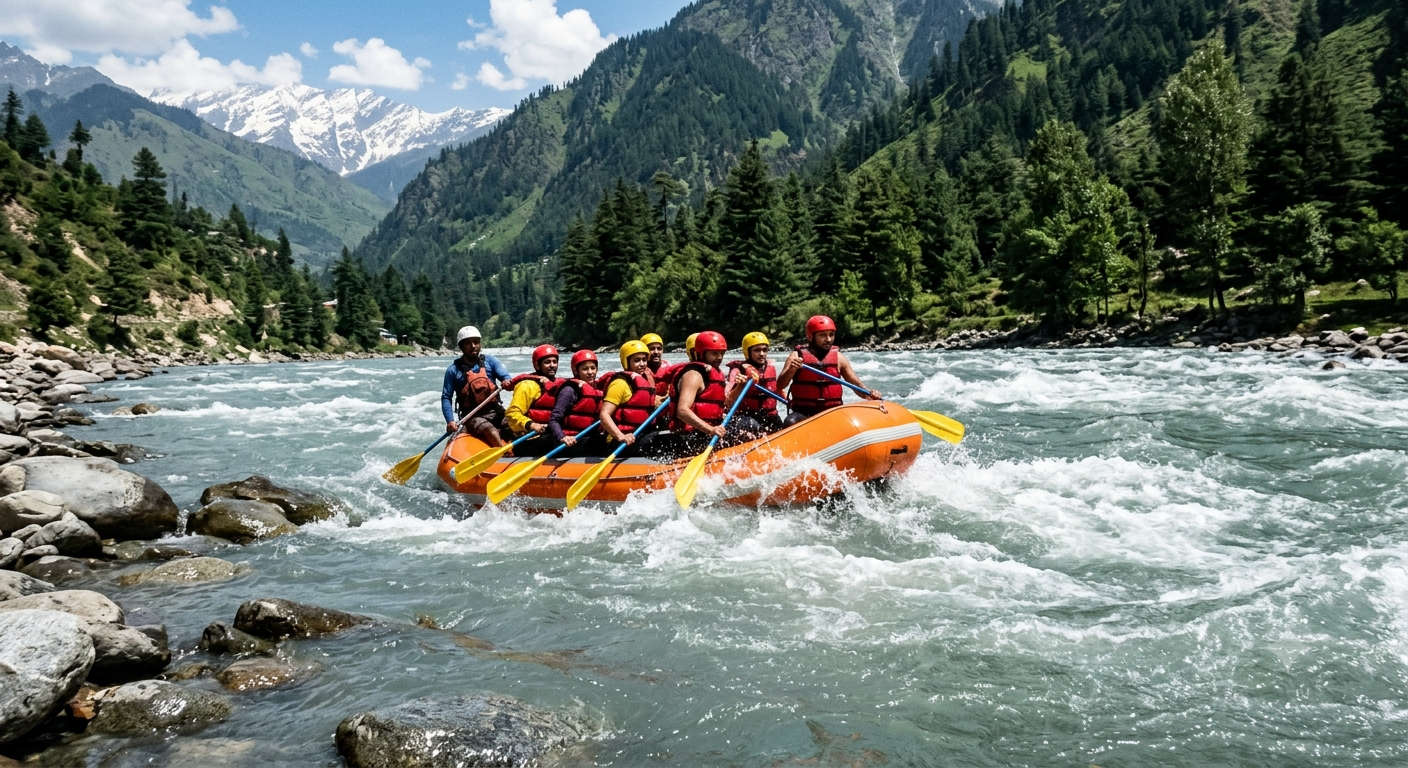
Rafting in Himachal is cheap by adventure-sport standards. What you pay depends on the river, the stretch length and whether you go short or full. A short beginner run can be Rs 500, while a long guided descent on the Beas or Sutlej runs to about Rs 1,500 per person. Groups usually get a per-head discount, and the price almost always includes the raft, guide, life jacket and helmet; transport to and from the put-in is often extra. The table below is the current per-spot picture.
| River and spot | Stretch | Cost per person |
| Beas (Pirdi, Kullu-Manali) | 4 km short | About Rs 500 to 700 |
| Beas (Pirdi to Bajaura) | 14 km full | About Rs 1,000 to 1,500 |
| Sutlej (Tattapani, Shimla) | 5 km / 14 to 15 km | About Rs 800 / Rs 1,500 |
| Ravi (Chamba area) | Short runs | About Rs 600 to 1,200 |
| Parvati (Kasol) | Short seasonal | About Rs 500 to 1,000 |
| Tirthan Valley | Gentle short runs | About Rs 500 to 800 |
| Chenab (Lahaul expedition) | Multi-day | Custom, quote on request |
If you would rather have the rafting, transfers and stay bundled into one trip, our river rafting tour packages cover the Himachal spots with operators vetted end to end.
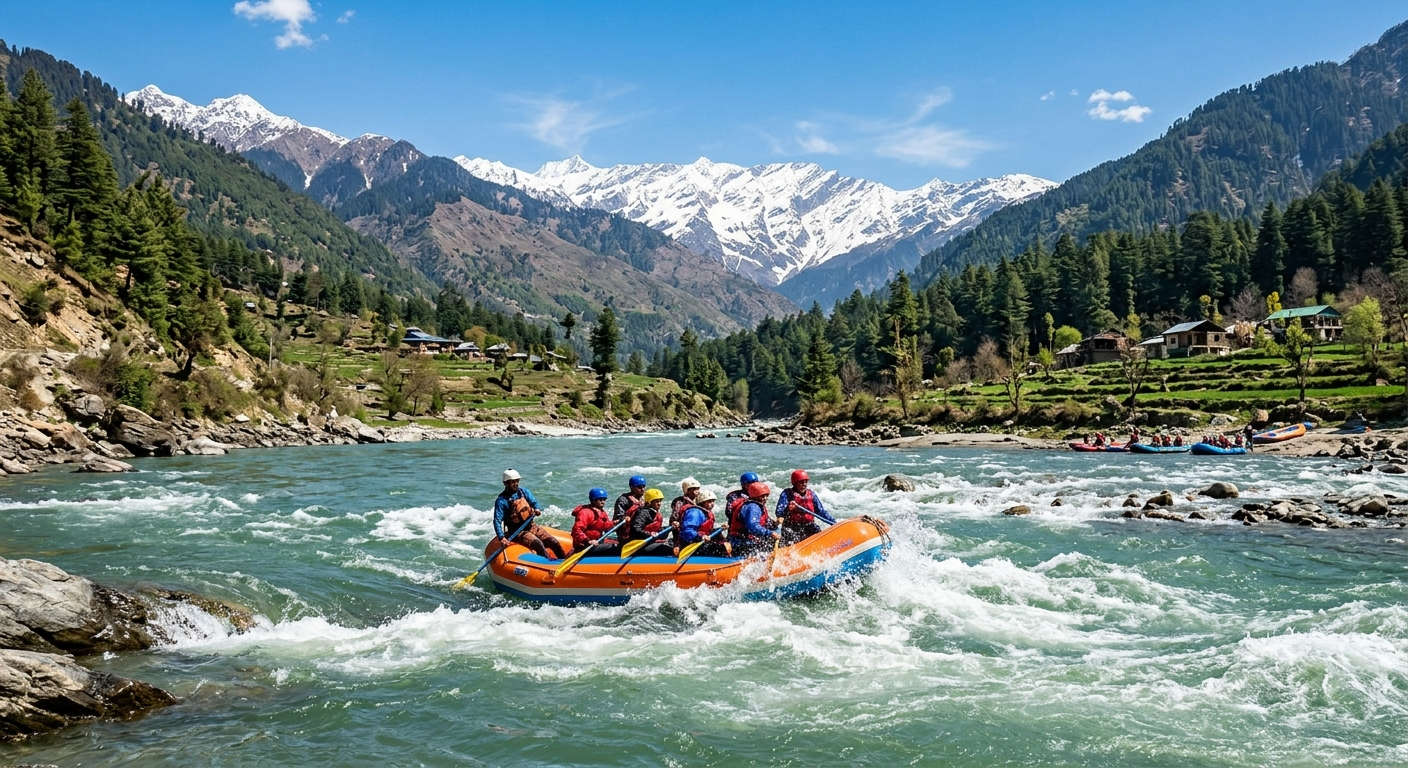
Rafting in Himachal follows the snowmelt, not the calendar, so the two good windows are spring and early autumn. Get the timing wrong and you either find low water or no operator running at all.
| Window | Conditions | Verdict |
| March to April | Flow building as snow melts; water still cold | Good, dress warm |
| May to June | Peak snowmelt, strong flow, warm days | Best window of the year |
| July to August | Monsoon; rivers in spate, most operators shut | Avoid |
| September to October | Post-monsoon; clear water settling down | Second peak, excellent |
| November to February | Low, cold water; higher grades closed | Gentle runs only, limited |
The old advice you still see online, that winter is the season, gets Himachal backwards. December to February water is low and bitterly cold, and the big Grade III to V stretches simply do not run. Aim for late May or late September if you want the strongest water in comfortable weather.
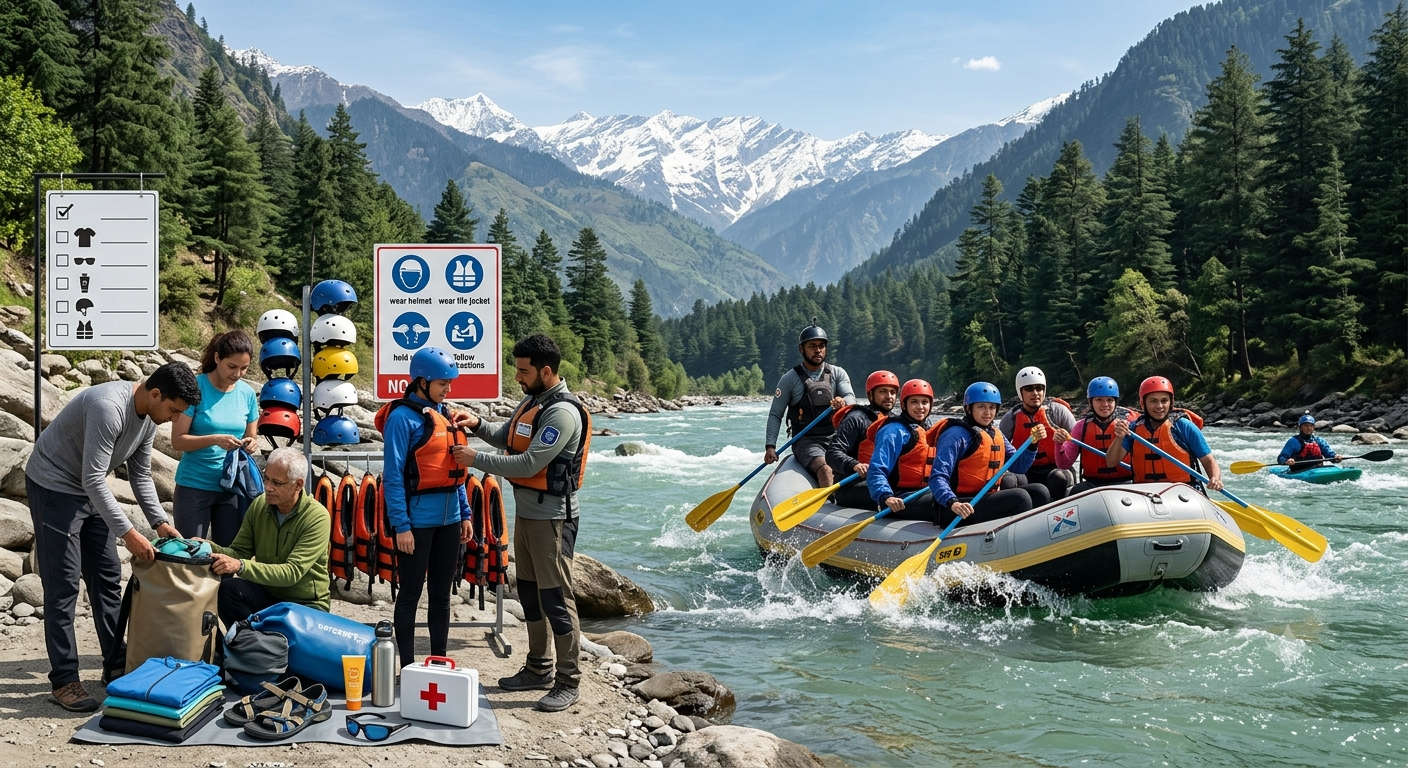
River rafting is a genuine adventure sport, and the difference between a great day and a bad one is almost always the operator. In Himachal, the Directorate of Mountaineering and Allied Sports (DMAS) in Manali registers and grades rafting stretches, and Himachal Tourism licenses operators. Book a registered one and you get a certified guide per raft, a proper safety briefing and, on the harder runs, a rescue kayaker shadowing the boat.
Non-negotiables on every grade: a life jacket that actually fits and a helmet, both provided and both worn correctly. Most operators set a minimum age of around 12 for the easy Grade I to II runs and higher for Grade III and above. Declare any heart condition, recent surgery or pregnancy before you book, and never raft a swollen river after heavy rain, no matter how keen you are. If an operator waves off the briefing or is short on gear, walk away.
What To Pack For A Rafting Day
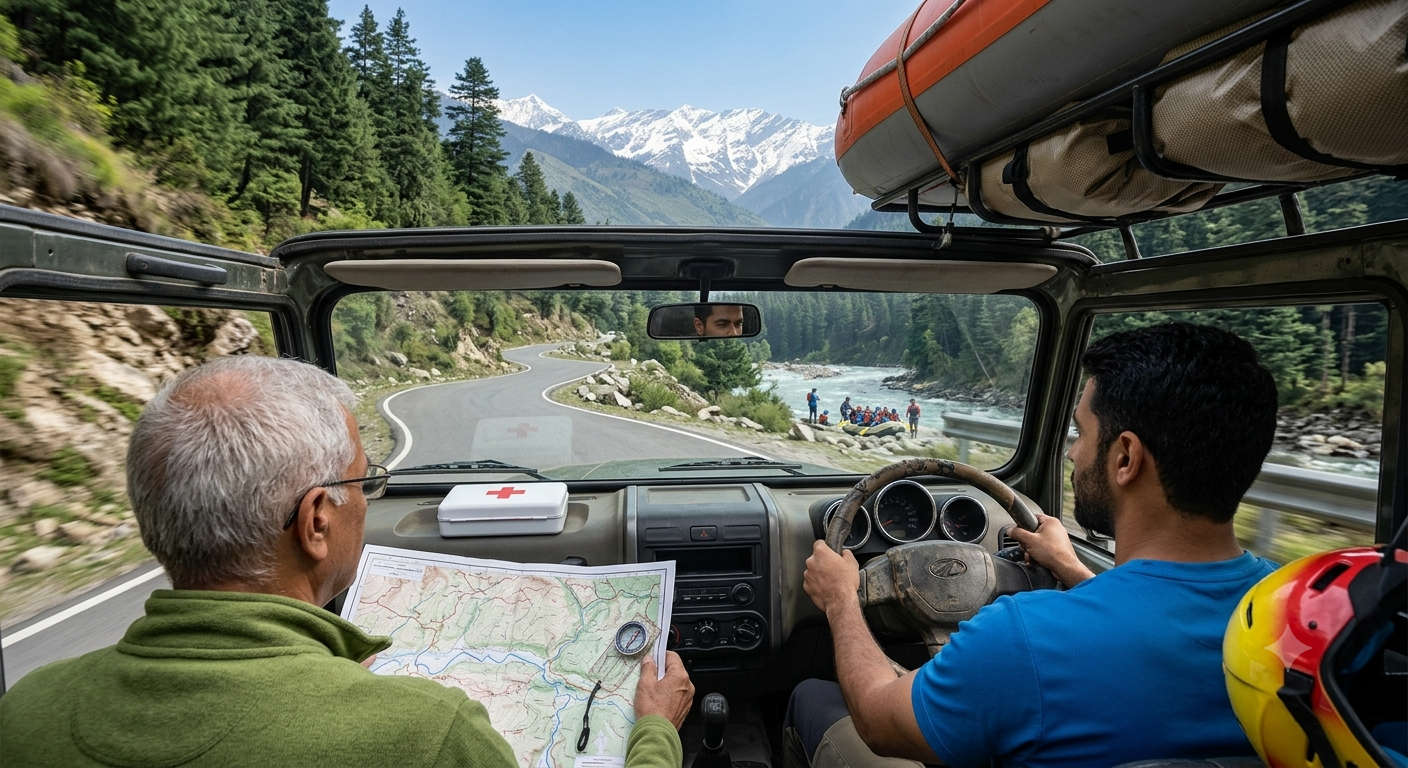
The Kullu valley spots are the easiest to reach; the Sutlej and Ravi need a little more planning. Here is the practical routing for each.
| Spot | By air | By road |
| Pirdi (Kullu-Manali) | Bhuntar (KUU), about 10 km | NH via Bilaspur and Mandi; Pirdi is on the Kullu-Manali highway |
| Tattapani (Shimla) | Shimla (SLV) or Chandigarh | About 50 km / 2 hours from Shimla by road |
| Chamba (Ravi) | Kangra (Gaggal), then road | Via Pathankot and Dalhousie |
| Kasol (Parvati) | Bhuntar (KUU), about 31 km | Bhuntar to Kasol via the Parvati Valley road |
| Tirthan Valley | Bhuntar (KUU), then road | Off NH-305 via Aut and Banjar |
River rafting is one of the easiest ways to feel the mountains in Himachal without a hard trek: pick a grade that matches your nerve, go in spring or early autumn, and book a registered operator. The Beas at Pirdi is the safe first choice, Tattapani the pick near Shimla, and the Chenab the trophy for experts. When you are ready to build it into a full trip with stays and transfers sorted, browse our river rafting tour packages and shape the itinerary around the water you want to run.
Yes, when you book a registered operator and raft in season. Himachal Tourism licenses operators and DMAS grades the stretches, so a certified guide, a fitted life jacket and a helmet come as standard on a proper run. The real risk is rafting a monsoon-swollen river or going with an unlicensed operator, both of which are easy to avoid. Match the rapid grade to your experience and follow the briefing, and it is a well-managed adventure.
The two peak windows are April to June and September to October. Spring snowmelt gives the strongest flow in comfortable weather, and the post-monsoon weeks bring clear, settled water. Avoid July and August, when monsoon rain puts most rivers in spate and operators shut. Winter water is low and cold, so the bigger Grade III to V runs do not operate.
None for the easy stretches. Grade I to II runs at Tirthan and the short Pirdi-to-Shamshi Beas stretch are built for first-timers and families. Grade III water, like the Sutlej at Tattapani, is a real step up and wants a fit adult who is comfortable following instructions. Grade IV and V, such as the full Beas run in high flow or the Chenab, are for experienced rafters only.
A standard run costs roughly Rs 500 to 2,500 per person. A short beginner stretch can be as low as Rs 500, while a long guided descent on the Beas or Sutlej runs to about Rs 1,500. The price usually covers the raft, guide, life jacket and helmet; transport to the put-in is often extra, and groups tend to get a per-head discount.
For most travellers, the Beas at Pirdi is the best all-round choice: it has both an easy stretch and a thrilling one, plenty of operators, and easy access from Kullu and Manali. Choose the Sutlej at Tattapani if you are based near Shimla and want gorge scenery with more push. The Parvati at Kasol is a short spring add-on rather than a destination raft in its own right.
Yes. The Grade I to II runs at Tirthan and the short Beas stretch at Pirdi are suitable for beginners, and most operators allow children from about age 12 on these gentle runs. Everyone wears a life jacket and helmet, a guide is in the raft, and the stretches are chosen to be forgiving. Keep children off Grade III and above.
Wear quick-dry clothing or a swimsuit under shorts, and secured footwear such as river sandals with a heel strap or old trainers. Carry a dry change of clothes and a towel for afterwards, reef-safe sunscreen, sunglasses on a strap, a waterproof pouch for your phone, and some cash. Leave heavy cotton, loose flip-flops and anything valuable behind.
Yes. Tattapani, about 50 km from Shimla on the Sutlej, is the main rafting spot for anyone based in Shimla. The river runs through a broad gorge at solid Grade III, rising to Grade IV in high early-summer water, with a short 5 km taster and a longer 14 to 15 km descent. It is also a hot-spring hamlet, so you can soak after the run.
A registered operator provides all three as part of the price: a certified guide in every raft, a fitted life jacket and a helmet for each person, and a safety briefing before you launch. On the harder Grade IV runs a rescue kayaker often shadows the boat. If an operator cannot show you certification or is short on gear, do not raft with them.
There is no fixed weight limit, but rafting is physically demanding and involves sustained paddling, so use judgement. Start with an easy Grade I to II stretch, tell the operator about any health condition beforehand, and follow the guide's positioning in the raft. If you have heart trouble or joint problems, get a doctor's clearance first.
Plan for a half-day. The time on the water is usually 30 minutes to about 2 hours depending on the stretch, but with the drive to the put-in, the safety briefing, kitting up and changing afterwards, the whole outing runs two to four hours. A short Beas run is quick; a full 14 km Sutlej or Beas descent takes the most time.
Yes, and this is where most Himachal rafting happens. The Beas at Pirdi sits between Kullu and Manali and offers both beginner and advanced runs. For the detail on operators and stretches, see our guides to river rafting in Manali and river rafting in Kullu.
Real reviews from real travelers who booked with us.
View All Reviews