
 8D / 7N
6% OFF


Sri Lanka's Most Famous Temples at a Glance
The most famous temples in Sri Lanka are the Temple of the Sacred Tooth Relic in Kandy, the country’s holiest Buddhist shrine, and three Hindu temples, Koneswaram in Trincomalee, Nallur Kandaswamy in Jaffna and Munneswaram near Chilaw. Kataragama in the deep south is the one place Buddhists, Hindus and Muslims all treat as sacred. For Indian pilgrims, two sets matter most. The first is the Pancha Ishwarams, five ancient Shiva temples on the island’s coasts. The second is the Ramayana kovils, led by Seetha Amman near Nuwara Eliya. Most Hindu kovils are free. The Tooth Temple charges LKR 3,000, or LKR 2,500 if you hold an Indian or other SAARC passport (about ₹715). Below are 25 temples across both faiths, with fees, timings, dress code and a 7-night route. Facts are checked against the Sri Dalada Maligawa, the Central Cultural Fund, UNESCO and the High Commission of India in Colombo.
Key Takeaways
- Carry your passport to Kandy. The Tooth Temple’s SAARC rate of LKR 2,500 saves you LKR 500, and tickets come only from the machines at the gate.
- Budget nothing for most kovils. Koneswaram, Nallur, Munneswaram, Ketheeswaram and Seetha Amman charge no entry. Your spend is flowers, archanai tickets and the donation box.
- Plan one ticket per ancient city. Anuradhapura and Polonnaruwa each sell a single site ticket of about USD 30, or about USD 15 (roughly ₹1,320) on an Indian or other SAARC passport, and the Dambulla cave temple’s own counter charges LKR 3,000.
- Take your shirt off at Nallur. Men enter Jaffna’s big kovils bare-chested. Women need shoulders and knees covered everywhere.
- Go between February and April for the north and east. The northeast monsoon is over by then, and Maha Shivaratri falls in this window at Ketheeswaram and Munneswaram.
Famous temples in Sri Lanka: the full list
| Temple | Faith and deity | Town | Entry for foreigners | Best for |
|---|---|---|---|---|
| Temple of the Sacred Tooth Relic | Buddhist, Buddha’s tooth relic | Kandy | LKR 3,000 (SAARC LKR 2,500) | The evening thevava drumming |
| Koneswaram Temple | Hindu, Shiva (Pancha Ishwaram) | Trincomalee | Free | Clifftop sea views, Shakti Peetha |
| Nallur Kandaswamy Kovil | Hindu, Murugan | Jaffna | Free | Tamil temple culture, Aug festival |
| Munneswaram Temple | Hindu, Shiva (Pancha Ishwaram) | Chilaw | Free | Ramayana pilgrims, Navaratri |
| Ruhunu Maha Kataragama Devalaya | Murugan, revered by all faiths | Kataragama | Free | The July Esala festival |
| Thiruketheeswaram | Hindu, Shiva (Pancha Ishwaram) | Mannar | Free | Maha Shivaratri at the Palavi tank |
| Naguleswaram | Hindu, Shiva (Pancha Ishwaram) | Keerimalai, Jaffna | Free | A dip in the Keerimalai spring |
| Tondeswaram (Devinuwara) | Vishnu and Upulvan | Dondra, Matara | Free | The island’s southern tip |
| Nainativu Nagapooshani Amman | Hindu, Shakti | Nainativu island | Free (ferry fare extra) | Shakti devotees, island trip |
| Seetha Amman Temple | Hindu, Sita (Ramayana) | Nuwara Eliya | Free | Ashok Vatika legend |
| Sri Bhakta Hanuman Temple | Hindu, Hanuman (Ramayana) | Ramboda | Free | Tea-valley views |
| Manavari Temple | Hindu, Shiva (Ramayana) | Chilaw | Free | Pairing with Munneswaram |
| Sri Muthumariamman Temple | Hindu, Mariamman | Matale | Small fee for foreigners | A gopuram covered in deities |
| Sri Ponnambalam Vaneswarar | Hindu, Shiva | Colombo (Kotahena) | Free | Granite Dravidian architecture |
| New Kathiresan Kovil | Hindu, Murugan | Colombo (Bambalapitiya) | Free | The Vel festival chariot |
| Gangaramaya and Seema Malaka | Buddhist | Colombo | About LKR 300 to 500 | A temple-museum in the city |
| Kelaniya Raja Maha Vihara | Buddhist | Kelaniya, Colombo | Free | Murals, January Duruthu Perahera |
| Dambulla Cave Temple | Buddhist (UNESCO) | Dambulla | LKR 3,000 | Five painted caves |
| Sri Maha Bodhi and Ruwanwelisaya | Buddhist (UNESCO) | Anuradhapura | Free (small fee at the Bodhi tree) | The oldest planted tree on record |
| Mihintale | Buddhist | Near Anuradhapura | About LKR 1,000 | Poson full moon, summit views |
| Gal Vihara | Buddhist (UNESCO) | Polonnaruwa | About USD 30 site ticket (SAARC about USD 15) | Four rock-cut Buddhas |
| Embekke and Lankatilaka | Buddhist and devale | Near Kandy | A few hundred LKR each | Woodcarving, a half-day loop |
| Aluvihare Rock Temple | Buddhist | Matale | Donation | Where the Pali canon was first written |
| Muthiyangana Raja Maha Vihara | Buddhist | Badulla | Free | A stop near Ella |
| Maviddapuram Kandaswamy | Hindu, Murugan | Near Jaffna | Free | A Chola-princess legend |
Sri Lanka
Sri Lanka
Hindu kovils, Buddhist shrines and Ramayana sites, with 2026 fees, timings and dress code
Best Time
January - April
Select Package Type
Best Selling Packages


25 Famous Temples in Sri Lanka
The 25 temples Indian travellers ask about most, Hindu kovils and Buddhist shrines in one list, followed by the Pancha Ishwaram and Ramayana explainers, etiquette, the festival calendar and a 7-night temple route.
-
Temple of the Sacred Tooth Relic, Kandy
-
Koneswaram Temple, Trincomalee
-
Nallur Kandaswamy Kovil, Jaffna
-
Munneswaram Temple, Chilaw
-
Ruhunu Maha Kataragama Devalaya, Kataragama
-
Thiruketheeswaram Temple, Mannar
-
Naguleswaram Temple, Keerimalai
-
Tondeswaram and the Devinuwara Vishnu Devalaya, Dondra
-
Nainativu Nagapooshani Amman Temple, Nainativu Island
-
Seetha Amman Temple, Nuwara Eliya
-
Sri Bhakta Hanuman Temple, Ramboda
-
Manavari Temple, Chilaw
-
Arulmigu Sri Muthumariamman Temple, Matale
-
Sri Ponnambalam Vaneswarar Temple, Colombo
-
New Kathiresan Kovil, Colombo
-
Gangaramaya Temple and Seema Malaka, Colombo
-
Kelaniya Raja Maha Vihara, Kelaniya
-
Dambulla Cave Temple, Dambulla
-
Jaya Sri Maha Bodhi and Ruwanwelisaya, Anuradhapura
-
Mihintale, near Anuradhapura
-
Gal Vihara, Polonnaruwa
-
Embekke Devalaya and Lankatilaka Vihara, near Kandy
-
Aluvihare Rock Temple, Matale
-
Muthiyangana Raja Maha Vihara, Badulla
-
Maviddapuram Kandaswamy Temple, Jaffna
Explore Popular Destination In Sri Lanka
01
Temple of the Sacred Tooth Relic, Kandy
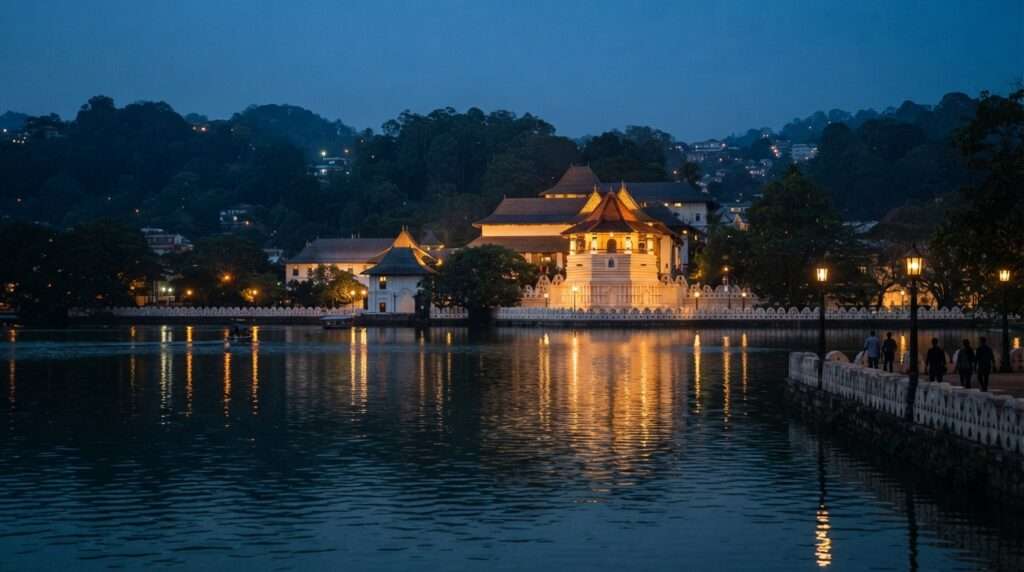
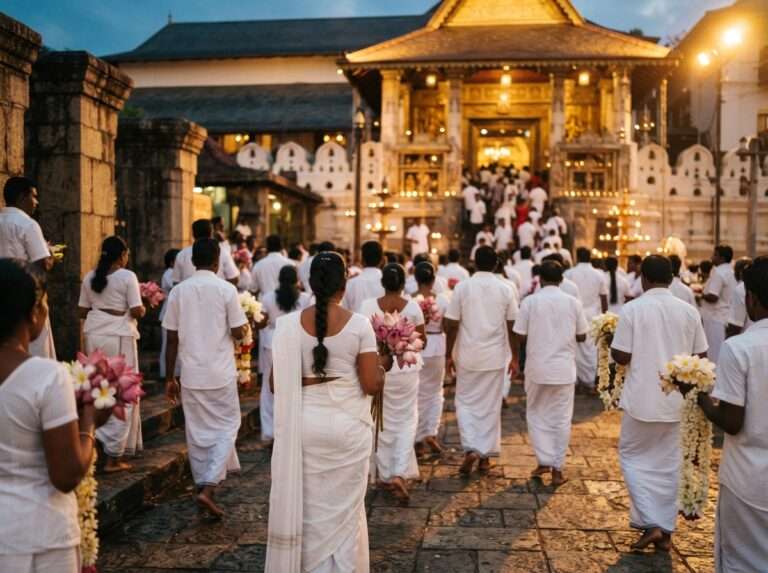
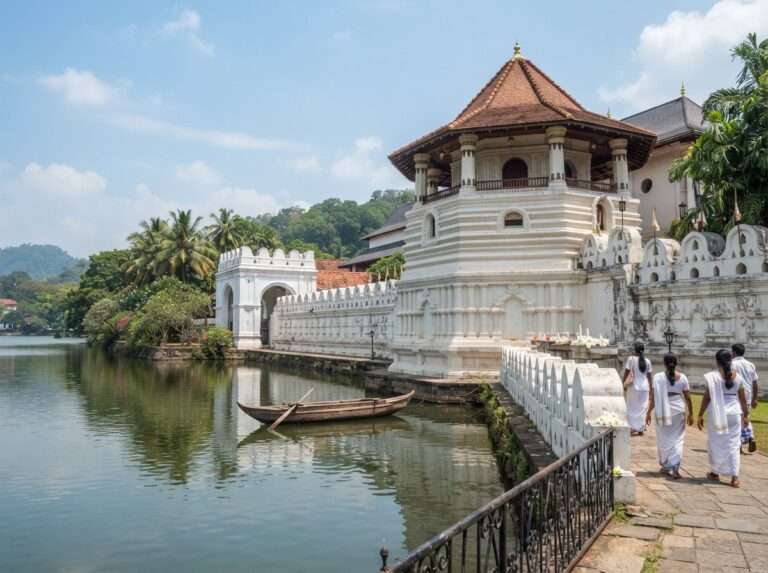
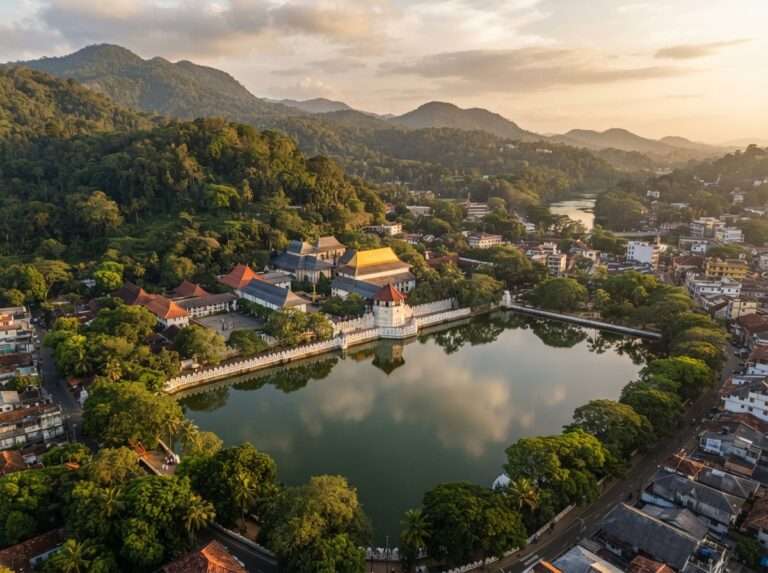
Sri Dalada Maligawa holds the relic most Sri Lankan Buddhists consider their country’s greatest treasure, a tooth of the Buddha that was carried to the island in the 4th century and has belonged to whoever ruled ever since. The temple sits beside Kandy Lake inside the old royal palace complex, which UNESCO lists as the Sacred City of Kandy.
The relic itself stays inside a gold casket in an upper chamber. You see the casket, not the tooth, and only during the thevava (puja) when the chamber doors open. Time your visit to one of three services. The 6:30 pm evening service is the one to get, with hewisi drummers in the lower hall and white-clad families queuing with lotus flowers up the stairs. Expect a crush and a quick shuffle past the doors.
Your ticket also covers the Dalada Museum, the World Buddhist Museum and the stuffed tusker Raja in his own hall. Each August the casket’s replica leaves the temple on an elephant for the Esala Perahera. The 2026 procession ran from 18 to 28 August. For the full fee breakdown see our Temple of the Tooth entry fees page.
| Location | Beside Kandy Lake, central Kandy, about 115 km from Colombo |
| Timings | 5:30 am to 8 pm daily. Services 5:30 to 7 am, 9:30 to 11 am, 6:30 to 8 pm |
| Entry fee | LKR 3,000; SAARC passport holders LKR 2,500 (about ₹715), from the ticket machines only |
| Dress code | No shorts or sleeveless tops. White is best. Wraps are available at the entrance |
| Time needed | 1.5 to 2 hours with the museums |
| Best time | The evening service, any day. August for the Perahera |
Related Tour Packages


❮
❯
02
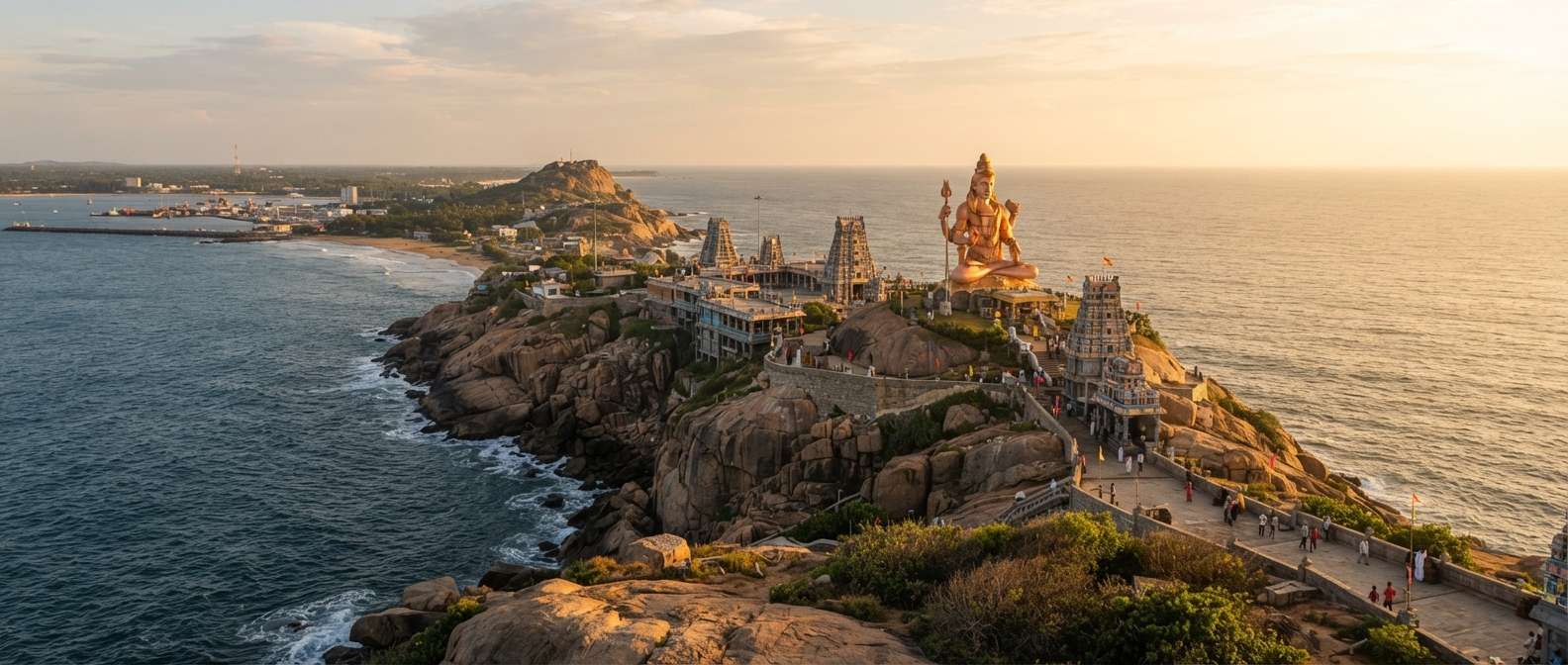
Koneswaram Temple, Trincomalee
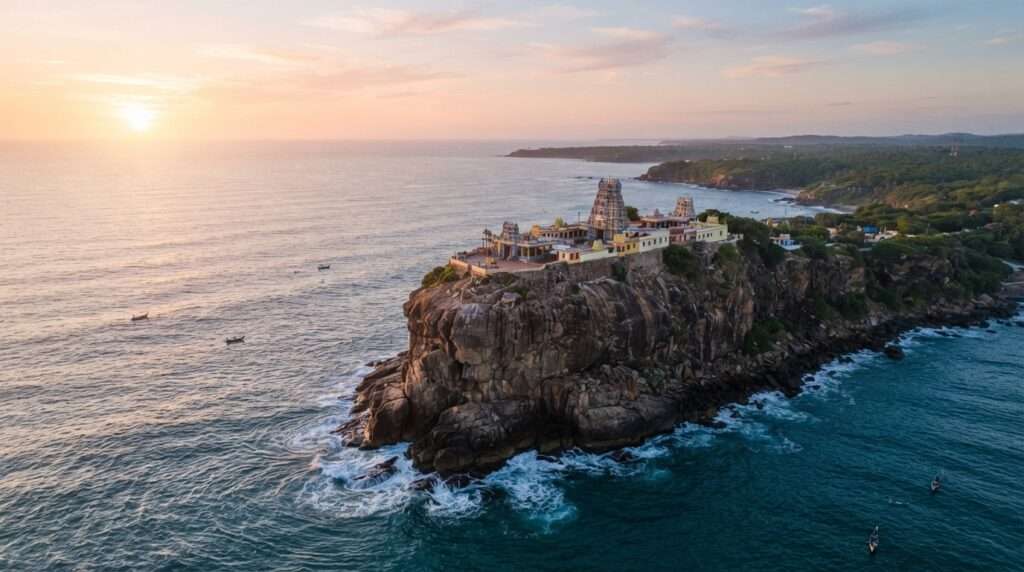
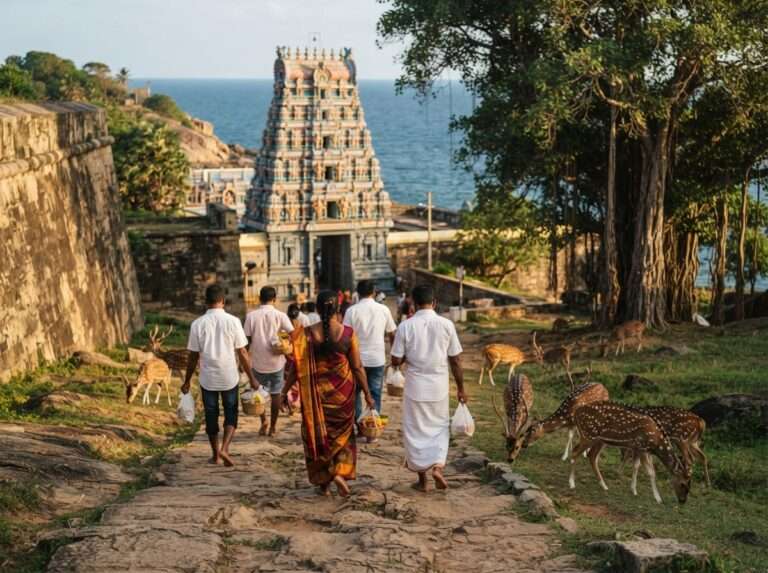
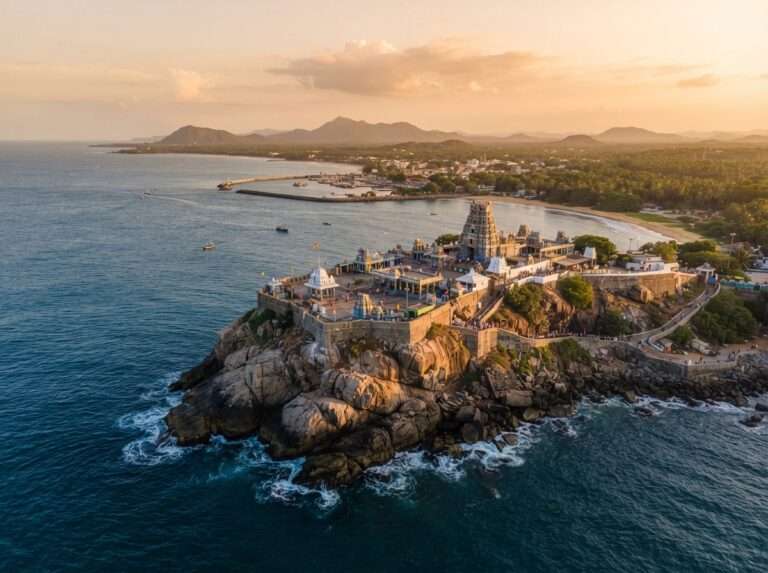
Thiru Koneswaram is the Pancha Ishwaram most Indian visitors come for. It stands on Swami Rock, a headland inside Fort Frederick that drops straight into the Indian Ocean, and the Shaiva saints Thirugnana Sambandar and Sundarar praised it in their Tevaram hymns, which makes it a Paadal Petra Sthalam. Portuguese soldiers tore down the original in 1622 and pushed much of it over the cliff. Divers found pieces of it on the seabed in the 1950s, and the temple you see today was rebuilt in that decade.
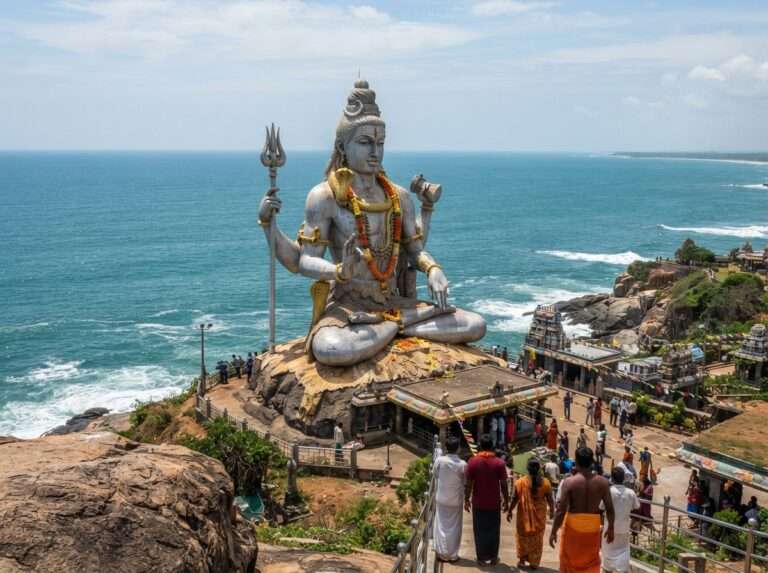
Walk up through the fort past spotted deer, under a giant seated Shiva, and you reach a compact, brightly painted kovil. A short path leads to the cleft in the rock that devotees call Ravana’s Cut. Inside the complex is a shrine to Shankari Devi, whom the Ashtadasha Shakti Peetha stotram places in Lanka, so many pilgrims count Koneswaram as both a Pancha Ishwaram and a Shakti Peetha. Pujas are held three times a day, around 6:30 am, 11:30 am and 4:30 pm. Go for the last one and stay for the sunset over Back Bay. Read our Koneswaram Temple guide for the legends.
| Location | Swami Rock, inside Fort Frederick, Trincomalee. About 260 km (6 hours) from Colombo |
| Timings | About 6 am to 6 pm |
| Entry fee | Free |
| Dress code | Shoulders and knees covered; shoes off at the fort-side stand |
| Nearby | Pathirakali Amman Kovil, Nilaveli beach |
| Time needed | 1 hour |
Related Tour Packages


❮
❯
03
Nallur Kandaswamy Kovil, Jaffna
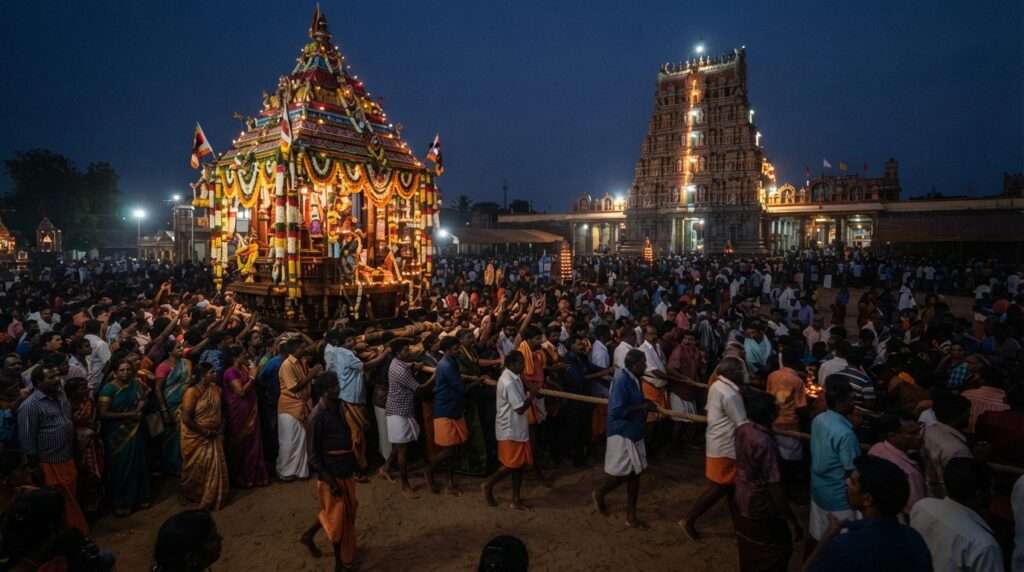
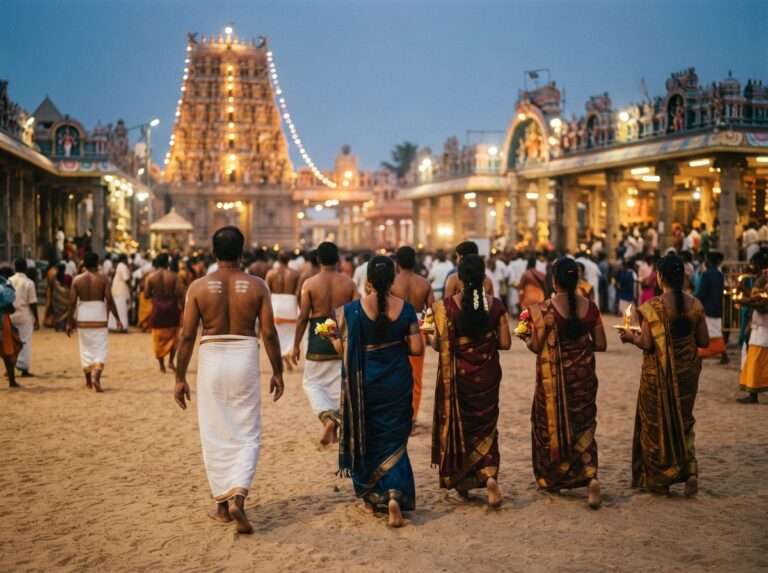
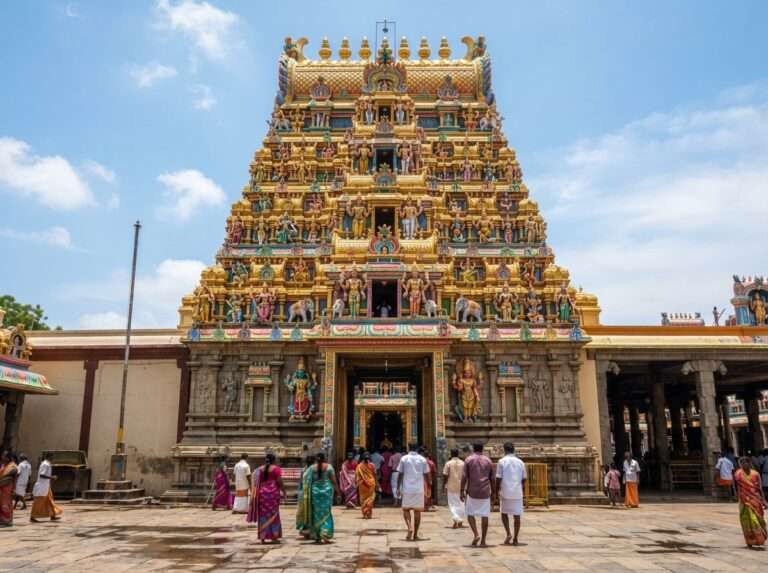
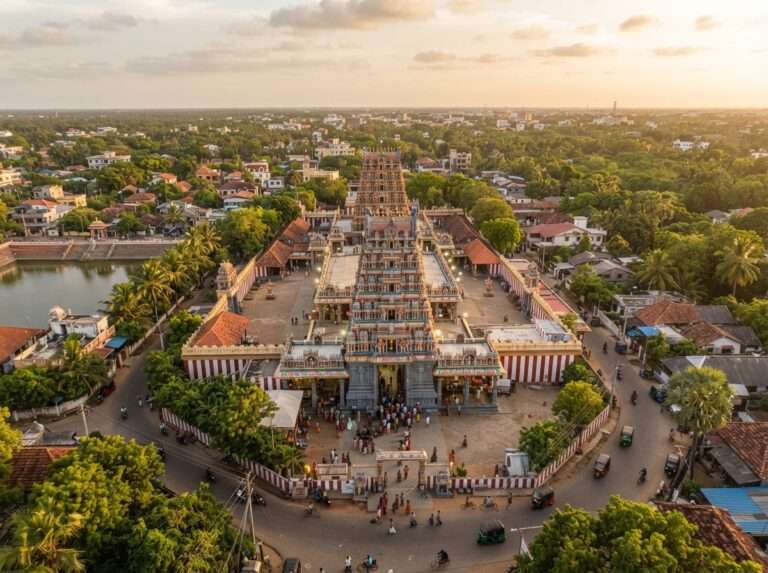
Nallur is the heart of Tamil Hindu life in Sri Lanka and the most visited kovil on the island. The deity is Murugan, worshipped here in the form of his vel (spear) rather than an idol. The present temple dates from 1734 and was built on the site of an older shrine that the Portuguese levelled. Its golden gopurams rise over a quiet Jaffna suburb about 3 km from the town centre.
Nallur runs to the clock. Pujas start on time to the minute, and the bell is your cue to move. Men remove their shirts before entering, and the attendants at the gate will remind you. Women should wear a saree, salwar or a long skirt. Photography inside is not allowed.
The annual festival is the island’s longest, about 25 days in late July and August, ending with the chariot procession and the water-cutting (theertham). Hundreds of thousands of pilgrims fill the streets, and some perform kavadi. Book Jaffna rooms three months ahead if your dates overlap. Our Nallur Kandaswamy Temple guide has festival tips.
| Location | Nallur, about 3 km from Jaffna town. Jaffna is about 400 km from Colombo |
| Timings | Open dawn to evening, with pujas through the day |
| Entry fee | Free |
| Dress code | Men bare-chested inside; women in a saree, salwar or long skirt |
| How to get there | Intercity train from Colombo (6 to 7 hours), or fly Chennai to Jaffna (Palaly) |
| Best time | The August festival, or February to September for drier weather |
Related Tour Packages


❮
❯
04
Munneswaram Temple, Chilaw
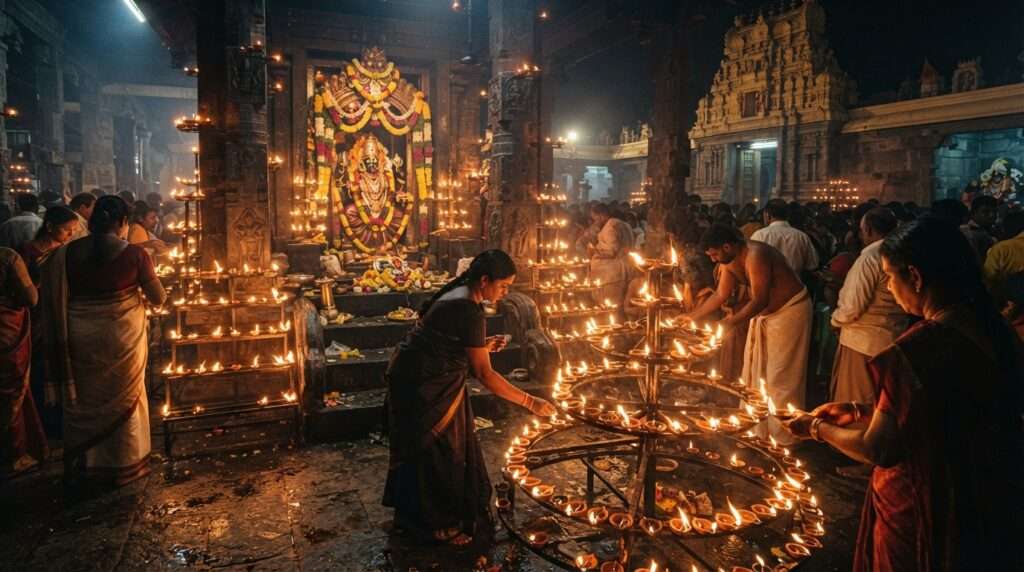
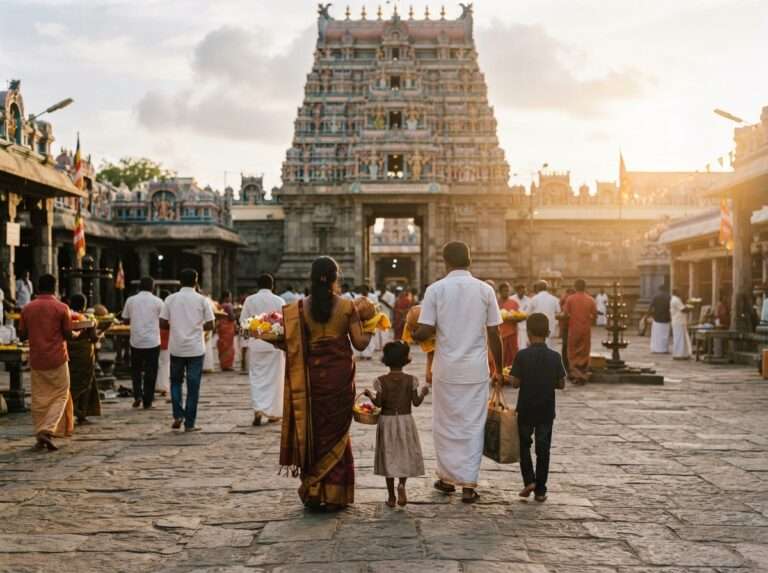
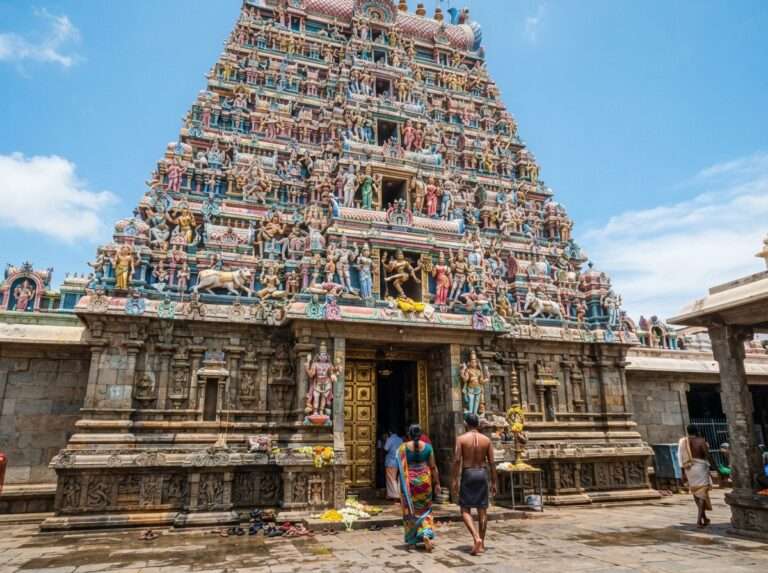
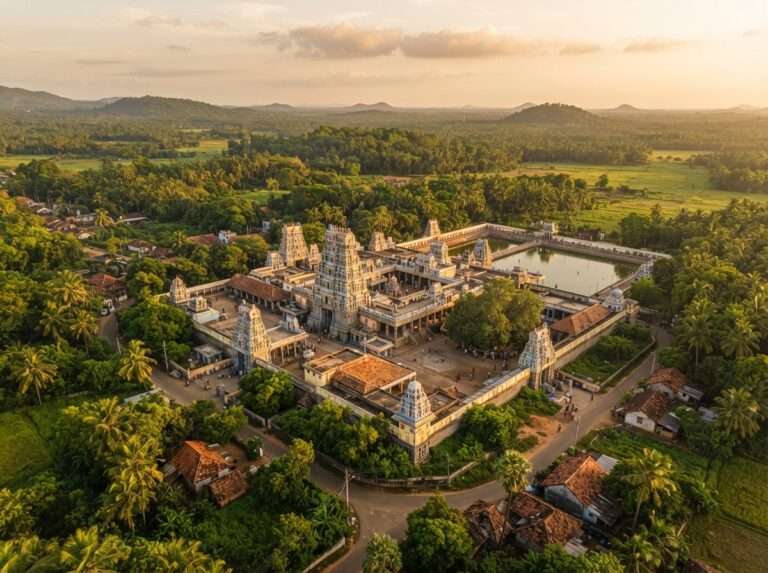
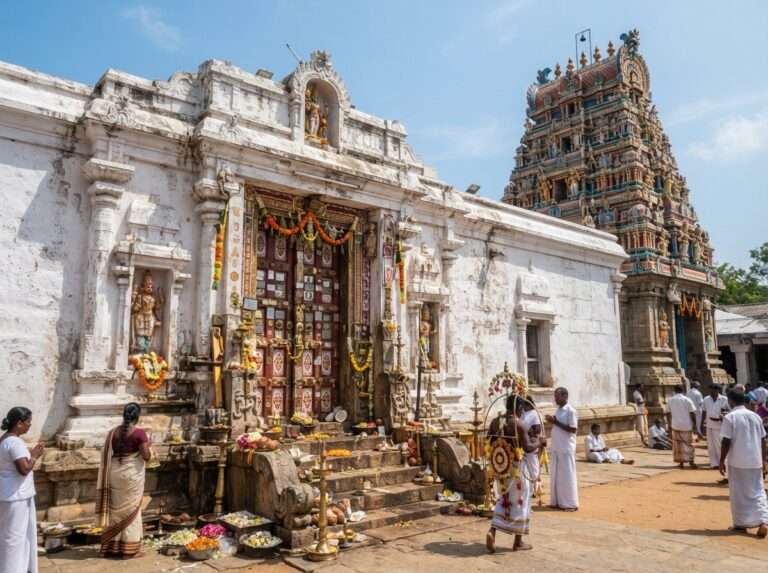
Munneswaram is the nearest Pancha Ishwaram to Colombo and the easiest Shiva temple for a short trip. It is not one shrine but five, set in a wide compound, with the main Shiva temple in the middle and a powerful Kali temple to one side. Tradition says Rama stopped here on his way home from Lanka to pray to Shiva and wash away the sin of killing Ravana. That story is why most Ramayana tours start their day here.
The temple opens from 5:30 am to 8 pm, with six pujas between dawn and nightfall. Navaratri and Sivarathri are the biggest nights, and the main festival runs for 28 days in August and September. Expect a mixed crowd. Sinhala Buddhist families come here too, especially to the Kali shrine. Pair this visit with Manavari, a short drive away.
| Location | Munneswaram village, about 5 km east of Chilaw. About 80 km (2 hours) north of Colombo |
| Timings | 5:30 am to 8 pm. Pujas at 5:30 am, 7:30 am, 12 pm, 5 pm, 7 pm and 8 pm |
| Entry fee | Free |
| Dress code | Shoulders and knees covered; men may be asked to remove shirts at the inner shrine |
| Best time | Navaratri (Sep to Oct), Maha Shivaratri (Feb to Mar), the Aug to Sep festival |
| Time needed | 1 hour |
05
Ruhunu Maha Kataragama Devalaya, Kataragama
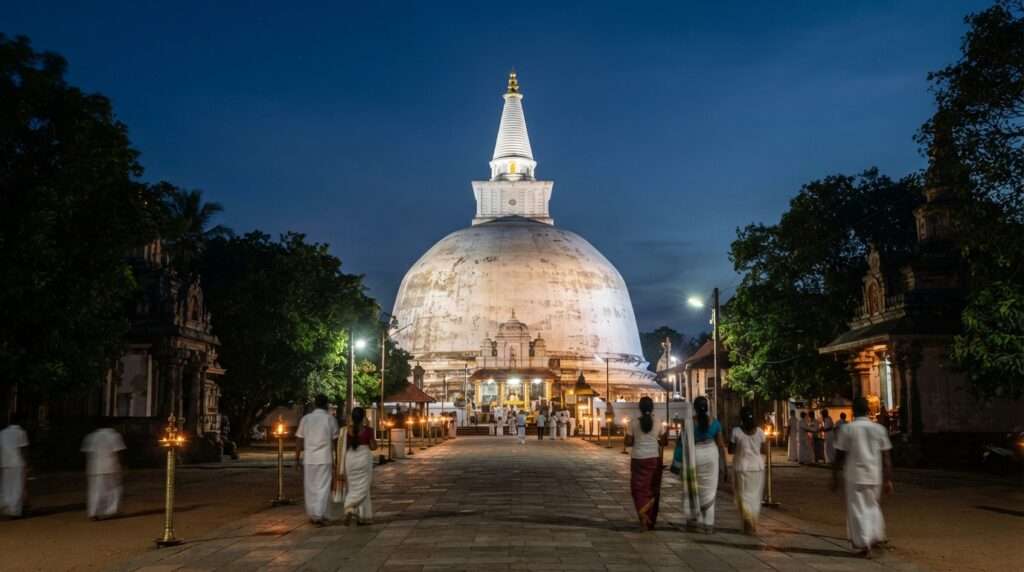
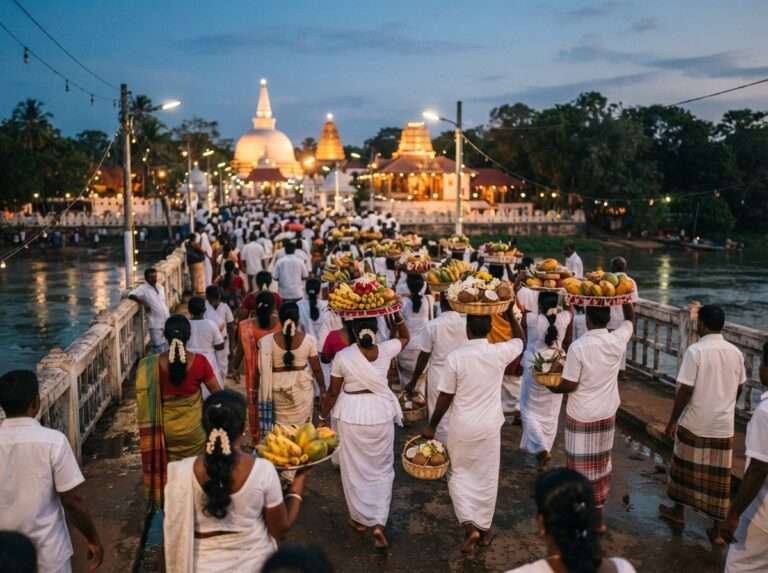
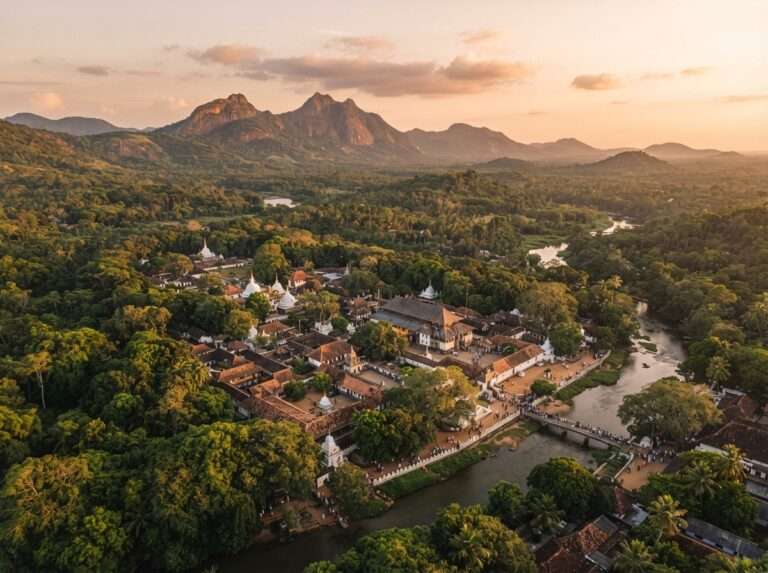
Kataragama is the only temple town in Sri Lanka that every faith claims. Hindus know the god as Murugan (Skanda), Sinhala Buddhists as Kataragama Deviyo, a guardian of the island, and Muslims pray at a mosque in the same sacred precinct. The main devalaya is a plain, whitewashed building with no idol on view. A curtain hides the yantra the god is believed to live in.
Cross the Menik Ganga river and walk the avenue to the devalaya at dusk, when the evening puja draws the biggest crowd. Fruit platters are sold along the way. After the puja, continue to Kiri Vehera, the white Buddhist stupa at the far end. Its local story is that Murugan met and married Valli, a hunter’s daughter, in these forests.
The Esala festival brings fire-walking, kavadi dancers and pilgrims who walk the whole way from Jaffna. In 2026 it ran from 15 to 30 July. Our Kataragama guide covers the pilgrim walk.
| Location | Kataragama, Monaragala District. About 280 km (5 hours by expressway) from Colombo |
| Timings | Three pujas daily at dawn, midday and evening |
| Entry fee | Free |
| Dress code | Covered shoulders and knees; white is common |
| Best time | The July Esala festival, or dry months from May to September |
| Nearby | Yala National Park, about 30 minutes away |
06
Thiruketheeswaram Temple, Mannar
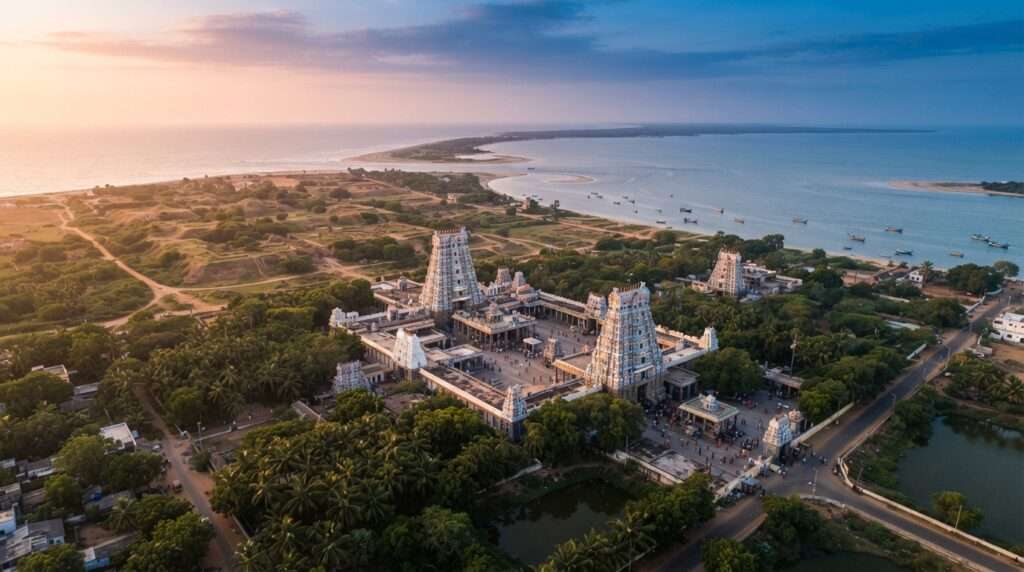
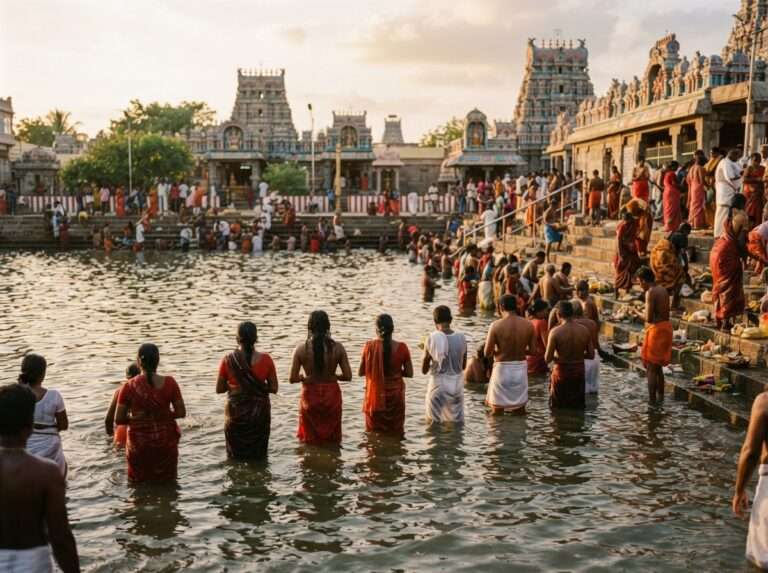
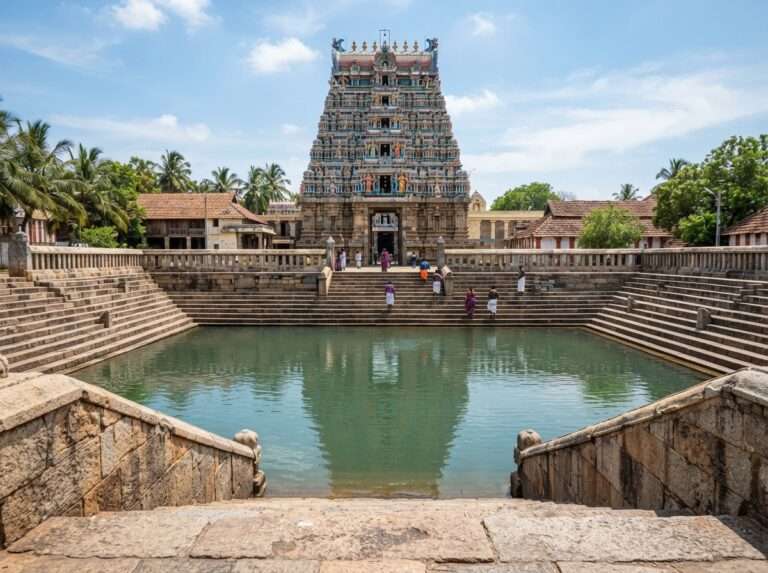
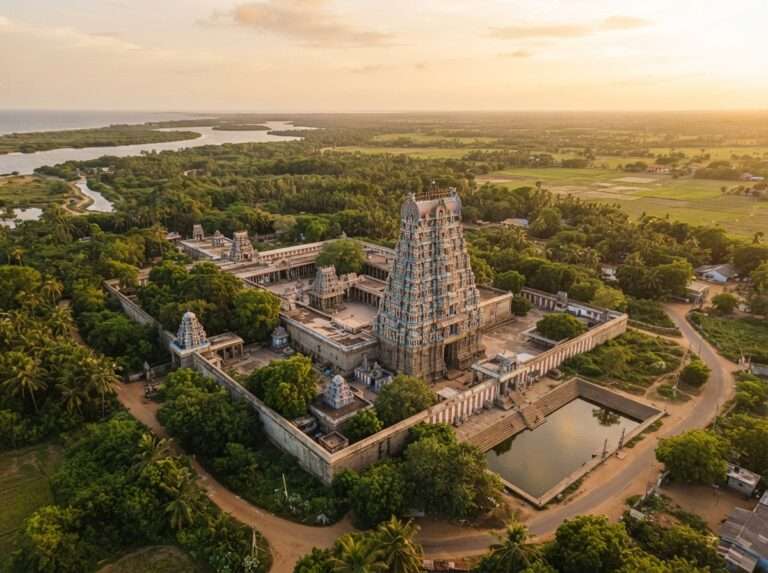
Ketheeswaram is the second Pancha Ishwaram praised in the Tevaram hymns, and for many Tamil Shaivites it is the most sacred of the five. It sits near the ancient port of Mantai, on the road to Mannar Island, where the Ramayana bridge points towards India. Tradition credits its founding to Maya, father of Ravana’s queen Mandodari.
What makes it special is the Palavi tank, a large stepped pond in front of the temple. On Maha Shivaratri night the lingam is bathed with Palavi water, and devotees take a ritual dip at dawn the next morning. The Government of India funded a major restoration, launched by India’s Culture Minister on 20 August 2012. The result is a crisp, newly carved stone temple in the middle of flat, dry country. Combine it with Mannar’s baobab tree and the bird lagoons.
| Location | Near Mantai, about 10 km before Mannar town. About 300 km (6 hours) from Colombo |
| Timings | Morning and evening pujas |
| Entry fee | Free |
| Dress code | Men shirtless inside the sanctum; women in saree or salwar |
| Best time | Maha Shivaratri (Feb to Mar) |
| Time needed | 1 to 1.5 hours |
07
Naguleswaram Temple, Keerimalai
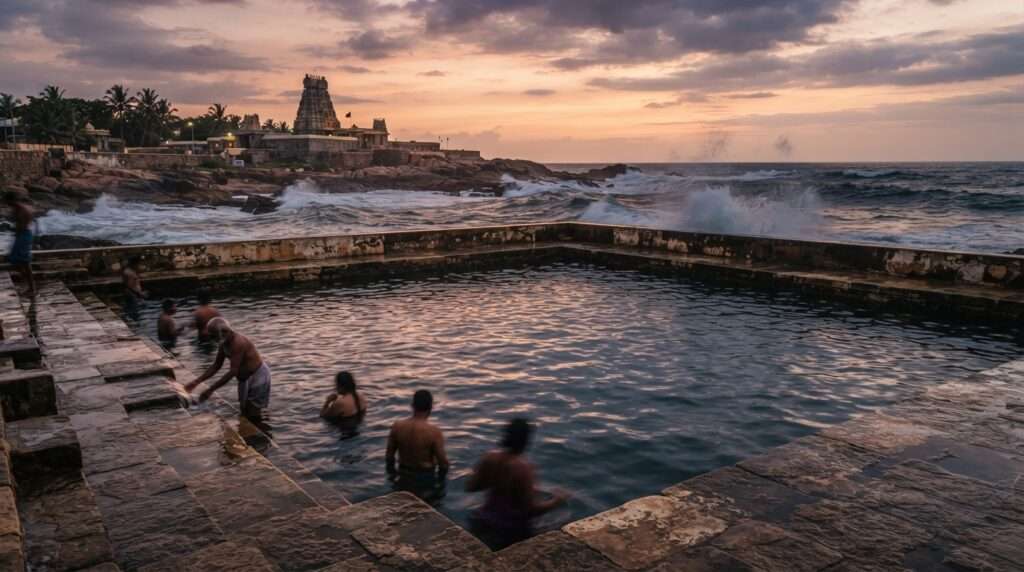
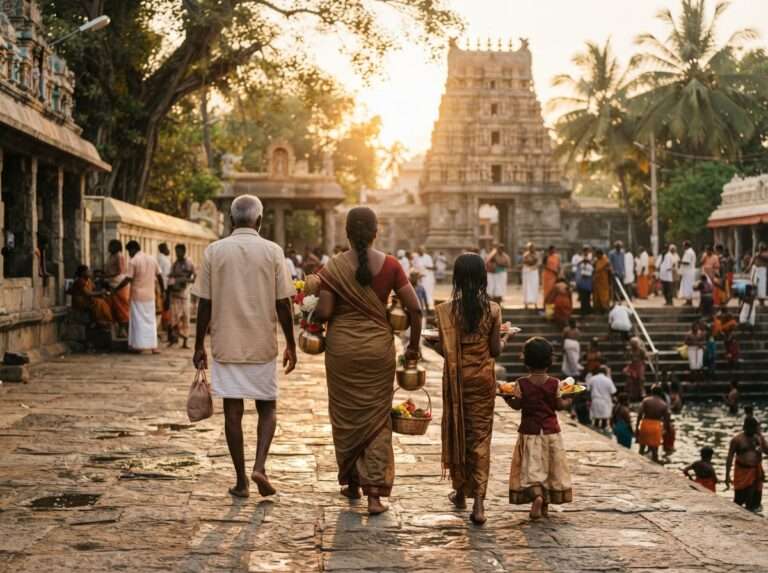
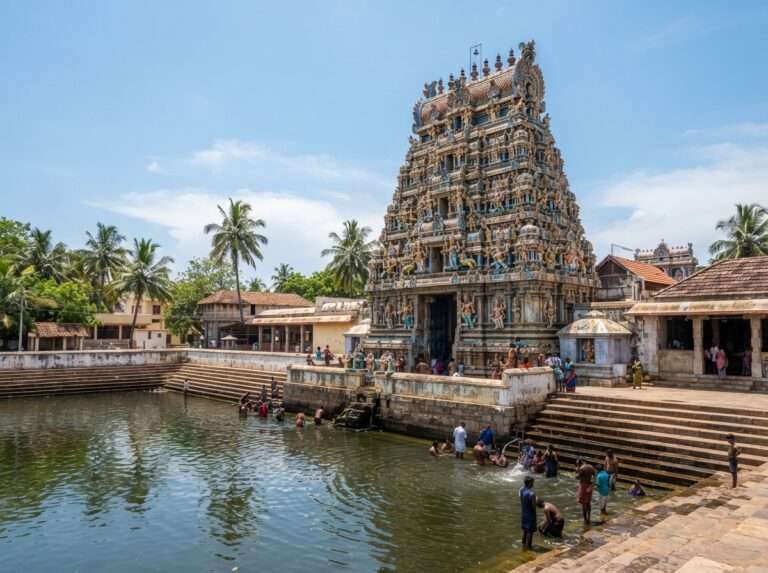
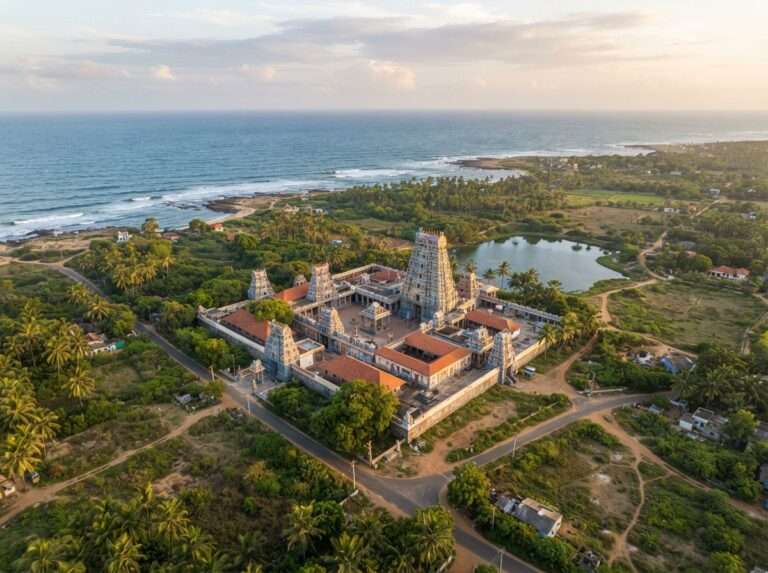
Naguleswaram is the northernmost Pancha Ishwaram, on the coast about 20 km north of Jaffna. Its name means “lord of the mongoose”. Legend says a sage with a mongoose’s face was cured by bathing in the spring next to the temple. That spring is Keerimalai, a freshwater pool right beside the sea with separate walled sections for men and women.
The temple was destroyed by the Portuguese, rebuilt in the 19th century, then badly damaged during the war years. It was rebuilt again and reconsecrated in January 2012. Families still come here to perform rites for their ancestors, with a dip in the spring first. Bring a towel and a change of clothes. The water is cold and clear.
| Location | Keerimalai, about 20 km north of Jaffna |
| Timings | Morning to evening, with pujas at fixed hours |
| Entry fee | Free |
| Dress code | Covered shoulders and knees; shirt off for men inside |
| Nearby | Maviddapuram Kandaswamy (about 5 km) |
| Time needed | 1 hour, plus time for the spring |
08
Tondeswaram and the Devinuwara Vishnu Devalaya, Dondra
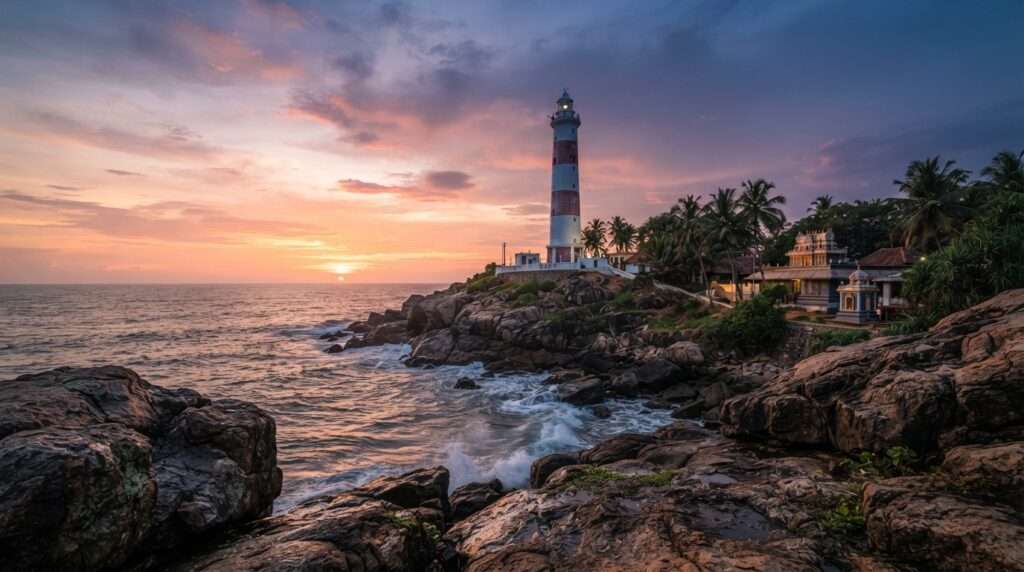
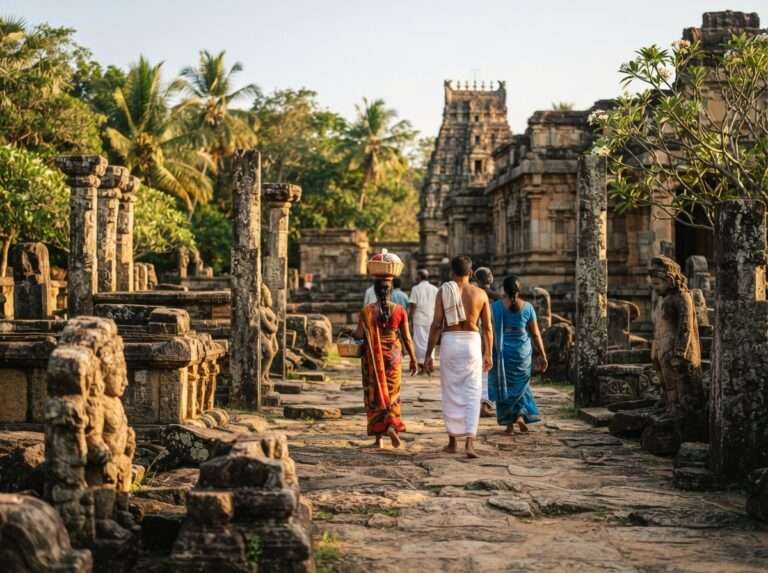
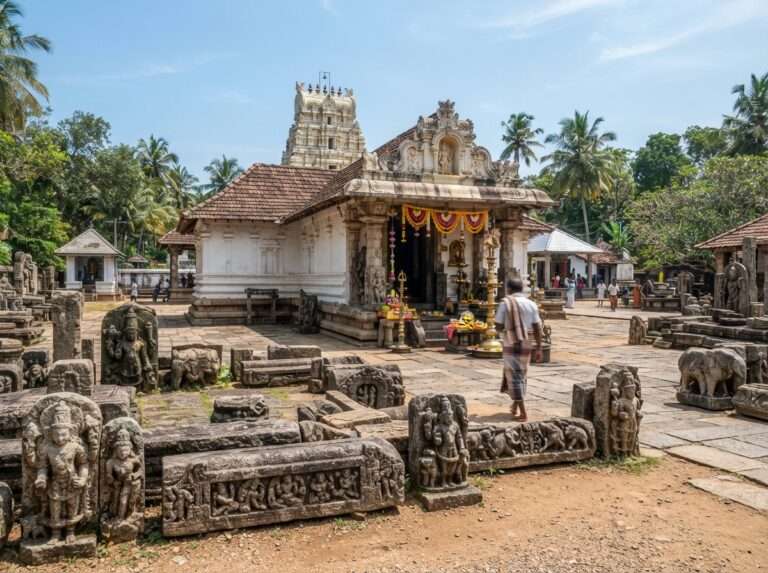
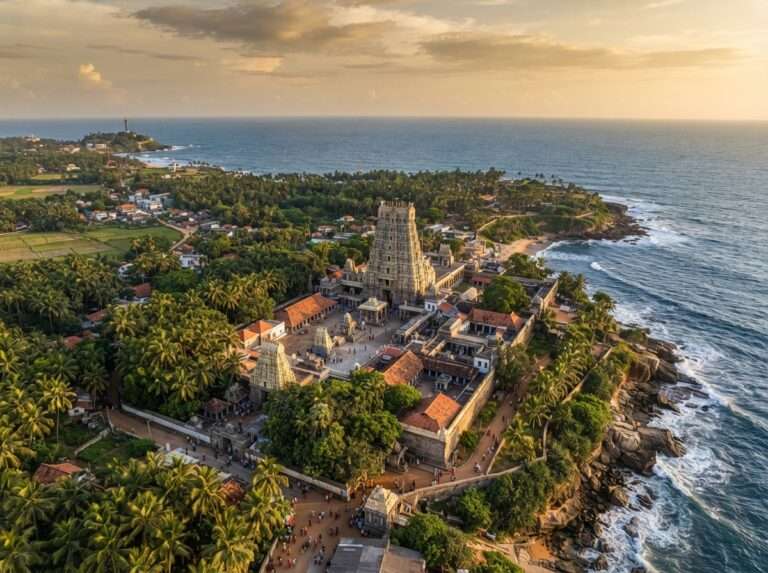
Tondeswaram was the fifth Pancha Ishwaram and once the grandest temple on the south coast, a gilded complex that sailors used as a landmark. Portuguese raiders under Thomé de Sousa sacked it in 1587, and only scattered carved stones remain. Today the site is the Devinuwara Sri Vishnu Maha Devalaya, where Sinhala Buddhists worship Upulvan, a god identified with Vishnu, next to a Buddhist temple.
Hindu pilgrims still come to complete the five Ishwarams here. Visit in the afternoon, then drive 2 km to Dondra Head, the southern tip of Sri Lanka, where a 49 m white lighthouse built in 1889 stands over the rocks. The devalaya’s Esala perahera in July or August is the big local event.
| Location | Dondra (Devinuwara), about 6 km east of Matara. About 160 km (2.5 hours) from Colombo by expressway |
| Timings | Daytime, with an evening puja |
| Entry fee | Free |
| Dress code | Covered shoulders and knees |
| Nearby | Dondra Head Lighthouse, Mirissa (about 15 km) |
| Best time | December to April, the south coast's dry season |
09
Nainativu Nagapooshani Amman Temple, Nainativu Island
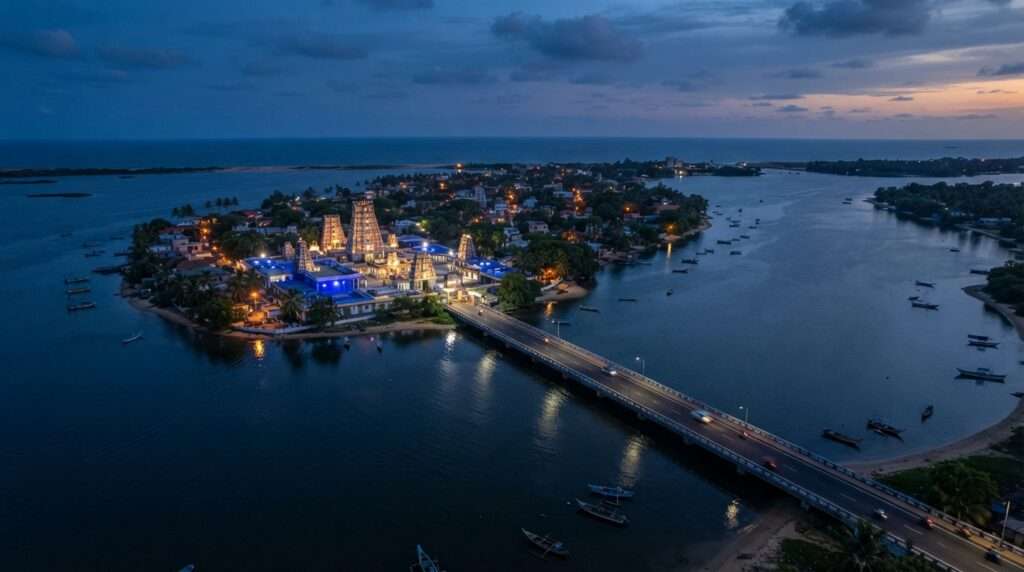
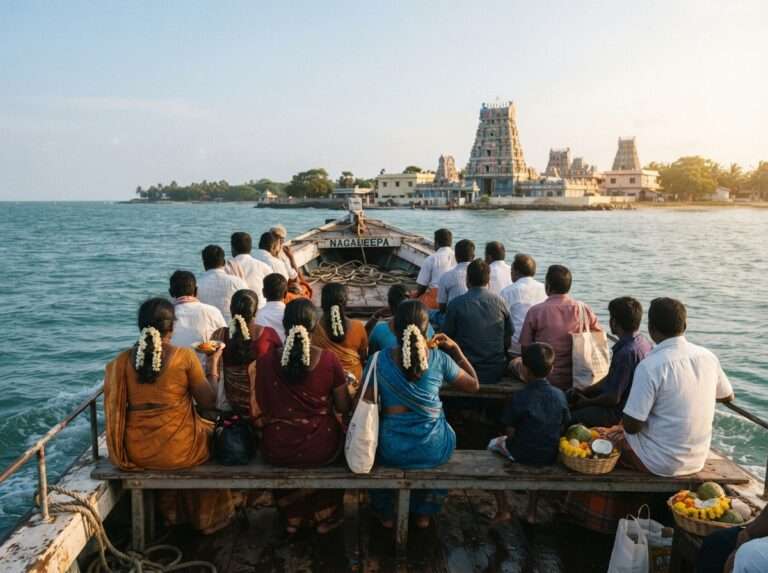
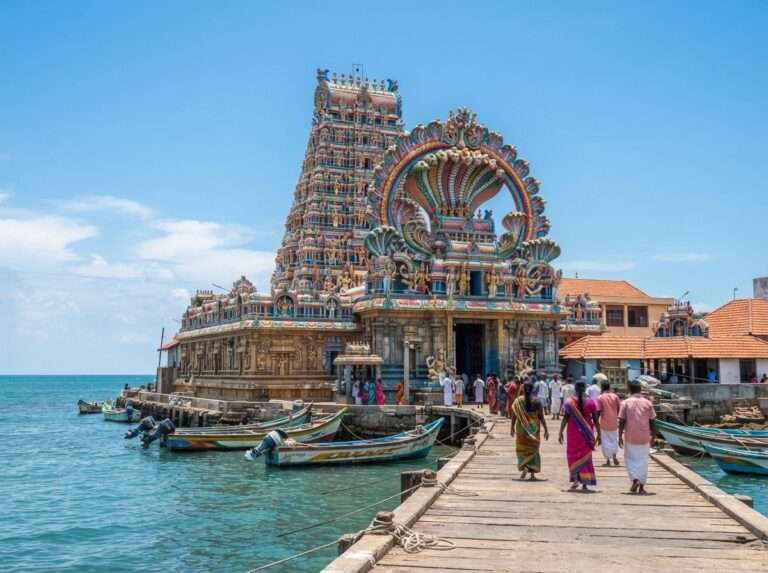
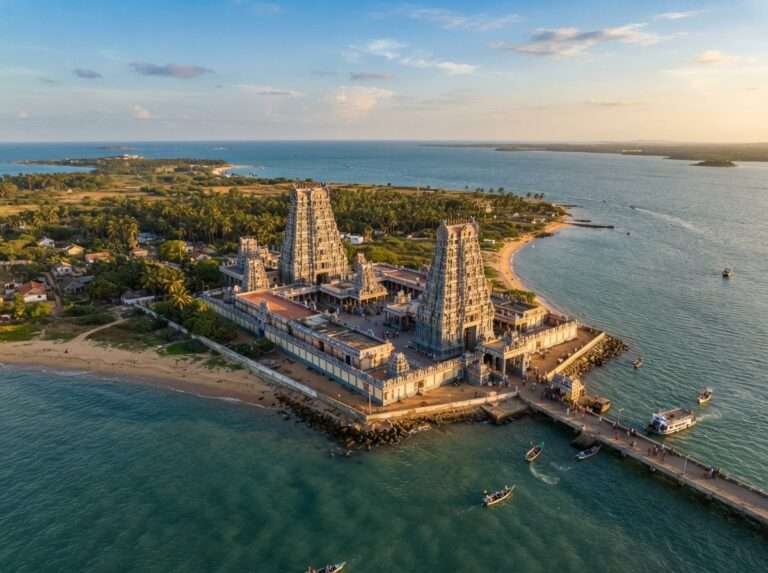
Nagapooshani Amman sits on a small island off the Jaffna peninsula and is worshipped as a form of Parvati with a serpent theme throughout. Many devotees count it among the Shakti Peethas, and Indian pilgrims often treat it as the island’s second Shakti shrine after Shankari Devi at Koneswaram. The temple’s tall gopuram is the first thing you see from the boat.
Getting there is half the experience. Drive 35 km west from Jaffna over the causeways to Kurikadduwan jetty, then take the 20-minute public ferry. Boats run roughly every 30 to 60 minutes and the fare is under LKR 100. Check the time of the last return boat before you go across, usually in the late afternoon. On the same island stands Nagadeepa Vihara, where Buddhists believe the Buddha made his second visit to Sri Lanka, so one trip covers both faiths.
The temple’s 15-day annual festival falls around June and July.
| Location | Nainativu island, reached from Kurikadduwan jetty, about 35 km from Jaffna |
| Timings | About 6:30 am to 12:30 pm and 4:30 to 7:30 pm |
| Entry fee | Free; ferry fare extra |
| Dress code | Men shirtless inside; women in saree or salwar |
| Time needed | A half day from Jaffna, including the ferry |
| Nearby | Nagadeepa Purana Vihara (a short walk or tuk-tuk ride) |
10
Seetha Amman Temple, Nuwara Eliya
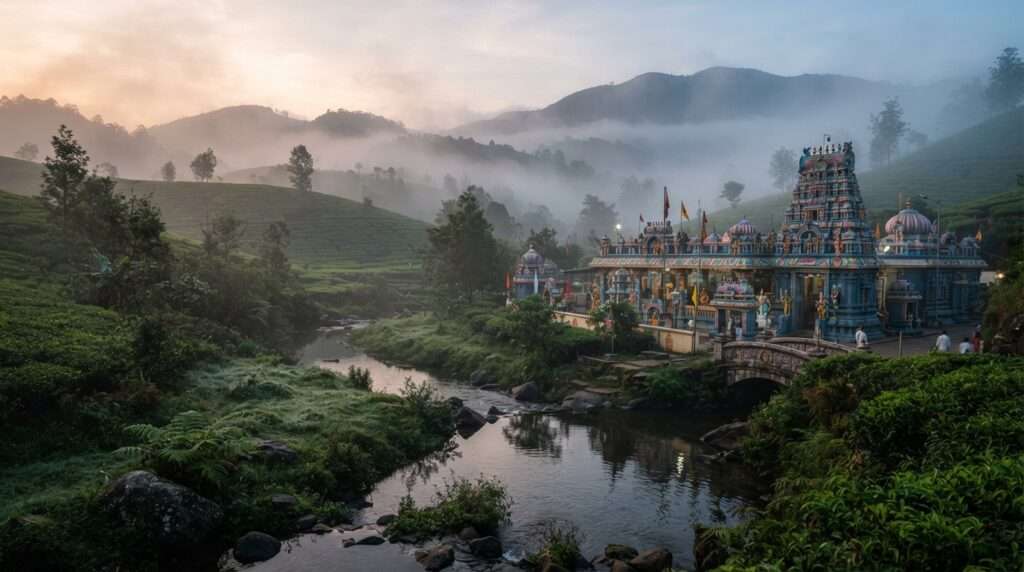
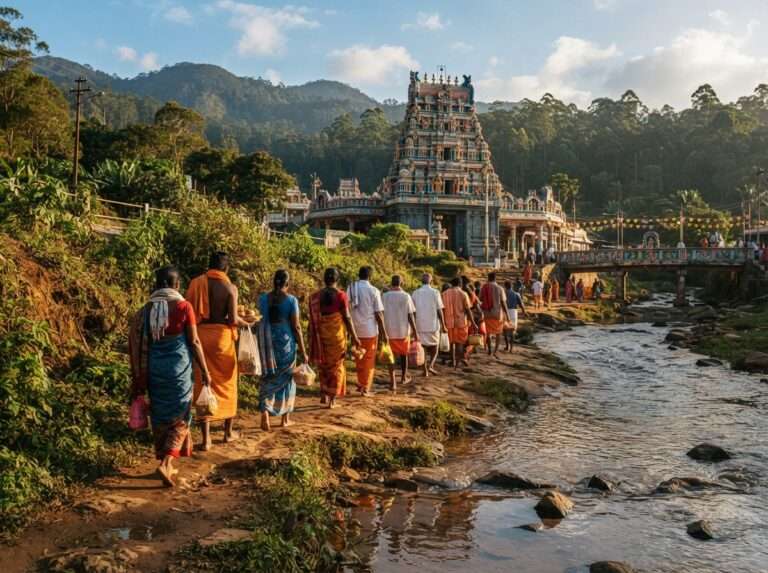
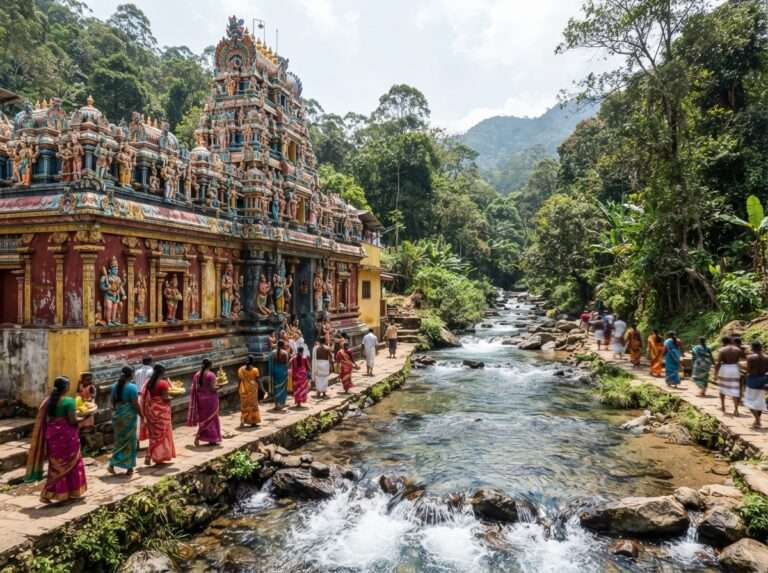
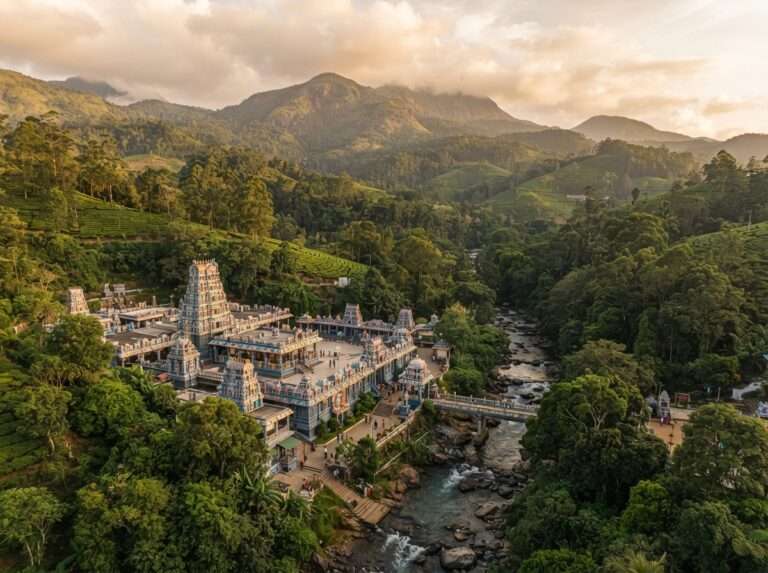
Seetha Amman Temple at Sita Eliya, 5 km south-east of Nuwara Eliya, is the Ramayana site Indian travellers ask about most. Hindu tradition places Ravana’s Ashok Vatika here, the garden where Sita was held captive. The painted temple faces a fast, clear stream, and on the far bank are the hollows in the rock that devotees call Hanuman’s footprints.
The temple was built and is still run by Indian Tamils, whose families came to Sri Lanka to work the tea estates. In 2021 a stone from Sita Eliya went to India for the Ram temple in Ayodhya. The Ashok Vatika Meditation Centre inside the complex opened in August 2025. Arrive before 10 am on weekends, before the Kandy coaches. For details, read our Seetha Amman Temple guide and our round-up of temples in Nuwara Eliya.
| Location | Sita Eliya, on the A5 towards Badulla, about 5 km from Nuwara Eliya |
| Timings | 8 am to 1 pm and 2 pm to 6:30 pm |
| Entry fee | Free |
| Dress code | Covered shoulders and knees; shoes off |
| Nearby | Hakgala Botanical Garden (1.7 km) |
| Time needed | 45 minutes to 1 hour |
11
Sri Bhakta Hanuman Temple, Ramboda
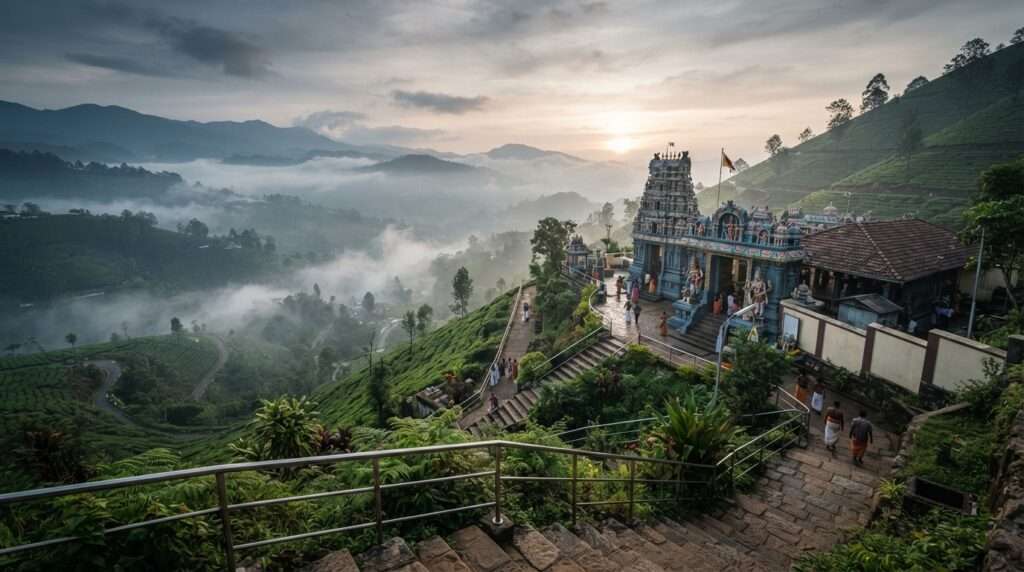
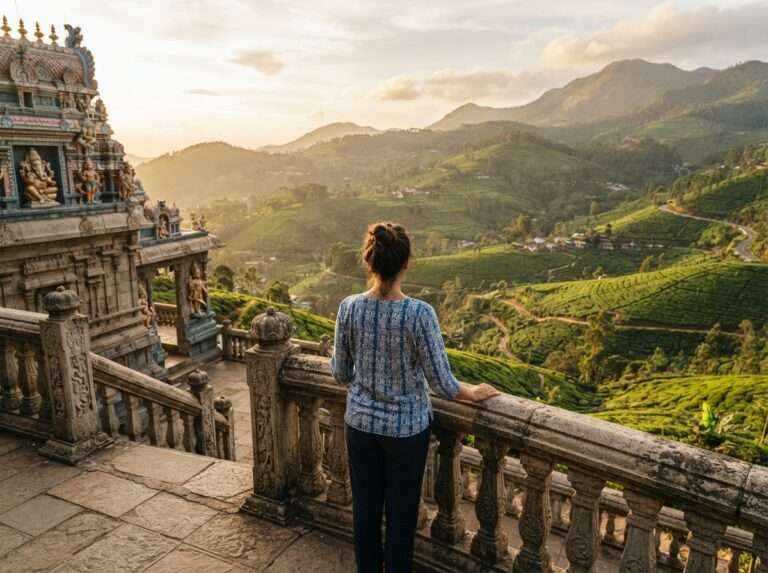
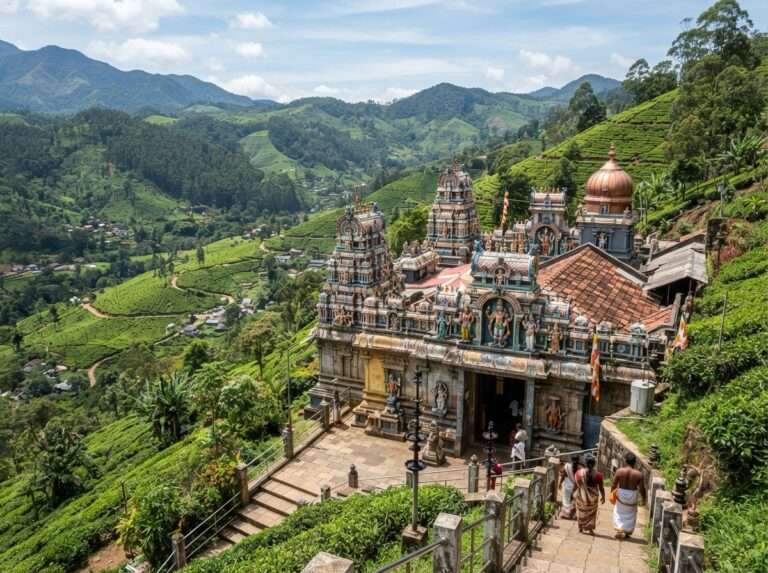
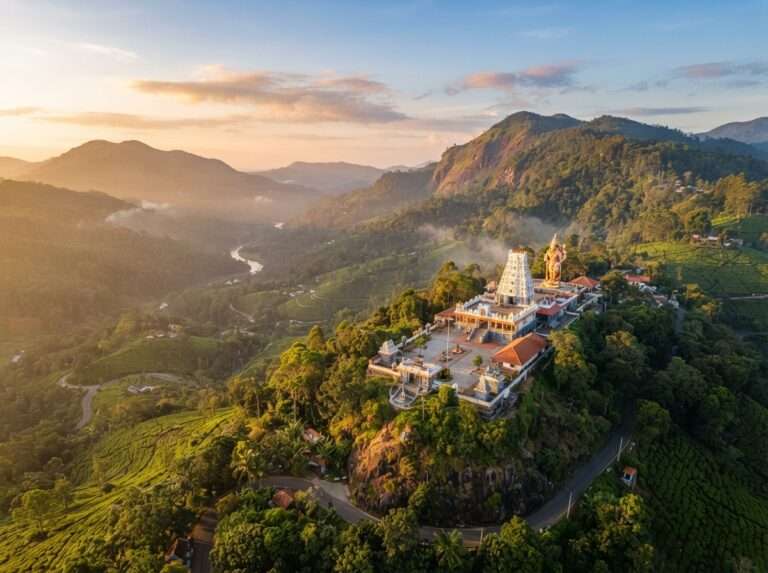
The Hanuman temple at Ramboda sits on a hillside above the Kandy to Nuwara Eliya road, about 30 km before Nuwara Eliya. The Chinmaya Mission built it, and it was consecrated on 8 April 2001. Local belief holds that Hanuman searched for Sita in these hills. The main idol stands about 16 ft tall, and from the terrace you look straight down over tea estates into the Kotmale valley.
The temple opens from 7 am to 1 pm and 3:30 to 6:30 pm. Get there at opening, before the mist rises off the valley. Ramboda Falls is a few minutes down the same road. Our Sri Bhakta Hanuman Temple guide has the full story.
| Location | Ramboda, on the A5, about 30 km before Nuwara Eliya and 50 km after Kandy |
| Timings | 7 am to 1 pm and 3:30 to 6:30 pm |
| Entry fee | Free |
| Dress code | Covered shoulders and knees; shoes off |
| Nearby | Ramboda Falls |
| Time needed | 45 minutes |
12
Manavari Temple, Chilaw
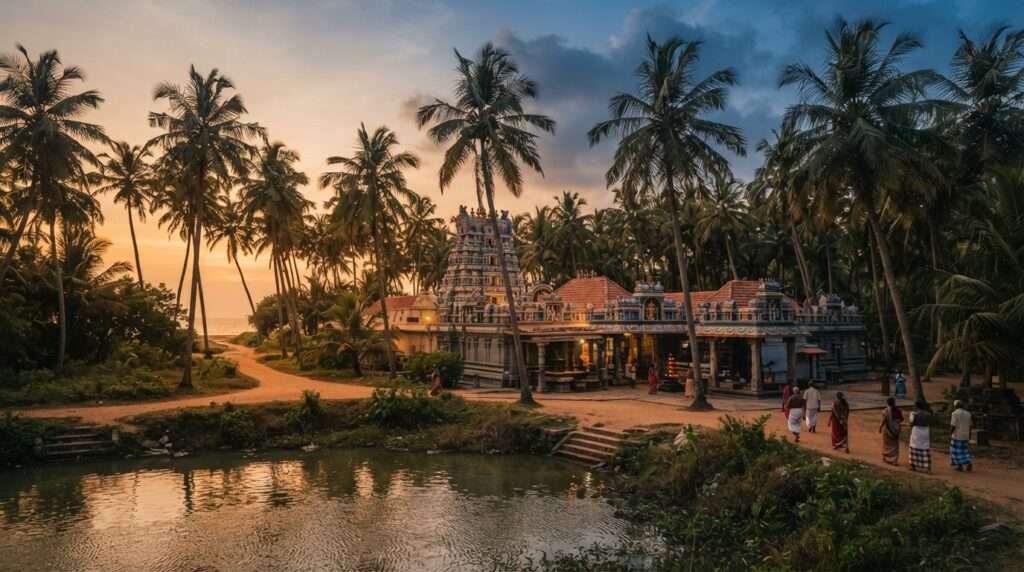
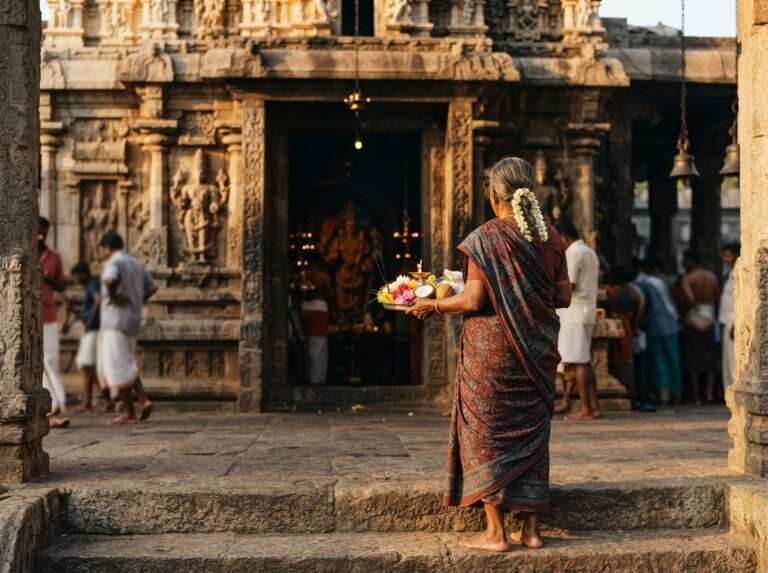
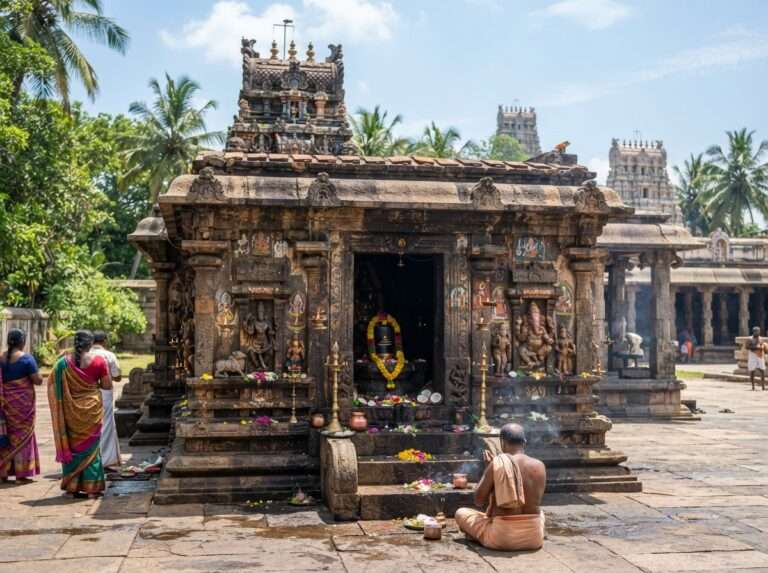
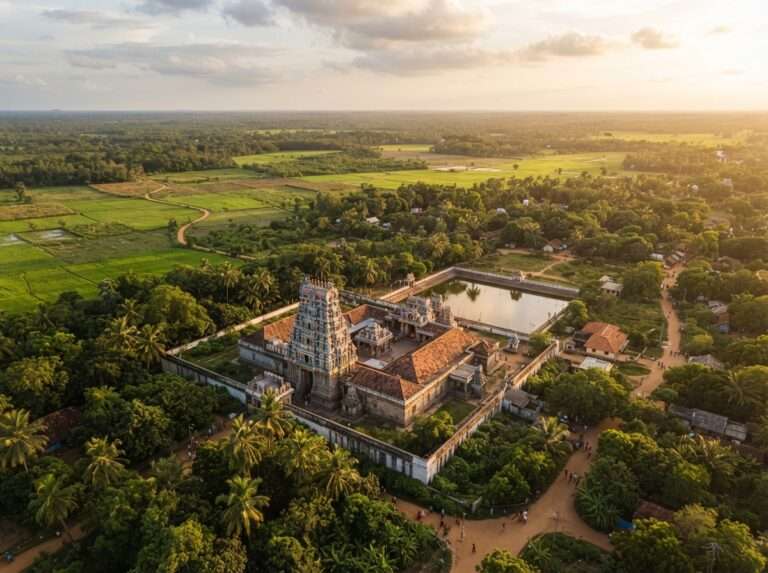
Manavari is a small Shiva temple near Chilaw with an outsized story. Local tradition says Rama installed a lingam here himself after the war, before the better-known one at Rameswaram in India, and pilgrims call it the Ramalingam of Sri Lanka. You will not find grand gopurams. The shrine is modest, the setting is a quiet village, and the priest will usually tell the legend if you ask.
Most Ramayana tours visit Manavari and Munneswaram on the same morning. Allow 30 minutes here and keep a donation ready for the archanai.
| Location | Near Chilaw, a short drive from Munneswaram |
| Timings | Morning and evening pujas |
| Entry fee | Free |
| Dress code | Covered shoulders and knees |
| Time needed | 30 minutes |
13
Arulmigu Sri Muthumariamman Temple, Matale
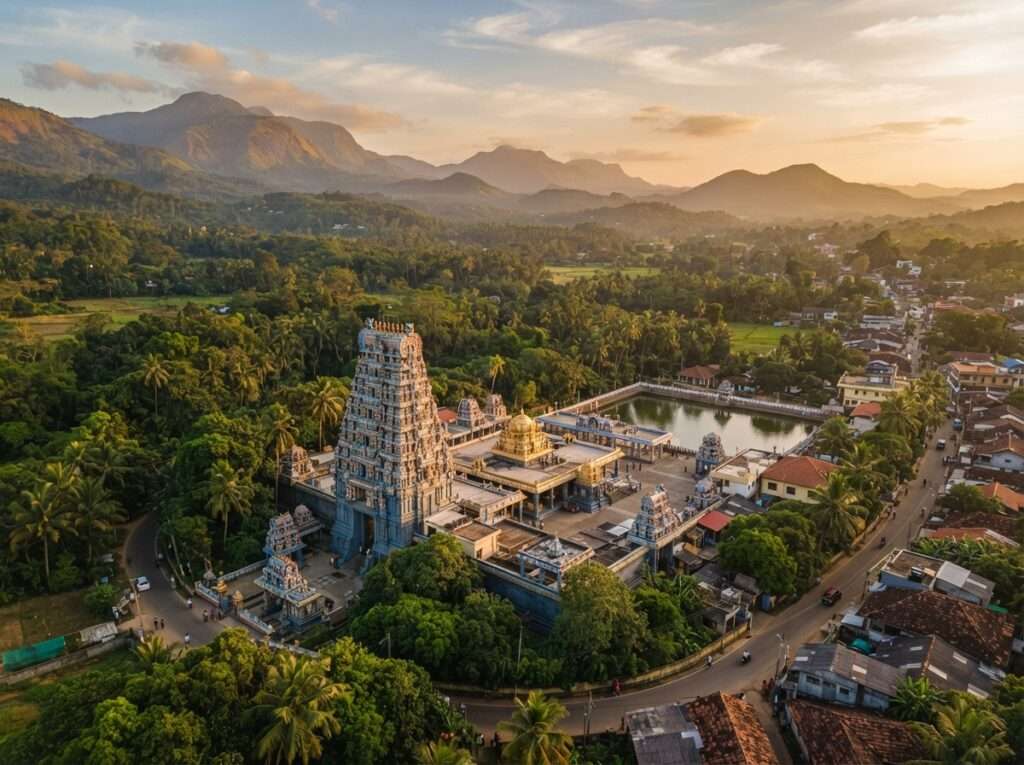
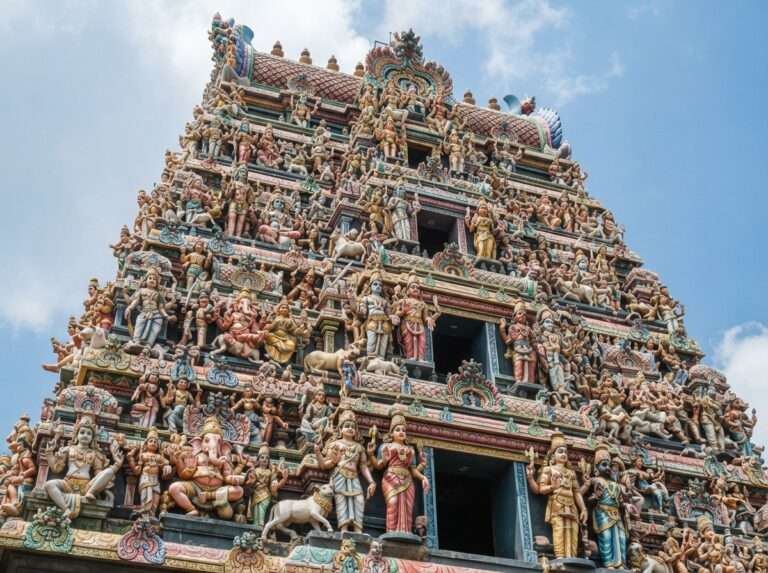
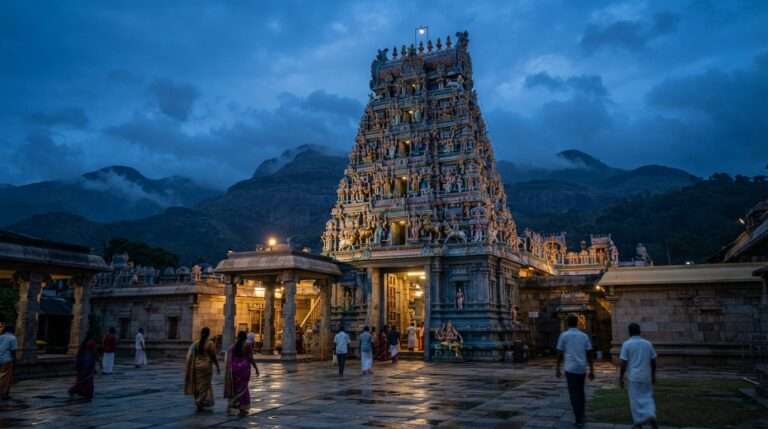
The Muthumariamman temple in Matale is the hill-country kovil you will remember for its gopuram, a tower covered in hundreds of painted deities, every one of them different. It is dedicated to Mariamman, the rain and healing goddess of South Indian village tradition, and it was built by Tamil traders and estate workers in the 19th century.
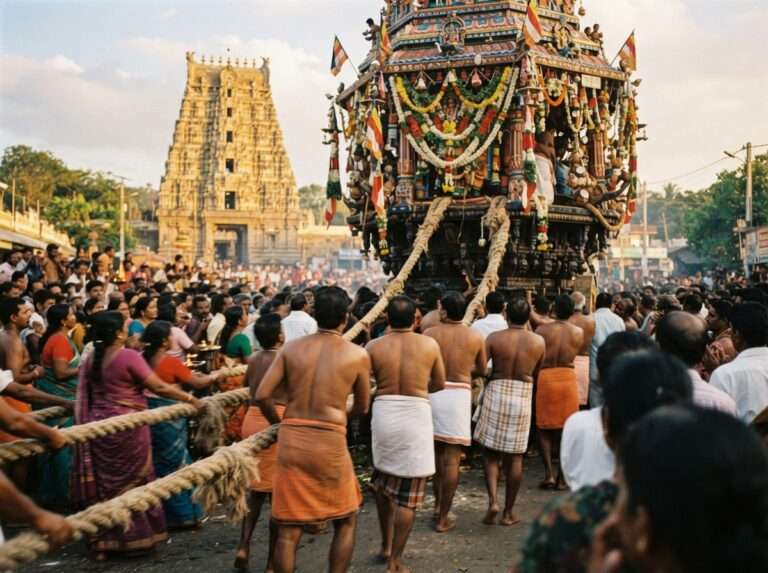
It sits right on the A9, 25 km north of Kandy, so it is an easy stop on the way to Dambulla. A small fee is charged to foreigners for entry and a guided walk. The yearly chariot festival pulls the whole town into the street. Aluvihare Rock Temple is 3 km further north.
| Location | On the A9 in Matale, 25 km north of Kandy |
| Timings | Morning to evening |
| Entry fee | Small fee for foreigners; free for worshippers |
| Dress code | Covered shoulders and knees; shoes off |
| Nearby | Aluvihare Rock Temple (3 km), Matale spice gardens |
| Time needed | 30 to 45 minutes |
14
Sri Ponnambalam Vaneswarar Temple, Colombo
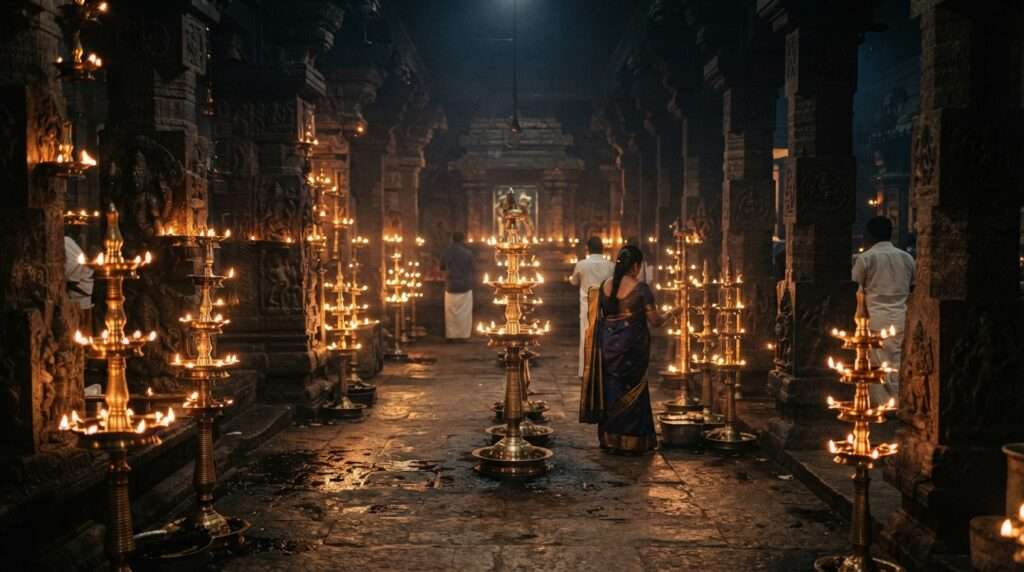
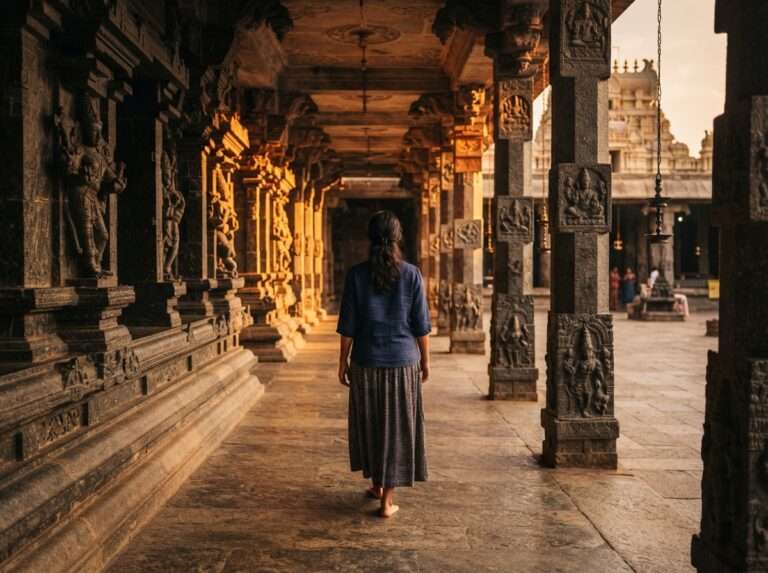
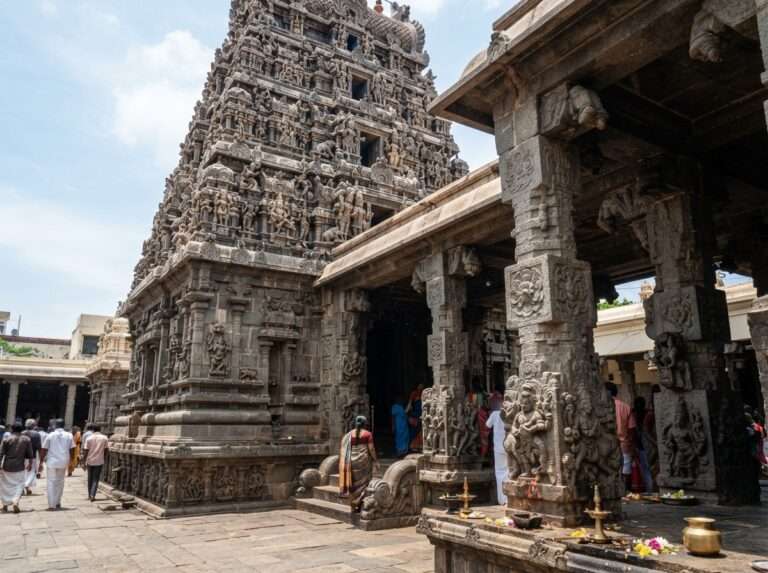
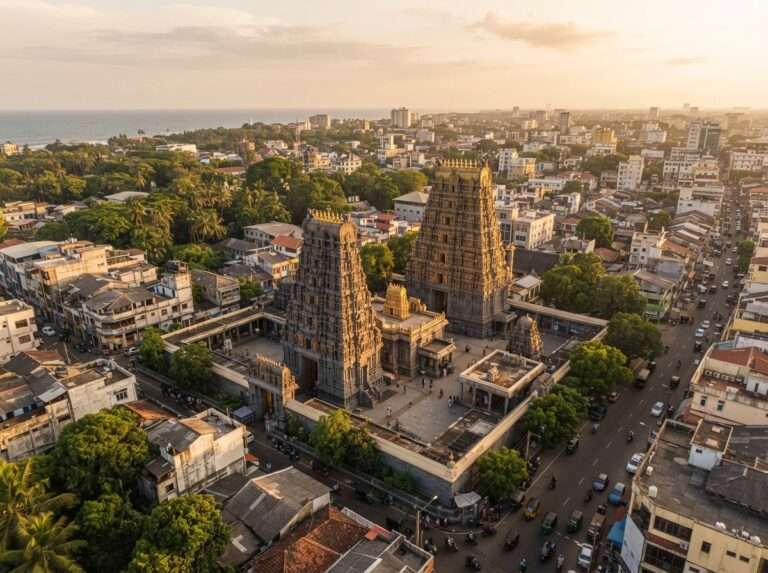
Ponnambalam Vaneswarar in Kotahena is the most striking Hindu temple in Colombo. It was founded in 1857 by Ponnambalam Mudaliyar, and his son Sir Ponnambalam Ramanathan rebuilt it in solid South Indian granite in the early 20th century. The result is a cool, dark, carved-stone hall that feels nothing like the painted kovils elsewhere in the city. It is not one of the oldest Hindu temples in the world, as some guides claim, but it is the finest piece of Dravidian stonework in Colombo.
Visit in the late afternoon, when the stone is coolest and the evening lamps are lit.
| Location | Kotahena, north Colombo, about 3 km from Colombo Fort |
| Timings | Morning and evening pujas |
| Entry fee | Free |
| Dress code | Covered shoulders and knees; shoes off |
| Time needed | 30 minutes |
15
New Kathiresan Kovil, Colombo
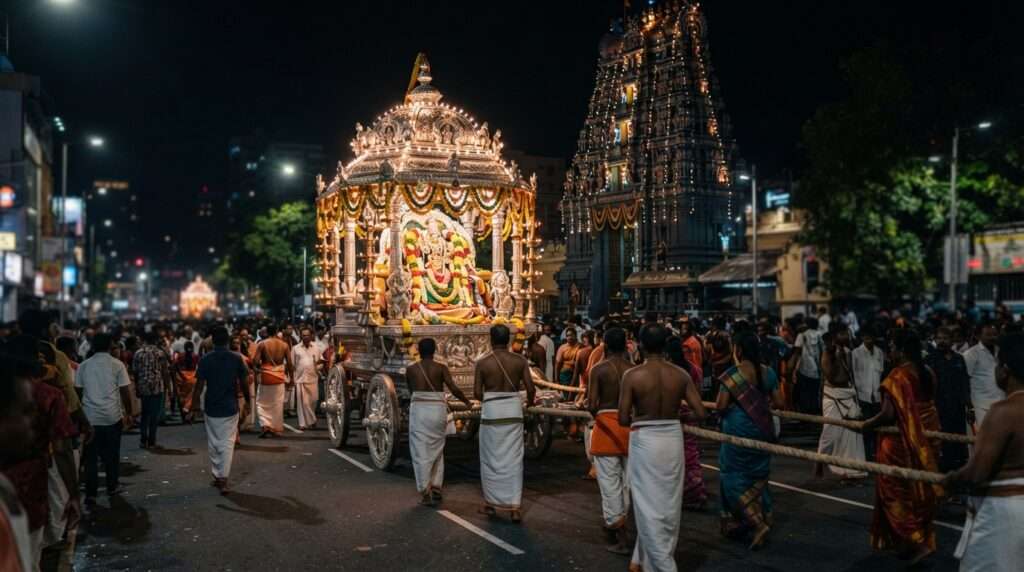
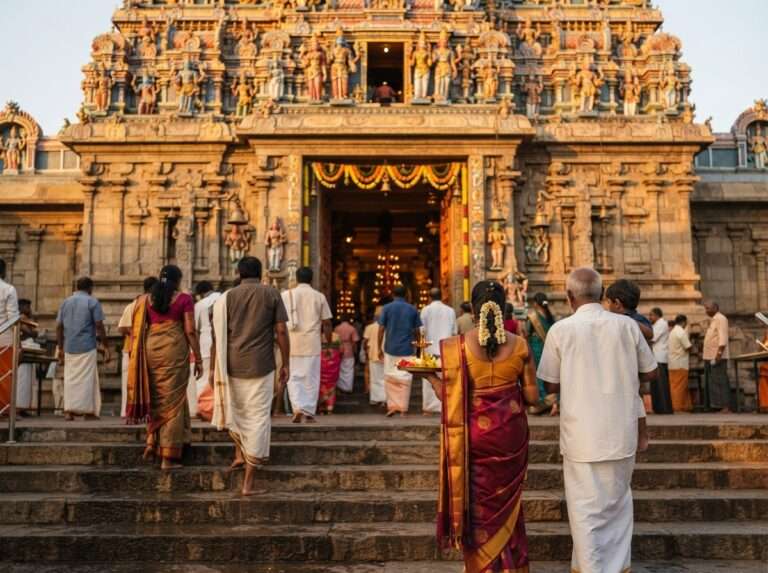
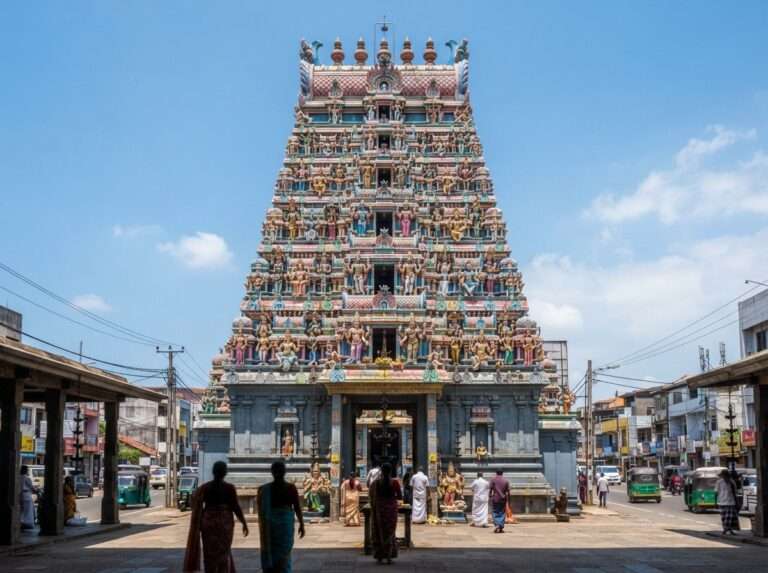
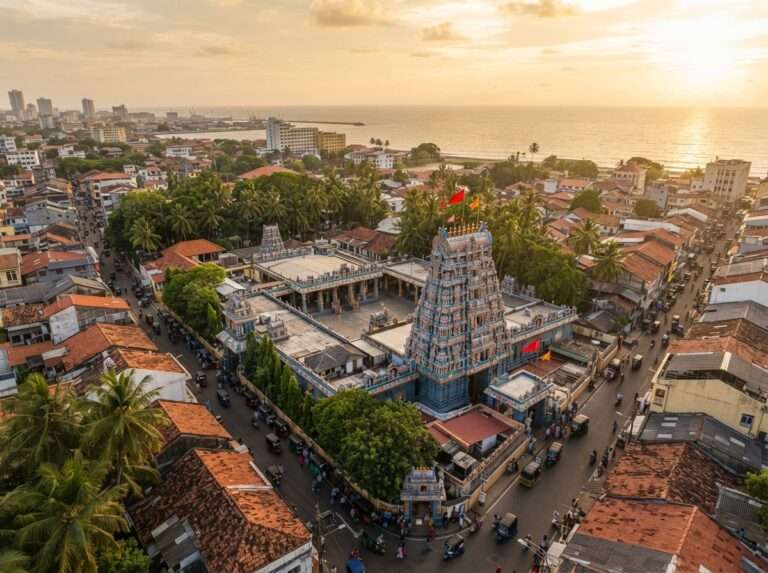
The New Kathiresan Kovil on Galle Road in Bambalapitiya is the Colombo temple Indian visitors are most likely to pass. It is dedicated to Murugan and is busiest on Tuesdays and Fridays. Its big day is the Vel festival in July or August, when a silver chariot carries Murugan’s spear through Colombo from the old Kathiresan temples in Pettah to Bambalapitiya, with drummers and thousands of devotees.
For more city kovils and viharas, see our list of temples in Colombo.
| Location | Galle Road, Bambalapitiya, about 6 km south of Colombo Fort |
| Timings | Morning and evening pujas |
| Entry fee | Free |
| Best time | The Vel festival, July or August |
| Time needed | 30 minutes |
16
Gangaramaya Temple and Seema Malaka, Colombo
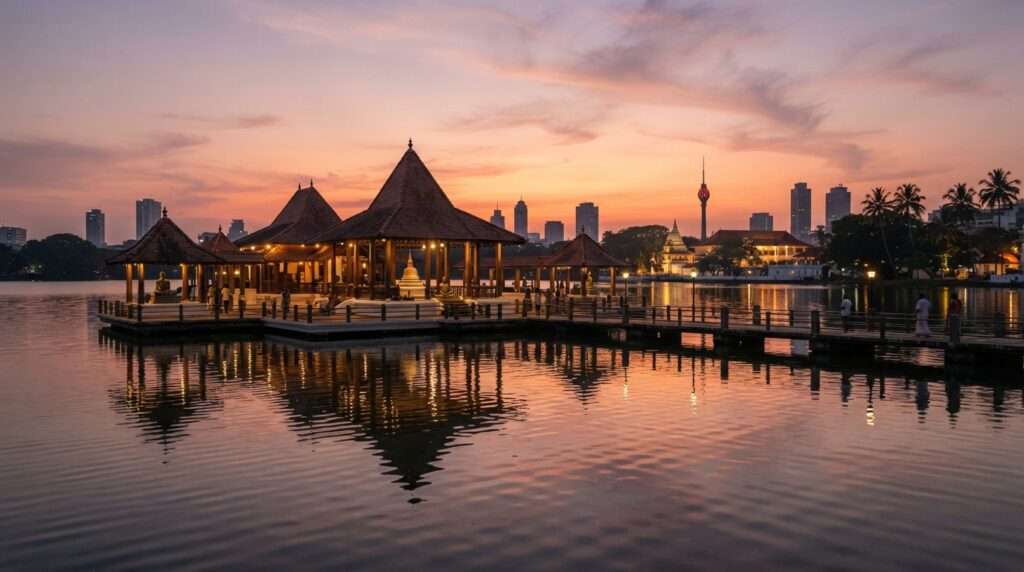
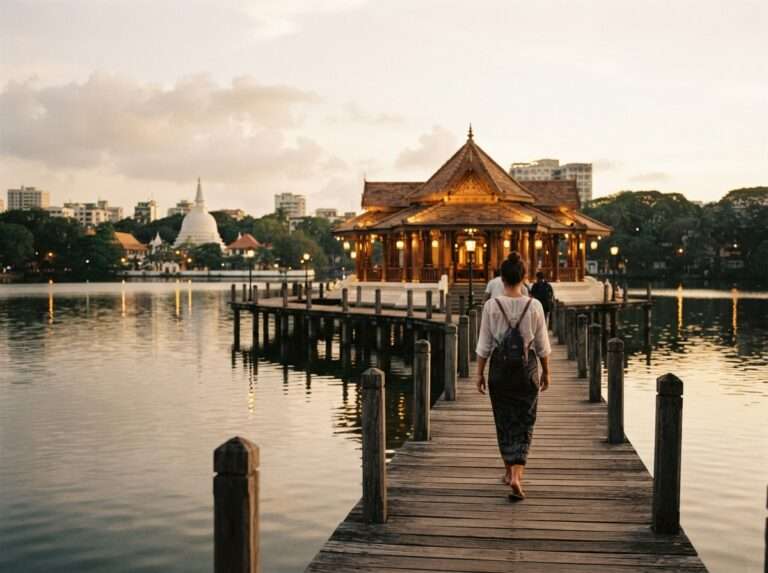
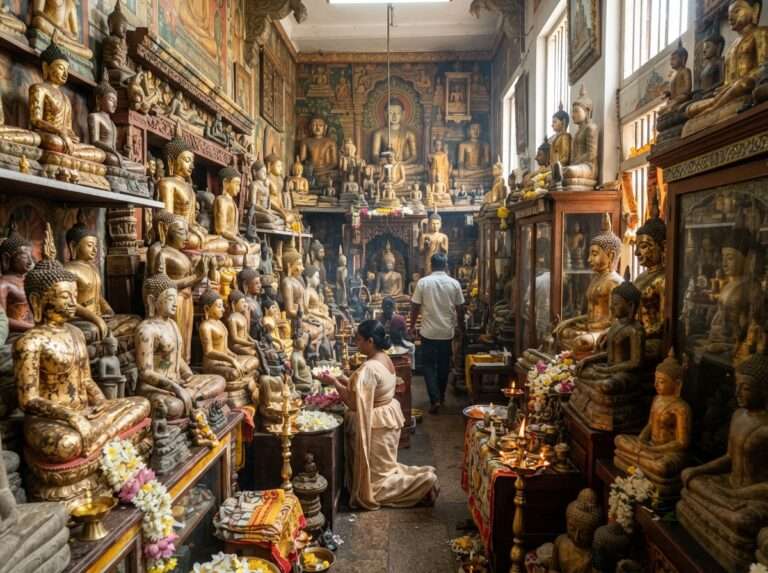
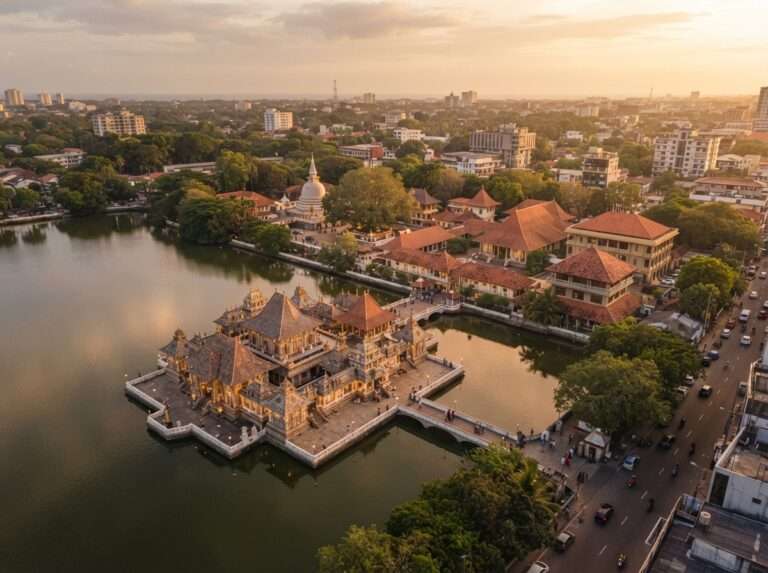
Gangaramaya is Colombo’s busiest Buddhist temple and part museum, part monastery and part school. It was founded in the late 19th century by the scholar monk Hikkaduwe Sri Sumangala Thera, so despite what older guides say, it is not ancient. The halls are crammed with donated Buddha images, vintage cars, clocks and carved ivory. Each February it organises the Navam Perahera around Beira Lake.
Your ticket also covers Seema Malaka, a set of pavilions on the lake designed by Geoffrey Bawa. Go there at sunset. See our Gangaramaya Temple guide for more.
| Location | Hunupitiya, near Beira Lake, central Colombo |
| Timings | About 6 am to 10 pm |
| Entry fee | About LKR 300 to 500, covering Seema Malaka |
| Dress code | Covered shoulders and knees; shoes off |
| Best time | Sunset at Seema Malaka; February for Navam Perahera |
| Time needed | 1 hour |
17
Kelaniya Raja Maha Vihara, Kelaniya
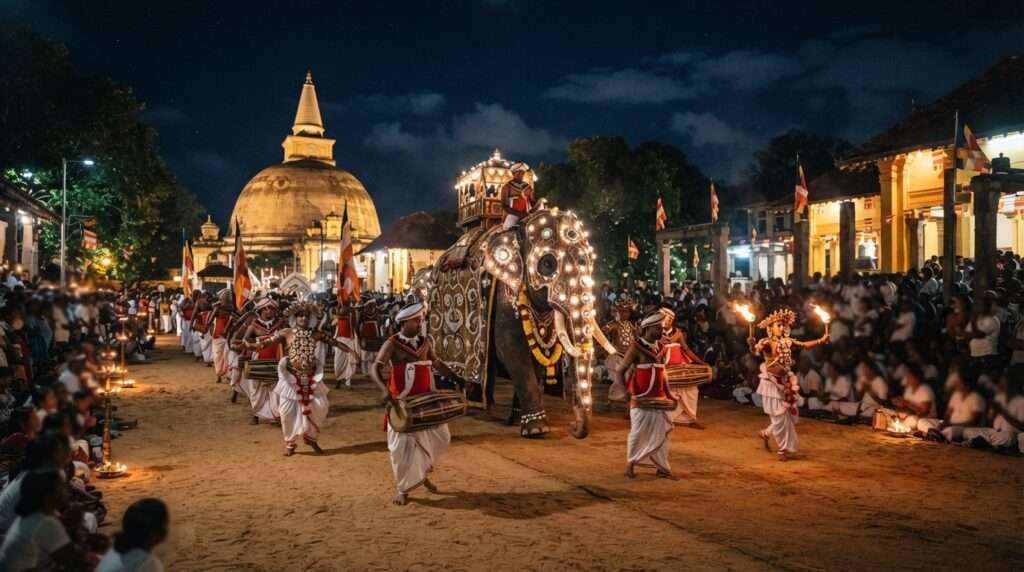
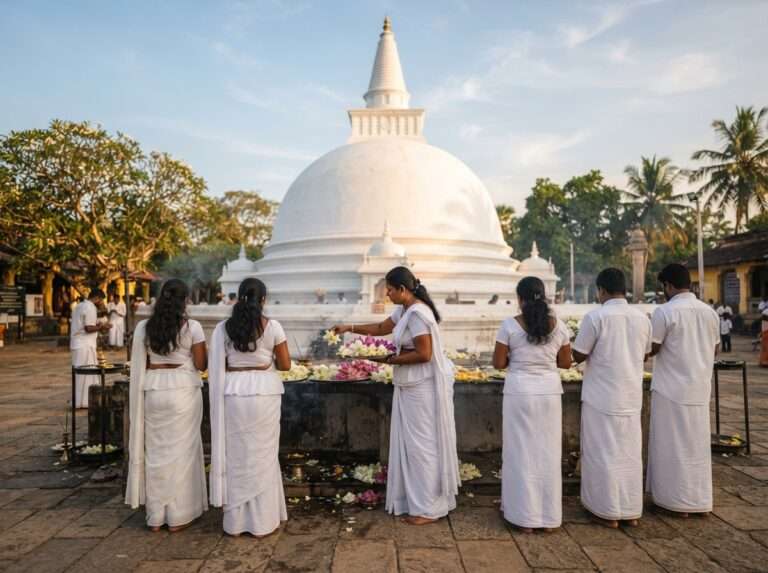
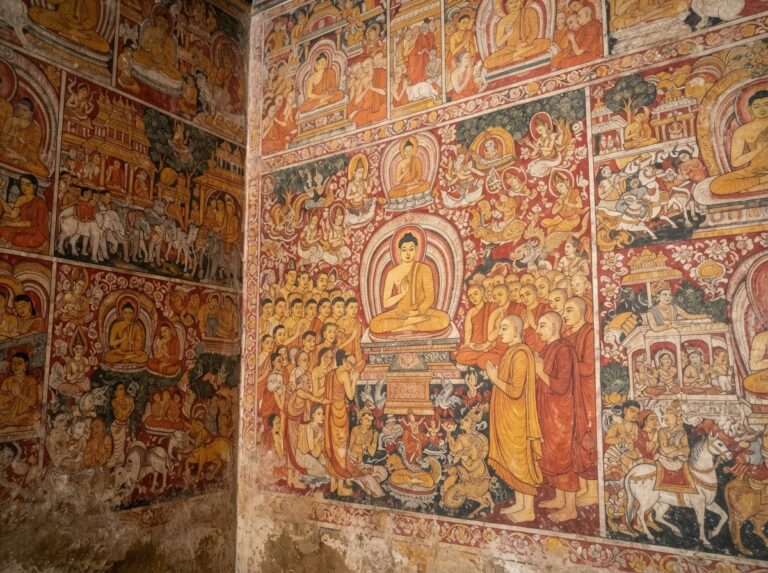
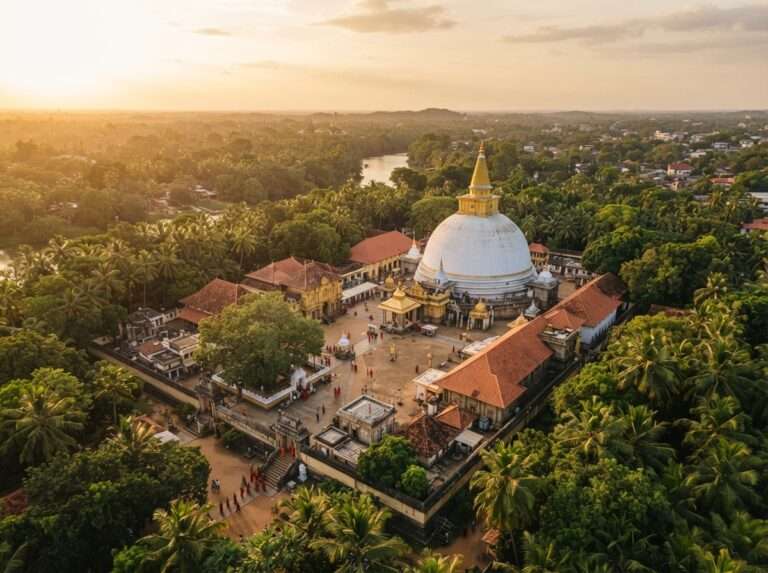
Kelaniya, 11 km from Colombo Fort, is where Sri Lanka’s chronicles say the Buddha made his third and final visit to the island. The current image house is from the 18th and 20th centuries, and its walls carry some of the finest modern Buddhist murals in the country, painted by Solias Mendis in the mid-20th century. They show the history of Buddhism in Sri Lanka, including the arrival of the Bodhi tree.
The Duruthu Perahera in January brings elephants and dancers to the temple grounds. It is one of the easiest temples to add to an arrival day in Colombo. More Buddhist temples like this one are in our guide to Buddhist temples in Sri Lanka.
| Location | Kelaniya, about 11 km north-east of Colombo Fort |
| Timings | About 5:30 am to 9 pm |
| Entry fee | Free; donations welcome |
| Dress code | White or light colours; shoulders and knees covered |
| Best time | Full-moon (Poya) evenings; January for Duruthu Perahera |
18
Dambulla Cave Temple, Dambulla
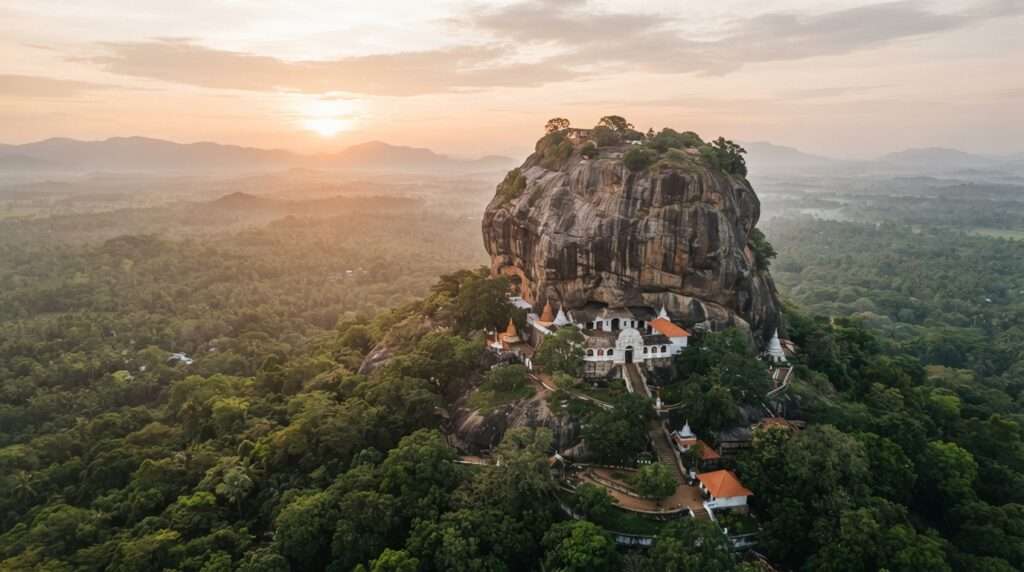
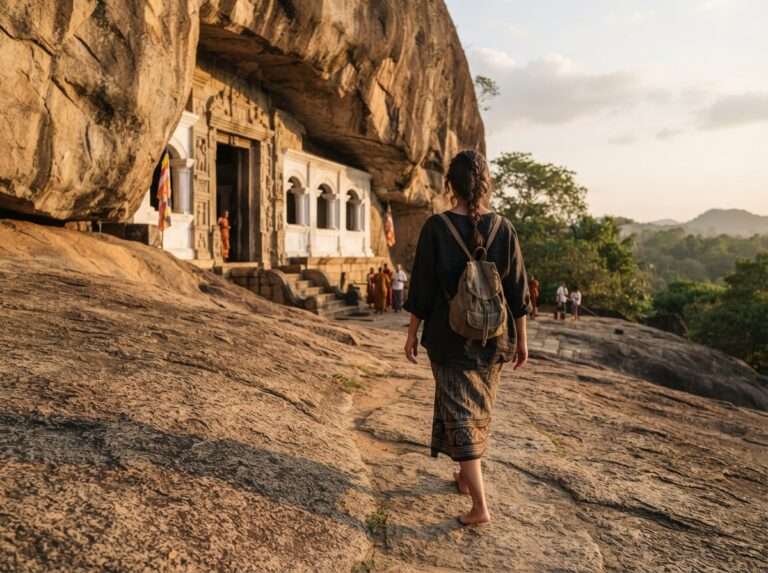
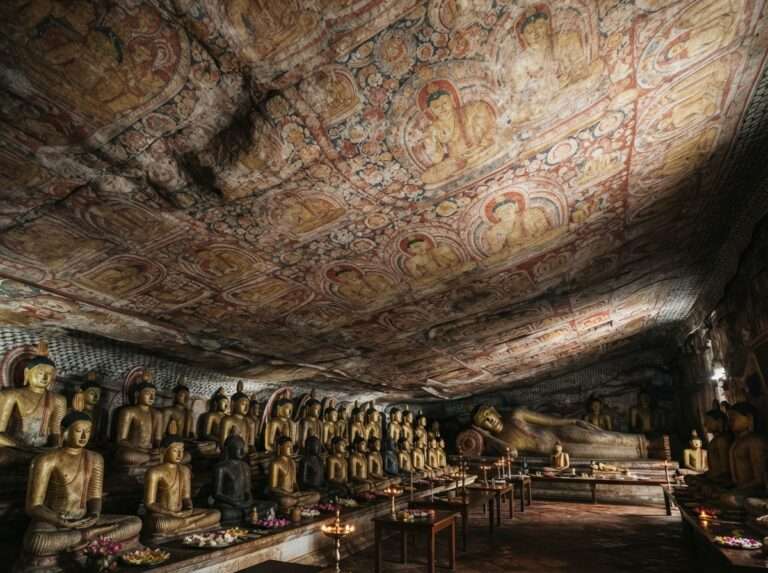
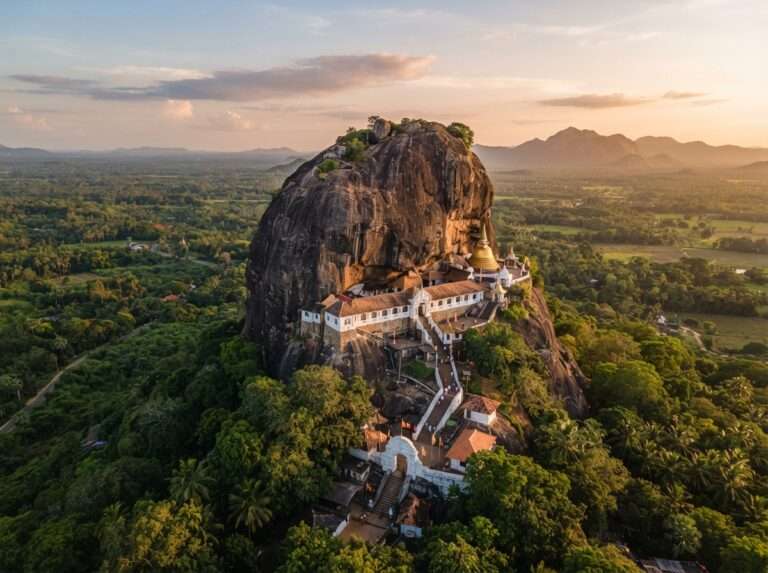
Dambulla is a monastery built into five caves high on a granite outcrop, with 153 Buddha images and ceilings painted edge to edge. King Valagamba is said to have taken refuge here in the 1st century BC and later turned the caves into a temple. UNESCO listed it as a World Heritage Site in 1991.
The climb from the road takes 15 to 20 minutes. Buy your ticket at the counter at the bottom first, because there is no ticket office at the top. Shoes go into a paid stand at the cave entrance. Ignore the giant golden Buddha by the road. It belongs to a modern museum and is not the cave temple. Our Dambulla Cave Temple guide and the Dambulla entry fees page have current details.
| Location | Dambulla town, Matale District, about 20 km from Sigiriya and 150 km from Colombo |
| Timings | About 7 am to 7 pm; the ticket office closes earlier |
| Entry fee | LKR 3,000 |
| Dress code | Shoulders and knees covered; shoes off at the caves |
| Best time | Early morning, before the rock heats up |
| Time needed | 1.5 hours with the climb |
19
Jaya Sri Maha Bodhi and Ruwanwelisaya, Anuradhapura
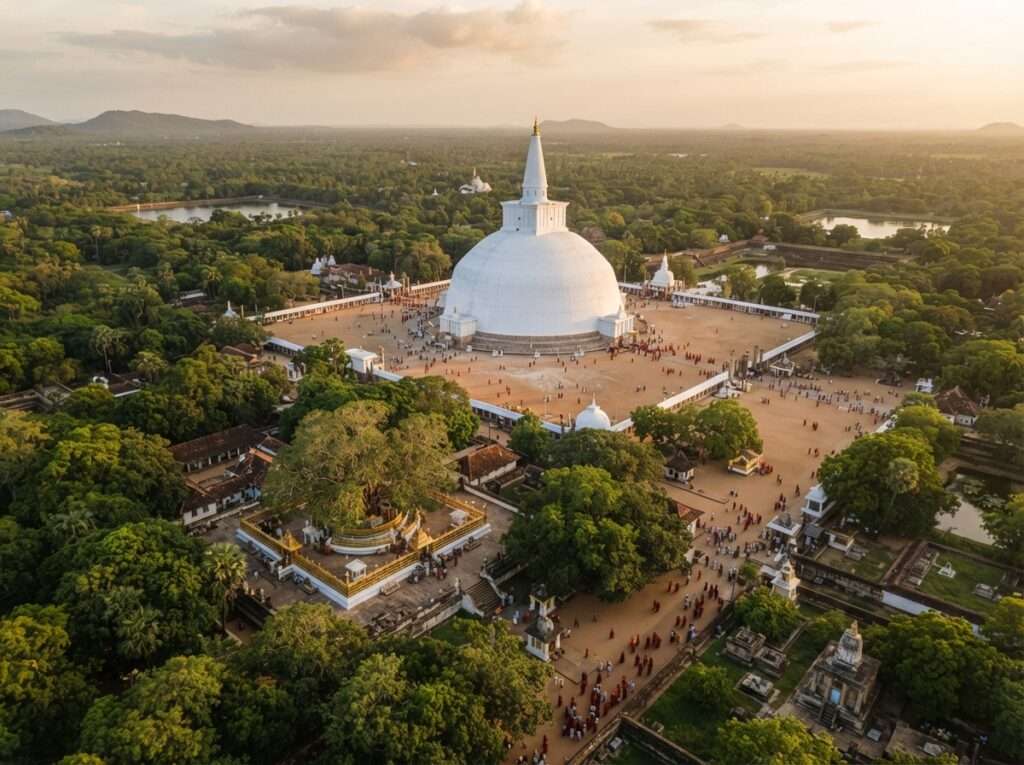
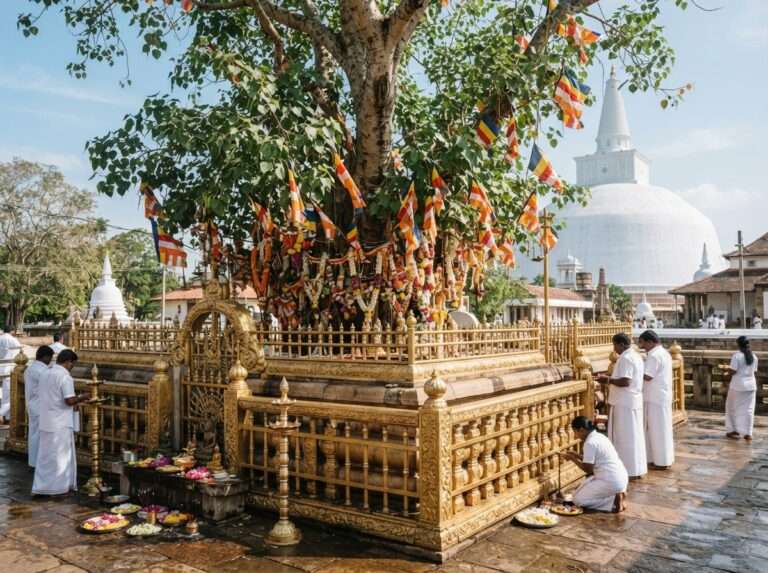
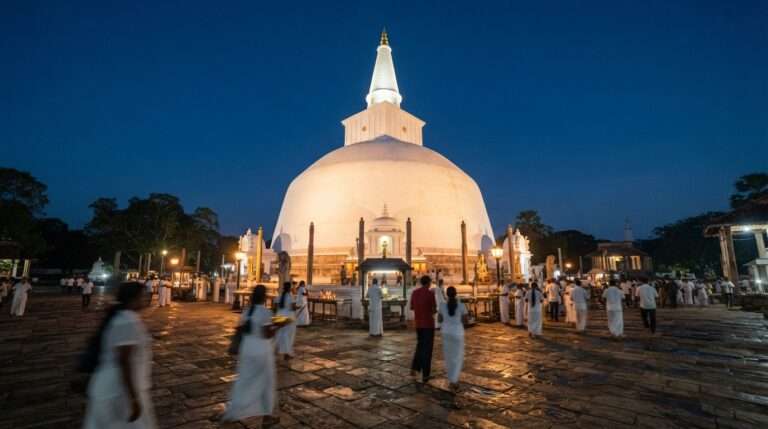
Anuradhapura was Sri Lanka’s first capital and is still its most sacred Buddhist city. At its heart is Jaya Sri Maha Bodhi, a fig tree grown from a cutting of the Bodh Gaya tree under which the Buddha gained enlightenment. The nun Sanghamitta, daughter of Emperor Ashoka, brought the cutting in the 3rd century BC. It is the oldest human-planted tree with a documented history anywhere.
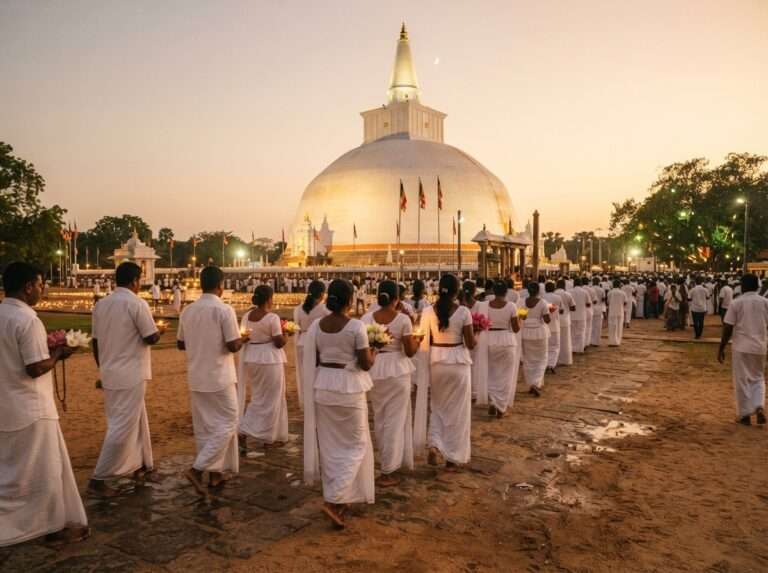
A short walk north is Ruwanwelisaya, the great white stupa built by King Dutugemunu in the 2nd century BC. Pilgrims in white walk around it at dusk carrying flowers. Most visitors rent bicycles to cover the sacred city. For more temples here, see our Anuradhapura guide.
| Location | Sacred City, Anuradhapura, about 205 km (5 hours) from Colombo |
| Timings | Sacred city about 7 am to 6 pm; the Bodhi tree and Ruwanwelisaya stay open for worship into the night |
| Entry fee | Ruwanwelisaya is free and Sri Maha Bodhi charges a small fee (around LKR 200 to 300). The CCF ticket (about USD 30, or about USD 15 for SAARC passports) is only needed for the museums and other ruins such as Abhayagiri and Jetavanaramaya |
| Dress code | White is preferred; shoulders and knees covered; shoes off |
| Best time | Late afternoon into evening, or Poson full moon in June |
| Time needed | A full day for the sacred city |
20
Mihintale, near Anuradhapura
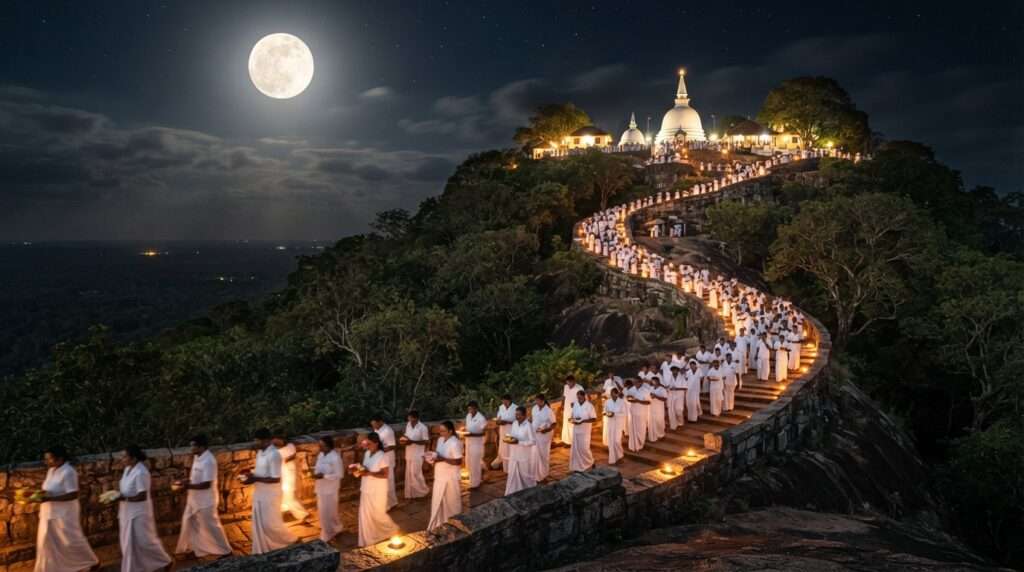
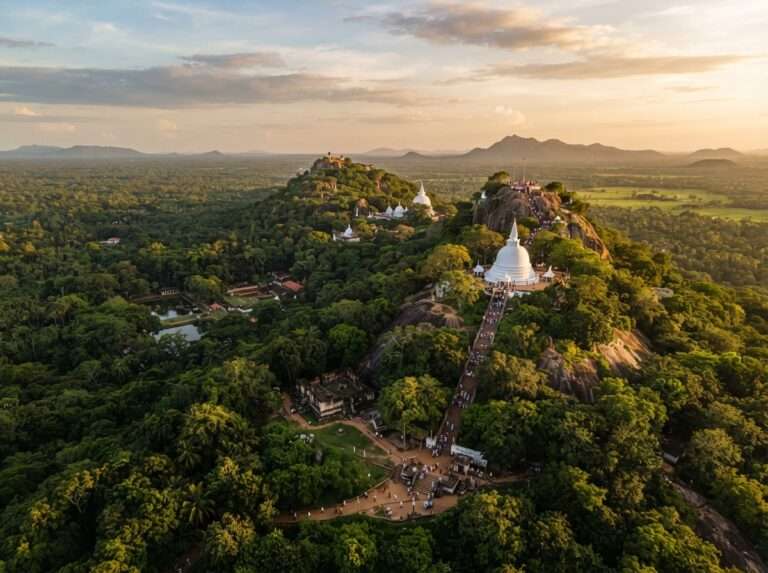
Mihintale is the hill where Buddhism arrived in Sri Lanka. In the 3rd century BC, on the June full moon, the monk Mahinda met King Devanampiya Tissa here, and the king converted. That day is now Poson, when thousands climb the hill in white.
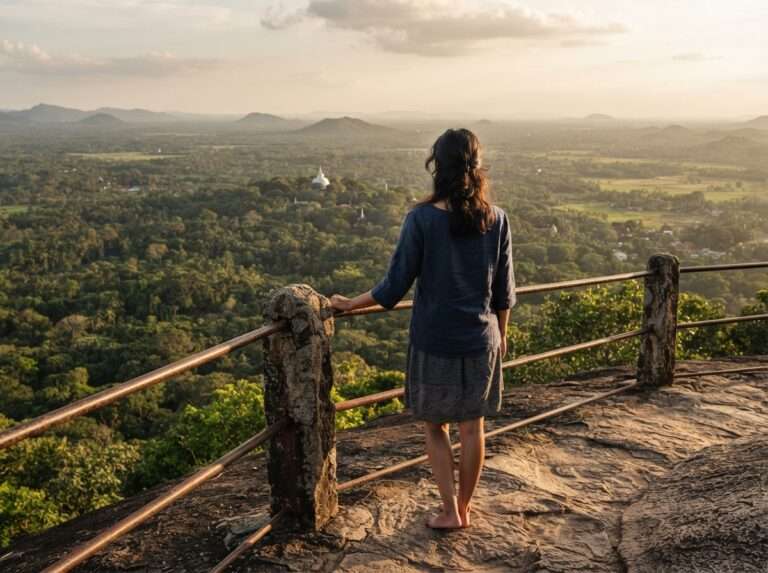
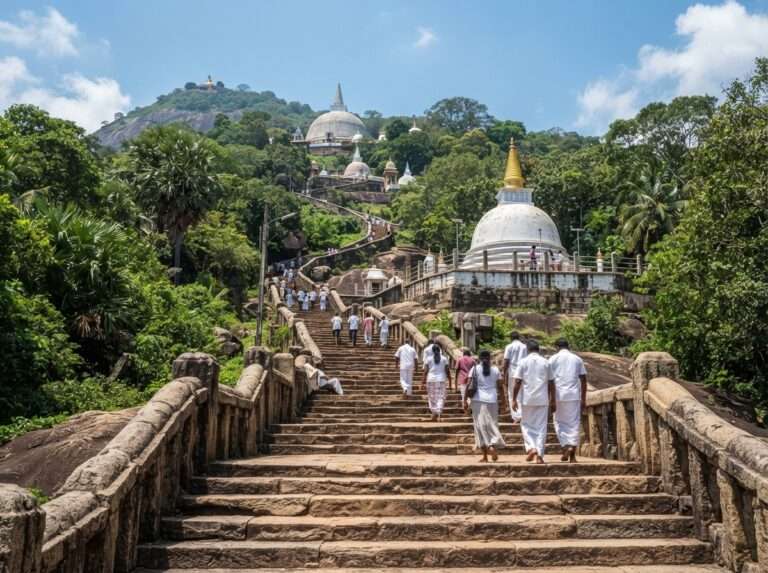
A long stone stairway of more than 1,800 steps climbs past dagobas and a monks’ refectory to Aradhana Gala, a bare rock with a railing and a view over the plains to Anuradhapura’s stupas. Climb barefoot from the upper terrace, so go early before the rock burns. Our Mihintale guide covers the full climb.
| Location | Mihintale, about 12 km east of Anuradhapura |
| Timings | Dawn to dusk |
| Entry fee | About LKR 1,000 |
| Dress code | Shoulders and knees covered; shoes off at the upper terrace |
| Best time | Early morning; Poson full moon in June |
| Time needed | 2 hours |
21
Gal Vihara, Polonnaruwa
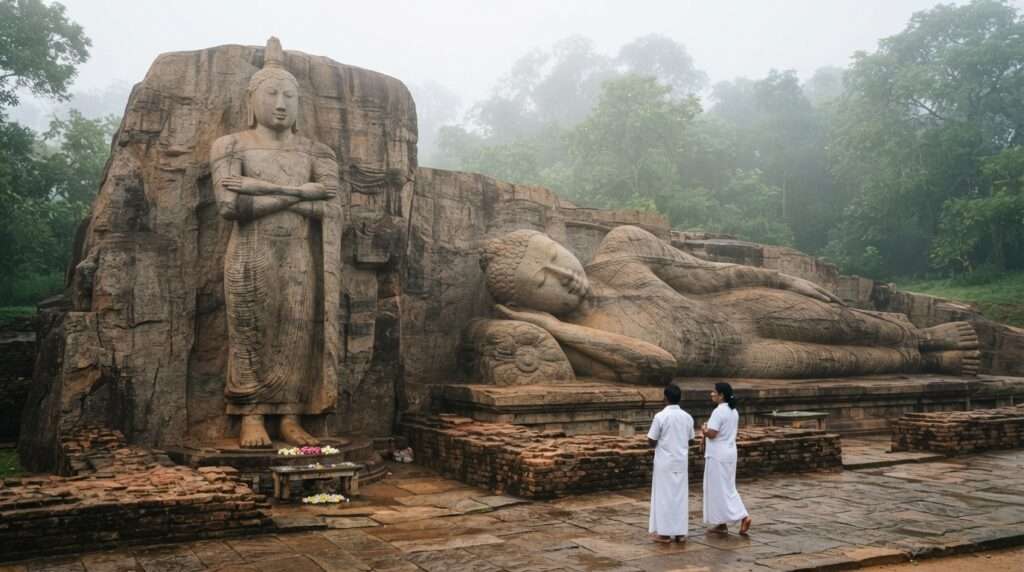
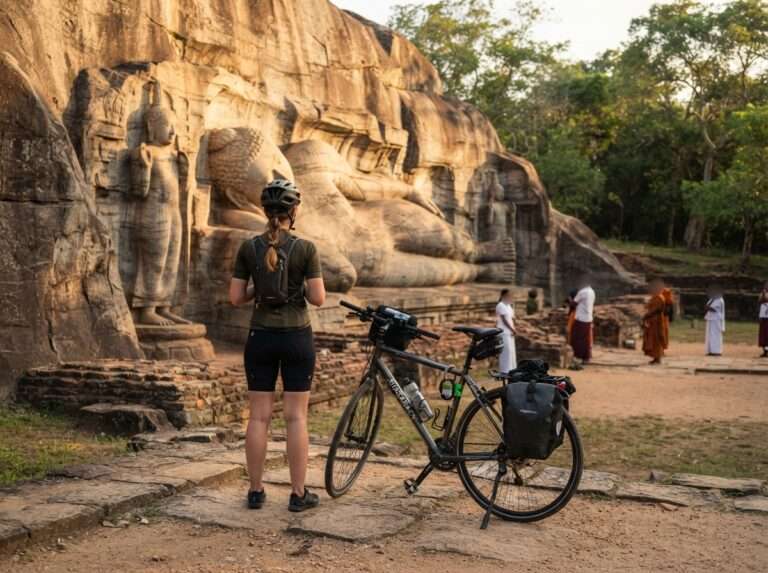
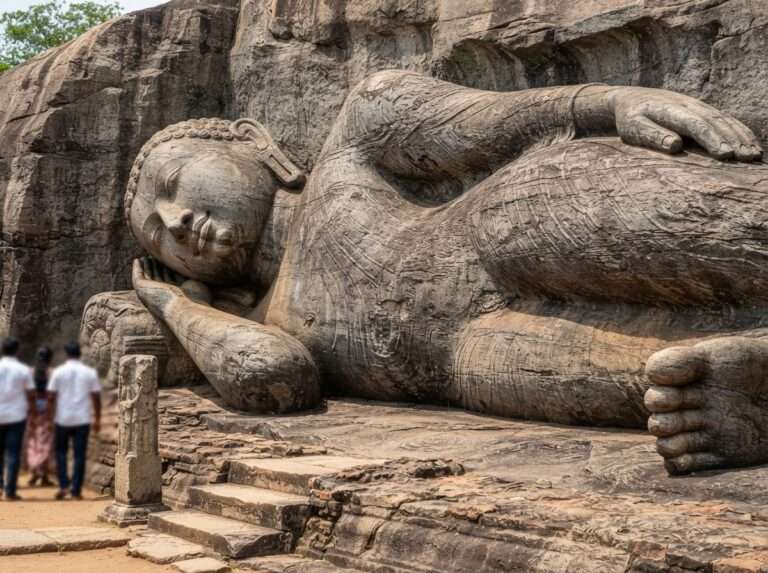
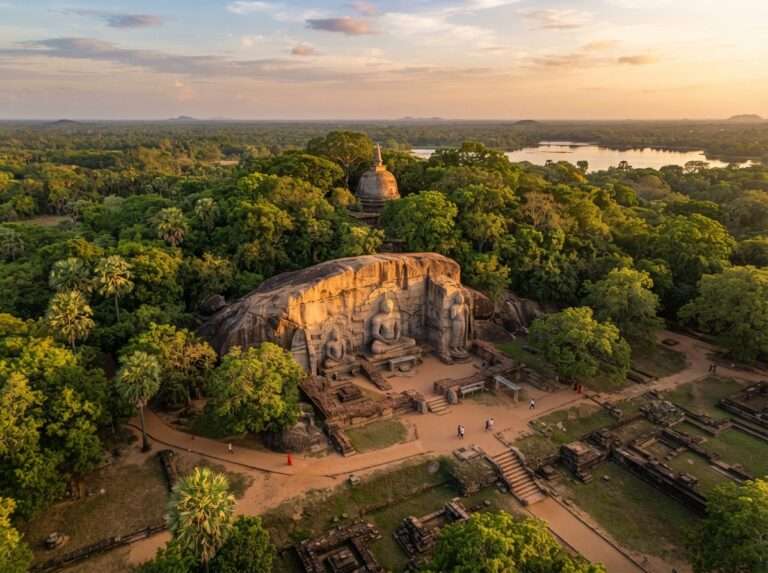
Gal Vihara is the finest stone sculpture in Sri Lanka. In the 12th century King Parakramabahu I had four Buddha figures cut from a single granite face. There is a seated Buddha, a small one in a cave, a standing figure and a reclining Buddha about 14 m long, showing the passing into parinirvana.
It is one stop inside the Ancient City of Polonnaruwa, a UNESCO site of palaces, image houses and the round Vatadage. The site ticket covers all of it. Rent a bicycle at the museum and finish at Gal Vihara in the late-afternoon light.
| Location | Ancient City of Polonnaruwa, about 65 km from Dambulla |
| Timings | About 7 am to 6 pm |
| Entry fee | About USD 30 for the Ancient City ticket; about USD 15 for Indian and other SAARC passport holders |
| Dress code | Shoulders and knees covered; shoes and hats off at the shrines |
| Time needed | Half a day for the whole site |
22
Embekke Devalaya and Lankatilaka Vihara, near Kandy
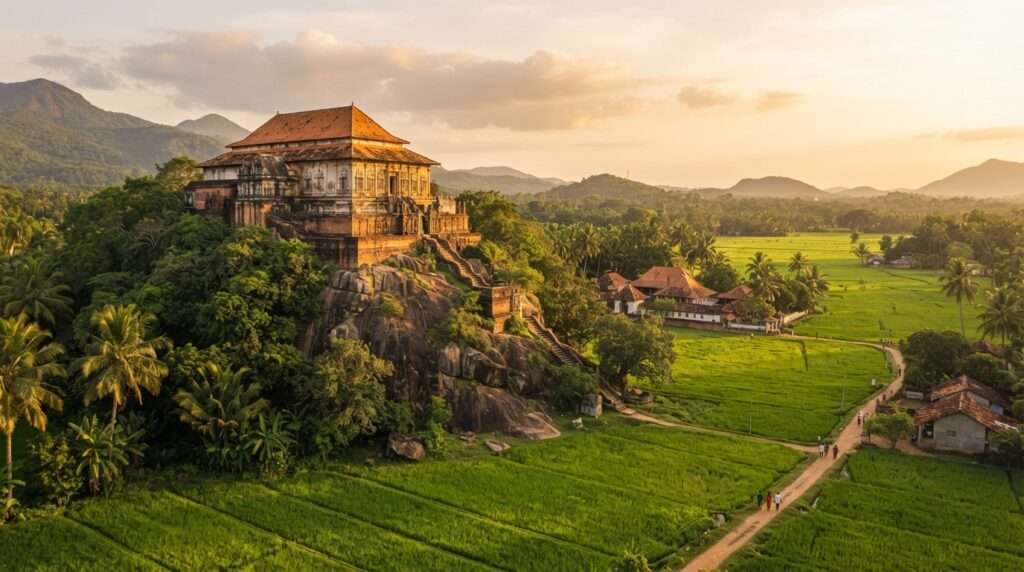
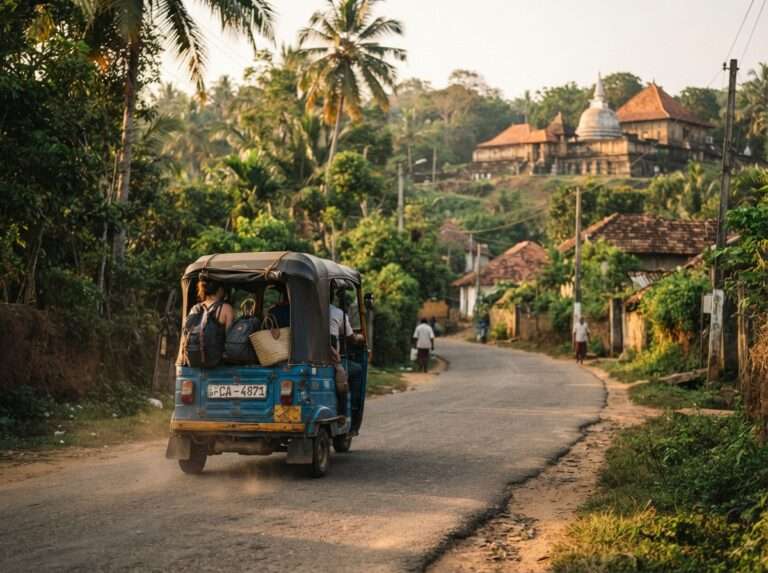
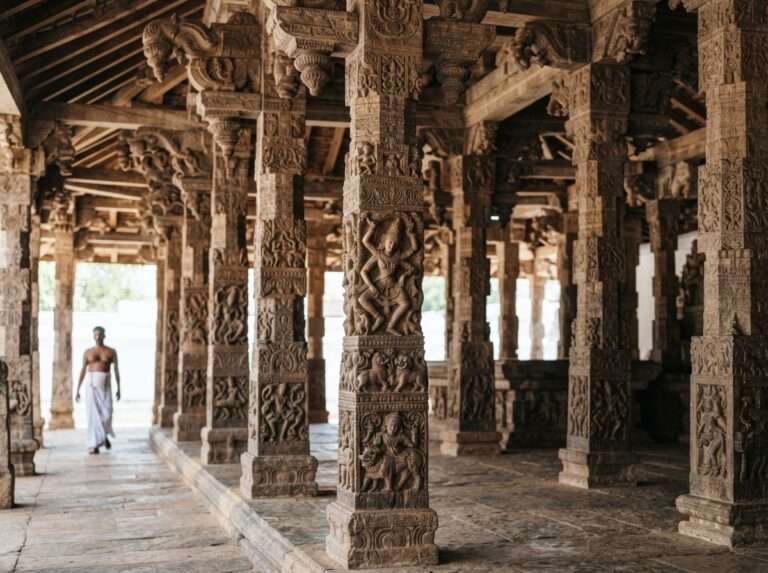
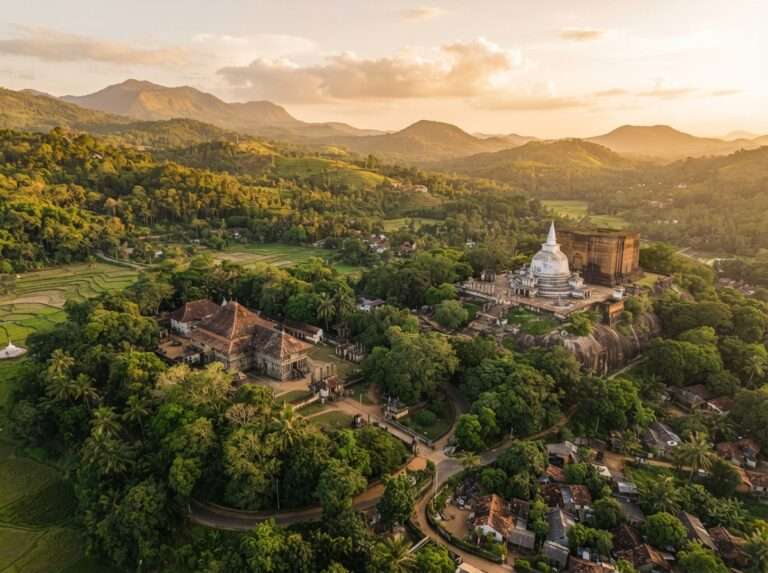
Embekke and Lankatilaka sit on a short rural loop south-west of Kandy known as the Three Temples Loop, together with Gadaladeniya. Embekke is a 14th-century devale dedicated to the god Kataragama, and its wooden drumming hall has carved pillars showing dancers, wrestlers, double-headed eagles and a woman suckling a child. Lankatilaka, from 1344, is a tall image house on a rock with Buddhist and Hindu deities sharing the same walls.
Each charges a few hundred rupees. A tuk-tuk from Kandy for the loop takes about half a day.
| Location | Kandy District, about 12 to 15 km south-west of Kandy |
| Timings | About 8 am to 5 pm |
| Entry fee | A few hundred LKR at each temple |
| Dress code | Shoulders and knees covered; shoes off |
| Time needed | Half a day for all three temples |
23
Aluvihare Rock Temple, Matale
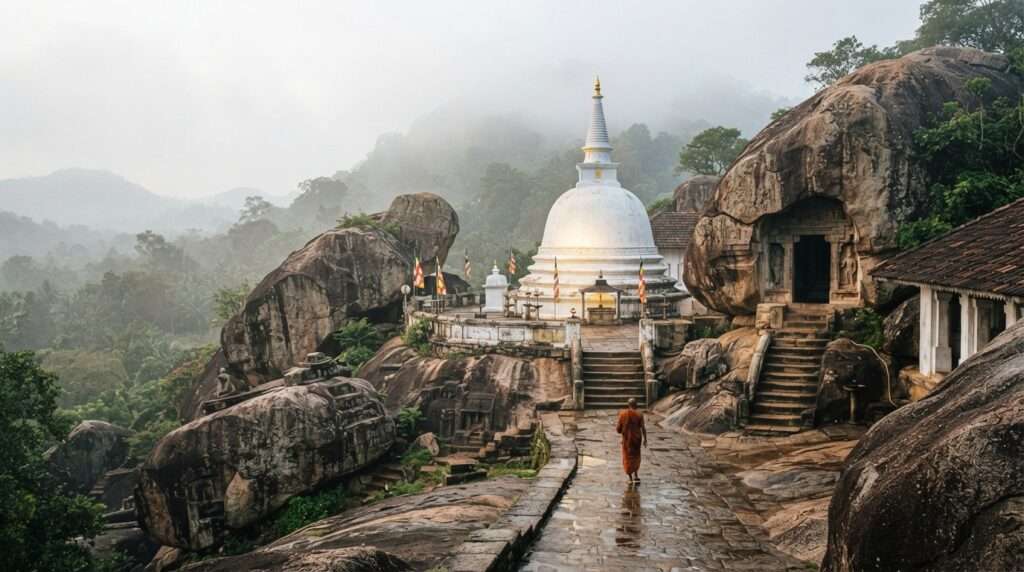
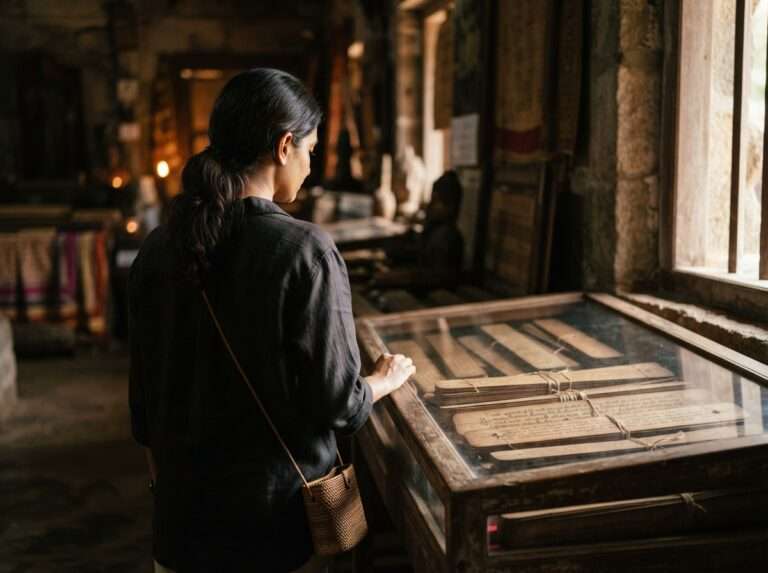
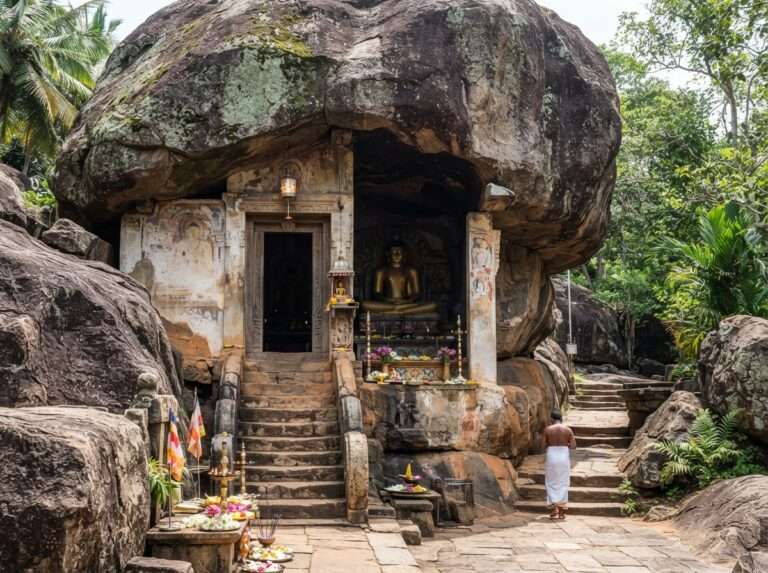
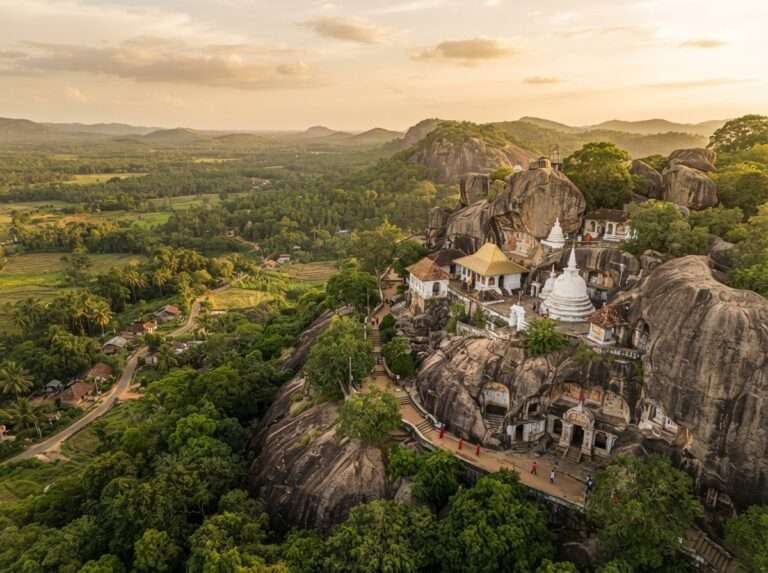
Aluvihare is where Buddhist monks first wrote down the Pali canon (Tipitaka) on palm leaves, in the 1st century BC, after centuries of passing it on by memory. The temple is built into a cluster of boulders, with cave shrines and a small museum showing how ola-leaf manuscripts are made.
One cave has graphic paintings of the punishments of hell. Children may find them disturbing. Visit with the Matale Muthumariamman temple, 3 km south.
| Location | On the A9, 3 km north of Matale and 28 km north of Kandy |
| Timings | About 7 am to 6 pm |
| Entry fee | Donation |
| Dress code | Shoulders and knees covered; shoes off |
| Time needed | 45 minutes |
24
Muthiyangana Raja Maha Vihara, Badulla
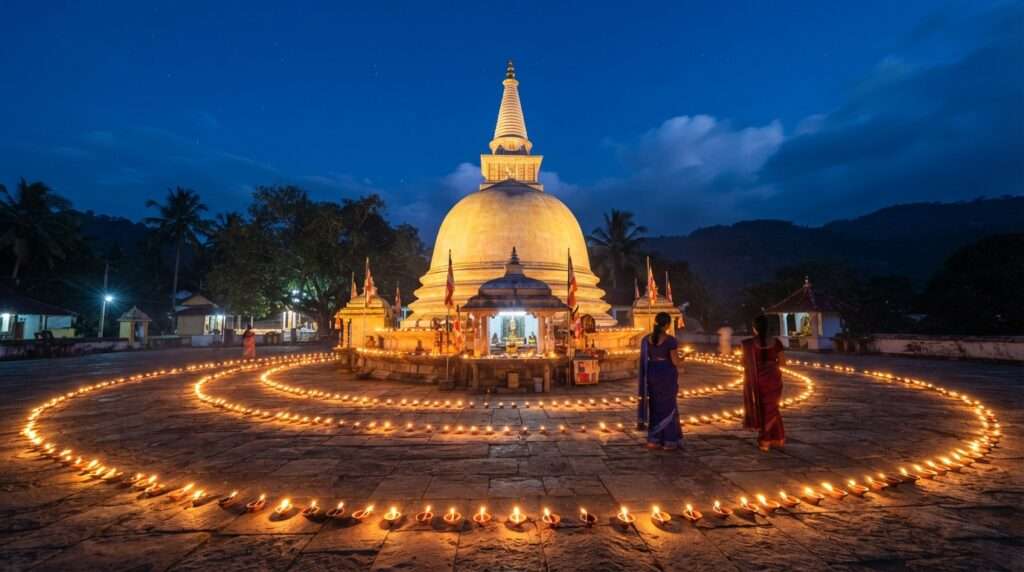
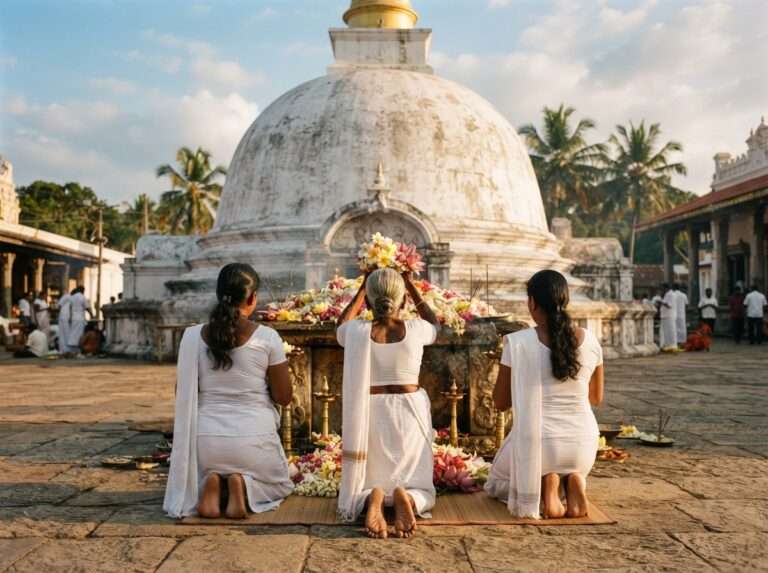
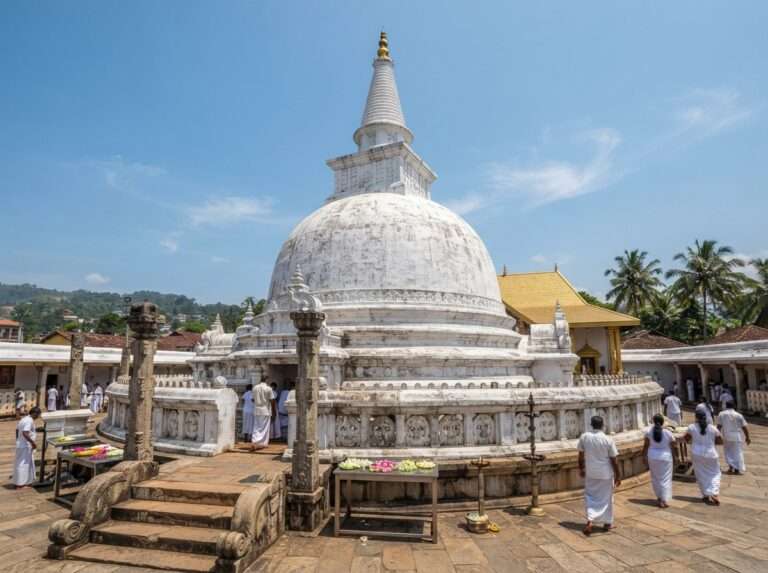
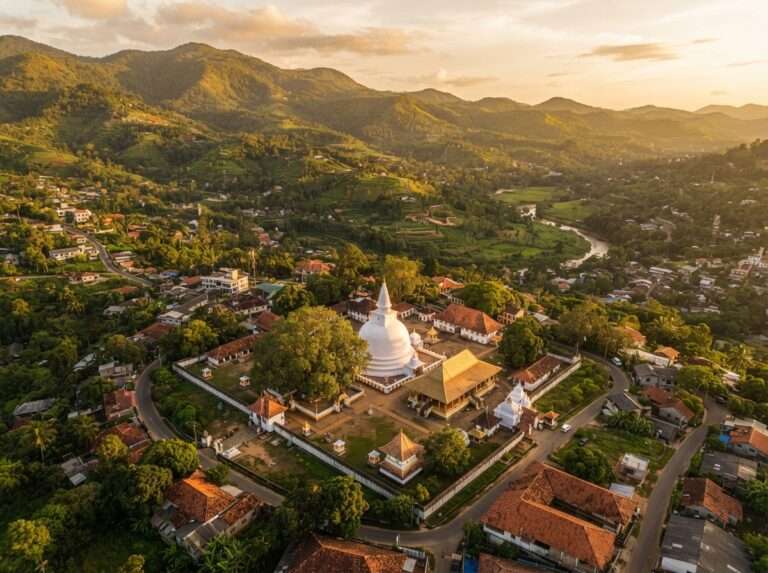
Muthiyangana in Badulla town is one of the 16 Solosmasthana, the most sacred Buddhist sites in Sri Lanka, because tradition says the Buddha visited here. Its white stupa and Kandyan-era paintings draw mostly local worshippers, so it is calm even in peak season.
It is about 22 km from Ella, so add it to an Ella stay rather than a south-coast trip. Stay in Ella or Badulla.
| Location | Badulla town, about 22 km from Ella |
| Timings | Morning to evening |
| Entry fee | Free |
| Dress code | White or light colours; shoulders and knees covered |
| Time needed | 45 minutes |
25
Maviddapuram Kandaswamy Temple, Jaffna
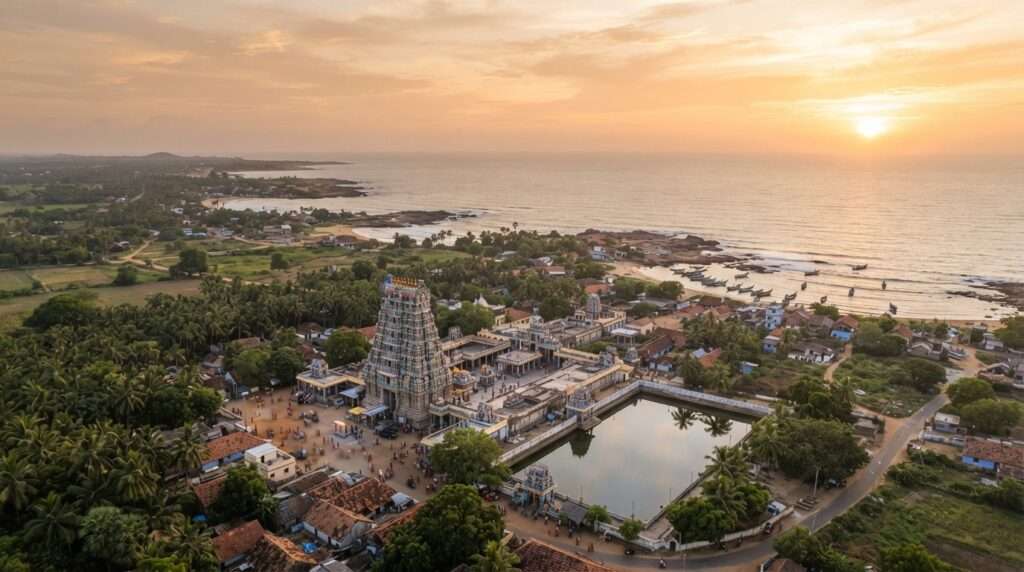
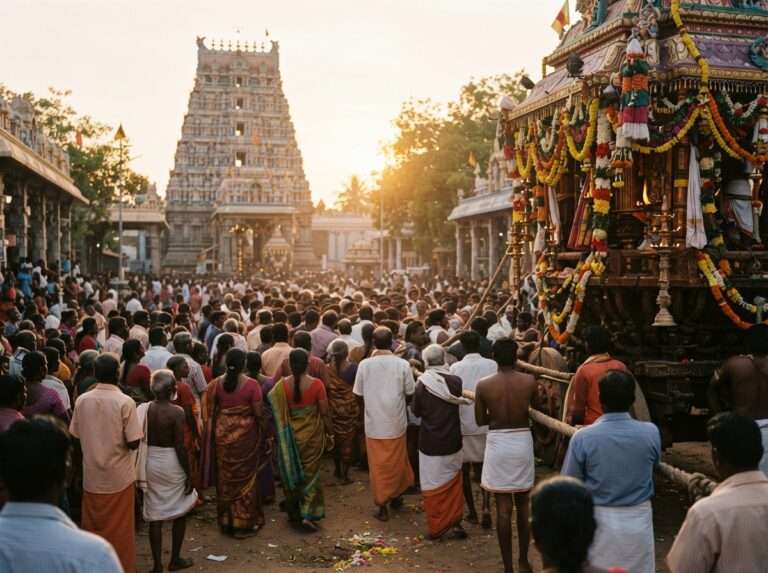
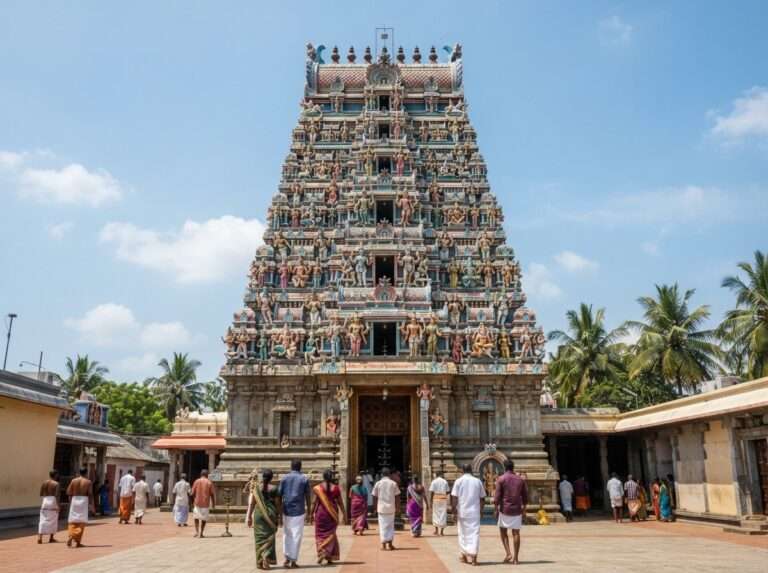
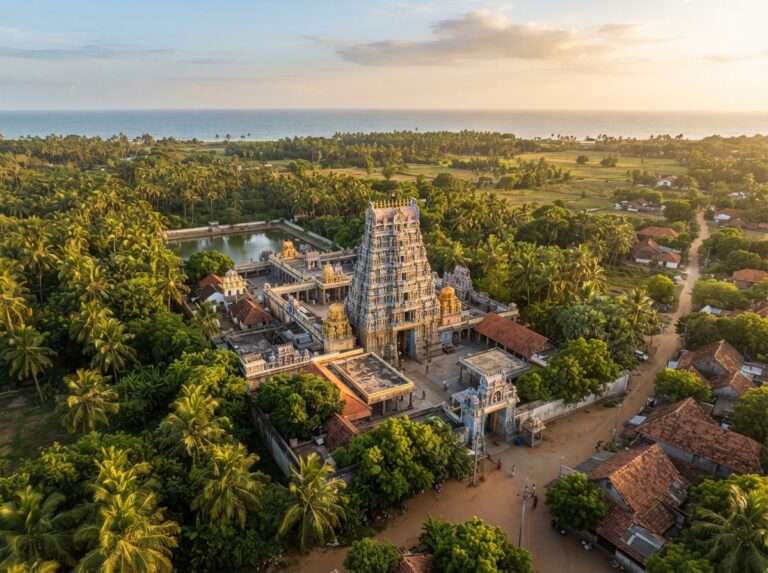
Maviddapuram is a Murugan temple near Kankesanthurai on the north coast of the Jaffna peninsula. Its legend tells of a Chola princess, Maruthapuraveeka, who had a horse’s face and was cured by bathing at Keerimalai and praying to Murugan. In thanks, the temple was built here, and the name comes from “maa” (horse) and “viddapuram” (the place where it left).
The temple’s annual festival is one of the biggest in the north. Jaffna International Airport at Palaly is a short drive away, and Naguleswaram and Keerimalai are about 5 km west, so you can do all three in one morning.
| Location | Maviddapuram, about 15 km north of Jaffna, near Kankesanthurai |
| Timings | Morning and evening pujas |
| Entry fee | Free |
| Dress code | Men shirtless inside; women in saree or salwar |
| Nearby | Naguleswaram and Keerimalai spring (about 5 km), Jaffna Airport at Palaly |
Pancha Ishwarams, Shakti Peethas and the Jyotirlinga Question
Indian pilgrims arrive in Sri Lanka with three lists in mind, and only two of them apply here.
The Pancha Ishwarams are five coastal Shiva temples said to have guarded the island in each direction. They are Naguleswaram in the north, Koneswaram in the east, Tondeswaram in the south, Munneswaram in the west and Ketheeswaram in the north-west. Koneswaram and Ketheeswaram are also Paadal Petra Sthalams, temples praised in the Tevaram hymns that are sung across Tamil Nadu. All five are written up in the list above.
The Shakti Peethas are the places where parts of Sati’s body are said to have fallen. Adi Shankara’s Ashtadasha Shakti Peetha stotram begins with “Lankayam Shankari Devi”, and the Shankari Devi shrine at Koneswaram is the one pilgrims visit for it. Many devotees also count Nainativu Nagapooshani Amman among the 51 Shakti Peethas.
Is there a Jyotirlinga in Sri Lanka? No. All 12 Jyotirlingas are in India, from Somnath in Gujarat to Rameswaram in Tamil Nadu. Websites that call Koneswaram or Munneswaram a “Sri Lanka Jyotirlinga” are mixing up the lists. What Sri Lanka has instead is the Pancha Ishwaram circuit, and for a Shiva devotee it is reason enough to come.
| Temple | Direction | Region | From Colombo | Big festival |
| Naguleswaram | North | Keerimalai, Jaffna | About 420 km | Maha Shivaratri |
| Koneswaram | East | Trincomalee | About 260 km | Annual chariot festival |
| Tondeswaram | South | Dondra, Matara | About 160 km | Esala perahera (Jul to Aug) |
| Munneswaram | West | Chilaw | About 80 km | Navaratri; 28-day Aug to Sep festival |
| Ketheeswaram | North-west | Mannar | About 300 km | Maha Shivaratri at the Palavi tank |
Ramayana Temples in Sri Lanka
Six temples on this list carry a Ramayana link, and they are spread across the island. Munneswaram and Manavari on the west coast are tied to Rama’s prayers after the war. Seetha Amman at Sita Eliya marks the Ashok Vatika. The Hanuman temple at Ramboda stands where Hanuman is believed to have searched for Sita. Ketheeswaram is linked to Mandodari’s family, and Koneswaram to Ravana himself, who tradition says worshipped Shiva on Swami Rock.
Outside the temples, the trail continues to Divurumpola near Nuwara Eliya, where Sita is said to have faced the Agni Pariksha, and to Ravana’s Cave near Ella. Our Ramayana trail in Sri Lanka guide maps all of these, and if you would like the driving and hotels arranged, Sri Lanka Ramayana tour packages bundle them into one trip.
Hindu Kovils vs Buddhist Temples: What to Expect
A Hindu kovil and a Buddhist vihara feel completely different, even when they sit a few kilometres apart. The table compares the two.
| Hindu kovil (Nallur, Koneswaram, Munneswaram) | Buddhist temple (Tooth Temple, Dambulla, Kelaniya) | |
|---|---|---|
| Entry fee | Almost always free | Free at working temples; LKR 3,000 or more at major heritage sites |
| Men’s dress | Shirt off inside the big Jaffna and Mannar kovils; veshti or long trousers | Shirt on; long trousers or sarong; white preferred |
| Women’s dress | Saree, salwar or long skirt; shoulders covered | Shoulders and knees covered; white or light colours preferred |
| Shoes | Off at the gate, often at a paid stand | Off before the shrine terrace, sometimes before the outer gate |
| Offerings | Flowers, coconut, archanai ticket (about LKR 100 to 200) | Lotus or jasmine flowers, incense, oil lamps |
| Photography | Usually banned inside the sanctum | Allowed in most halls; never with your back to a Buddha image |
| Best time to visit | During a puja, especially dusk | Evening puja or full-moon (Poya) days |
How to Visit a Hindu Kovil or Buddhist Temple in Sri Lanka
- Dress for the stricter of the two. Carry a shawl or sarong in your daypack. It covers shoulders at a vihara and works as a wrap at a kovil.
- Carry cash in small notes. Archanai tickets, shoe stands and flower stalls want LKR 20 to 200, and none of them take cards.
- Time your arrival to a puja. The Tooth Temple’s 6:30 pm service, Koneswaram’s 4:30 pm puja and Nallur’s dusk puja are the ones worth planning a day around.
- Leave shoes and hats at the gate. At the bigger kovils, men are also expected to take off their shirts before the inner shrine.
- Buy or bring the right offering. Flowers and incense for Buddhist temples. Flowers, a coconut or an archanai ticket at a kovil.
- Walk clockwise and keep the image in front of you. Circle stupas and shrines clockwise, and never pose for a photo with your back to a Buddha statue. Sri Lankans see it as deeply disrespectful, and tourists have been detained and deported for disrespecting Buddha images. Cover any Buddha tattoo as well, because visitors with visible Buddha tattoos have been refused entry and deported.
- Ask before you photograph. Point the camera at the building, not at people praying, and put it away entirely when a priest tells you to.
Temple Festival Calendar for Sri Lanka
Temple festivals follow the lunar calendar, so the dates move every year. Use the months below to plan, then check the exact dates once the temple or the Sri Lankan government publishes them. Every full-moon day (Poya) is a public holiday, and alcohol sales stop island-wide.
| Month | Festival | Temple |
|---|---|---|
| January | Duruthu Perahera | Kelaniya Raja Maha Vihara |
| February | Navam Perahera | Gangaramaya, Colombo |
| February to March | Maha Shivaratri | Ketheeswaram, Munneswaram, Koneswaram |
| May | Vesak (Buddha’s birth, enlightenment and passing) | Island-wide, lantern displays in Colombo |
| June | Poson | Mihintale and Anuradhapura |
| June to July | Annual Mahotsavam | Nainativu Nagapooshani Amman |
| July | Esala festival (15 to 30 July in 2026) | Kataragama |
| July to August | Vel festival | New Kathiresan Kovil, Colombo |
| July to August | Esala perahera | Devinuwara, Dondra |
| August | Esala Perahera (18 to 28 August in 2026) | Temple of the Tooth, Kandy |
| Late July to early September | Annual festival, about 25 days | Nallur Kandaswamy, Jaffna |
| August to September | 28-day festival | Munneswaram, Chilaw |
| September to October | Navaratri | Munneswaram and all major kovils |
For the full list, including Deepavali and Thai Pongal, see our guide to festivals in Sri Lanka.
A 7-Night Temple Route for Indian Travellers
This loop covers four of the five Pancha Ishwarams, Nallur, Anuradhapura and Dambulla in the Cultural Triangle, and the Ramayana sites in the hills, and it starts and ends in Colombo. It works best with a car and driver, because Jaffna, Trincomalee and Mannar are poorly linked by public transport.
| Day | Route | Temples | Drive |
|---|---|---|---|
| 1 | Arrive Colombo | Kelaniya, Gangaramaya, Ponnambalam Vaneswarar | City only |
| 2 | Colombo to Anuradhapura via Chilaw | Munneswaram, Manavari; evening at Sri Maha Bodhi | About 6 hours |
| 3 | Anuradhapura to Jaffna via Mannar | Mihintale at dawn; Ketheeswaram at midday | About 6 hours |
| 4 | Jaffna day | Nainativu by morning ferry; Nallur dusk puja | About 2.5 hours in total |
| 5 | Jaffna to Trincomalee via Keerimalai | Naguleswaram and Maviddapuram at dawn; Koneswaram 4:30 pm puja | About 6 hours |
| 6 | Trincomalee to Kandy via Dambulla | Dambulla Cave Temple, Matale Muthumariamman; Tooth Temple 6:30 pm service | About 4.5 hours |
| 7 | Kandy to Nuwara Eliya | Ramboda Hanuman; Seetha Amman | About 3 hours |
| 8 | Nuwara Eliya to Colombo | Departure | About 5 hours |
If Day 5 feels tight, see Naguleswaram and Maviddapuram on the Day 4 afternoon instead. Want Polonnaruwa too? Add a night there between Trincomalee and Kandy to see Gal Vihara. Adding the south? Kataragama and Dondra need two more days from Nuwara Eliya via Ella. Take in Muthiyangana in Badulla on the way.
TravelTriangle’s Sri Lanka tour packages can be customised around this route, and the Sri Lanka temple tour itinerary is a ready-made starting point. For visa rules before you book, read Sri Lanka visa for Indians.
Plan Your Temple Trip to Sri Lanka
Sri Lanka packs five ancient Shiva temples, two Shakti shrines, the Buddha’s tooth and the world’s oldest documented tree into an island you can drive across in a day. Start with Kandy and Koneswaram if you have a week. Add Jaffna if you have more. For the bigger picture, our Sri Lanka travel guide covers the rest of the island, and when you are ready to book, compare Sri Lanka tour packages that can be built around the temples you most want to see.
FAQs
FAQs About Temples in Sri Lanka
What Indian travellers ask before planning a temple trip to Sri Lanka
The Temple of the Sacred Tooth Relic (Sri Dalada Maligawa) in Kandy is the most famous temple in Sri Lanka. It holds a tooth of the Buddha, brought to the island in the 4th century, and is the country's holiest Buddhist site. Among Hindu temples, Koneswaram in Trincomalee and Nallur Kandaswamy in Jaffna are the best known. Kataragama is the only major temple revered by Buddhists, Hindus and Muslims alike.
Nallur Kandaswamy Kovil in Jaffna is the largest and most visited Hindu temple in Sri Lanka, and its 25-day festival draws hundreds of thousands of people. Munneswaram near Chilaw is a large complex with five temples in one compound. By reputation, Koneswaram and Ketheeswaram are the most sacred, because both are Pancha Ishwarams praised in the Tevaram hymns.
The Pancha Ishwarams are five ancient Shiva temples on Sri Lanka's coasts. They are Naguleswaram (Keerimalai, north), Koneswaram (Trincomalee, east), Tondeswaram (Dondra, south), Munneswaram (Chilaw, west) and Ketheeswaram (Mannar, north-west). Four are working Hindu temples today. Tondeswaram was destroyed in 1587, and its site is now the Devinuwara Vishnu Devalaya. Covering all five takes about a week by road.
There is no Jyotirlinga in Sri Lanka. All 12 Jyotirlingas are in India. Sri Lanka does have a Shakti Peetha. The Ashtadasha Shakti Peetha stotram names Shankari Devi in Lanka, and her shrine is at Koneswaram in Trincomalee. Many devotees also count Nainativu Nagapooshani Amman, on an island off Jaffna, among the Shakti Peethas.
Six temples carry Ramayana links. Seetha Amman Temple near Nuwara Eliya marks Ashok Vatika. Sri Bhakta Hanuman Temple at Ramboda is linked to Hanuman's search. Munneswaram and Manavari near Chilaw are tied to Rama's prayers after the war. Koneswaram is associated with Ravana's worship of Shiva, and Ketheeswaram with Mandodari's family. Divurumpola and Ravana's Cave complete the trail.
Indians pay the SAARC rate of LKR 2,500 at the Temple of the Tooth in Kandy, about ₹715. Other foreigners pay LKR 3,000, and Sri Lankans enter free. Show your passport. Tickets are sold only by the machines at the entrance, and tickets bought from anyone else are not valid. The ticket also covers the temple's museums and the tusker hall.
Most Hindu kovils and working Buddhist temples are free, including Koneswaram, Nallur, Munneswaram, Kelaniya and Seetha Amman. Fees apply at heritage sites. Expect LKR 3,000 at the Tooth Temple and Dambulla, about USD 30 each for the Anuradhapura and Polonnaruwa ancient cities (about USD 15 on an Indian or other SAARC passport), and LKR 300 to 1,000 at smaller sites like Gangaramaya and Mihintale. Carry cash in rupees.
Cover your shoulders and knees at every temple, and take off shoes and hats before entering. White or light colours are best at Buddhist temples. At big Hindu kovils in Jaffna and Mannar, men must remove their shirts, and women should wear a saree, salwar or long skirt. Shorts and sleeveless tops are refused at the Tooth Temple, which has wraps at the entrance.
January to April suits most of the island. The north and east (Jaffna, Trincomalee, Mannar) are dry from February to September, and the hill country and south are best from December to April. To see a festival, plan for the Kandy Esala Perahera in July or August, Nallur in August, or Vesak in May. Full-moon Poya days are busy but special.
Yes. The Esala Perahera is a ten-day procession around the Temple of the Tooth in July or August, with dancers, drummers and dozens of elephants. In 2026 it ran from 18 to 28 August, ending with the grand Randoli procession on 27 August. Book seats along the route and hotels in Kandy two to three months ahead. Dates for 2027 follow the lunar calendar.
Plan 7 to 8 days for the main temples. That covers Colombo, Chilaw, Anuradhapura, Trincomalee, Jaffna, Kandy and Nuwara Eliya, including four of the five Pancha Ishwarams. With 4 days, stick to Colombo, Kandy, Ramboda and Nuwara Eliya. Add two days for Kataragama and Dondra in the south.
श्रीलंका के प्रसिद्ध मंदिर हैं कैंडी का दंत मंदिर (श्री दलदा मालिगावा), त्रिंकोमाली का कोनेश्वरम, जाफना का नल्लूर कंदस्वामी, चिलाव का मुन्नेश्वरम, नुवारा एलिया का सीता अम्मन मंदिर और कटारगामा। हिंदू तीर्थयात्रियों के लिए पंच ईश्वरम (कोनेश्वरम, केतीश्वरम, मुन्नेश्वरम, नगुलेश्वरम और तोंडेश्वरम) सबसे महत्वपूर्ण हैं। ज़्यादातर हिंदू मंदिरों में प्रवेश निःशुल्क है।