
 5D / 4N
9% OFF


What a Cultural Holiday in Vietnam Looks Like
A cultural holiday in Vietnam is a trip built around the country’s living traditions rather than its beaches: lantern nights in Hoi An, royal court music in Hue, water puppets in Hanoi, Hmong and Dao villages around Sapa, Hindu-era Cham temples at My Son and floating markets in the Mekong Delta. Vietnam has 17 practices on UNESCO’s intangible heritage lists, the latest being Dong Ho folk painting in December 2025 (VOV), and 54 officially recognised ethnic groups, so there is far more to see than temples. Most cultural sights cost under 200,000 VND to enter, about ₹670 or US$8. The best single window is Tet, the Lunar New Year, which falls on 6 February 2027, though many shops close for several days around it. Below are the 15 experiences that show Vietnam culture at its best, then a 2026 to 2027 festival calendar, the three ways to book Vietnam cultural holidays from India and a 10-day route.
Key Takeaways
- Base a first cultural holiday on three cities: Hanoi for puppets, folk music and the Old Quarter, Hue for the imperial court, and Hoi An for lanterns, crafts and cooking. All three sit on one north to south route.
- Time your trip to a festival if you can. Tet falls on 6 February 2027 (official break 4 to 10 February), Hoi An’s next lantern nights are 22 November and 22 December 2026, and Mid-Autumn is on 15 September 2027.
- Add two nights in Sapa for ethnic minority villages and a homestay. It is the experience most travellers rate highest and most tours rush.
- Visit My Son, the Hindu temple complex built by the Cham kingdom, and Saigon’s Sri Mariamman Temple if you are travelling from India. They are the closest link to home on the route, and the Cham towers of Po Nagar in Nha Trang are worth a detour if you add the coast.
- Budget about 1,500,000 to 2,000,000 VND (roughly ₹5,000 to ₹6,700, or US$58 to 77) for entry tickets, boat fees and shows across the 15 experiences, not counting classes, food tours, a homestay or the Hoi An Memories show.
Cultural Experiences in Vietnam at a Glance
Use this table to see where each experience is, what it costs and how long to give it. Prices are for adult foreign visitors in late 2026, with rough conversions at 26,000 VND to US$1 and 300 VND to ₹1.
| # | Experience | Where | Type | Cost (adult) | Time needed |
|---|---|---|---|---|---|
| 1 | Hoi An Ancient Town and lantern nights | Hoi An, Da Nang | UNESCO old town | 120,000 VND for 5 sites (US$5 / ₹400) | 1 day and 1 evening |
| 2 | Hue’s Imperial City and royal court music | Hue | Imperial heritage | 200,000 VND citadel (US$8 / ₹670) | 1 to 2 days |
| 3 | Water puppet show | Hanoi | Performing art | From around 100,000 to 200,000 VND by seat | 1 hour |
| 4 | Temple of Literature and the Old Quarter guild streets | Hanoi | Confucian heritage | 70,000 VND temple (US$3 / ₹230) | Half day |
| 5 | Ethnic minority villages and homestays | Sapa, Lao Cai | Living culture | Village tickets small, homestay extra | 2 to 3 days |
| 6 | Vietnam Museum of Ethnology | Hanoi | Museum | 40,000 VND (US$1.50 / ₹130) | 2 to 3 hours |
| 7 | Ca tru and quan ho folk singing | Hanoi and Bac Ninh | UNESCO folk music | Show tickets vary | 1 evening |
| 8 | My Son Sanctuary and Cham culture | Da Nang (formerly Quang Nam) | UNESCO Hindu temples | 150,000 VND (US$6 / ₹500) | Half day |
| 9 | Cooking class and farm village | Hoi An | Food culture | About US$25 to 45 per class | Half day |
| 10 | Craft villages | Hanoi, Hoi An, Hue | Crafts | Free to small fees | Half day each |
| 11 | Pagodas and the Perfume Pagoda pilgrimage | Hanoi and My Duc | Buddhist heritage | Pagodas mostly free | Half to full day |
| 12 | Mekong Delta river life and don ca tai tu | Can Tho, Ben Tre | River culture | Boat hire from the pier | 1 to 2 days |
| 13 | Gong culture of the Central Highlands | Buon Ma Thuot, Dak Lak | UNESCO tradition | Village shows by arrangement | 2 days |
| 14 | Saigon’s many faiths and the Cao Dai Holy See | Ho Chi Minh City, Tay Ninh | Religious heritage | Free | Full day |
| 15 | Street food and coffee culture | Hanoi, Ho Chi Minh City | Food culture | Food tours about US$25 to 40 | 3 to 4 hours |
Vietnam
Vietnam
15 cultural experiences, the 2026 to 2027 festival calendar and a 10-day route from Hanoi to Saigon
Best Time
February - April
Select Package Type
Best Selling Packages


15 Cultural Experiences in Vietnam, Best First
The first five are the experiences no cultural holiday in Vietnam should miss. The rest run from the north down to the Mekong Delta, so you can pick the ones that sit on your route.
-
Hoi An Ancient Town and Lantern Nights
-
Hue's Imperial City and Royal Court Music
-
Water Puppet Show in Hanoi
-
Temple of Literature and the Old Quarter Guild Streets
-
Ethnic Minority Villages and Homestays in Sapa
-
Vietnam Museum of Ethnology
-
Ca Tru and Quan Ho Folk Singing
-
My Son Sanctuary and Cham Culture
-
Cooking Class and Tra Que Farm Village, Hoi An
-
Craft Villages: Pottery, Silk, Lanterns and Folk Paintings
-
Pagodas and the Perfume Pagoda Pilgrimage
-
Mekong Delta River Life and Don Ca Tai Tu Music
-
Gong Culture of the Central Highlands
-
Saigon's Many Faiths and the Cao Dai Holy See
-
Street Food and Coffee Culture
Explore Popular Destination In Vietnam
01
Hoi An Ancient Town and Lantern Nights
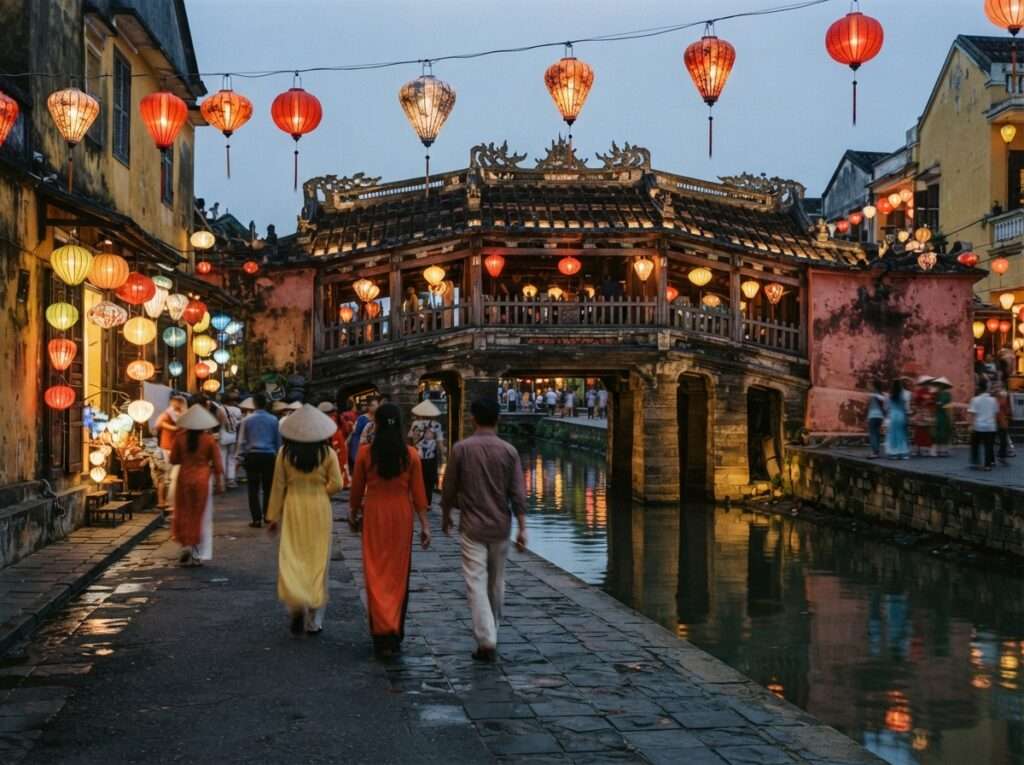
Hoi An is the most complete cultural experience in Vietnam in one small town. Japanese, Chinese and European traders all built here between the 15th and 19th centuries, and UNESCO listed the old town in 1999 because the mix survives almost intact: Chinese assembly halls, wooden merchant houses and the 1590s Japanese Covered Bridge, which reopened in August 2024 after restoration. The old-town ticket costs 120,000 VND for foreign visitors and covers five of about 20 heritage sites (Da Nang Department of Tourism, 2026 price list).
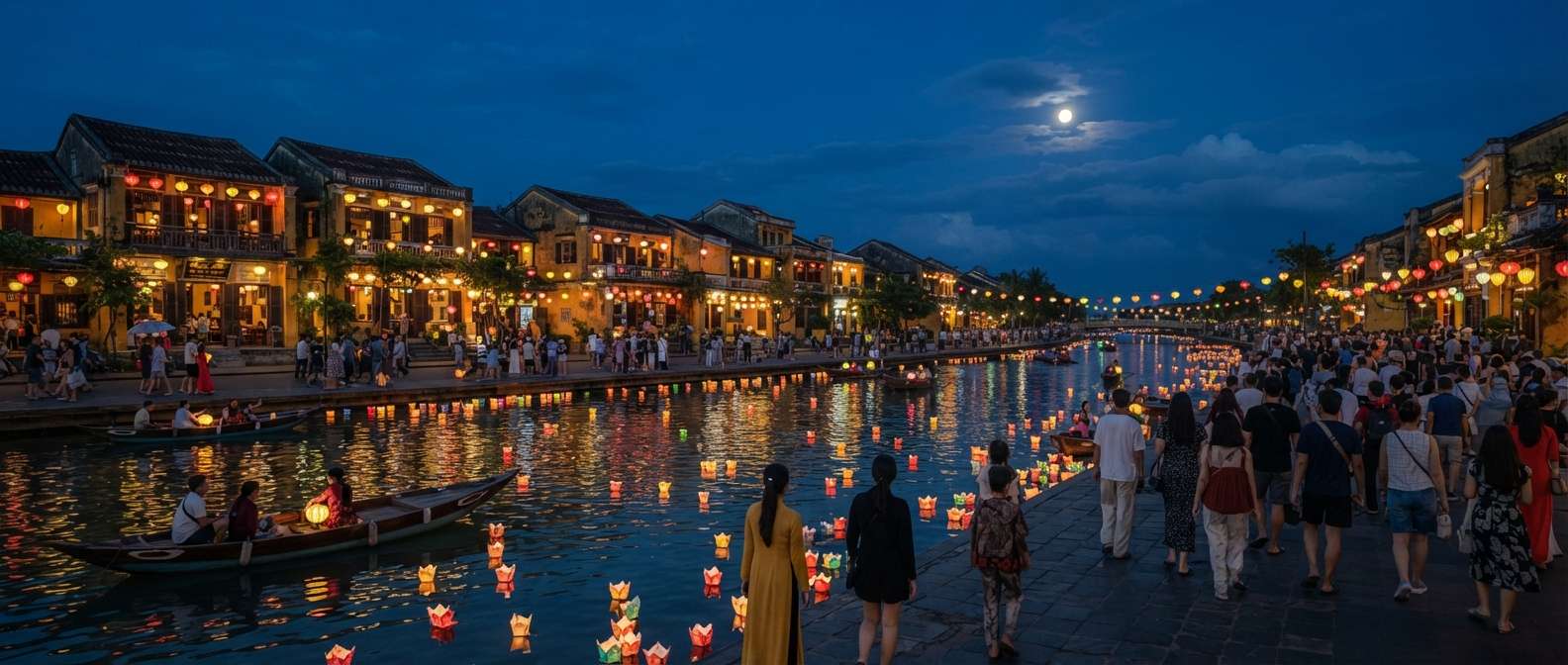
The town is best after dark. On the 14th day of every lunar month, Hoi An switches off much of its electric light for the full-moon lantern night, and families float paper lanterns on the Thu Bon River. Bai choi, a sung card game listed by UNESCO in 2017, is performed in the old town most evenings, and you can join a round for a few thousand dong. Hoi An is also the place to have an ao dai, the national dress, made to measure. Most tailors need 24 to 48 hours and at least one fitting. For a bigger production, the Hoi An Memories show on the river island tells 400 years of the town’s history with about 500 performers, with seats from around 600,000 VND (Eco) to 1,200,000 VND (VIP). There is no show on Tuesdays. Our list of things to do in Hoi An has the rest.
| Location | Hoi An, part of Da Nang city since the 2025 province merger. 30 km south of Da Nang airport |
| Entry | 120,000 VND for 5 heritage sites (about US$5 or ₹400) |
| Next lantern nights | 22 November 2026, 22 December 2026, 21 January 2027, 19 February 2027 |
| Best time | February to April. The old town floods most years between October and December |
| Don't miss | A lantern boat on the Thu Bon, bai choi in the evening, an ao dai fitting |
Related Tour Packages


❮
❯
02
Hue's Imperial City and Royal Court Music
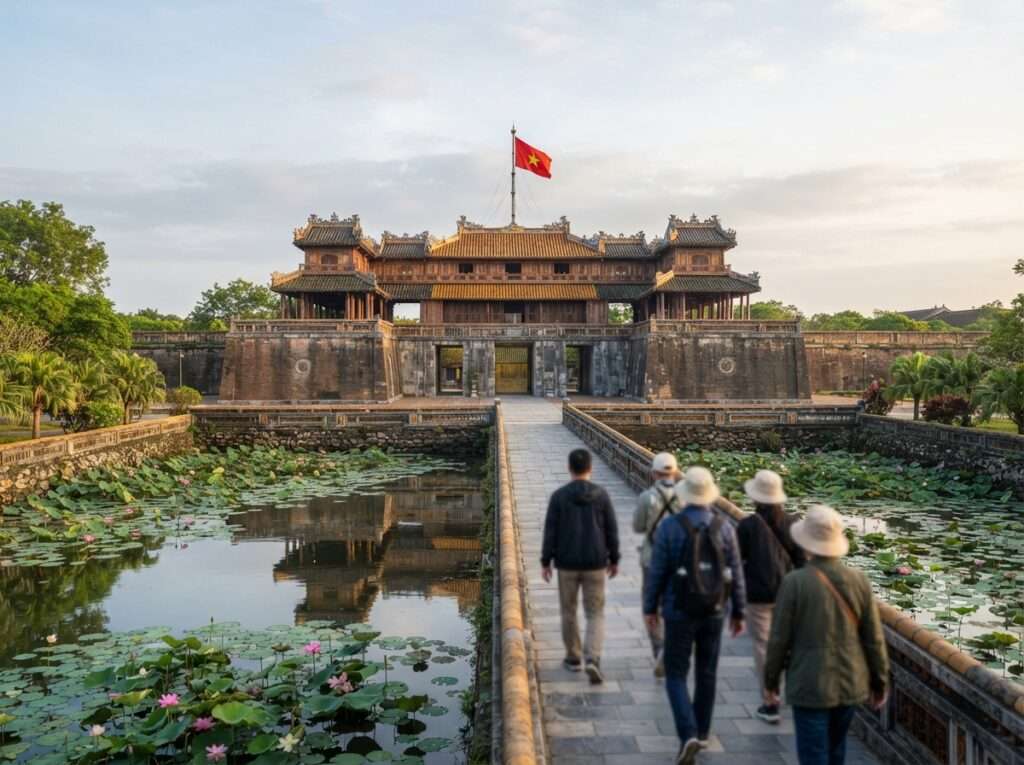
Hue was Vietnam’s capital under the Nguyen dynasty from 1802 to 1945, and nowhere else in the country keeps its court culture alive the way it does. The Imperial City, Vietnam’s first UNESCO World Heritage Site in 1993, costs 200,000 VND, and combo tickets add the royal tombs of Minh Mang, Tu Duc and Khai Dinh (Hue Monuments Conservation Centre). Inside the walls, the Duyet Thi Duong royal theatre, built in 1826, stages short performances of nha nhac, the court music UNESCO recognised in 2003, with dancers in court dress.
In the evening, take a dragon boat on the Perfume River for ca Hue, the chamber songs once sung for mandarins, performed by a small band with zithers and moon lutes. Hue also runs its festival on a four-season model, with the main International Arts Festival Week held in June and smaller events at other times of year, so check what is on before you fix dates. Hue is the conical hat (non la) capital too, and the hat-making villages outside the city welcome visitors.
Read our guide to Hue’s historic citadel before you go, and our list of things to do in Hue for the rest of the city.
| Location | North bank of the Perfume River, central Hue |
| Entry | 200,000 VND (about US$8 or ₹670). Combos with the royal tombs 420,000 to 530,000 VND |
| Court music | Short nha nhac shows at Duyet Thi Duong theatre inside the citadel on set times each day |
| Time needed | One full day, two if you add the tombs and a ca Hue boat |
| Best time | February to April. Avoid the September to November rains |
Related Tour Packages


❮
❯
03
Water Puppet Show in Hanoi
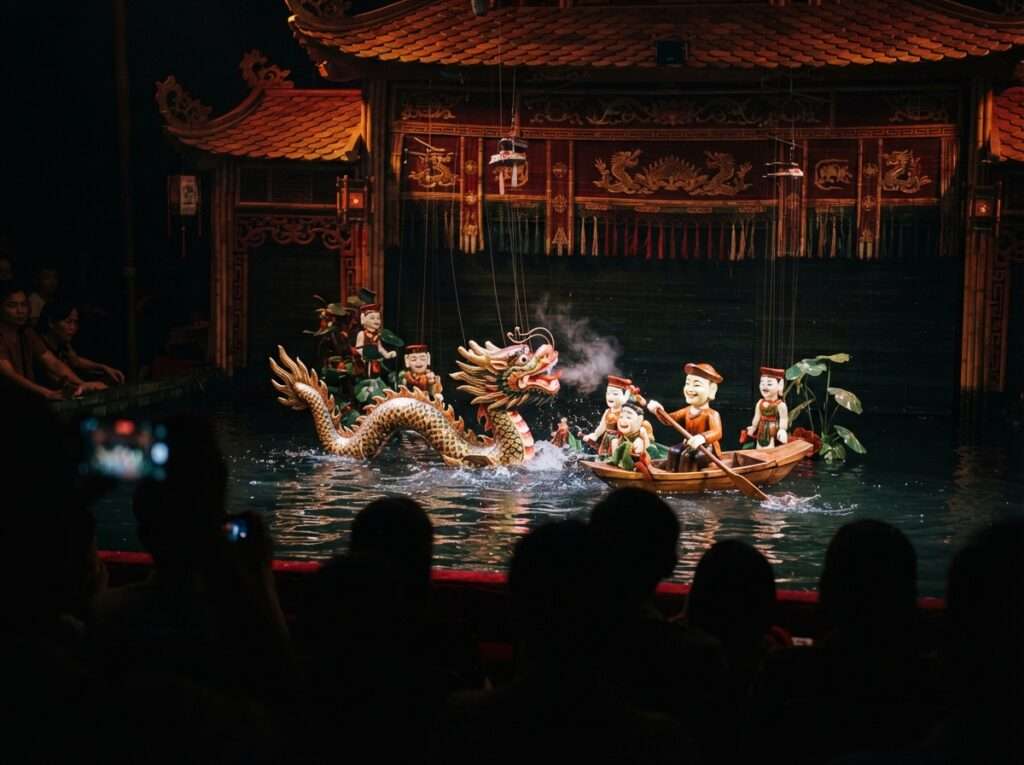
Water puppetry (mua roi nuoc) began in the flooded rice fields of the Red River Delta about a thousand years ago, and a stone stele from 1121 at Doi Pagoda records a royal performance. Puppeteers stand waist-deep in water behind a bamboo screen and work lacquered wooden puppets on long poles under the surface, so the dragons, fishermen and buffalo seem to glide on the water. A live band plays the dan bau (monochord), drums and flutes, and singers voice the characters in Vietnamese. Vietnam plans to nominate water puppetry, along with pho, for UNESCO listing (VOV).
The best-known venue is the Thang Long Water Puppet Theatre on Dinh Tien Hoang Street, at the north-east corner of Hoan Kiem Lake. Shows last about 50 minutes and run several times each afternoon and evening, usually from around 3 pm, and tickets cost from around 100,000 to 200,000 VND depending on the seat. Evening shows often sell out from November to March, so book a day ahead. Pick a seat in the first few rows, because the puppets are small.
For the backstory and show tips, see our guide to watching a water puppet show in Hanoi.
| Location | Thang Long Water Puppet Theatre, Dinh Tien Hoang Street, Hoan Kiem, Hanoi |
| Entry | From around 100,000 to 200,000 VND by seat class (US$4 to 8) |
| Show length | About 50 minutes, several shows daily from mid-afternoon |
| Tip | The Museum of Ethnology also stages short outdoor shows on its own pond |
| Don't miss | The dragon dance and the fishermen scene, the two crowd favourites |
Related Tour Packages


❮
❯
04
Temple of Literature and the Old Quarter Guild Streets
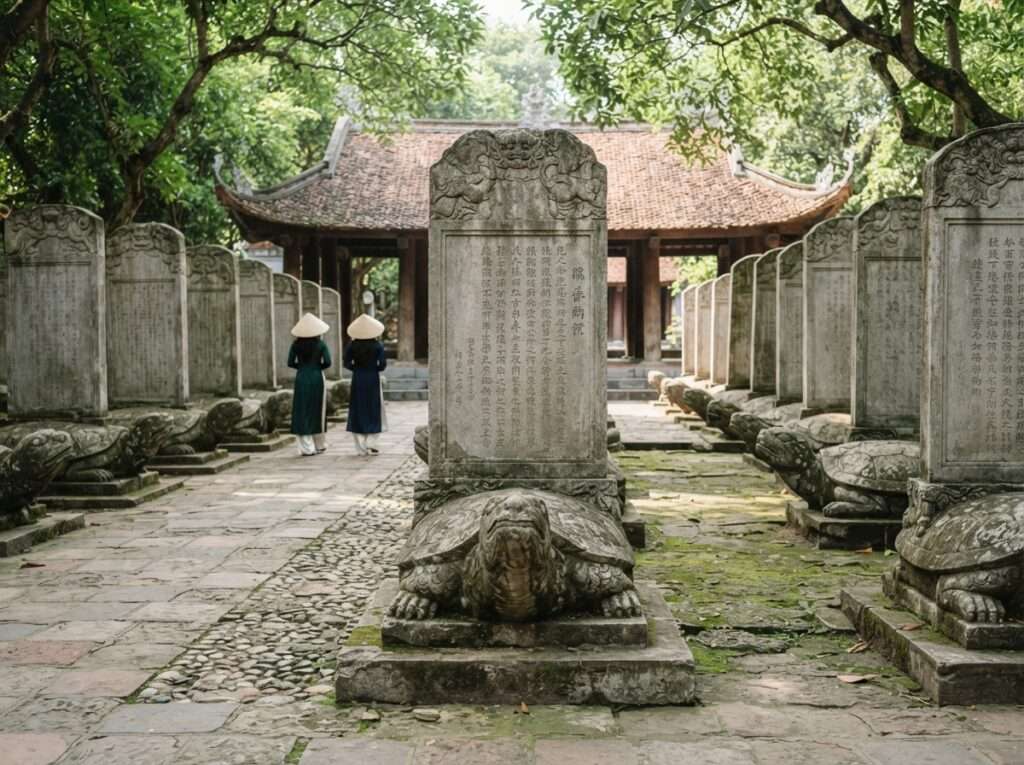
The Temple of Literature (Van Mieu) is the best place to understand the Confucian learning that shaped Vietnam for nine centuries. It was founded in 1070 to honour Confucius, and in 1076 the Imperial Academy, Vietnam’s first university, opened beside it. The highlight is the courtyard of 82 stone stelae on the backs of stone turtles, carved with the names of doctoral graduates from 1442 to 1779, which UNESCO added to its Memory of the World register in 2010. Students still come before exams to pray for good results, but the stelae are now fenced off and touching the turtles’ heads is not allowed. Entry is 70,000 VND (Vietnam Airlines travel guide).
From there, the Old Quarter is about 2 km east, a 25-minute walk or a short Grab ride, where each street was once a guild. Hang Bac still sells silver, Hang Ma sells paper votive offerings and, before Mid-Autumn, lanterns, and Hang Gai sells silk. Bach Ma Temple on Hang Buom is one of the oldest temples in the city. From Friday to Sunday evening, the streets around Hoan Kiem Lake close to traffic and fill with families, street games and music.
Our guide to the Temple of Literature and our list of places to visit in Hanoi cover both in more detail.
| Location | Quoc Tu Giam Street, Dong Da, Hanoi. Old Quarter 2 km east |
| Entry | 70,000 VND (about US$3 or ₹230). Old Quarter free |
| Time needed | 1 hour for the temple, an evening for the Old Quarter |
| Best time | Weekday mornings for the temple, Friday to Sunday evenings for the walking streets |
| Don't miss | The 82 doctoral stelae, Hang Ma Street before Mid-Autumn, Bach Ma Temple |
05
Ethnic Minority Villages and Homestays in Sapa
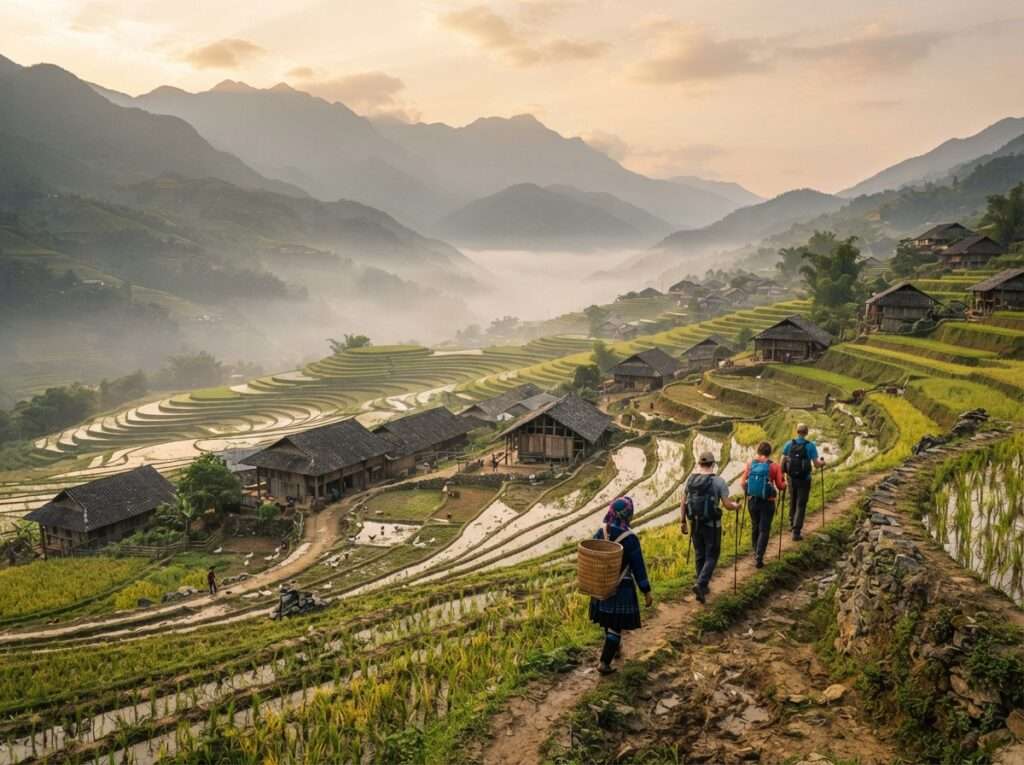
The hills around Sapa are home to Black Hmong, Red Dao, Tay and Giay communities, and a homestay here is the closest most travellers get to everyday rural life in Vietnam. Walk the valley trail from Lao Chai to Ta Van through rice terraces, stop at a Hmong family’s house to see indigo cloth being dyed and batiked, and sleep in a stilt house or a Dao home where dinner is cooked over a wood fire. The Red Dao herbal bath, steeped in dozens of forest plants, is the local way to end a day of walking.
Go to a market if your dates allow. Bac Ha’s Sunday market, about 2.5 hours from Sapa, draws Flower Hmong families in their brightest clothes to trade buffalo, horses and textiles. Cat Cat village, a short walk below Sapa town, is the easy option and charges a small entry fee, but it is now set up for visitors. For a less staged experience, book a local guide from the community. Sapa is about 5 to 6 hours from Hanoi by expressway bus or limousine van.
Our guide to things to do in Sapa has trek routes, and our Sapa tour packages include the transfer and a homestay night.
| Location | Sapa, Lao Cai province, about 320 km north-west of Hanoi |
| Entry | Small village fees at Cat Cat and Lao Chai to Ta Van. Homestays from about US$15 a night |
| Time needed | 2 nights at least, 3 with Bac Ha market |
| Best time | September to October for golden rice, March to May for planting. December and January are near freezing |
| Don't miss | A homestay dinner, the indigo dyeing, Bac Ha's Sunday market |
06
Vietnam Museum of Ethnology
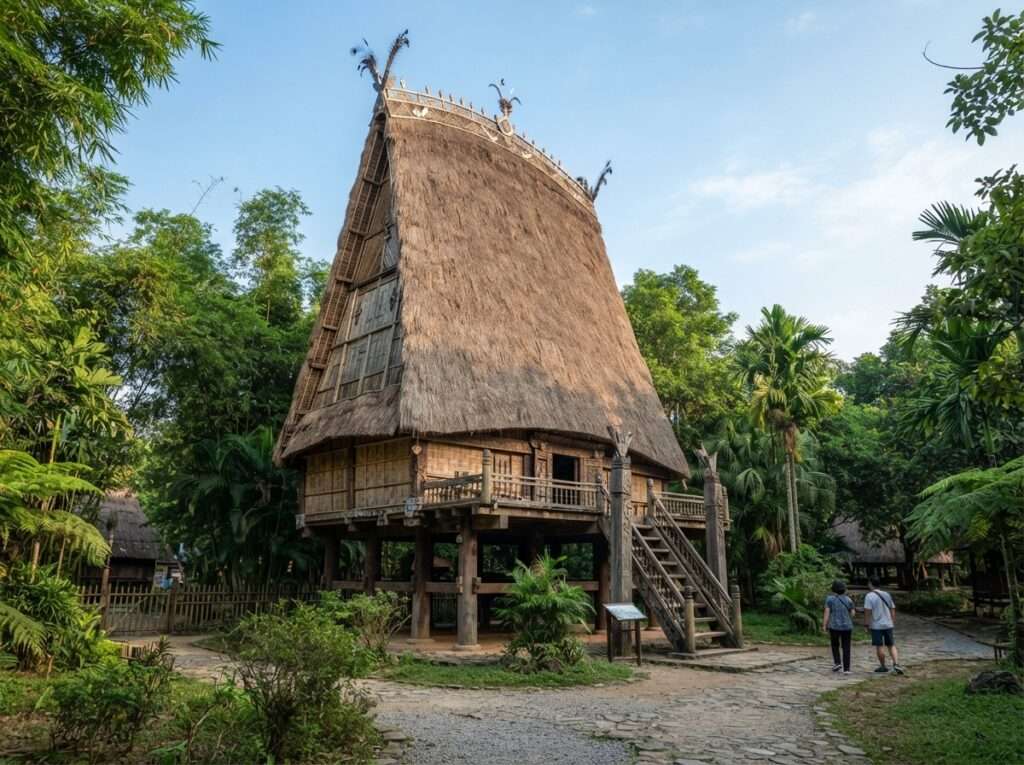
Vietnam has 54 officially recognised ethnic groups, and the Museum of Ethnology in Hanoi is the only place you can see all of them in a single afternoon. Inside, galleries walk you through each group’s dress, tools, rituals and beliefs, with labels in English. The real draw is the outdoor garden, where full-size traditional houses were taken apart in their home provinces and rebuilt here: an Ede longhouse, a Bahnar communal house with a soaring thatched roof, a Tay stilt house and a Jarai tomb with carved wooden figures.
Visit before you head to Sapa or the Central Highlands, and the villages will make far more sense. The museum is in Cau Giay district, about 30 minutes from the Old Quarter by Grab. Entry is 40,000 VND for adults, and it is open 8:30 am to 5:30 pm, closed on Mondays and during the Tet holiday (Vietnam Museum of Ethnology). Short water puppet shows run on the garden pond for a separate ticket.
Our full guide to the Vietnam Museum of Ethnology covers each gallery, and our round-up of museums in Hanoi adds the Women’s Museum and the Fine Arts Museum.
| Location | Nguyen Van Huyen Street, Cau Giay, Hanoi |
| Entry | 40,000 VND adults (about US$1.50 or ₹130), 20,000 VND students and children |
| Hours | 8:30 am to 5:30 pm, closed Mondays and during Tet |
| Time needed | 2 to 3 hours |
| Don't miss | The Bahnar communal house, the Jarai tomb figures, the pond puppet show |
07
Ca Tru and Quan Ho Folk Singing
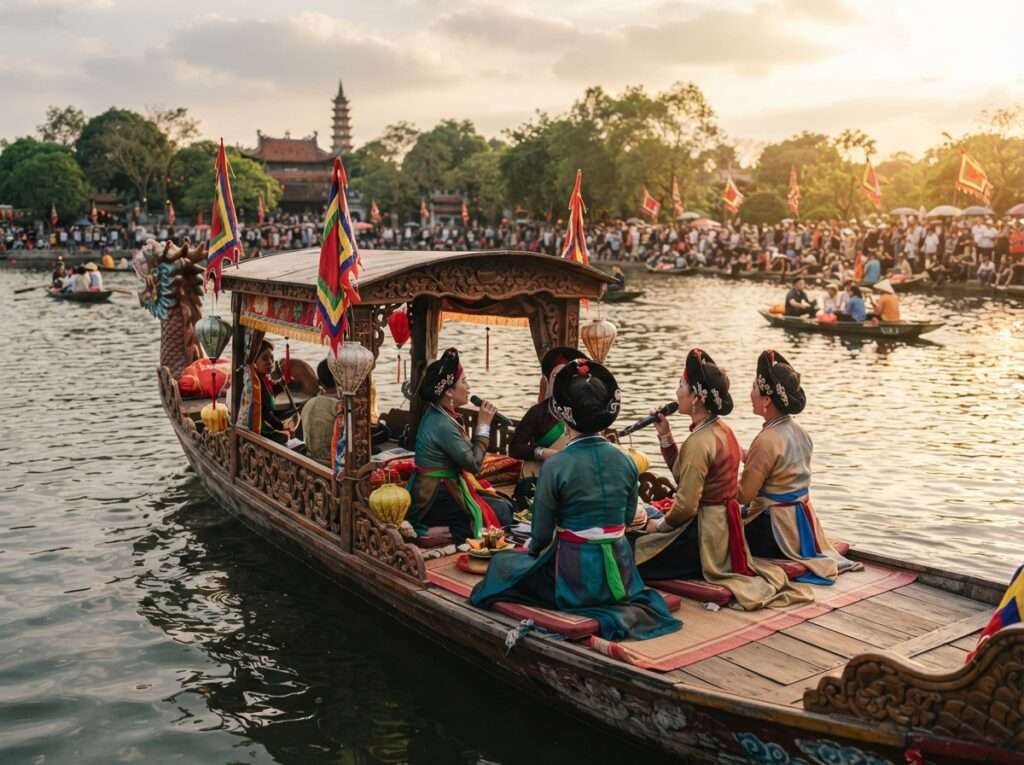
Two of Vietnam’s oldest song traditions are within an hour of Hanoi, and both are on UNESCO’s lists from 2009. Ca tru is a chamber art in which a female singer keeps time with a small bamboo clapper while a musician plays a long-necked lute and a connoisseur strikes a drum to show approval. UNESCO placed it on its list of heritage in need of urgent safeguarding, because only a handful of master singers were left. Small ca tru clubs now perform in restored communal houses in Hanoi’s Old Quarter on set evenings each week, in a room that holds a few dozen people.
Quan ho is the call-and-response love song of Bac Ninh, where pairs of men and women sing to each other across a lake or a courtyard. The best time to hear it is the Lim Festival on the 13th day of the first lunar month, 18 February 2027, when singers in turbans and four-panel dresses perform on boats and hillsides at Lim. Phu Tho’s xoan singing, linked to the Hung Kings, is a third tradition with performances around Hung Kings Day in April.
| Location | Ca tru in Hanoi's Old Quarter. Quan ho in Bac Ninh, about 1 hour east of Hanoi |
| Entry | Ca tru club tickets vary by venue. Lim Festival free |
| Time needed | One evening for ca tru, one day for the Lim Festival |
| Best time | Year round for ca tru, 18 February 2027 for the Lim Festival |
| Don't miss | The ca tru drum "applause", quan ho singers on boats at Lim |
08
My Son Sanctuary and Cham Culture
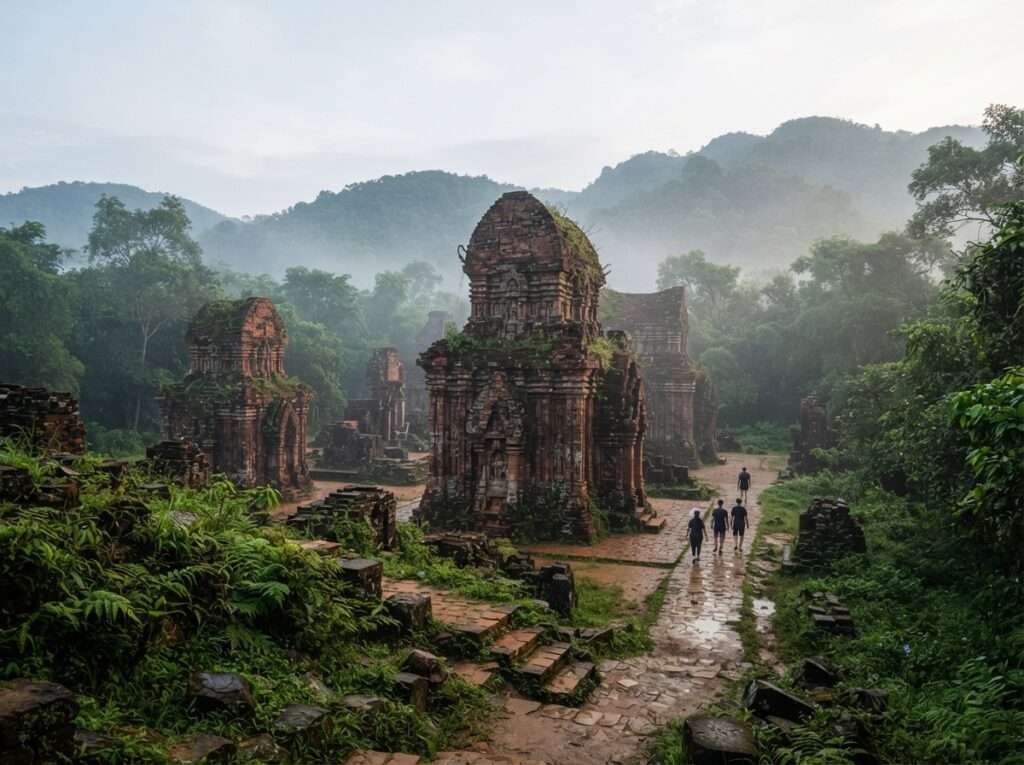
My Son is where Indian travellers find the strongest link to home in Vietnam. Between the 4th and 13th centuries, the Hindu kings of Champa built more than 70 brick temples to Shiva in this jungle valley, using a mortar-free brick technique that is still not fully understood. Only about 20 survive, after heavy bombing in 1969. UNESCO listed the site in 1999, and entry is 150,000 VND (Da Nang Department of Tourism, 2026). A short Apsara and Cham dance performance is held in the site’s theatre several times a day. Go at opening time, when mist sits in the valley and the tour buses from Hoi An have not yet arrived.
The Cham are still one of Vietnam’s ethnic groups, mainly in the south-central coast. In Nha Trang, the Po Nagar Cham Towers are an active temple to a mother goddess, and further south, Bau Truc village makes Cham pottery by hand without a wheel, a craft UNESCO listed in 2022. The Cham Kate festival, held in the seventh month of the Cham calendar, usually in October, fills the Po Klong Garai towers with music and offerings.
Our guides to My Son Sanctuary and the Hindu temples in Vietnam go further.
| Location | Duy Phu, about 40 km south-west of Hoi An (Da Nang city since 2025) |
| Entry | 150,000 VND (about US$6 or ₹500), includes the dance show and shuttle to the ruins |
| Time needed | Half a day from Hoi An |
| Best time | February to April, at opening time |
| Don't miss | Group B and C temples, the Apsara dance, the site museum's Shiva lingas |
09
Cooking Class and Tra Que Farm Village, Hoi An
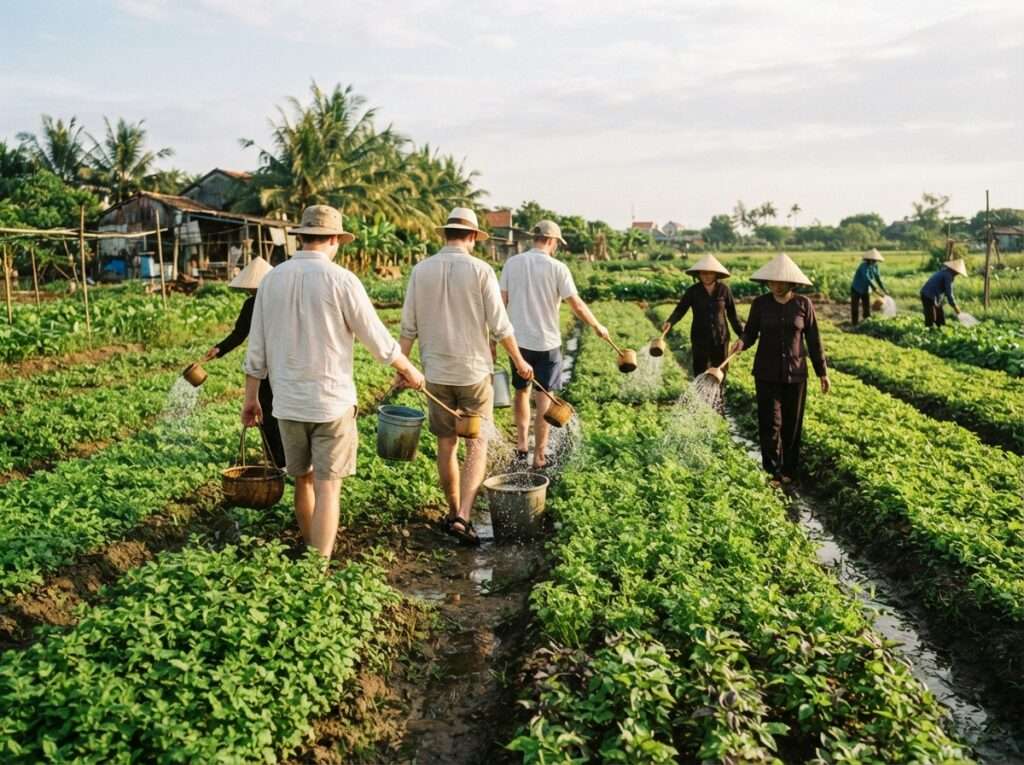
Food is the part of Vietnamese culture you take home, and Hoi An is the easiest place to learn it. Most classes start with a market walk to buy herbs and rice paper, then a boat or bicycle ride out to Tra Que, a vegetable village about 3 km from the old town where farmers still fertilise their beds with river seaweed. You water the herbs, then cook three or four dishes: banh xeo pancakes, fresh spring rolls, a noodle salad and Hoi An’s own cao lau noodles. Many classes add a round-basket boat ride in the Cam Thanh coconut forest.
Half-day classes cost about US$25 to 45 per person. Vegetarians are easy to cater for, because Vietnam has a strong Buddhist vegetarian tradition (com chay), so say “an chay” when you book.
Our guide to Vietnamese food covers the dishes you will cook.
| Location | Tra Que village, 3 km north of Hoi An old town |
| Cost | About US$25 to 45 per person for a half-day class |
| Time needed | 4 to 5 hours, usually morning |
| Best time | Year round. Mornings are cooler from April to August |
| Don't miss | Cao lau noodles, the basket boat in Cam Thanh, the farmers' seaweed beds |
10
Craft Villages: Pottery, Silk, Lanterns and Folk Paintings
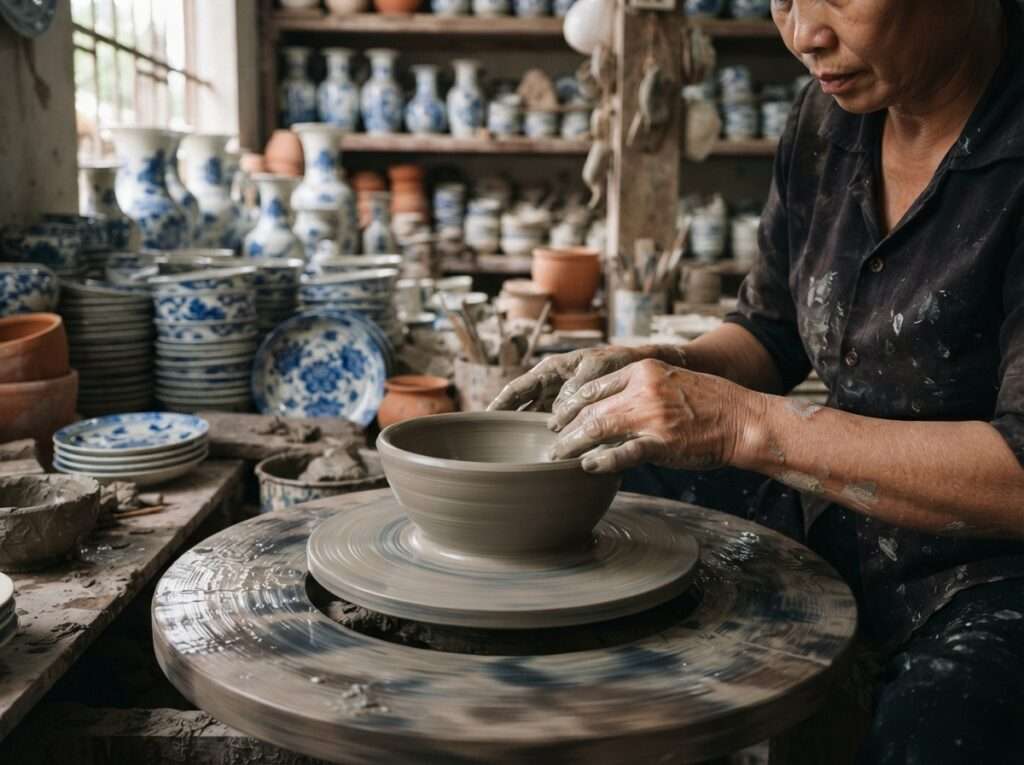
Vietnam’s craft villages are where traditions are made by hand, often by the same families for centuries. Near Hanoi, Bat Trang ceramic village, 13 km from the Old Quarter, has fired pottery since at least the 15th century and lets you throw your own bowl at a wheel. Van Phuc silk village in Ha Dong has weaving looms clattering behind the shopfronts. In Bac Ninh, Dong Ho folk painting, printed from carved wooden blocks onto paper made from do bark and coloured with natural pigments, was added to UNESCO’s intangible heritage list in December 2025 (VOV).
Around Hoi An, Thanh Ha pottery village, about 3 km west of the old town, and Kim Bong carpentry village, across the river on Cam Kim island, are both a short bike ride away, and lantern workshops in town will teach you to stretch silk over a bamboo frame in about an hour. In Hue, the villages around the city still make conical hats and incense. Buy direct from the workshops, and you will usually pay less than in the old-town shops. For Hanoi’s markets, see our guide to shopping in Hanoi.
| Location | Bat Trang and Van Phuc near Hanoi, Dong Ho in Bac Ninh, Thanh Ha and Kim Bong near Hoi An |
| Entry | Mostly free. Thanh Ha charges a small ticket. Workshops charge for classes |
| Time needed | Half a day per village |
| Best time | Weekday mornings, when artisans are at work |
| Don't miss | A pottery wheel in Bat Trang, a lantern-making class in Hoi An |
11
Pagodas and the Perfume Pagoda Pilgrimage
Buddhism, folk belief and ancestor worship blend in Vietnamese religion, and pagodas are where you see it in daily life. In Hanoi, Tran Quoc Pagoda on West Lake traces its roots to the 6th century, and Phu Tay Ho temple, dedicated to the Mother Goddess Lieu Hanh, fills with worshippers on the 1st and 15th days of every lunar month. The Mother Goddess faith (Dao Mau) and its trance-like len dong rituals, with music and costume changes, were listed by UNESCO in 2016.
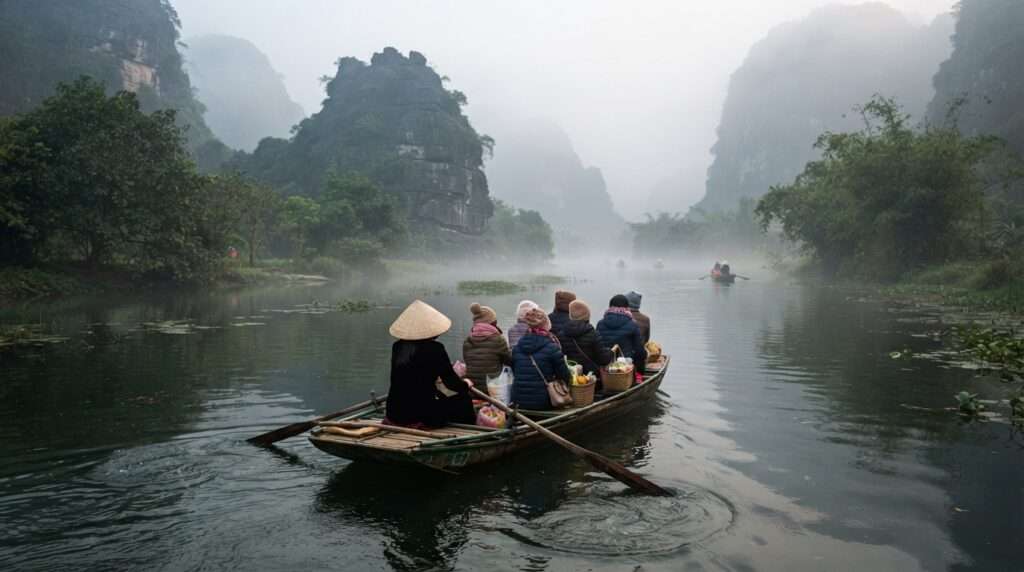
The great pilgrimage is the Perfume Pagoda (Chua Huong) in My Duc, about 60 km south-west of Hanoi. You row for an hour along the Yen stream between limestone hills, then climb or take a cable car up to the Huong Tich cave shrine. The festival season opens on the 6th day of the first lunar month (11 February 2027) and runs to the end of the third lunar month (5 May 2027), and weekends in the first weeks draw huge crowds. Go on a weekday or after the festival for a calmer visit.
Our guide to temples in Vietnam lists the country’s most important pagodas.
| Location | Tran Quoc and Phu Tay Ho on West Lake, Hanoi. Perfume Pagoda in My Duc, 60 km from Hanoi |
| Entry | Hanoi pagodas free. Perfume Pagoda charges an entry and boat fee, cable car extra |
| Time needed | 1 hour per Hanoi pagoda, a full day for the Perfume Pagoda |
| Best time | 11 February to 5 May 2027 for the festival, weekdays for fewer crowds |
| Don't miss | The rowing boat on the Yen stream, Huong Tich cave, Phu Tay Ho on a full-moon day |
12
Mekong Delta River Life and Don Ca Tai Tu Music
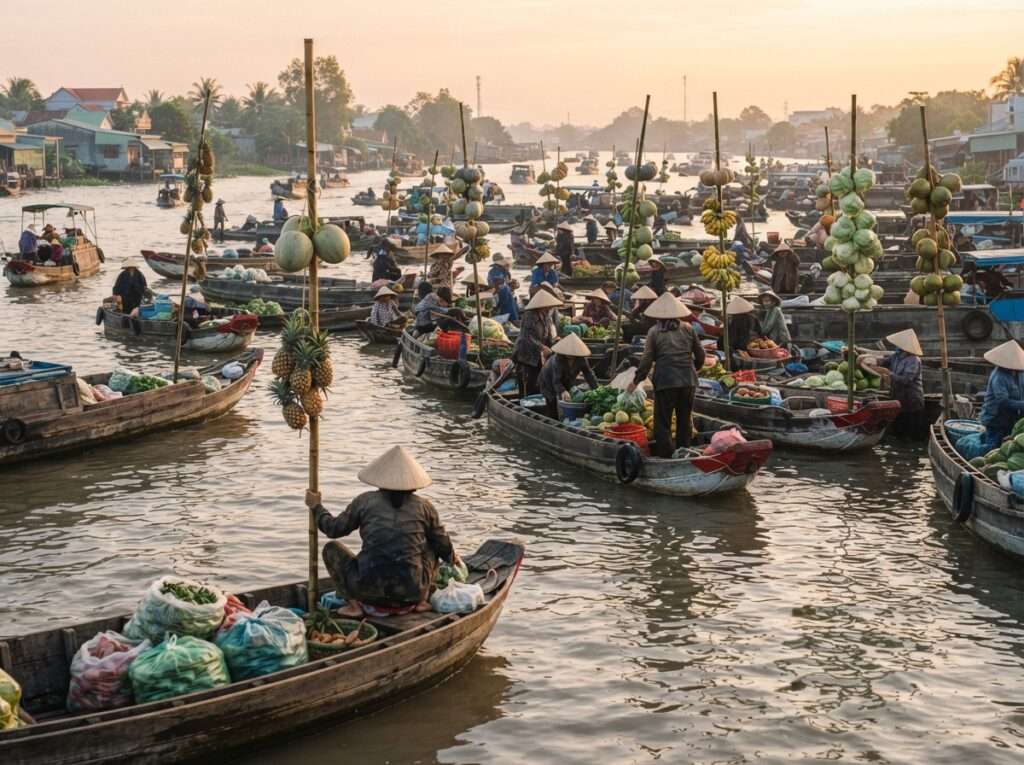
In the Mekong Delta, culture is lived on the water. At dawn, wholesale boats crowd the Cai Rang floating market in Can Tho, each hanging a sample of what it sells from a tall pole. Smaller canals lead to orchards, rice-paper and coconut-candy workshops, and family homestays where you eat river fish under the fruit trees. In the evening, many homestays and boats perform don ca tai tu, the amateur music of the south, played on guitars with scooped fretboards and the dan kim lute. UNESCO listed it in 2013.
The delta is also home to Vietnam’s Khmer community. Their pagodas around Soc Trang, such as the Bat Pagoda and the Clay Pagoda, look like the temples of Cambodia, and the Ok Om Bok festival on the 15th day of the tenth lunar month (23 November 2026) brings long ngo boat races. Further west, the Ba Chua Xu festival on Mount Sam near Chau Doc, listed by UNESCO in 2024, draws pilgrims from late in the fourth lunar month. Our guide to the Mekong Delta has routes from Ho Chi Minh City.
| Location | Can Tho, Ben Tre and Soc Trang, 2 to 4 hours from Ho Chi Minh City |
| Entry | Boat hire from Ninh Kieu pier in Can Tho. Pagodas free |
| Time needed | One night at least, two for Soc Trang |
| Best time | December to April for dry weather. September to November for high water |
| Don't miss | Cai Rang at sunrise, don ca tai tu after dinner, a Khmer pagoda |
13
Gong Culture of the Central Highlands
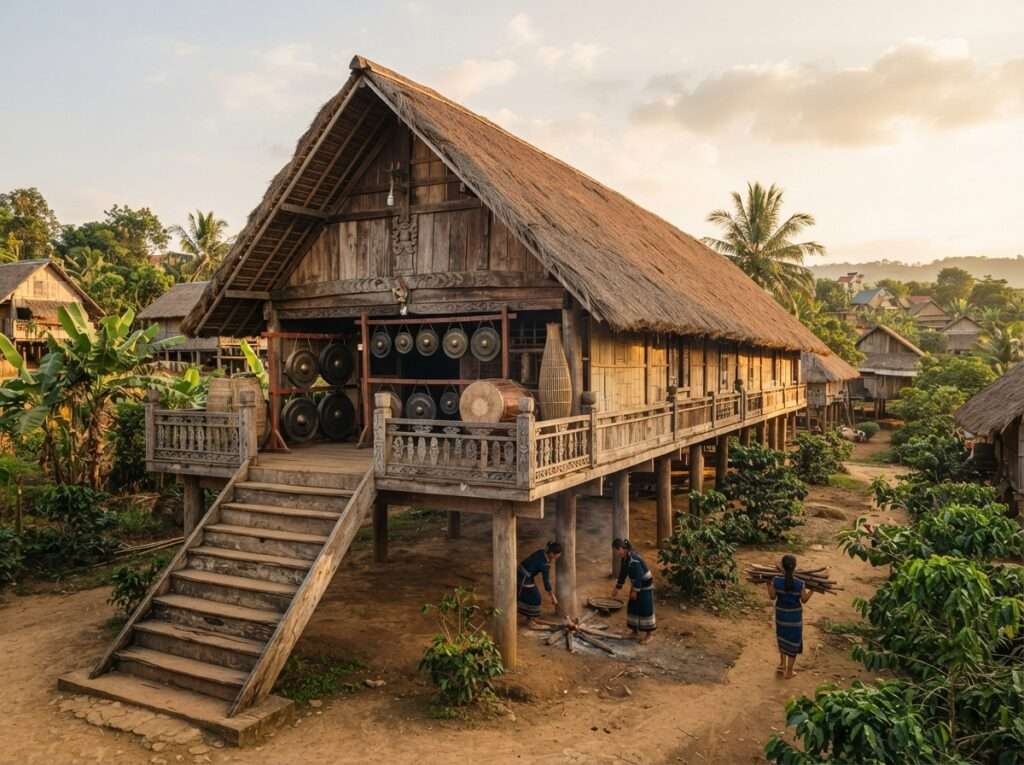
The Central Highlands are the least visited cultural region of Vietnam and one of the most distinctive. Ede, M’nong, Bahnar and Jarai communities here play sets of bronze gongs at funerals, harvests and buffalo ceremonies, believing each gong holds a spirit. UNESCO listed the Space of Gong Culture in 2005. Around Buon Ma Thuot, villages such as Ako Dhong keep Ede longhouses on stilts, some long enough to hold several generations, and can arrange a gong and rice-wine evening for visitors.
Buon Ma Thuot is also Vietnam’s coffee capital, and the city’s coffee museum and plantations explain how robusta came to dominate the hills. Avoid elephant rides, which welfare groups and the local authorities have been moving away from.
Our guide to Buon Ma Thuot has the details.
| Location | Buon Ma Thuot, Dak Lak province. About 1 hour by air from Ho Chi Minh City and under 2 hours from Hanoi |
| Entry | Village visits and gong evenings by arrangement with a local guide |
| Time needed | 2 days |
| Best time | November to April, the dry season |
| Don't miss | An Ede longhouse, a gong performance, a coffee farm visit |
14
Saigon's Many Faiths and the Cao Dai Holy See
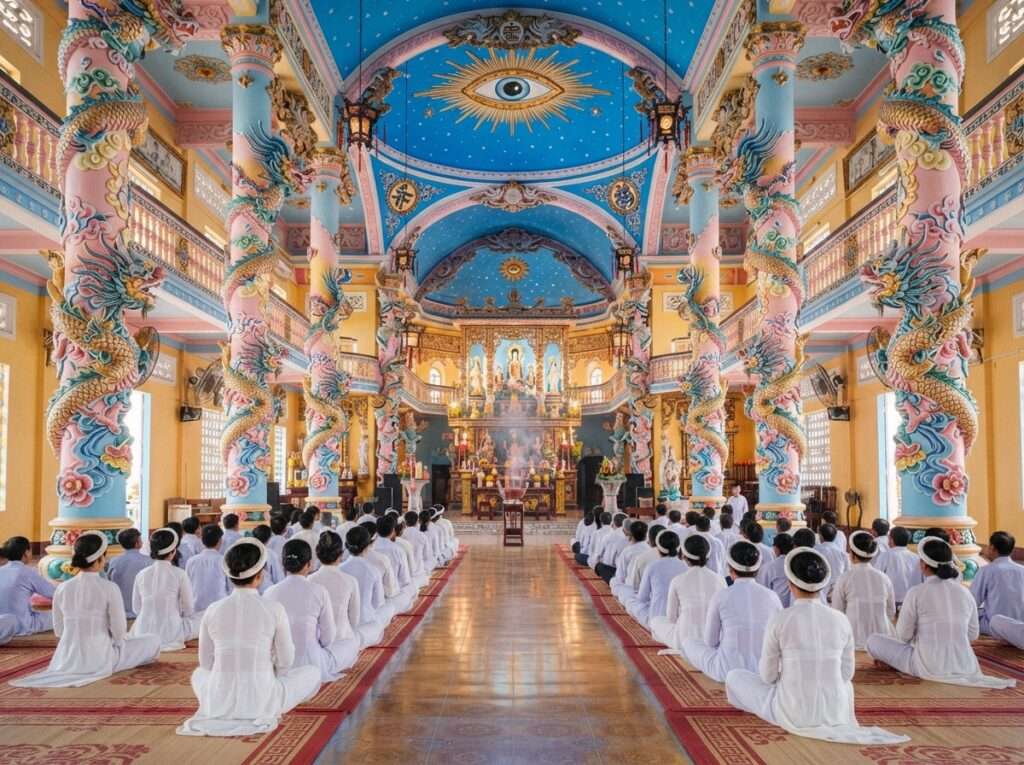
Ho Chi Minh City shows how many faiths share Vietnam. In Cholon, Saigon’s old Chinese quarter, Thien Hau Temple has honoured the sea goddess since 1760, with giant incense coils hanging from its roof. In District 1, the Sri Mariamman Temple on Truong Dinh Street is a Hindu temple built by Tamil traders in the late 19th century and still worshipped at, and a short walk away the Saigon Central Mosque on Dong Du Street serves the city’s Muslim community. Both are a natural stop for Indian travellers.
A day trip north-west takes you to the Cao Dai Holy See in Tay Ninh, about 100 km from the city. Cao Dai, founded in 1926, blends Buddhism, Taoism, Confucianism and Christianity, and its temple is a riot of pastel columns and dragons under a giant Divine Eye. Visitors can watch the noon prayer from the upper gallery if they are quiet and covered. Most tours combine it with the Cu Chi Tunnels.
See our guides to places to visit in Ho Chi Minh City and the city’s mosques.
| Location | Cholon (District 5) and District 1, Ho Chi Minh City. Cao Dai Holy See in Tay Ninh, 100 km north-west |
| Entry | Free at all of them |
| Time needed | Half a day in the city, a full day with Tay Ninh and Cu Chi |
| Best time | December to April. Arrive in Tay Ninh by 11:30 am for the noon prayer |
| Don't miss | Thien Hau's incense coils, Sri Mariamman, the Cao Dai noon prayer |
15
Street Food and Coffee Culture
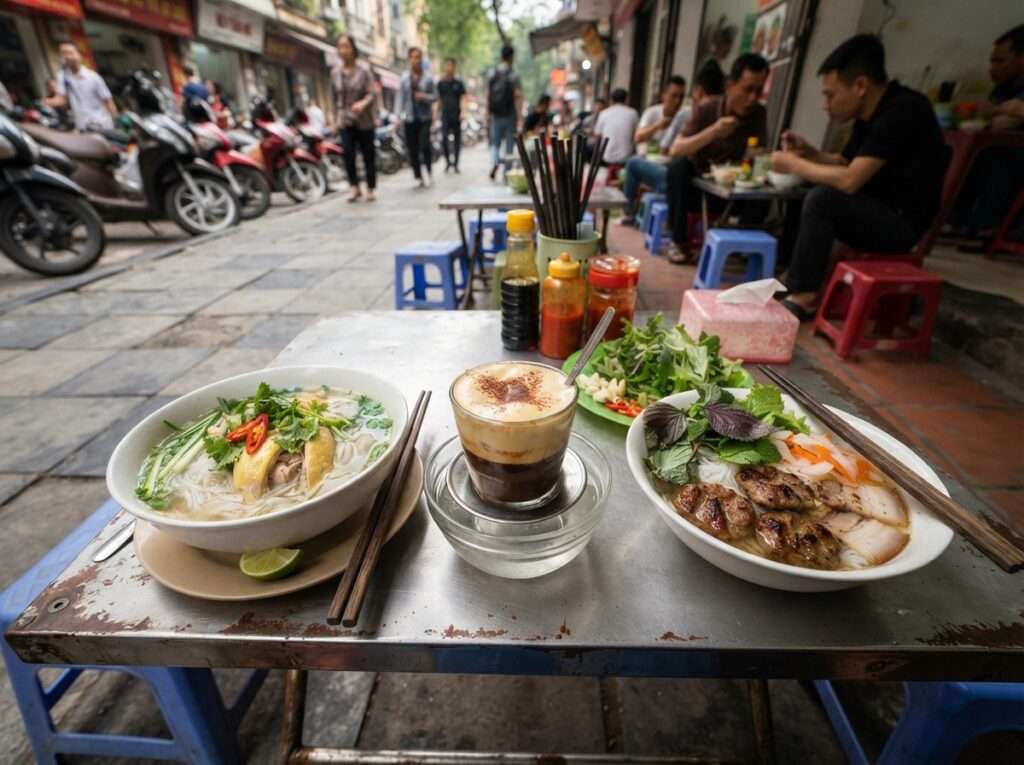
Vietnamese street food is culture in its most social form: plastic stools on the pavement, shared tables and dishes that change from one city to the next. In Hanoi, try pho for breakfast, bun cha (grilled pork with noodles) at lunch and ca phe trung, egg coffee, in the afternoon. Egg coffee was created in Hanoi in the 1940s, when milk was scarce, and the family cafes that serve it still use the original whisked-yolk method. In Ho Chi Minh City, the food is sweeter and the coffee comes as ca phe sua da, iced with condensed milk, from a drip filter at every corner.
A guided walking or motorbike food tour of 3 to 4 hours costs about US$25 to 40 and is the easiest way to eat at places without English menus. Most guides can arrange a vegetarian route.
Our guide to Vietnamese street foods lists what to order in each city.
| Location | Old Quarter, Hanoi. District 1 and District 4, Ho Chi Minh City |
| Cost | Street dishes 30,000 to 60,000 VND. Food tours about US$25 to 40 |
| Time needed | 3 to 4 hours for a tour |
| Best time | Evenings year round |
| Don't miss | Egg coffee in Hanoi, bun cha at lunch, ca phe sua da in Saigon |
Vietnam's Cultural Holiday Calendar 2026 to 2027
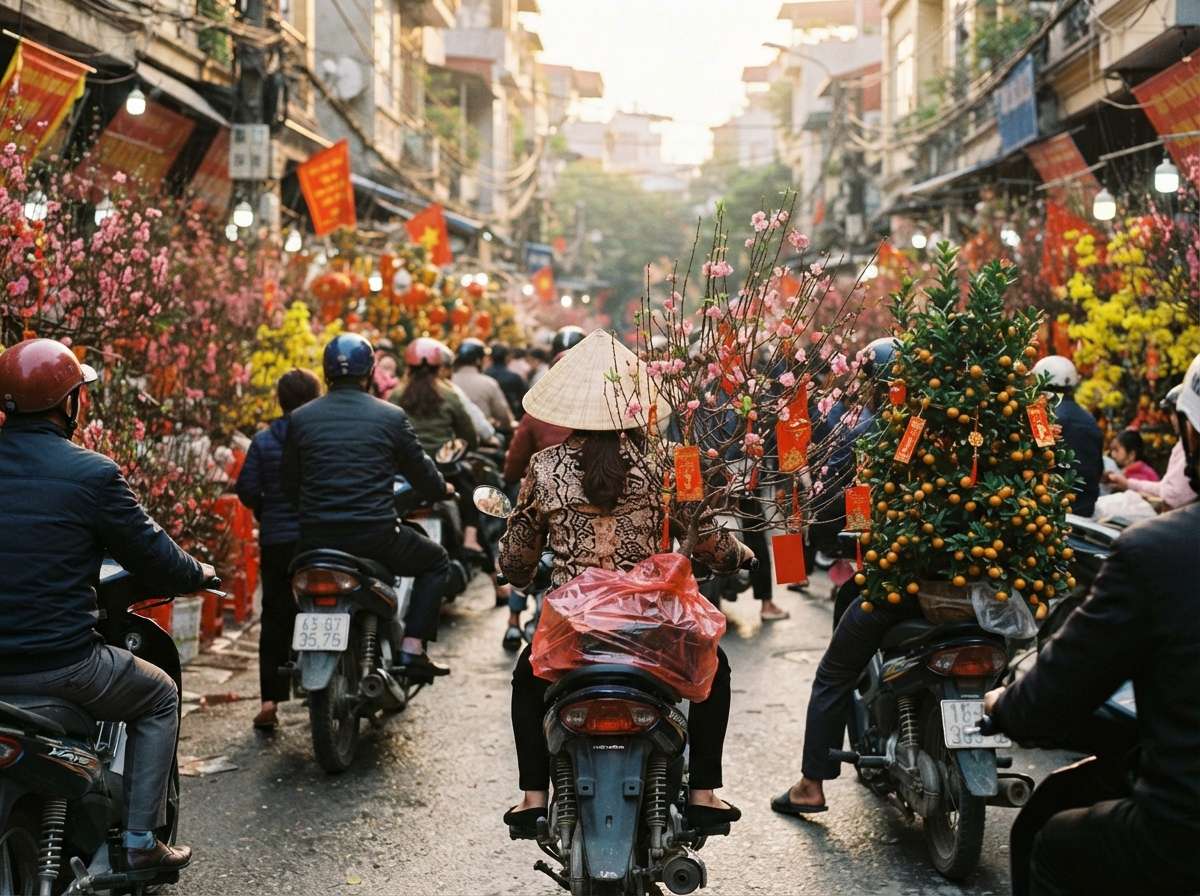
Vietnam runs on two calendars. New Year’s Day, Reunification Day, Labour Day, National Day and the new Vietnamese Culture Day (24 November, a paid public holiday from 2026) are fixed on the Gregorian calendar. Tet, Hung Kings Day and almost every festival follow the lunar calendar, so their dates move by up to a month from one year to the next. The table converts the main ones for the next 12 months. For the full festival list with history and rituals, see our guide to festivals in Vietnam.
| Festival or holiday | Next date | Best place to see it | What you will see |
|---|---|---|---|
| Hoi An lantern night | 14th of each lunar month: 22 Nov 2026, 22 Dec 2026, 21 Jan 2027 | Hoi An | River lanterns, folk games, bai choi |
| Ok Om Bok (Khmer) | 23 November 2026 | Soc Trang, Mekong Delta | Ngo boat races, floating lanterns |
| Tet Nguyen Dan (Lunar New Year) | 6 February 2027. Official break 4 to 10 Feb | Hanoi, Hue, Hoi An | Flower markets, ancestor altars, lion dances. Many shops close for 3 to 5 days |
| Perfume Pagoda Festival opens | 11 February 2027, runs to 5 May | My Duc, near Hanoi | Pilgrims, boats on the Yen stream |
| Lim Festival | 18 February 2027 | Bac Ninh | Quan ho singing on boats |
| First full moon (Tet Nguyen Tieu) | 20 February 2027 | Pagodas nationwide, Hoi An | Lanterns, poetry, temple offerings |
| Hung Kings Commemoration | 16 April 2027 (public holiday) | Hung Temple, Phu Tho | Procession, xoan singing |
| Reunification Day and Labour Day | 30 April and 1 May 2027 | Ho Chi Minh City | Parades, busy domestic travel |
| Buddha’s Birthday (Phat Dan) | 20 May 2027 | Pagodas in Hanoi, Hue, Saigon | Lantern processions, vegetarian feasts |
| Hue Festival, summer arts week | June 2027 (dates set by Hue city) | Hue Imperial City | Court music, night shows in the citadel |
| Vu Lan (Wandering Souls) | 16 August 2027 | Pagodas nationwide | Roses for parents, offerings for the dead |
| National Day | 2 September 2027 (public holiday) | Hanoi, Ba Dinh Square | Flags, fireworks, concerts |
| Mid-Autumn (Tet Trung Thu) | 15 September 2027 | Hanoi’s Hang Ma Street, Hoi An | Lanterns, lion dances, mooncakes |
Tet is the most memorable time for a cultural holiday in Vietnam, but plan for it. Trains, flights and hotels sell out weeks ahead, prices rise and many family restaurants and shops close for the first three days. Arrive a week before Tet to see the flower markets and preparations, then spend the holiday itself in a big city or a resort town, where more stays open.
The run-up is the part visitors enjoy most. On 30 January 2027, the 23rd day of the last lunar month, families send the Kitchen Gods (Ong Cong Ong Tao) back to heaven by releasing live carp into lakes and rivers, and Hoan Kiem Lake in Hanoi gets crowded with them by mid-morning. Kitchens then turn out banh chung, square sticky-rice cakes filled with mung bean and pork and boiled overnight. Homes fill with peach blossom in the north and yellow apricot blossom in the south. On New Year’s morning, children get li xi, lucky money in red envelopes, and the first guest through the door is believed to set the family’s luck for the year, so don’t drop in on a Vietnamese friend unannounced that day.
Tet and Holiday Closures in 2027: What Shuts and What Stays Open
Only a handful of days are official holidays, and outside Tet very little closes. The bigger effect is on transport and hotels, because domestic travellers fill the roads, trains and beaches on every long weekend.
The newest is Vietnamese Culture Day on 24 November, a one-day paid holiday that falls on Tuesday 24 November 2026 and Wednesday 24 November 2027. Offices and banks close, but sights, shops and restaurants stay open.
| Holiday | 2027 date and days off | What closes | What stays open | Book transport and hotels |
|---|---|---|---|---|
| New Year’s Day | Friday 1 January, 1 day | Government offices and banks | Sights, shops, restaurants | 2 weeks ahead |
| Tet (Lunar New Year) | 4 to 10 February, 7 days | Family restaurants, markets and many shops on days 1 to 3. The Museum of Ethnology and some other museums. Banks all week | Hotels, malls, chain cafes, Hoi An old town and most big sights from day 4 | 6 to 8 weeks ahead |
| Hung Kings Commemoration | Friday 16 April, 1 day | Government offices and banks | Everything else. Hung Temple in Phu Tho is packed | 2 to 3 weeks ahead |
| Reunification Day and Labour Day | Friday 30 April and Saturday 1 May, with a substitute weekday off for most offices | Government offices and banks. Some central roads in Ho Chi Minh City close on the morning of 30 April | Sights, shops and restaurants | 4 to 6 weeks ahead. This is the busiest domestic travel weekend after Tet |
| National Day | Thursday 2 September plus one adjoining day set by the government | Offices, banks and the area around Ba Dinh Square in Hanoi during ceremonies | Sights, shops and restaurants | 3 to 4 weeks ahead |
| Lunar festival days (Buddha’s Birthday, Vu Lan, Mid-Autumn) | Not days off | Nothing | Everything. Pagodas and old towns are busier in the evening | No change |
For the full statutory list and the history behind each day, see Vietnam public holidays 2027 in our festivals guide.
Vietnam's 17 UNESCO Intangible Cultural Heritage Elements
Vietnam has 17 elements on UNESCO’s intangible heritage lists, the count reported by VOV after Dong Ho folk painting was added in December 2025. Several of them are the experiences above. Pho and water puppetry have been proposed for future listing.
| Element | Region | Year | Where a traveller can see it |
|---|---|---|---|
| Nha nhac, Vietnamese court music | Hue | 2003 | Duyet Thi Duong theatre, Hue |
| Space of Gong Culture | Central Highlands | 2005 | Ede villages, Buon Ma Thuot |
| Quan ho Bac Ninh folk songs | Bac Ninh | 2009 | Lim Festival |
| Ca tru singing | North | 2009 | Old Quarter clubs, Hanoi |
| Giong festival of Phu Dong and Soc temples | Hanoi | 2010 | Gia Lam and Soc Son, 4th lunar month |
| Xoan singing | Phu Tho | 2011 | Around Hung Kings Day |
| Worship of the Hung Kings | Phu Tho | 2012 | Hung Temple, 16 April 2027 |
| Don ca tai tu music | South | 2013 | Mekong Delta homestays |
| Vi and Giam folk songs | Nghe An, Ha Tinh | 2014 | Local festivals in Nghe An |
| Tugging rituals and games | Shared with Korea, Cambodia, Philippines | 2015 | Village festivals near Hanoi |
| Mother Goddess worship (Dao Mau) | North and centre | 2016 | Phu Tay Ho, Hanoi |
| Bai choi | Central coast | 2017 | Hoi An old town, evenings |
| Then practices of the Tay, Nung and Thai | Northern mountains | 2019 | Village ceremonies in the north |
| Xoe dance of the Thai people | North-west | 2021 | Mai Chau and Muong Lo |
| Cham pottery | South-central coast | 2022 | Bau Truc village |
| Ba Chua Xu festival of Mount Sam | An Giang | 2024 | Chau Doc, 4th lunar month |
| Dong Ho folk painting | Bac Ninh | 2025 | Dong Ho village |
Best Time for a Cultural Holiday in Vietnam
February to April is the best time for a cultural holiday across all of Vietnam. The weather is dry in the south, mild in the north and not yet hot in the centre, and it is festival season after Tet, with the Perfume Pagoda pilgrimage, the Lim Festival and Hung Kings Day. If you want to see Tet itself, arrive in the first week of February 2027.
| Region | Cultural highlights | Best months | Months to avoid |
|---|---|---|---|
| North | Hanoi, Sapa villages, Perfume Pagoda, Bac Ninh | October to April | July to September for heavy rain. Sapa is near freezing in January |
| Central | Hue, Hoi An, My Son | February to August | September to December for typhoons and floods |
| Central Highlands | Gong culture, Buon Ma Thuot | November to April | May to October, the wet season |
| South | Ho Chi Minh City, Cao Dai, Mekong Delta | December to April | Short afternoon storms from May to November, rarely a problem |
For month-by-month weather, see our guide to the best time to visit Vietnam.
Vietnam Cultural Tours: Tailor-Made, Small Group or Self-Guided
For most Indian travellers, a tailor-made tour is the best way to take a cultural holiday in Vietnam. It fixes the three things that go wrong most often on a culture-led trip: missing a lunar festival date by a day, arriving at the Museum of Ethnology on a Monday, and eating badly as a vegetarian. Small group tours suit solo travellers who want company and a set price. Going self-guided is cheapest and easy enough in Hanoi, Hue and Hoi An, but harder for a Sapa homestay or a Central Highlands gong evening, which need a local contact.
| Style | Best for | Cost per person (twin sharing, without flights) | What you get | What you give up |
|---|---|---|---|---|
| Tailor-made private tour | Couples, families, vegetarians, anyone fixing a trip around Tet or a lantern night | From about ₹29,000 with 3-star hotels (TravelTriangle’s Vietnam packages, October 2026). More with 4-star hotels and a private guide in each city | Your own dates and pace, a car and driver, English-speaking guides, homestay and cooking class pre-booked | Costs more per head for 1 or 2 people |
| Small group tour | Solo travellers and friends who like company | Fixed per departure, so compare live dates and prices | A guide for the whole route, fixed departures of 10 to 16 people | Set dates that may miss festivals, less time at each site |
| Self-guided | Experienced travellers on a budget | Usually the lowest, since you pay only for what you book | Full freedom, the lowest cost | You handle every booking, ticket and transfer yourself |
If you would rather have one price for everything, TravelTriangle’s Vietnam tour packages run from 3 to 13 nights and every itinerary can be changed to add a homestay, a court music show or a festival date. Solo travellers can compare fixed-date Vietnam group tour packages, and anyone planning a longer Indochina trip should look at our Vietnam and Cambodia tour packages.
A 10-Day Cultural Holiday Route Through Vietnam
You can fit 12 of the 15 experiences, two of them in part, into 10 days and 9 nights by travelling from Hanoi to Ho Chi Minh City, flying the two long legs and flying home on the night of day 10. It is a full pace, so drop Sapa or Ho Chi Minh City if you want slower days. Here is how to plan it.
- Days 1 and 2: Fly into Hanoi and spend two days on the city’s culture. Visit the Temple of Literature and the Museum of Ethnology on a Tuesday to Sunday, see a water puppet show in the evening and walk the Old Quarter guild streets. Indian travellers can fly direct to Hanoi from Delhi and Mumbai and need an e-visa from the official evisa.gov.vn portal before flying. Our Vietnam visa guide for Indians has the steps.
- Day 2 afternoon: Take a half-day trip to Bat Trang craft village, 30 minutes south-east of the centre, then cross town to Tran Quoc Pagoda on West Lake for sunset. In Perfume Pagoda season (February to early May), add a third Hanoi day for the pilgrimage, which takes a full day.
- Days 3 and 4: Go north to Sapa for two nights. Take a morning expressway bus or limousine van, about 5 to 6 hours, then walk the Lao Chai to Ta Van valley on day 4 and spend that night in a homestay.
- Days 5 and 6: Take an early bus back to Hanoi (about 5 to 6 hours), catch an evening flight to Hue (about 1 hour 10 minutes) and spend day 6 in the Imperial City. Catch the court music at Duyet Thi Duong and take a ca Hue boat in the evening.
- Days 7 to 9: Drive the Hai Van Pass to Hoi An, about 3 to 4 hours with stops, and stay three nights. Spend one day in the old town and lantern streets, one morning at My Son and one morning at a cooking class in Tra Que. Order an ao dai on day one so it is ready to collect.
- Day 10: Take an early flight from Da Nang to Ho Chi Minh City (about 1 hour 20 minutes). Visit Cholon, Sri Mariamman and the Saigon Central Mosque, join an early-evening food tour and fly home that night.
- Optional extra days: Add the Mekong Delta or Tay Ninh. Can Tho is about 3.5 hours each way by road, so give it two days and a night for Cai Rang at dawn and don ca tai tu after dinner. Tay Ninh and the Cu Chi Tunnels fit into one long day trip. Fly home from Ho Chi Minh City.
| Trip length | Route | Experiences covered |
|---|---|---|
| 7 days | Hanoi, Hue, Hoi An | 1 to 4, 6, 8, 9, 10, 15 |
| 10 days | Hanoi, Sapa, Hue, Hoi An, Ho Chi Minh City | 1 to 6, 8 to 10 and 15 in full, plus the Hanoi pagodas from 11 and the Saigon temples from 14 |
| 14 days | The 10-day route plus Bac Ninh, the Mekong Delta and Buon Ma Thuot | All 15 |
The route stretches easily in four directions. Ha Long Bay is about 2.5 hours from Hanoi by expressway, and an overnight cruise there adds two days of limestone scenery and floating fishing villages to the cultural ones. Our Ha Long Bay tour packages bundle the cruise with the transfer. Ninh Binh, 2 hours south of Hanoi, has Hoa Lu, Vietnam’s capital in the 10th century, and the Trang An boat ride through limestone caves, a UNESCO site since 2014. Angkor Wat in Cambodia is a one-hour flight from Ho Chi Minh City to Siem Reap, and three extra days are enough for the main temples and an Apsara dance evening. Luang Prabang in Laos, with its dawn alms round by saffron-robed monks, is a short flight from Hanoi. Our Vietnam, Cambodia and Laos tour packages link all three, and our guide to Angkor Wat covers the temples.
Prefer to have the flights, transfers and homestays arranged for you? Our 7-day Vietnam tour package covers the Hanoi and central Vietnam stretch, our Hanoi tour packages and Hoi An tour packages focus on the two big cultural cities, and all of our Vietnam tour packages can be adjusted to add a homestay, a cooking class or a festival date.
Cultural Etiquette Tips for Vietnam
- Cover up at temples and pagodas. Shoulders and knees should be covered at pagodas, the Hue citadel’s temples, the Ho Chi Minh Mausoleum and the Cao Dai Holy See. Take off your shoes when you see others have, but keep them on at the Ho Chi Minh Mausoleum, where hats come off and silence is strictly enforced.
- Do not touch heads or point feet. The head is considered sacred, so do not pat children on the head, and do not point your feet at altars or people when sitting.
- Ask before photographing people. This matters most in Sapa and the Central Highlands. A smile and a gesture to your camera is enough, and accept a “no”.
- Mind your chopsticks. Never leave them standing upright in a bowl of rice, which recalls incense at a funeral.
- Use both hands for gifts and money. Passing something with both hands, or with your left hand supporting your right wrist, is polite, especially to older people.
- Bring a small gift to a homestay. Fruit, sweets or a small item from home is welcome. Avoid giving money directly to children in villages.
- Plan around Tet closures. Many shops, restaurants and some museums close for the first three days of Tet. Book transport weeks ahead.
- Keep your voice down in sacred places. Pagodas, the Mausoleum and ancestor shrines in homes are places of quiet respect.
Tips for Indian Travellers on a Cultural Holiday
Indian travellers have some advantages on a cultural trip to Vietnam. The Cham temples at My Son and Po Nagar are Hindu in origin, with lingas, Shiva carvings and Sanskrit inscriptions, and in Ho Chi Minh City the Sri Mariamman Temple is still in active worship. Vegetarian food is easy to find, because Vietnam has a strong Buddhist vegetarian tradition. Look for “com chay” or “quan chay” restaurants near pagodas, and many Vietnamese families eat vegetarian on the 1st and 15th days of each lunar month. Indian passport holders need an e-visa, now valid for up to 90 days, from the official evisa.gov.vn portal, and direct flights connect Delhi and Mumbai with Hanoi and Ho Chi Minh City. For families, our Vietnam family packages add child-friendly cultural stops such as the water puppets and the Museum of Ethnology.
How We Researched This Guide
We started from the cultural experiences that the most widely read English-language guides to Vietnam agree on, then added the ones Indian travellers ask us about most, such as the Cham Hindu temples and vegetarian food. Entry fees come from 2026 listings by the sources named in the text: the Da Nang Department of Tourism’s 2026 admission price list for Hoi An and My Son, the Hue Monuments Conservation Centre, the Vietnam Museum of Ethnology’s own site and the Vietnam Airlines travel guide for the Temple of Literature. Tet 2027 dates come from the government-approved schedule reported by VnExpress and Tuoi Tre in August 2026. Other lunar festival dates are converted from the Vietnamese lunar calendar and checked against published 2027 holiday lists. UNESCO years and the count of 17 intangible heritage elements come from UNESCO and VOV. Rupee figures use about 300 VND to ₹1 and US dollar figures about 26,000 VND to US$1. Prices and show times in Vietnam change often, so check with the venue before you go.
Plan Your Cultural Holiday in Vietnam
The best cultural holiday in Vietnam follows one route from north to south. Hanoi gives you water puppets, folk music, the Temple of Literature and the Museum of Ethnology. Sapa gives you a homestay with Hmong or Dao families. Hue gives you the imperial court, and Hoi An gives you lanterns, tailors, crafts and a cooking class, with My Son’s Hindu temples next door. Ten days covers most of it, and a date near Tet, the Lim Festival or a Hoi An full moon turns a good trip into a memorable one.
When you are ready to book, our Vietnam tour packages bundle flights, transfers and stays, and every itinerary can be adjusted around the experiences and festival dates you care about most.
FAQs
Cultural Holidays in Vietnam: Frequently Asked Questions
Quick answers on festivals, Tet 2027, lantern nights, water puppets, homestays, Hindu temples, vegetarian food, etiquette and trip length
A cultural holiday in Vietnam is a trip planned around the country's traditions rather than its beaches. A typical one covers Hanoi for water puppets, folk music and the Temple of Literature, Sapa for a homestay with Hmong or Dao families, Hue for the imperial court and Hoi An for lantern nights, crafts and a cooking class. Ten days is enough for most of these, and timing the trip to a festival such as Tet or a Hoi An full moon adds the most.
The main cultural holidays in Vietnam are Tet, the Lunar New Year (6 February 2027), Hung Kings Commemoration Day (16 April 2027), Buddha's Birthday (20 May 2027), Vu Lan (16 August 2027), National Day (2 September) and the Mid-Autumn Festival (15 September 2027). Tet, Hung Kings Day and National Day are public holidays. Local festivals such as the Perfume Pagoda pilgrimage, the Lim Festival and the Hue Festival add more through the year.
Tet, the Vietnamese Lunar New Year, falls on Saturday 6 February 2027. The government has approved a seven-day official break from 4 to 10 February 2027. Expect flights, trains and hotels to be busy and expensive in the week before, and many family-run shops and restaurants to close for the first three days of the new year. Arrive a few days early to see the flower markets.
February to April is the best time for a cultural holiday in Vietnam. The weather suits all three regions, and the weeks after Tet bring the Perfume Pagoda pilgrimage, the Lim Festival on 18 February 2027 and Hung Kings Day on 16 April 2027. If you want Tet itself, arrive by early February. Avoid central Vietnam from September to December, when floods can close Hoi An's old town.
Hoi An and Hue are the best places in Vietnam for culture, followed closely by Hanoi. Hoi An has the UNESCO old town, lantern nights, craft villages and cooking classes, with the Cham temples of My Son nearby. Hue has the Imperial City and the only regular performances of royal court music. Hanoi has the Temple of Literature, water puppets, ca tru and the Museum of Ethnology. For living village culture, add Sapa.
The Hoi An lantern festival is held on the 14th day of every lunar month, the night before the full moon. The next dates are 22 November 2026, 22 December 2026, 21 January 2027 and 19 February 2027. On those evenings, much of the old town's electric light is switched off, the streets are lit by lanterns and families float paper lanterns on the Thu Bon River. Book a hotel early for those nights.
The best place to watch a water puppet show is the Thang Long Water Puppet Theatre on Dinh Tien Hoang Street beside Hoan Kiem Lake in Hanoi. Shows last about 50 minutes and run several times each afternoon and evening, with tickets from around 100,000 to 200,000 VND. The Vietnam Museum of Ethnology also stages short outdoor shows, and Ho Chi Minh City has its own shows at the Golden Dragon Water Puppet Theatre in District 3.
Yes. The easiest place is Sapa, where Hmong, Dao and Tay families in Ta Van, Lao Chai and nearby villages run homestays from about US$15 a night with dinner. Mai Chau, home to the White Thai, and Pu Luong are gentler options closer to Hanoi. In the Central Highlands, Ede longhouses near Buon Ma Thuot host visitors through local guides. Ask before photographing anyone, and bring a small gift for the family.
Yes. The Cham kingdom built Hindu temples across central and southern Vietnam from the 4th to the 13th century. The best known are the My Son Sanctuary near Hoi An, a UNESCO site of temples to Shiva, and the Po Nagar Cham Towers in Nha Trang, still in active worship. In Ho Chi Minh City, the Sri Mariamman Temple, built by Tamil traders, holds regular pujas. Our guide to Hindu temples in Vietnam lists the rest.
Yes. Vietnam has a long Buddhist vegetarian tradition, so most cities have "com chay" restaurants, often near pagodas, serving tofu, mushroom and vegetable versions of Vietnamese dishes. Many Vietnamese families eat vegetarian on the 1st and 15th days of each lunar month, when vegetarian choices multiply. Cooking classes in Hoi An and food tours in Hanoi can be booked as fully vegetarian if you ask in advance.
Wear clothes that cover your shoulders and knees when you visit temples and pagodas in Vietnam. The rule is enforced at the Ho Chi Minh Mausoleum and is expected at the Hue citadel's temples, the Cao Dai Holy See and most working pagodas. Carry a light scarf and long trousers in your day bag, take off your shoes when others do and keep your voice down inside.
You need about 10 days for a cultural trip to Vietnam. That covers Hanoi, two nights in Sapa, Hue, three nights in Hoi An with My Son and a cooking class, and a day in Ho Chi Minh City. With 7 days, focus on Hanoi, Hue and Hoi An. With 14 days, add Bac Ninh's folk singing, the Mekong Delta and the gong culture of the Central Highlands.
Yes, if you come for the culture and plan around the closures. The week before Tet 2027, which falls on 6 February, is the best of it: flower markets, Kitchen Gods day on 30 January and towns decorated with red lanterns. During the official break from 4 to 10 February, family restaurants, markets and many shops close for the first three days, and transport is full. Book flights and hotels 6 to 8 weeks ahead, stay in Hanoi, Ho Chi Minh City or Hoi An, and keep the first three days of the new year light.
Mostly not. Outside Tet, sights, shops and restaurants stay open on Vietnam's holidays, and only offices and banks close on days such as Hung Kings Day (16 April 2027), 30 April and 1 May, and National Day (2 September). Tet is the exception. During the official break from 4 to 10 February 2027, family restaurants, markets and many shops close for the first three days of the new year, as do the Museum of Ethnology and some other museums. Every long weekend fills trains, flights and beach hotels, so book early.