
 8D / 7N
6% OFF


The Sri Lanka Rules Visitors Break Most Often
The things not to do in Sri Lanka that cause real trouble are mostly about Buddhism and the law. Don’t pose with your back to a Buddha statue, don’t show a Buddha tattoo, don’t enter a temple in shorts or shoes, don’t expect a drink on a Poya (full moon) day, and don’t fly a drone without Civil Aviation Authority registration. A British nurse was arrested at Colombo airport in 2014 and deported over a Buddha tattoo, so these aren’t theoretical. The rest are manners and money: the left hand, public kissing, unmetered tuk-tuks and gemstone-shop detours. Below are 25 don’ts, each with the reason and what to do instead, plus the places and seasons to avoid and the extra rules that apply to Indian travellers in 2026.
Key Takeaways
- Cover shoulders and knees and take off shoes and hats at every temple, including the Temple of the Tooth in Kandy.
- Plan around Poya days. Liquor sales are banned on every full moon, so bars, liquor shops and most hotel bars close. The next ones fall on 24 November and 23 December 2026.
- Apply for your ETA before you fly. It has been free for Indian passport holders since 25 May 2026, but you still need the approval.
- Use PickMe or Uber, or agree the fare first, for every tuk-tuk ride.
- Pack mosquito repellent. Dengue passed 44,000 cases in the first half of 2026, while malaria was eliminated in 2016.
All 25 don’ts at a glance. “Legal risk” means a fine, arrest, deportation or refused boarding is possible. “Offensive” means locals will take it badly. “Costly or risky” means it hits your wallet, your trip or your health.
| # | Don’t | Why it matters | Do this instead | Risk |
|---|---|---|---|---|
| 1 | Pose with your back to a Buddha statue | Treated as disrespect to Buddhism, which is a serious offence | Take photos facing or beside the statue | Legal risk |
| 2 | Show a Buddha tattoo or wear Buddha prints | Visitors have been refused entry or deported | Cover the tattoo with sleeves; leave the prints at home | Legal risk |
| 3 | Enter a temple in shorts, sleeveless tops, shoes or a hat | Temple guards will turn you away | Cover shoulders and knees, remove shoes and hats | Offensive |
| 4 | Touch a monk or hand things straight to one (women) | Monks avoid physical contact with women | Place the item down or pass it through a man | Offensive |
| 5 | Point your feet at a Buddha or a person | Feet are the lowest, least clean part of the body | Sit cross-legged or tuck your feet beneath you | Offensive |
| 6 | Climb on stupas, statues or ancient ruins | Damages protected heritage and offends worshippers | Photograph from the ground | Legal risk |
| 7 | Expect to buy alcohol on a Poya day | Liquor sale is banned on every full moon | Check the Poya calendar and plan a dry day | Legal risk |
| 8 | Fly a drone or photograph military sites without permission | Needs CAASL registration; bases and VIP convoys are off limits | Register in advance, or leave the drone at home | Legal risk |
| 9 | Sunbathe topless or nude | Not allowed on any Sri Lankan beach | Wear a swimsuit; cover up off the sand | Legal risk |
| 10 | Buy, carry or use drugs, including cannabis | Long jail sentences and heavy fines | Stay clear, even of “local herbs” offers | Legal risk |
| 11 | Pack antiques, coral or shells to take home | Antiques need an Archaeology permit; reef life is protected | Buy certified reproductions and keep receipts | Legal risk |
| 12 | Fly in without an approved ETA | Airlines can refuse boarding | Apply on eta.gov.lk a week or more ahead | Legal risk |
| 13 | Ignore no-smoking or no-alcohol signs | Police can fine you on the spot | Smoke and drink only where it is allowed | Legal risk |
| 14 | Eat, pay or pass things with your left hand | The left hand is seen as unclean | Use your right hand, or both hands for gifts | Offensive |
| 15 | Kiss or cuddle in public | Draws stares and complaints | Keep it to holding hands | Offensive |
| 16 | Photograph people without asking | Seen as rude, especially with monks and women | Ask first; a smile and a gesture is enough | Offensive |
| 17 | Compare Sri Lanka with India or start talking about the war | Touches national pride and recent trauma | Ask questions and listen | Offensive |
| 18 | Misread the head wobble or ask a “hotel” for a room | A wobble means yes; many “hotels” only serve food | Ask “guest house?” if you need a bed | Costly or risky |
| 19 | Board a tuk-tuk without a fare | Tourist quotes run far above local rates | Use PickMe or Uber, or a working meter | Costly or risky |
| 20 | Follow touts to gemstone shops or “special festival” detours | Commission-driven and often a scam | Buy gems only from certified sellers | Costly or risky |
| 21 | Rely on cards outside the cities | Small towns and tuk-tuks take cash; card fraud happens | Carry small LKR notes; use UPI at LankaQR counters | Costly or risky |
| 22 | Underestimate travel times or hang out of train doors | Hill roads are slow; the rail line is still part-closed | Plan 2 to 3 sights a day; keep inside the carriage | Costly or risky |
| 23 | Cross busy roads carelessly or drive without the right permit | Traffic doesn’t stop for pedestrians | Cross with locals; hire a driver | Costly or risky |
| 24 | Ride or feed elephants, or push a safari driver to chase leopards | Harms animals and gets jeeps fined | Choose ethical sanctuaries; let the animal set the distance | Offensive |
| 25 | Swim on the monsoon coast, drink tap water or skip repellent | Rip currents, stomach bugs and dengue end trips | Follow the season, drink bottled water, use DEET | Costly or risky |
Sri Lanka
Sri Lanka
Temple etiquette, local laws, Poya rules and tourist scams to avoid in 2026
Best Time
January - December
Select Package Type
Best Selling Packages


Temple and Buddhism Don'ts
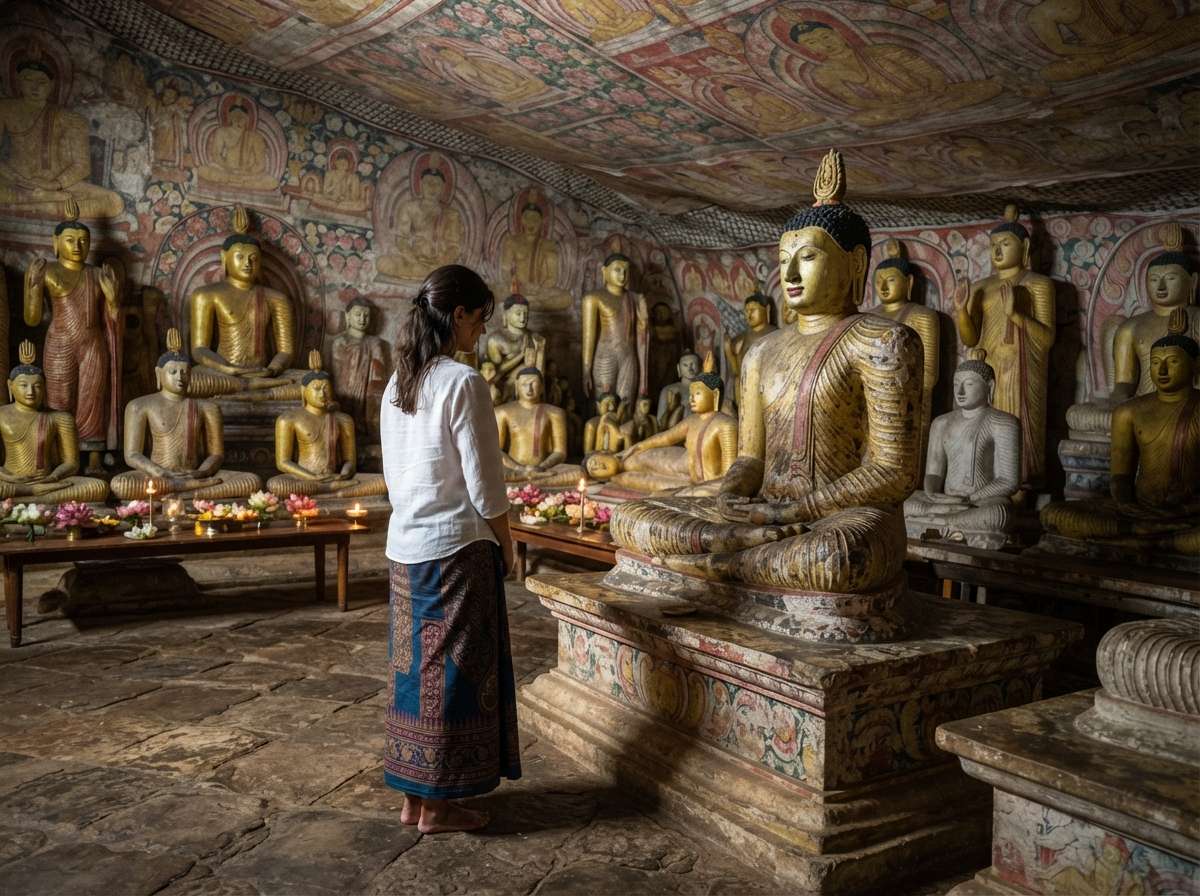
About 70% of Sri Lankans are Buddhist, and the faith is protected in the constitution. That’s why temple mistakes are the ones that get tourists into the most trouble. These six apply at every vihara, dagoba and roadside shrine, from the Temple of the Tooth in Kandy to the cave temples at Dambulla.
1. Don’t Pose With Your Back to a Buddha Statue
The UK government’s travel advice is blunt: do not pose for photographs standing in front of a statue of Buddha. A selfie with the Buddha over your shoulder reads to most Sri Lankans as mocking the faith, and disrespecting Buddhist images is a serious offence under local law. The same goes for sitting on a statue’s plinth or putting an arm around it.
If you want the picture, stand beside the statue and face it, or photograph the statue alone. Walk out of shrine rooms without swinging round, and you’ll notice locals step backwards a few paces before turning. Copy them. It feels odd for about five minutes, then it’s habit.
2. Don’t Show a Buddha Tattoo or Wear Buddha-Print Clothes
This is the one rule that can end your holiday at the airport. In April 2014 a British nurse, Naomi Coleman, was arrested at Bandaranaike International Airport over a Buddha tattoo on her arm, held for three days and deported. Sri Lanka’s Supreme Court later ruled in November 2017 that her arrest violated her rights and awarded her about Rs 800,000 with costs, but the UK government still warns that a visible Buddha tattoo can get you refused entry or deported.
If you have one, cover it with a long sleeve or a bandage from the moment you land. The same thinking applies to T-shirts, bags and sarongs printed with the Buddha’s face. They’re sold in markets across Asia, and they offend here.
3. Don’t Enter a Temple in Shorts, Sleeveless Tops, Shoes or a Hat
Temple staff will stop you at the gate if your shoulders or knees are bare. Men and women both need sleeves and a lower half that reaches below the knee. Hats and sunglasses come off. Shoes come off at the entrance, and at the bigger sites that means everything from the outer courtyard inward.
White or light clothing is what local worshippers wear, and it won’t get you stared at. Socks are allowed, and you’ll want them. The rock floors at Dambulla, Anuradhapura and Polonnaruwa get painfully hot by late morning, which is why most travellers who visit after 11 am end up hopping between patches of shade. Carry a light shawl or sarong in your daypack so you’re ready for unplanned stops. The Temple of the Tooth charges foreign visitors a ticket, with SAARC nationals (including Indians) paying LKR 2,500 and other foreigners LKR 3,000 from 1 July 2026, according to the temple’s own FAQ. See our places to visit in Kandy for the rest of the temple circuit.
4. Don’t Touch a Monk, or Hand Things Straight to One if You’re a Woman
Monks keep their distance from physical contact, and with women the rule is strict. A woman shouldn’t shake a monk’s hand, brush against his robe or pass him an object directly. Place it on a table or cloth in front of him, or let a man in your group hand it over.
On buses and trains, the front seats are often marked for clergy. Leave them free even if the bus is empty when you board. And never touch anyone’s head, monk or not, including children. The head is considered the most sacred part of the body.
5. Don’t Point Your Feet at a Buddha or at People
Feet are the lowest and least clean part of the body. Stretching your legs out towards a shrine, a monk or another person, or resting your feet on a chair, is rude. In a temple, sit cross-legged or kneel with your feet tucked behind you, the way the families around you are sitting.
6. Don’t Climb on Stupas, Statues or Ancient Ruins
Stupas hold relics, and Sri Lanka’s ancient cities are protected archaeological sites. Climbing a dagoba wall, sitting on a moonstone or scrambling onto a reclining Buddha for a photo can get you removed by site guards. At Sigiriya and the sites around it, stay on the marked paths and stairs.
Laws Tourists Break by Accident in Sri Lanka
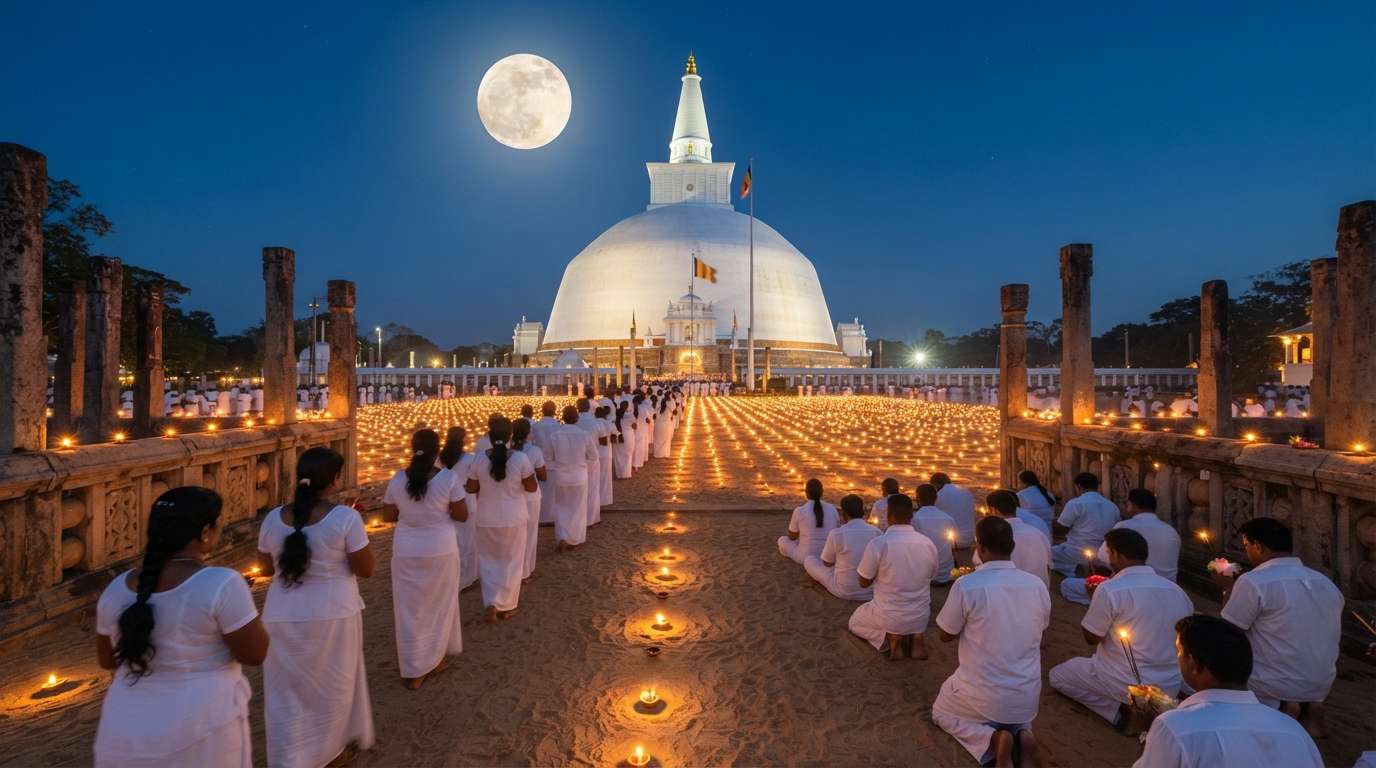
Most visitors who end up at a police station didn’t mean to break the law. They simply didn’t know it existed. These seven carry real penalties, so read them before you pack.
| Sri Lanka rule | What can happen | Where to check |
|---|---|---|
| No liquor sales on Poya days | Bars and shops close; venues caught selling have been raided | Excise Department Poya notices |
| Drones need CAASL registration; no photos of bases or VIP convoys | Customs can hold an unregistered drone; police and army can stop you | caa.lk, Ministry of Defence, UK travel advice |
| No topless or nude sunbathing | Not allowed on any beach | UK travel advice |
| No drugs, cannabis included | Long jail sentences and heavy fines | UK travel advice |
| No antiques, coral or reef shells out of the country | An offence under the Customs Ordinance | Sri Lanka Customs, Department of Archaeology |
| ETA approval before you fly | Airlines can refuse boarding | eta.gov.lk |
| No smoking in enclosed public places | Police can fine you | Signs at the venue |
7. Don’t Expect to Buy Alcohol on a Poya Day
Every full moon is a Poya day, a public and religious holiday. Under the Excise Ordinance of 1912, no one may sell liquor on a Full Moon Poya Day, and bars, liquor shops and restaurants that sell alcohol must close. Hotel bars are not reliably exempt. In 2019 the Excise Department sealed tourist-board-approved hotels for selling liquor on both Vesak Poya (near Kurunegala) and Nikini Poya (at Nikaweratiya). Some tourist hotels have been allowed to serve in-house guests on other closure days, such as the April New Year, but not on Poya.
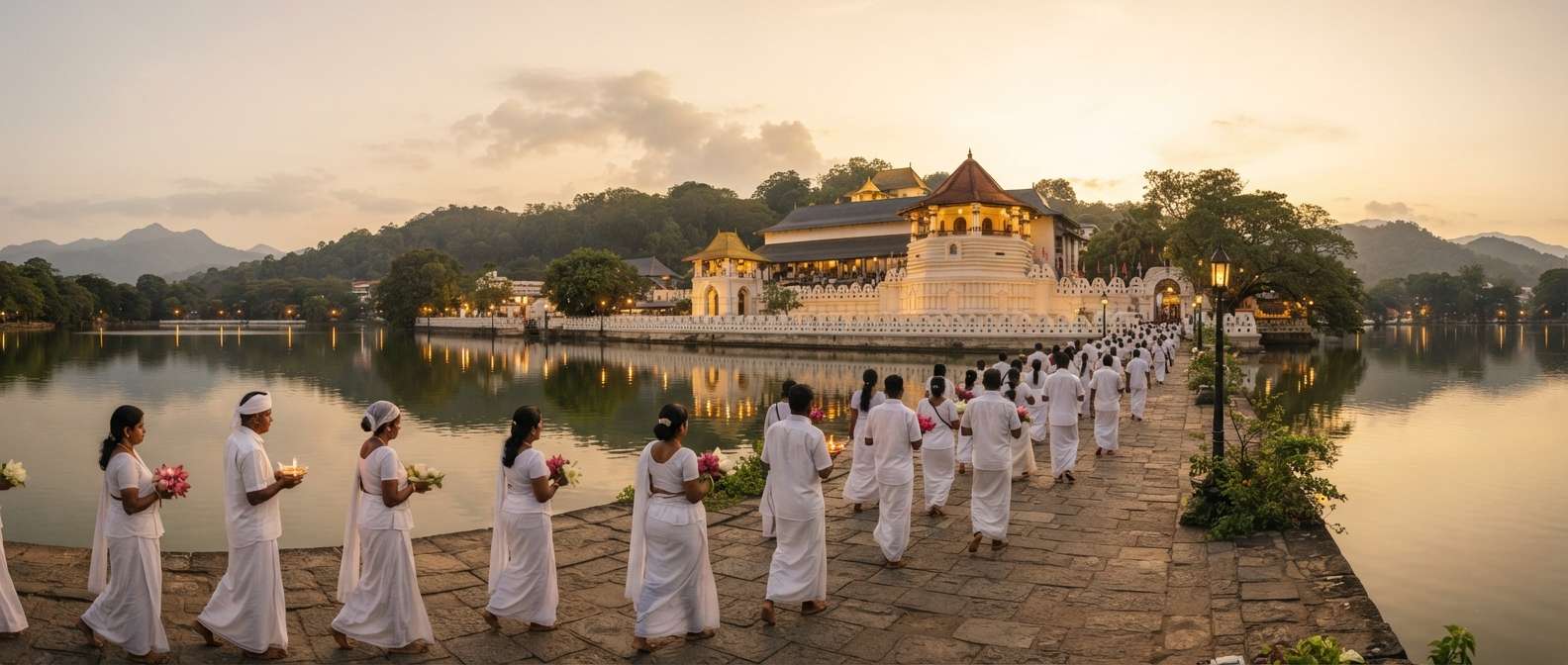
The next Poya days are Il Poya on 24 November 2026, Unduvap Poya on 23 December 2026 and Duruthu Poya on 22 January 2027 (per the Central Bank of Sri Lanka’s 2027 holiday list). Meat shops in some towns also shut. Treat it as a dry day, visit a temple in the evening to see the oil lamps and white-clad pilgrims, and you’ll get more out of it than a beer would have given you. Drinking in public that day is also culturally insensitive, the UK advice notes.
8. Don’t Fly a Drone or Photograph Military Sites Without Permission
Every camera drone needs registration with the Civil Aviation Authority of Sri Lanka (CAASL) through its online portal at caa.lk. Flying near airports, military bases, government buildings, and most national parks and archaeological sites needs further clearance, and the Ministry of Defence asks for restricted-area requests at least 14 days ahead. Arrive with an unregistered drone and Customs can hold it until the paperwork is done.
The same applies to cameras and even binoculars. The UK advice says not to photograph, fly drones near, or use binoculars to look at military bases, government buildings or vehicles used by VIPs. If a convoy passes or you see a camp, lower the camera. And if police or army stop your vehicle at a checkpoint, stop and follow their instructions.
9. Don’t Sunbathe Topless or Nude
Nude or topless sunbathing is not allowed anywhere in Sri Lanka, including the tourist beaches at Mirissa, Unawatuna and Bentota. Swimwear is fine on the sand. Cover up with a shirt or sarong when you walk into town, a café or a shop.
10. Don’t Buy, Carry or Use Drugs, Including Cannabis
Illegal drugs, cannabis included, carry severe penalties. Expect a long jail sentence and heavy fines for possession, use or smuggling, and the airports use scanners to find them. Beach touts sometimes offer “local herbs” or “ayurvedic” smokes. Say no and keep walking. Never carry a bag for a stranger, and don’t accept drinks from people you’ve just met, which the UK advice also flags.
11. Don’t Pack Antiques, Coral or Shells to Take Home
Exporting antiques without a permit from the Director General of Archaeology is an offence under the Customs Ordinance, and Customs currently treats items over 100 years old as antiques. Old palm-leaf manuscripts, temple carvings and colonial coins fall under the rule. Coral, shells taken from reefs and products from protected wildlife are also off limits. If a shop sells you an “antique” mask, ask for a receipt that states it is a reproduction.
The money rules matter too. Declare foreign currency over USD 15,000 when you arrive, and don’t carry more than LKR 20,000 in Sri Lankan rupee cash in or out of the country, per Sri Lanka Customs.
12. Don’t Fly In Without an Approved ETA
Indian passport holders have been able to get Sri Lanka’s Electronic Travel Authorisation (ETA) free since 25 May 2026, along with travellers from 39 other countries. Free doesn’t mean optional. You still apply on eta.gov.lk before you fly, airlines can deny boarding without approval, and the tourist ETA gives 30 days with double entry. Our guide to the Sri Lanka visa for Indians walks through the form. Once you land, carry your passport (or a copy, with the original in the hotel safe), because the UK advice says it is your official ID.
13. Don’t Ignore No-Smoking or No-Alcohol Signs
Smoking is banned in enclosed public places, and police can fine you for ignoring “no smoking” signs or notices that ban alcohol in certain public areas. If you smoke, step well away from temples, bus stands and restaurants.
Don’t pack cigarettes either. Sri Lanka Customs doesn’t let arriving passengers bring in cigarettes, cigars or beedies, duty-paid or not, so any you carry can be seized and you can be fined. E-cigarettes and vapes are banned too.
Etiquette With Sri Lankans: Social Don'ts
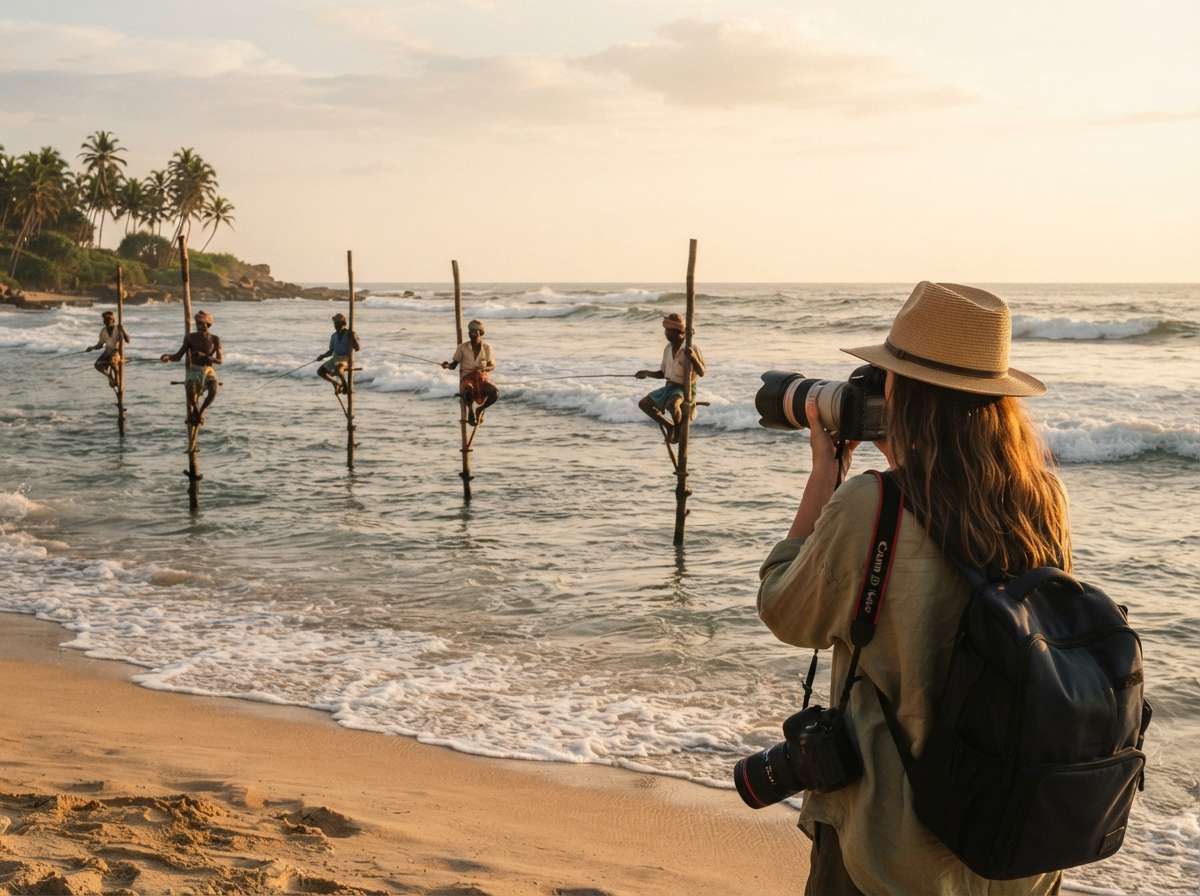
Sri Lankans are some of the most hospitable people you’ll meet in South Asia, and they’ll forgive a lot from a visitor who is trying. These five slips are the ones they notice.
14. Don’t Eat, Pay or Pass Things With Your Left Hand
The left hand is considered unclean. Eat, pay, hand over money and accept change with your right hand. When you give a gift or take something from an elder, use both hands or your right hand with the left touching your right forearm. Rice and curry is often eaten with the fingers of the right hand, so if you’re left-handed, ask for a spoon rather than switching. Our guide to Sri Lankan cuisine covers what to order.
15. Don’t Kiss or Cuddle in Public
Public displays of affection beyond holding hands draw stares, and in temples and small towns they cause offence. Couples on a Sri Lanka honeymoon will find beach resorts relaxed, but keep it low-key in Kandy, the ancient cities and on public buses. You’ll still see young local couples sharing an umbrella on Galle Face Green. That’s about as far as it goes.
16. Don’t Photograph People Without Asking
Ask before you photograph anyone, and especially monks, women and worshippers at prayer. Most people say yes with a smile. Some stilt fishermen near Koggala pose for photos and then ask for money, so agree a price first or take the shot from a distance. Inside shrine rooms, flash photography is banned in many temples, and some museums sell a separate camera ticket.
17. Don’t Compare Sri Lanka With India, or Bring Up the War Casually
Sri Lanka shares food, languages and history with South India, and Indian visitors notice it constantly. Saying “it’s just like Kerala” lands badly. Sri Lankans are proud of what is their own, from the Sinhala script to their cricket. Equally, the civil war that ended in 2009 touched almost every family. Don’t open a conversation with it or with current politics. If someone raises it, listen more than you speak. The UK advice also says to avoid demonstrations and political gatherings.
18. Don’t Misread the Head Wobble, or Ask a “Hotel” for a Room
A side-to-side wobble of the head usually means yes, or “I understand”. It isn’t a no. And the word “hotel” on a small roadside sign often means an eatery serving rice and curry, string hoppers and tea, not a place to sleep. Ask for a “guest house” or “rest house” if you need a bed.
Money, Tuk-Tuk and Transport Don'ts
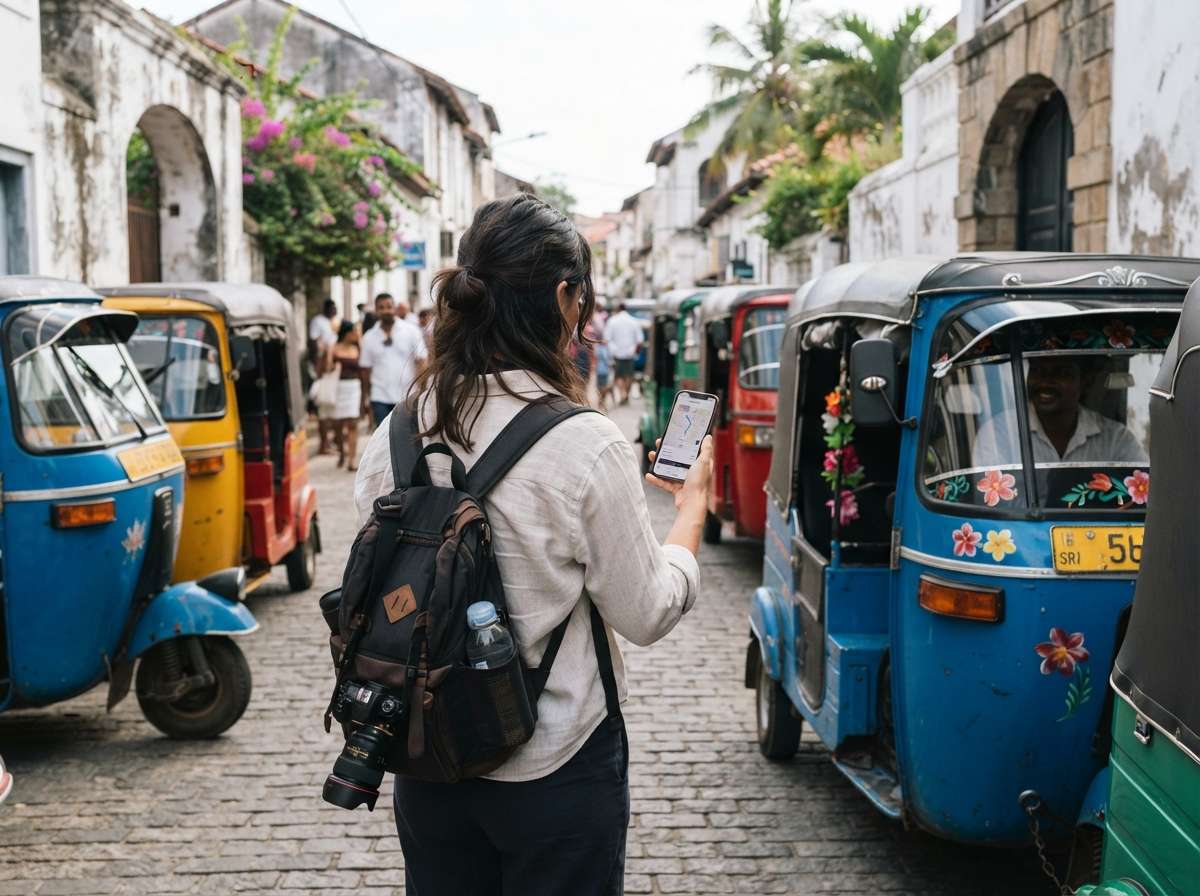
This is where first-time visitors lose the most money and time. None of it is dangerous. All of it is avoidable.
19. Don’t Board a Tuk-Tuk Without Agreeing the Fare
Street tuk-tuk drivers often quote tourists several times the local rate, especially outside hotels and stations. In Colombo, Kandy, Galle and Negombo, book through the PickMe or Uber apps, which show the fare before you ride. Otherwise, choose a tuk-tuk with a working meter (common in Colombo), or agree the price before you sit down. Have small notes ready, because “no change” is the oldest trick in the book.
20. Don’t Follow Touts to Gemstone Shops, Spice Gardens or “Special Festivals”
A friendly stranger tells you there’s an elephant festival or a special Poya ceremony today, and that his cousin’s tuk-tuk can take you. The detour ends at a gemstone shop or a spice garden with high-pressure sales. Sri Lanka has a real gemstone trade around Ratnapura, but buy only from sellers who give a certificate from the National Gem and Jewellery Authority. At spice gardens, the tour is free and the “ayurvedic” oils are not cheap. Go if you’re curious, but don’t feel obliged to buy.
21. Don’t Rely on Cards Outside the Cities
Hotels, malls and larger restaurants take cards, but tuk-tuks, buses, temple donation boxes and village shops run on cash. Carry LKR 100, 500 and 1,000 notes, and use ATMs inside banks rather than standalone machines, since the UK advice warns that card fraud is common. Indian travellers have an extra option. UPI has worked in Sri Lanka since February 2024 through LankaPay’s LankaQR network, which LankaPay says covers more than 400,000 merchants, and the debit is shown in rupees before you pay. For a full money plan, see Sri Lanka on a budget.
22. Don’t Underestimate Travel Times, or Hang Out of Train Doors
Sri Lanka looks small on a map, but hill-country roads are slow. Kandy to Nuwara Eliya is about 77 km and takes close to three hours by car. Plan two or three sights a day, not five.
The famous hill-country train also needs planning in 2026. Cyclone Ditwah damaged the line in late 2025. Services between Nanu Oya (for Nuwara Eliya) and Badulla, the stretch through Ella, resumed on 21 June 2026, but the Kandy to Nanu Oya section is still being repaired, so for now travellers take a car or bus from Kandy to Nanu Oya and board there. Reserve seats early through the railway’s official booking site. Whatever the season, don’t hang out of open doors or sit on footboards for photos. The doors stay open while the train moves and the line runs through tunnels and tight rock cuttings, so leaning out for a photo is a real fall risk.
23. Don’t Cross Busy Roads Carelessly, or Drive Without the Right Permit
Buses overtake on bends, tuk-tuks cut across lanes and motorbikes use the pavement in traffic. Cross at signals where they exist, or cross alongside locals. Traffic keeps to the left, as in India, so Indian drivers adjust faster than most. To drive a hire car you need either an international driving permit that Sri Lanka recognises (a 1949-convention permit needs an Automobile Association of Ceylon endorsement), or a temporary Sri Lankan driving licence, which the Department of Motor Traffic issues to tourists at Bandaranaike International Airport. Most visitors hire a car with a driver instead, which is how TravelTriangle’s Sri Lanka tour packages are usually built.
Wildlife, Beach and Health Don'ts
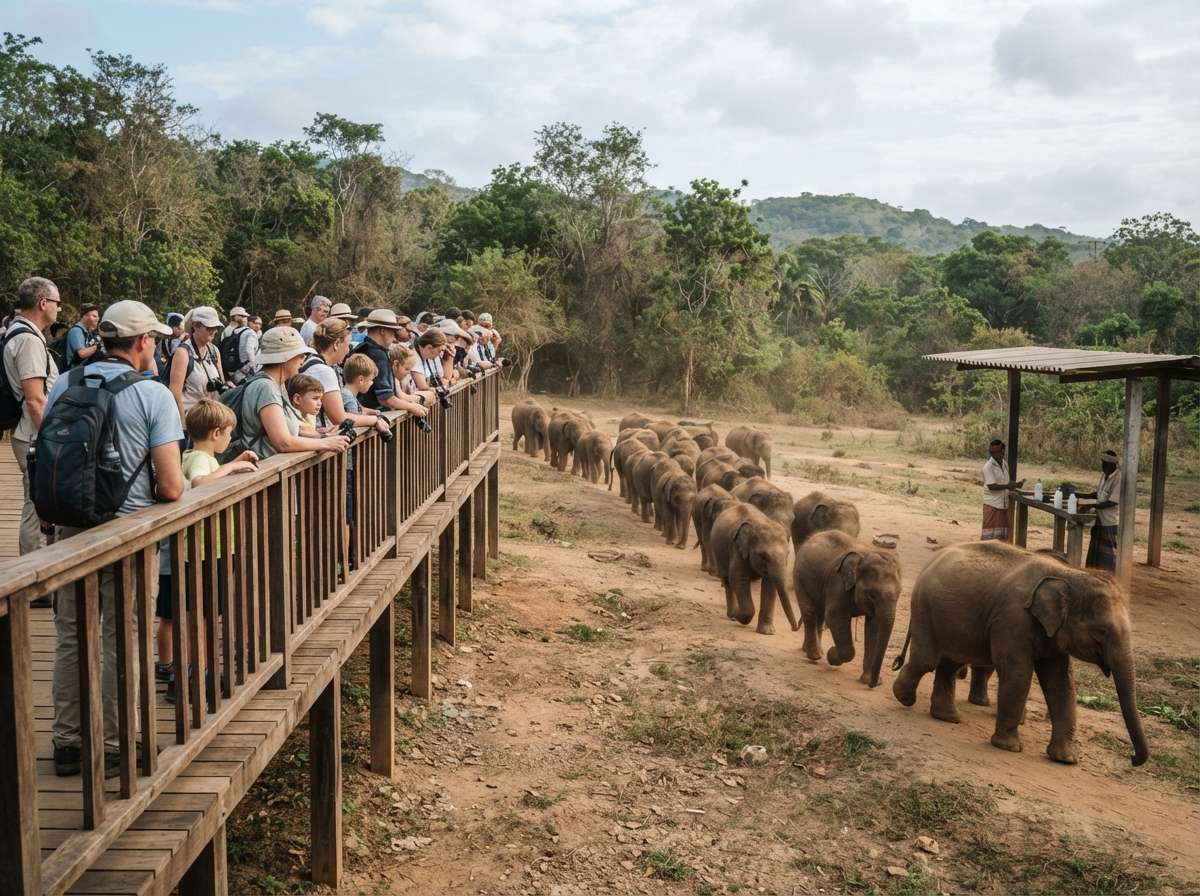
Sri Lanka’s nature is the reason many people come. These two don’ts protect both the animals and your trip.
24. Don’t Ride or Feed Elephants, or Push a Safari Driver to Chase Leopards
Elephant rides at Habarana and near Sigiriya use captive animals, and the bull-hooks are easy to spot once you know to look. Skip them. To see elephants up close, go to Udawalawe National Park and watch the orphaned calves being fed at the Elephant Transit Home from the viewing platform. Never feed wild elephants from a vehicle, a habit that has made some roadside bulls aggressive.
At Yala National Park, the pressure to find a leopard leads to jeeps racing and crowding a single animal. Don’t offer your driver a “leopard tip”. Ask him to keep his distance and switch off the engine. Plan around Yala’s dry-season closure too. Blocks 1 and 2 were shut from 14 September to 15 October 2026, while Blocks 3 and 5 stayed open. And don’t pet street dogs, however friendly. Rabies is present, so any bite or scratch needs a hospital visit the same day.
25. Don’t Swim on the Monsoon Coast, Drink Tap Water or Skip Repellent
Many Sri Lankan beaches have dangerous surf and rip currents at certain times of the year. The rule of thumb is simple. The south-west monsoon churns the west and south coasts (Colombo, Bentota, Hikkaduwa, Galle, Mirissa) from about May to September, and the north-east monsoon hits the east and north (Trincomalee, Pasikuda, Jaffna) from about November to February. Swim on the calm side, swim where locals swim, and never swim past a red flag. Our best time to visit Sri Lanka guide has the month-by-month split.
Drink bottled or filtered water, and check the seal. Tap water isn’t treated to a standard that’s safe for visitors.
Mosquitoes are the bigger health risk. Sri Lanka has been certified malaria-free by the WHO since 5 September 2016, so you don’t need malaria tablets. Dengue is different. The National Dengue Control Unit recorded 49,887 cases in 2024, and more than 44,000 were reported in the first half of 2026 alone. The dengue mosquito bites in daylight, so use a DEET repellent from morning, not only at dusk. On top of that, the sun in the lowlands is fierce. Carry water and a hat on long site days at Sigiriya and Polonnaruwa, and expect leeches on rainforest trails in Sinharaja and Horton Plains after rain. Leech socks cost little and solve it.
How to Visit a Sri Lankan Temple Without Giving Offence
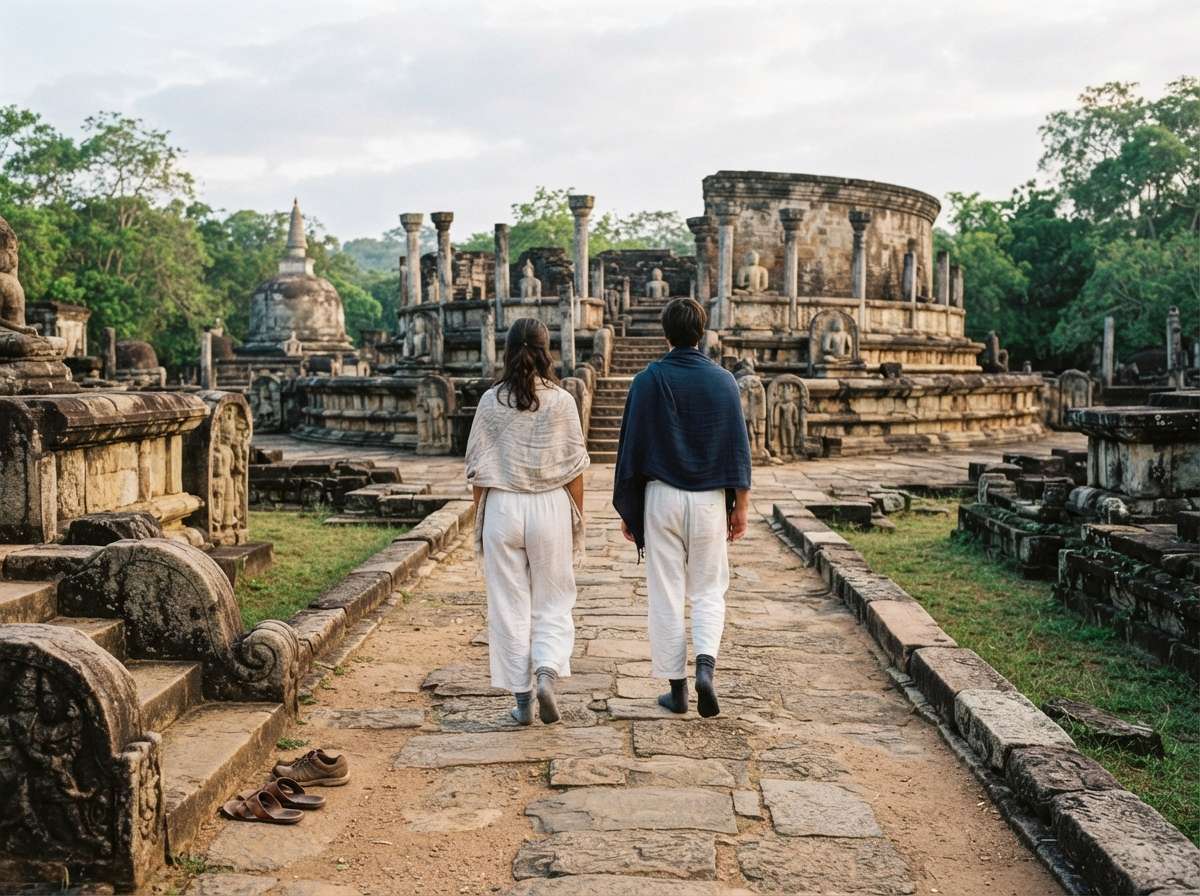
If you only remember one section, make it this one. Six steps cover every temple from Kandy to Kataragama.
- Dress before you leave the hotel. Wear a top with sleeves and trousers, a long skirt or a sarong below the knee. Light or white colours are best.
- Pack socks, a shawl and small notes. Socks for hot stone floors, a shawl for unplanned stops, and LKR 100 notes for the donation box or shoe minder.
- Remove shoes and hat at the entrance. Leave shoes at the stand (a small tip to the minder is normal) and take off hats and sunglasses.
- Walk clockwise around stupas and shrines. Keep the stupa on your right, as pilgrims do.
- Photograph with care. Ask before you photograph people, no flash in shrine rooms, and never turn your back to a Buddha for a selfie.
- Sit low and leave quietly. Sit with your feet tucked away from the Buddha, keep voices down, and step back a few paces before turning to leave.
Sri Lanka Dos and Don'ts for Tourists
The don’ts are easier with the dos beside them. These eight pairs cover what locals notice most.
| Do | Don’t |
|---|---|
| Greet people with “Ayubowan”, palms together and a slight bow | Eat, pay or pass things with your left hand |
| Wear sleeves and below-knee clothing at temples, and in Kandy, Anuradhapura and Jaffna | Walk into a temple in shorts, shoes or a hat |
| Carry small LKR notes for tuk-tuks, tips and temple donations | Rely on cards outside the cities |
| Ask before you photograph people | Pose with your back to a Buddha statue |
| Eat rice and curry with the fingers of your right hand | Compare Sri Lanka with India |
| Tip about 10% where no service charge is added, and a little for drivers and guides | Board a tuk-tuk without agreeing the fare |
| Check the Poya calendar before you plan a night out | Expect to buy alcohol on a full moon day |
| Book safaris and hill-country transport early from December to April | Swim past a red flag on the monsoon coast |
A few words go a long way, and Sri Lankans light up when a visitor tries.
| Say this | Language | Meaning |
|---|---|---|
| Ayubowan | Sinhala | Hello and goodbye (“may you live long”) |
| Istuti | Sinhala | Thank you |
| Kiyada? | Sinhala | How much? |
| Epa | Sinhala | No thanks / I don’t want it |
| Hari | Sinhala | OK |
| Vanakkam | Tamil | Hello (in Jaffna, the east and the tea estates) |
| Nandri | Tamil | Thank you |
Places and Times to Avoid in Sri Lanka
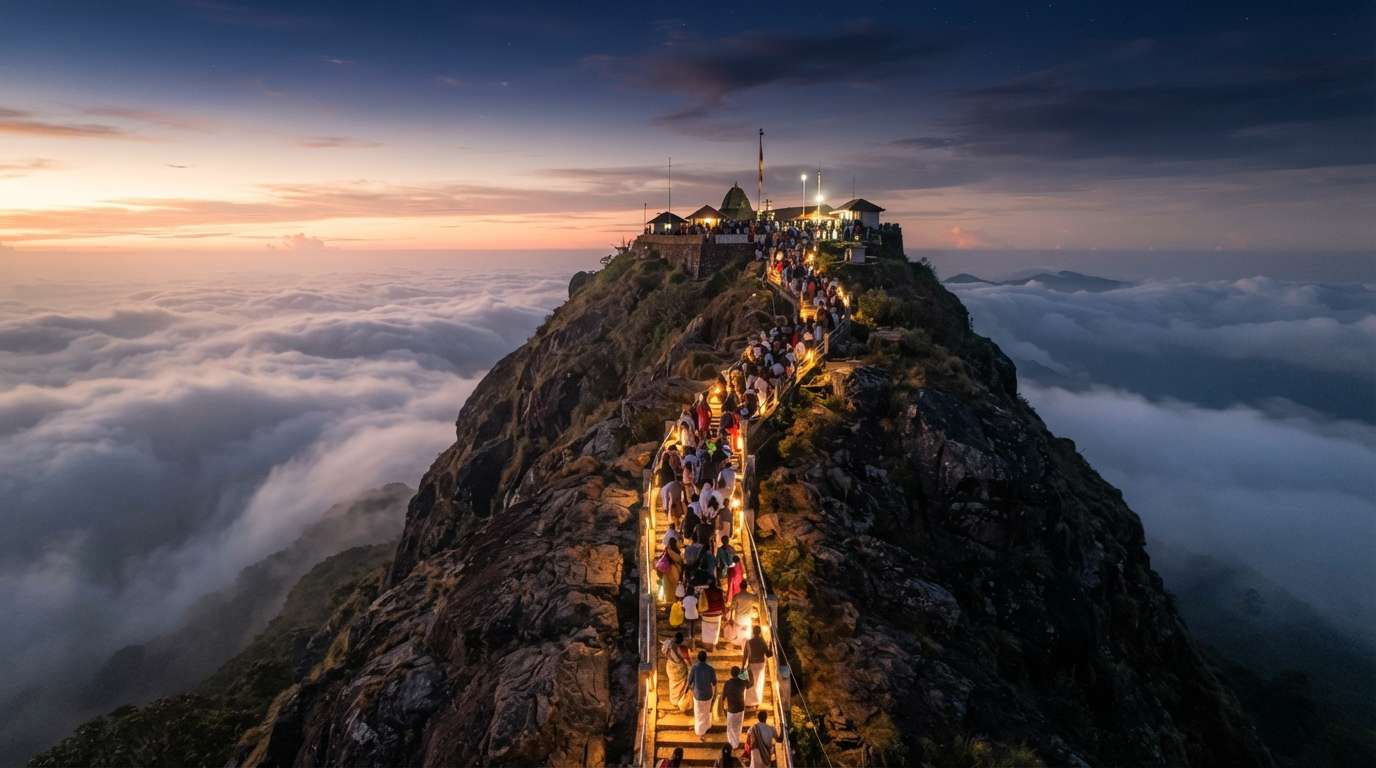
No part of Sri Lanka is off limits to tourists, but some places are worth skipping at certain times. Getting this wrong is the most common reason travellers come back disappointed.
| Avoid | When | Why | Go instead |
|---|---|---|---|
| West and south coast beaches (Bentota, Hikkaduwa, Mirissa) | About May to September | South-west monsoon brings rough seas and rip currents | East coast: Trincomalee, Pasikuda, Arugam Bay |
| East coast beaches (Trincomalee, Pasikuda) | About November to February | North-east monsoon | South and west coasts |
| Yala National Park Blocks 1 and 2 | Dry-season closure (14 Sep to 15 Oct in 2026) | Park closed to visitors | Yala Blocks 3 and 5, Udawalawe |
| Adam’s Peak night climb | June to November | Off season: no lights, stalls closed, wet and slippery | December (from Unduvap Poya) to May |
| Kandy to Ella by a single train | Until the Kandy to Nanu Oya section reopens | Line still under repair in 2026 | Car to Nanu Oya, then train to Ella |
| Ella and Nuwara Eliya | Last week of December, April New Year week | Rooms sell out, prices peak | Late January or March |
| Kandy hotels | Esala Perahera (July or August) | Rates rise sharply and crowds are huge | Book months ahead, or visit the week after |
| Colombo’s Galle Road by car | Weekday rush hours | Gridlock | Travel before 7 am or after 7 pm, or take the coastal train |
Adam’s Peak deserves a note of its own. The pilgrimage season runs from Unduvap Poya in December to Vesak Poya in May, so the 2026 to 2027 season opens on 23 December 2026. Our Adam’s Peak guide covers the climb.
Bad Things About Sri Lanka: The Honest Downsides
The bad things about Sri Lanka are irritations rather than dangers, and every one of them has a fix. The island is safe for tourists, and about 531,000 Indians visited in 2025. These are the downsides visitors actually complain about.
- Scams and overcharging are the most common complaint, from tuk-tuk fares to gemstone detours. Apps and fixed prices solve most of it.
- Roads are the biggest physical risk. Hire a driver rather than self-drive.
- Heat, dengue and stomach bugs are what actually ruin trips. Repellent, bottled water and a slower pace in the midday sun prevent most of them.
- Women travelling alone sometimes report staring and unwanted comments on crowded buses. Dressing modestly and taking the reserved seats in first or second class on trains helps.
- LGBTQ+ travellers should know that same-sex sexual activity is illegal, though the UK government says it isn’t aware of any prosecutions. Discretion in public is the norm.
- Foreigner ticket prices apply at temples, national parks and the ancient cities. SAARC visitors, Indians included, pay a lower foreign rate but still far more than locals, so budget for it.
- Protests and political gatherings are best avoided, as the UK advice recommends.
For the full safety overview, packing list and planning advice, read our Sri Lanka travel tips and the Sri Lanka travel guide.
Extra Tips for Indian Travellers
Indian visitors are Sri Lanka’s largest market, and a few habits from home don’t carry over. This matrix shows where they trip people up.
| What many Indians assume | The reality in Sri Lanka | What to do |
|---|---|---|
| Visa isn’t needed because it’s free | The ETA is free since 25 May 2026 but still mandatory | Apply on eta.gov.lk before booking flights |
| Indian rupee cash will work | LKR is the currency; UPI works only at LankaQR counters | Carry LKR notes, use UPI where you see LankaQR |
| Temple dress is like home | Shoulders and knees covered, hats off, no Buddha-face prints | Pack a sarong or dupatta for every site day |
| A drink is always available | Liquor sales stop every Poya day, at most hotel bars too | Check the Poya calendar before a celebration |
| Ticket prices match locals | SAARC visitors pay a separate foreign rate at most sites | Budget LKR 2,500 for the Temple of the Tooth |
| “It’s just like Kerala” | Comparisons with India land badly | Ask about local food and history instead |
| Cricket banter is fine | It is, and Sri Lankans love it | Keep it friendly; this one is a great icebreaker |
Phone plans are another catch. Indian roaming in Sri Lanka is expensive unless you buy a roaming pack, and a local Dialog or SLT-Mobitel tourist SIM at the airport is usually cheaper. If you’d rather leave the planning to someone else, our Sri Lanka family packages include a driver, hotels and the temple stops built around Poya days.
How We Checked These Rules
Every law on this page was checked in November 2026 against official or primary sources. They include the UK government’s Sri Lanka travel advice on local laws, Sri Lanka Customs on currency and antiques, the Civil Aviation Authority of Sri Lanka (caa.lk) and the Ministry of Defence on drones, the Excise Department’s Poya closure notices, the World Health Organization on malaria, the National Dengue Control Unit on dengue, the Sri Dalada Maligawa’s own visitor FAQ for ticket prices, and eta.gov.lk for entry rules. Rules change, so check the ETA site and the Poya calendar again in the week before you fly.
Plan a Trip That Respects the Rules
Most things not to do in Sri Lanka come down to two habits. Respect the Buddha and the temples, and check the law before you assume, whether it’s a drone, a drink on a full moon or a souvenir that looks old. Get those right and Sri Lankans will go out of their way for you. If you want a trip with a local driver who already knows the temple dress rules, the Poya dates and the honest tuk-tuk fare, browse TravelTriangle’s Sri Lanka tour packages and customise one around your dates. For more etiquette guides, see what not to do in Thailand, Bali, the Maldives and Dubai.
FAQs
Things Not to Do in Sri Lanka: Frequently Asked Questions
Quick answers on Sri Lanka's temple rules, laws, money and safety for 2026
Don't disrespect Buddhism, which is the rule that matters most. That means no posing with your back to a Buddha statue, no visible Buddha tattoos and no shorts, shoes or hats in temples. Legally, don't buy alcohol on Poya days, fly an unregistered drone, sunbathe topless, touch drugs or export antiques. Socially, avoid using your left hand, public kissing and photographing people without asking. For money, use PickMe or agree tuk-tuk fares first.
No, you can't buy it. The Excise Ordinance bans liquor sales on every Full Moon Poya Day, so bars, liquor shops and most hotel bars close. In 2019 the Excise Department raided a tourist-licensed hotel for selling on Poya. Upcoming Poya days are 24 November 2026, 23 December 2026 and 22 January 2027. Avoid drinking in public that day too, and plan celebrations for the day before or after.
There's no specific tattoo law, but the UK government warns that visible Buddha tattoos can lead to refused entry or deportation. British nurse Naomi Coleman was arrested at Colombo airport in 2014 and deported over one. The Supreme Court later ruled her treatment unlawful and awarded compensation, but officials have acted on tattoos since. Cover any Buddha tattoo with sleeves or a bandage from arrival to departure.
Yes, at the beach, in resorts and in Colombo's cafés. No, at temples and sacred sites, where shoulders and knees must be covered for both men and women. Many visitors wear shorts and carry a sarong to wrap over them at temple gates. In conservative towns such as Kandy, Anuradhapura and Jaffna, knee-length clothing draws less attention everywhere, not just inside temples.
Yes. Feet are considered the lowest and least clean part of the body, so pointing them at a person, a monk or a Buddha statue is disrespectful. In temples, sit cross-legged or kneel with your feet tucked behind you. Don't rest your feet on chairs or tables, and step around people sitting on the floor rather than over them.
Only with registration from the Civil Aviation Authority of Sri Lanka, done online through caa.lk before you arrive. Flying near airports, military bases, government buildings, national parks and archaeological sites needs further clearance, and the Ministry of Defence asks for restricted-area requests 14 days ahead. Customs can hold an unregistered drone at the airport. Most short-trip visitors find it simpler to leave the drone at home.
Indians need an approved ETA, but it has been free since 25 May 2026. Apply on the official site eta.gov.lk before you book flights, since airlines can refuse boarding without approval. The tourist ETA allows 30 days with double entry, and extensions are handled by the Department of Immigration in Colombo. Read our Sri Lanka visa for Indians guide for the full process.
No, visitors should not drink tap water in Sri Lanka. Stick to sealed bottled water or filtered water from your hotel, and check bottle seals when buying from small shops. Ice in hotels and established restaurants is usually made from filtered water, but avoid it at roadside stalls. Most travellers find a refillable bottle and the hotel's filtered water dispenser cuts plastic waste.
Yes. Sri Lanka is safe for tourists in 2026, and over half a million Indians visited in 2025. The real risks are road accidents, dengue, overcharging and rip currents on the monsoon coast, not crime. Hire a driver, use repellent, book tuk-tuks through apps and swim on the calm side of the island. Avoid protests and political gatherings, as UK government advice recommends.
Antiques can't leave without a permit from the Director General of Archaeology, and Customs treats items over 100 years old as antiques. Coral, shells from reefs and products from protected wildlife are also off limits. You can't take out more than LKR 20,000 in rupee cash, and you must declare foreign currency over USD 15,000 on arrival. Keep receipts showing that souvenir carvings and masks are new.
Yes, in markets and with street tuk-tuks, but politely. A counter-offer of about half the opening price is a normal starting point at souvenir stalls, and you'll usually settle somewhere in between. Don't haggle in supermarkets, fixed-price shops, restaurants or app-booked rides. Keep it light, smile, and walk away if the price is wrong. Aggressive bargaining over small sums is considered rude.
Yes, at shops and hotels that display a LankaQR code. UPI payments for Indian visitors launched in February 2024 through LankaPay, and the LankaQR network covers more than 400,000 merchants. The amount is debited in rupees and the exchange rate is shown before you confirm. Tuk-tuks, buses and village shops still want cash, so carry small LKR notes as well.