4D / 3N
24% OFF
Best Selling Alleppey-Munnar Kerala Weekend Tour
- Hotel
- Meals
- Sightseeing
- Houseboat
- Cab Transfer
₹17,132
₹13,020 /pp
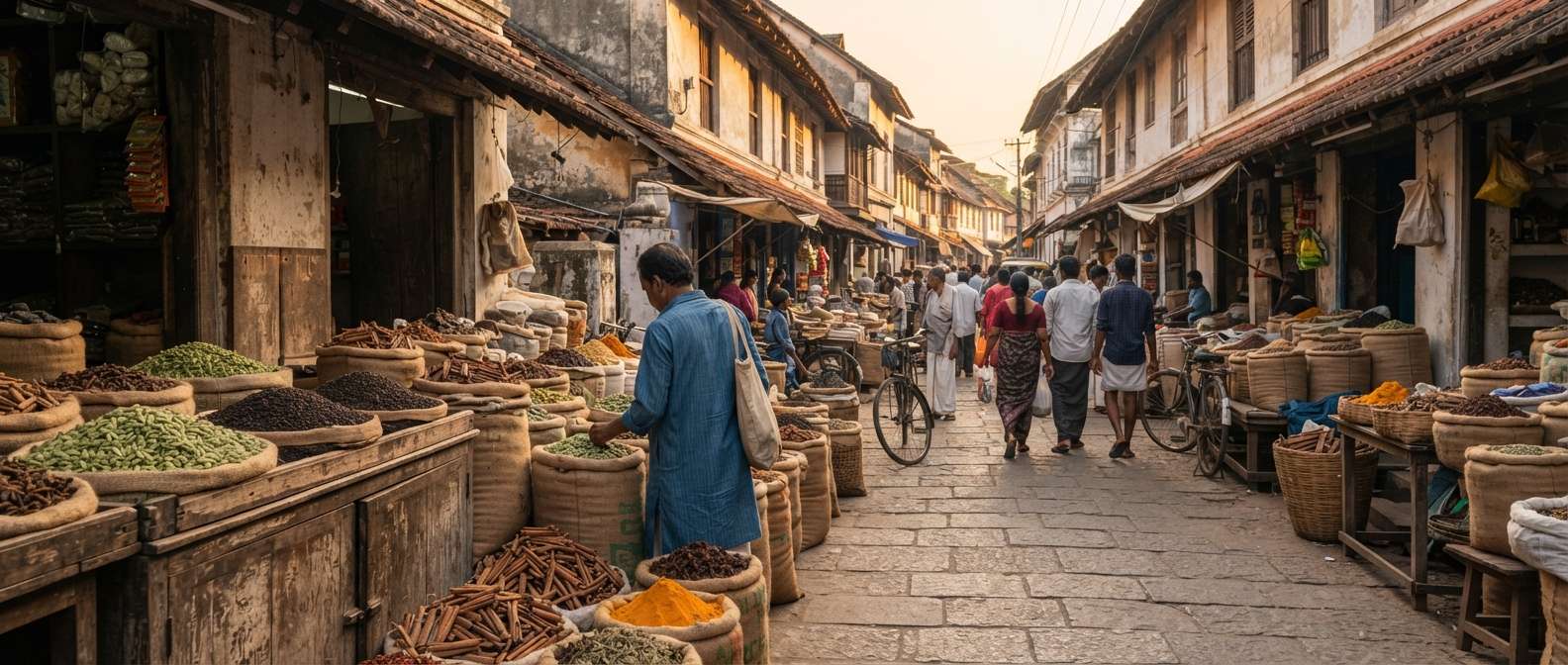


The most famous things to buy in Kerala are green cardamom and black pepper, Munnar tea, Kasavu sarees and set mundu, Kollam cashews, banana chips, Ayurvedic oils, coir, Kathakali masks and the GI-tagged Aranmula Kannadi metal mirror. Shopping in Kerala is cheapest and most reliable when you buy at the source. Get spices in Kumily or Mattancherry, handloom from the weaving villages of Balaramapuram and Kuthampully or a Hantex showroom, and crafts from the government-run Kairali and SURABHI emporia. A 100 g pack of good cardamom costs about ₹250 to ₹450 in September 2026, a kilo of fresh banana chips ₹350 to ₹600, and a genuine handloom Kasavu saree starts near ₹1,500. Below are all 20 things to buy in Kerala with their prices, where to buy each one, and how to tell the real thing from a copy.
Spices, handloom, GI-tagged crafts and edible gifts, with September 2026 prices and the best markets
Best Time
October - February
Select Package Type
This is the whole list at a glance. Prices are what a traveller pays at the places named, checked in September 2026. Each item has its own section further down with more detail.
| # | What to buy | Typical price (₹) | Best place to buy |
| 1 | Green cardamom (Alleppey Green Cardamom, GI) | 250 to 450 per 100 g | Kumily spice shops, Mattancherry |
| 2 | Black pepper, nutmeg, cloves, cinnamon | 80 to 150 per 100 g (pepper) | Mattancherry spice market, Kumily |
| 3 | Munnar tea | 150 to 600 per 250 g | KDHP Tea Museum shop, Munnar town |
| 4 | Wayanad coffee (Wayanad Robusta, GI) | 200 to 600 per 250 g | Kalpetta, estate shops in Wayanad |
| 5 | Kollam cashews 20 Famous Things to Buy in Kerala | 900 to 1,400 per kg | Kerala State Cashew Development Corporation outlets, Kollam |
| 6 | Banana chips and sharkara varatti | 350 to 600 per kg | Broadway (Kochi), Thrissur, Kozhikode |
| 7 | Kozhikode halwa | 300 to 600 per kg | SM Street (Mittai Theruvu), Kozhikode |
| 8 | Kasavu saree and set mundu (GI handloom) | 1,500 to 15,000 and up | Balaramapuram, Kuthampully, Hantex |
| 9 | Aranmula Kannadi (GI metal mirror) | 2,500 and up, by size | Aranmula workshops, Kairali, SURABHI |
| 10 | Kathakali masks and figurines | 300 to 5,000 | Fort Kochi, Kairali, SMSM Institute (Trivandrum) |
| 11 | Nettur Petti (jewel box) | 2,000 to 20,000 and up | Kairali, SURABHI, Mattancherry antique shops |
| 12 | Nilavilakku and bell-metal lamps | 500 to 20,000 and up | Mannar (Alappuzha), Guruvayur, Thrissur |
| 13 | Nettipattam (elephant caparison) | 500 to 10,000 | Thrissur, Guruvayur |
| 14 | Uru and snake-boat models | 500 to 5,000 | Beypore (Kozhikode), Alappuzha, SMSM Institute |
| 15 | Coir mats and décor (Alleppey Coir, GI) | 100 to 3,000 | Alappuzha coir showrooms |
| 16 | Coconut-shell, rosewood and screwpine crafts | 100 to 5,000 | Kovalam, Fort Kochi, SURABHI |
| 17 | Kerala mural paintings | 1,500 to 50,000 and up | Guruvayur Devaswom Institute of Mural Painting, Fort Kochi galleries |
| 18 | Ayurvedic oils and herbal products | 100 to 1,000 | Kottakkal Arya Vaidya Sala, Oushadhi outlets |
| 19 | Gold temple jewellery (palakka mala, mango mala) | About ₹14,000 per g (22K) plus making | Thrissur Round, Kochi, Kozhikode |
| 20 | Payyannur Pavithra Ring (GI) | Gold weight plus making | Payyannur (Kannur) goldsmiths |
All 20 buys with price, best place and how to spot the genuine article, then GI souvenirs, picks for women, cheap buys under ₹500, Sabarimala and Guruvayur, the best markets city by city, when to shop and how to carry it all home.
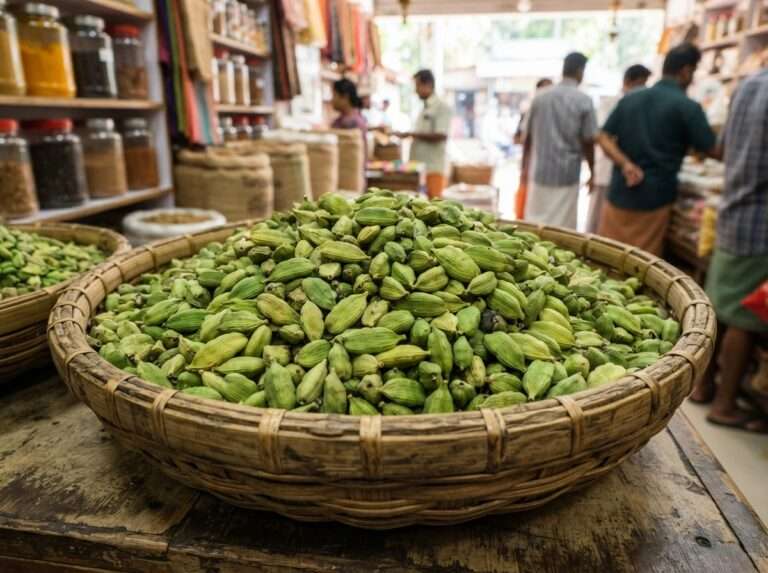
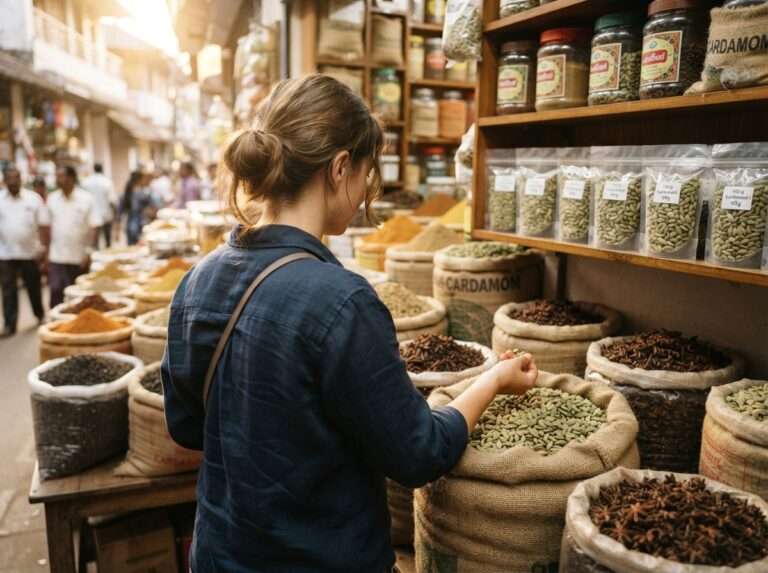
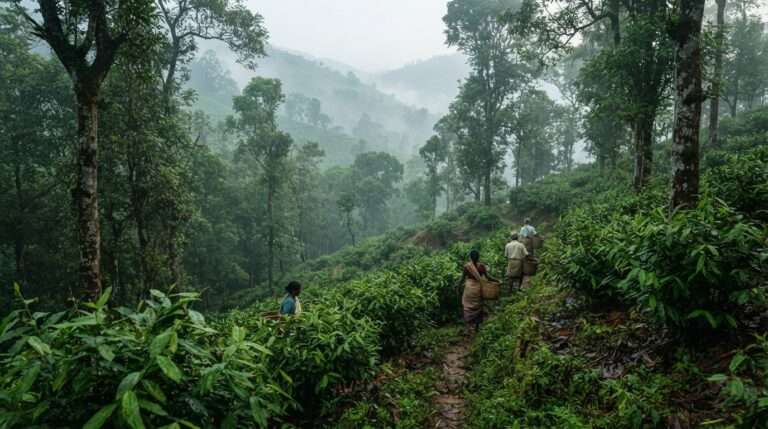
Cardamom is the spice people most often bring home from Kerala, and the Idukki hills around Kumily and Vandanmedu grow most of India’s crop. It is registered as Alleppey Green Cardamom, a GI named after the old port where it was graded and shipped. The pods you want are large, uniformly green and slightly sticky when pressed. Grade matters more than shop. Ask for 7 mm or 8 mm “bold” pods, which cost more but carry far more oil. Kumily is the natural place to buy, since the shops there sit a short drive from the plantations and restock every few days.
| Typical price | Where to buy | How to check it’s genuine |
| ₹250 to 450 per 100 g | Kumily Road shops (Thekkady), Mattancherry | Crush one pod. It should smell strong at once and the seeds inside should be black, not brown |
| Typical Price | ₹250 to 450 per 100 g |
| Where to Buy | Kumily Road shops (Thekkady), Mattancherry |
| How to Check It's Genuine | Crush one pod. It should smell strong at once and the seeds inside should be black, not brown |


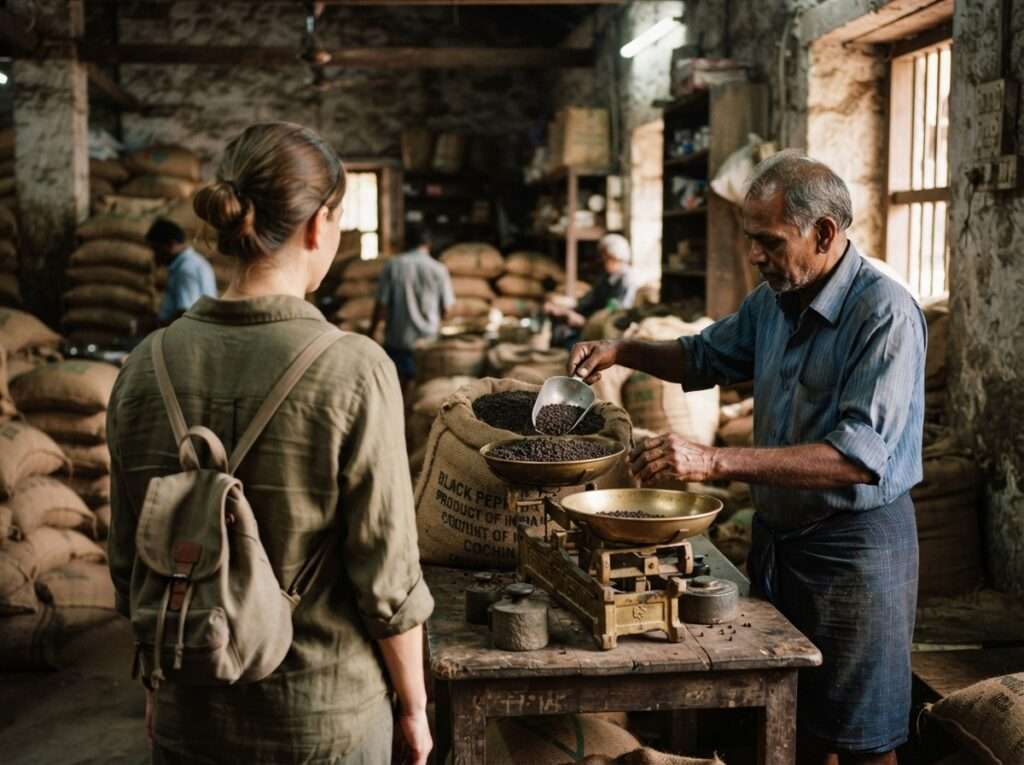

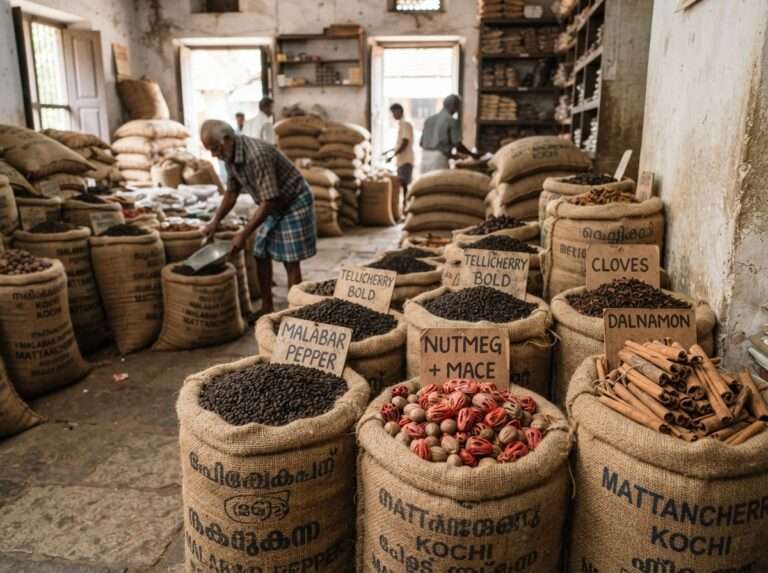
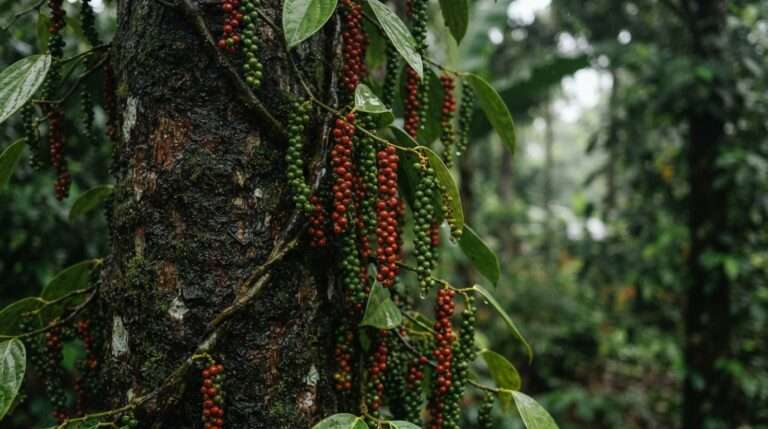
Kerala’s black pepper built the spice trade, and it is still grown in almost every home garden in Wayanad and Idukki. Malabar pepper is the everyday grade. Tellicherry pepper is the larger, more mature berry sold at a premium. Nutmeg with its red mace, cloves, cinnamon and dried ginger fill out the rest of the spice counter. The Mattancherry spice market in Kochi still has wholesale godowns along Bazaar Road where traders sell to anyone who asks, not only to shops.
| Typical price | Where to buy | How to check it’s genuine |
| Pepper ₹80 to 150 per 100 g · nutmeg ₹60 to 120 per 100 g | Mattancherry (Bazaar Road, Jew Town), Kumily | Good peppercorns are heavy and wrinkled. Drop a few in water. Real ones sink, papaya-seed fillers float |
| Typical Price | Pepper ₹80 to 150 per 100 g · nutmeg ₹60 to 120 per 100 g |
| Where to Buy | Mattancherry (Bazaar Road, Jew Town), Kumily |
| How to Check It's Genuine | Good peppercorns are heavy and wrinkled. Drop a few in water. Real ones sink, papaya-seed fillers float |



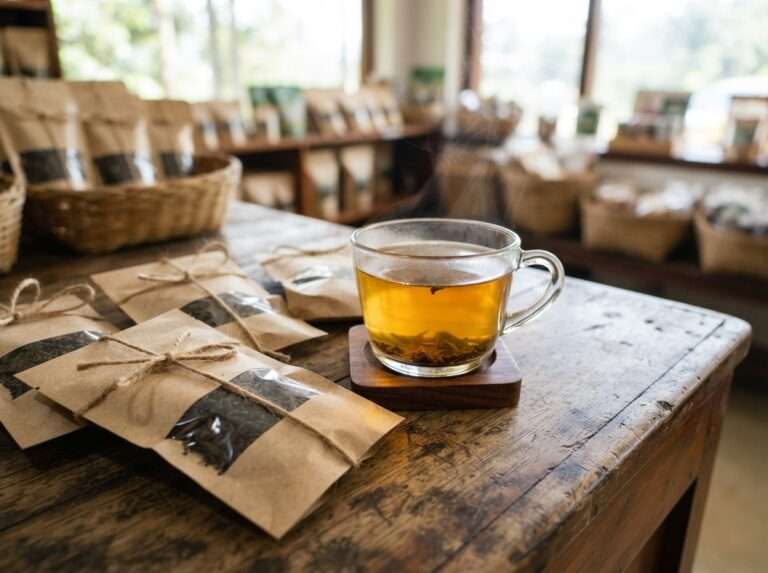


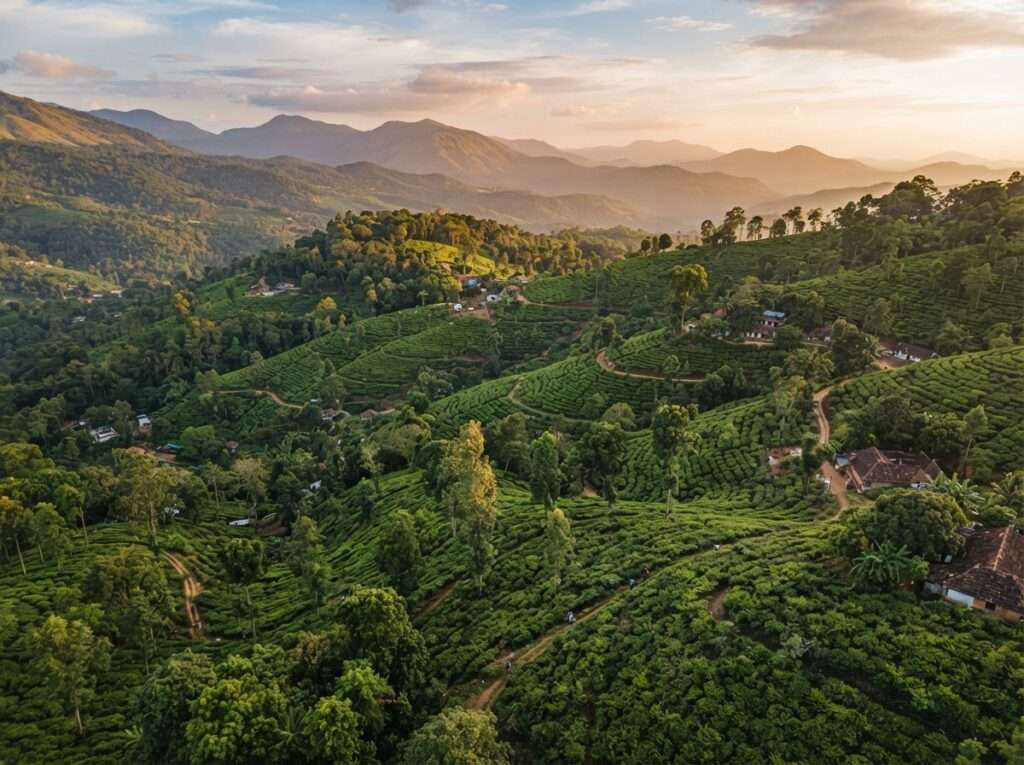
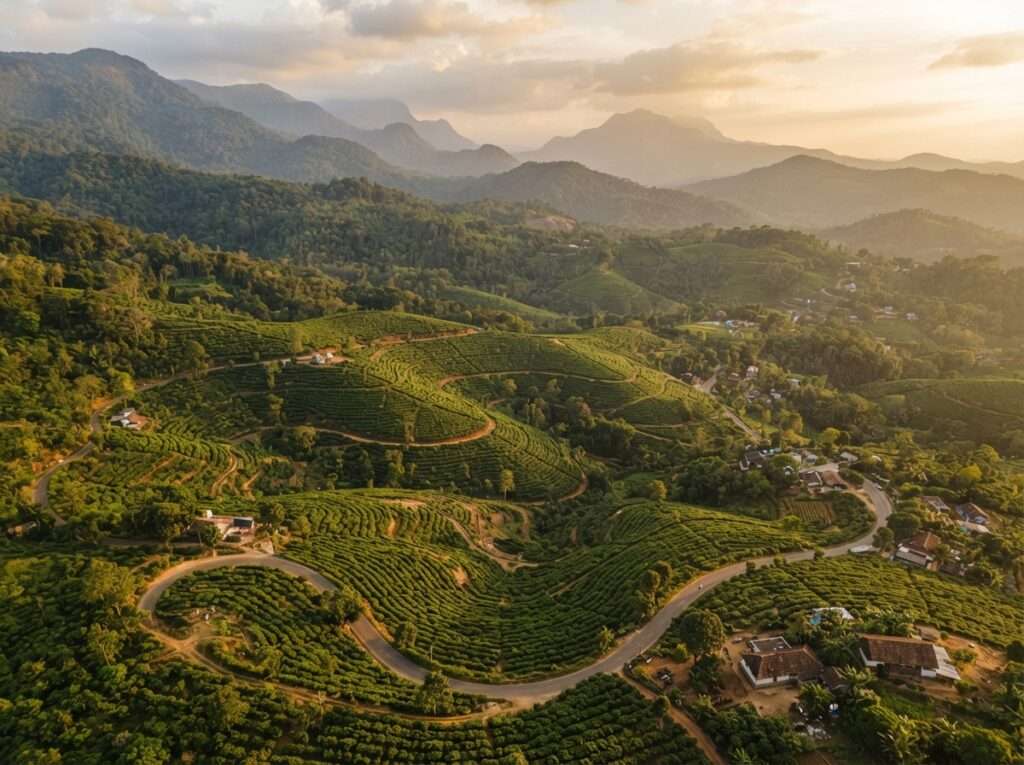
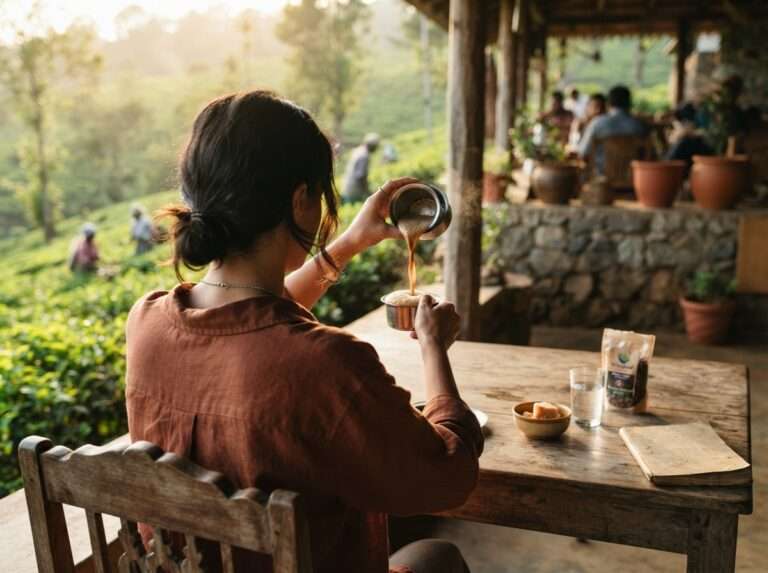
Munnar’s slopes have grown tea since the 1880s, and the high altitude gives the leaf a bright, brisk cup. The Kannan Devan Hills Plantations company runs the Tea Museum at Nallathanni, and its shop sells estate tea you won’t find in city supermarkets, including high-grown green and white tea. Local shops in Munnar town sell loose tea by weight, and the prices drop as you walk away from the main bazaar. Pair a stop here with homemade chocolate, a Munnar speciality sold in small shops near the bus stand. See our guide to shopping in Munnar for the town’s best stores.
| Typical price | Where to buy | How to check it’s genuine |
| ₹150 to 600 per 250 g | KDHP Tea Museum shop (Nallathanni), Munnar bazaar | Check the packing date and estate name on the pack. Loose “Munnar tea” with no estate named is often blended |
| Typical Price | ₹150 to 600 per 250 g |
| Where to Buy | KDHP Tea Museum shop (Nallathanni), Munnar bazaar |
| How to Check It's Genuine | Check the packing date and estate name on the pack. Loose "Munnar tea" with no estate named is often blended |


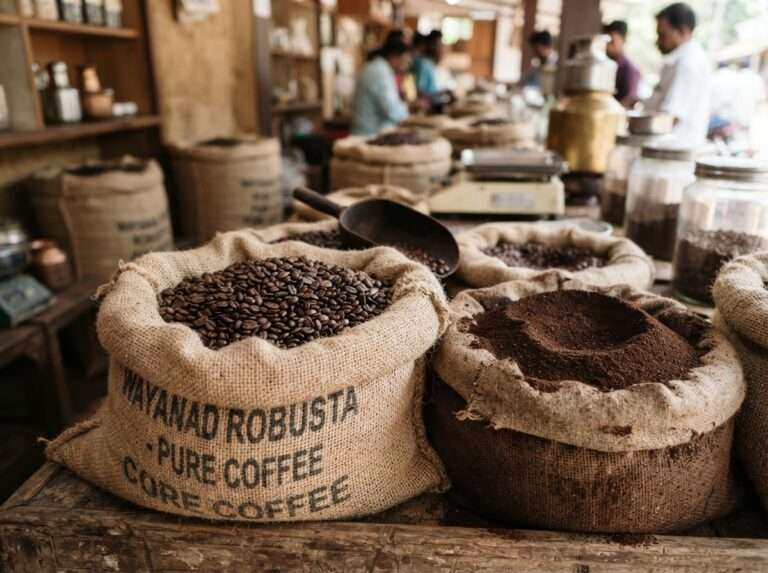
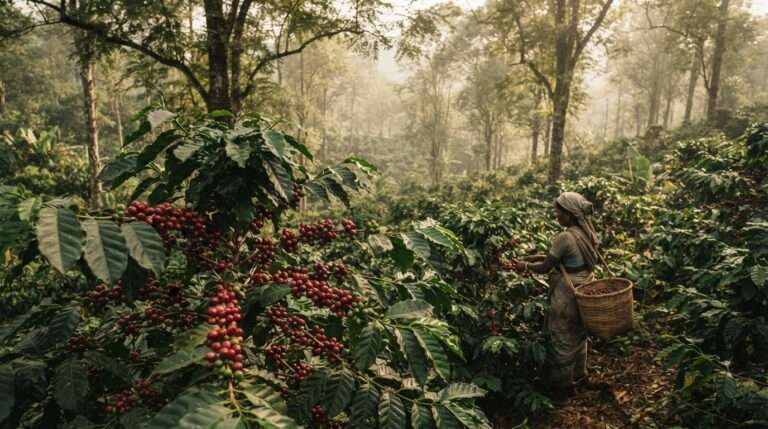
Wayanad is Kerala’s coffee district, and Wayanad Robusta Coffee holds its own GI tag. The robusta here is strong and slightly chocolatey, the type used in South Indian filter coffee. Estate shops around Kalpetta and Sulthan Bathery sell freshly roasted beans and powder, often with a chicory blend for filter coffee. If you prefer arabica, look for Monsooned Malabar, a bean aged in the damp monsoon air until it turns pale and mellow. Our shopping in Wayanad guide lists the cooperative stores that sell tribal honey and bamboo craft too.
| Typical price | Where to buy | How to check it’s genuine |
| ₹200 to 600 per 250 g | Kalpetta, Sulthan Bathery, estate outlets | Buy whole beans roasted within the last two weeks. The roast date should be printed, not stamped by hand over an old one |
| Typical Price | ₹200 to 600 per 250 g |
| Where to Buy | Kalpetta, Sulthan Bathery, estate outlets |
| How to Check It's Genuine | Buy whole beans roasted within the last two weeks. The roast date should be printed, not stamped by hand over an old one |


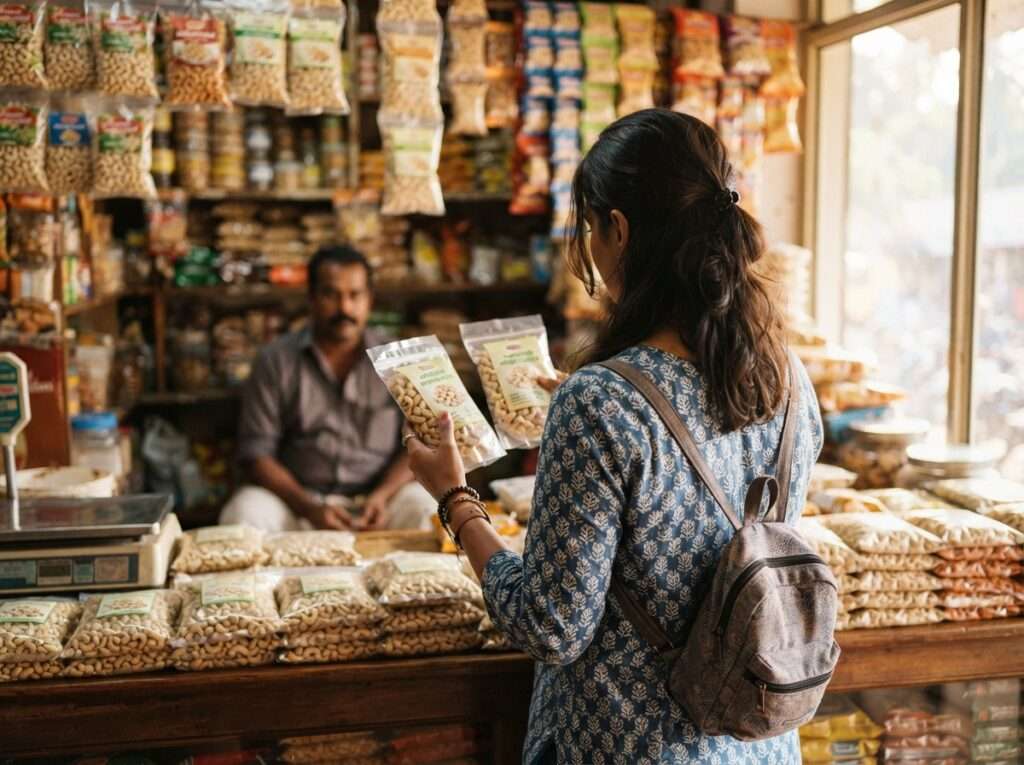
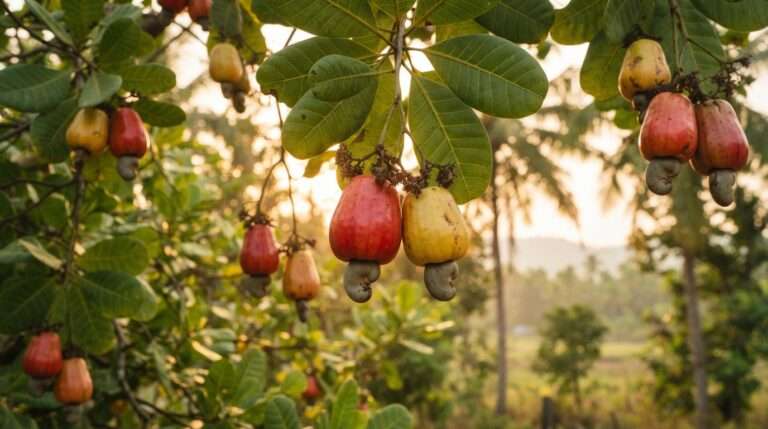

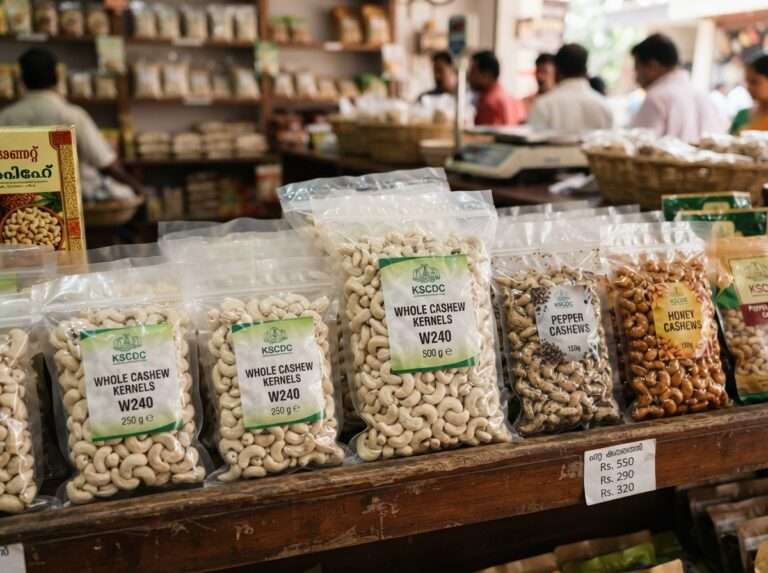
Kollam has been India’s cashew capital for a century, with dozens of processing factories around the town. The Kerala State Cashew Development Corporation runs retail outlets that sell graded kernels at fixed prices. W240 and W320 are the numbers to know. The lower the number, the bigger the nut (W240 means about 240 kernels per pound). Roasted and salted, pepper-coated and honey-glazed packs make good gifts because they keep for months. Our guide to shopping in Kollam has the market streets near the Chinnakada clock tower.
| Typical price | Where to buy | How to check it’s genuine |
| ₹900 to 1,400 per kg (W320 to W240) | KSCDC outlets in Kollam, Broadway (Kochi) | Kernels should be ivory white and whole. Grey or spotted nuts are old stock |
| Typical Price | ₹900 to 1,400 per kg (W320 to W240) |
| Where to Buy | KSCDC outlets in Kollam, Broadway (Kochi) |
| How to Check It's Genuine | Kernels should be ivory white and whole. Grey or spotted nuts are old stock |

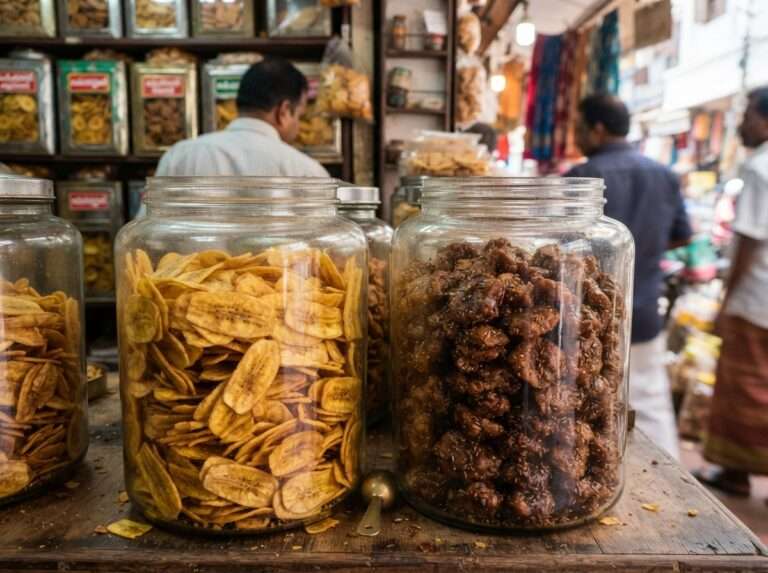
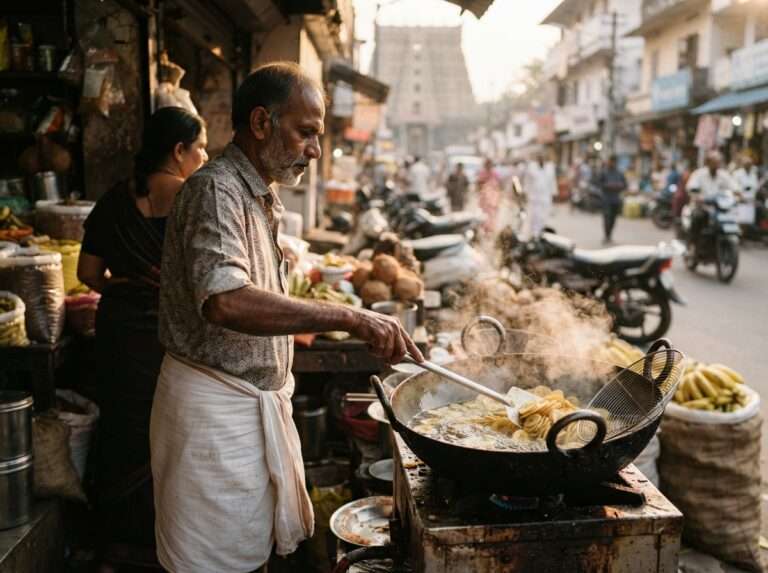
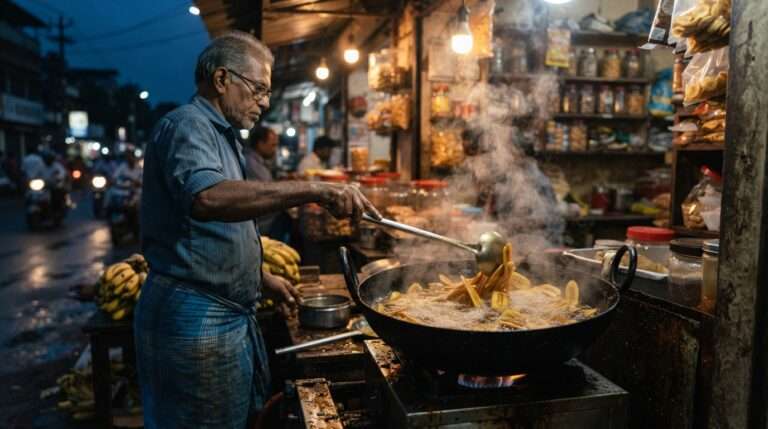
No Kerala trip ends without a bag of banana chips. The best ones are sliced from Nendran bananas and fried in coconut oil, which gives them their golden colour and nutty smell. Sharkara varatti is the sweet version, thick banana pieces coated in jaggery, dry ginger and cardamom, served at every Onam sadya. Shops on Broadway in Kochi and around the Round in Thrissur fry fresh batches through the day. Thrissur’s Changalikodan banana has its own GI tag, and chips made from it are sold near the town.
| Typical price | Where to buy | How to check it’s genuine |
| ₹350 to 600 per kg | Broadway (Kochi), Thrissur Round, Kozhikode | Ask which oil. Coconut-oil chips smell of coconut and cost more than palm-oil ones. Buy from a shop you can see frying |
| Typical Price | ₹350 to 600 per kg |
| Where to Buy | Broadway (Kochi), Thrissur Round, Kozhikode |
| How to Check It's Genuine | Ask which oil. Coconut-oil chips smell of coconut and cost more than palm-oil ones. Buy from a shop you can see frying |
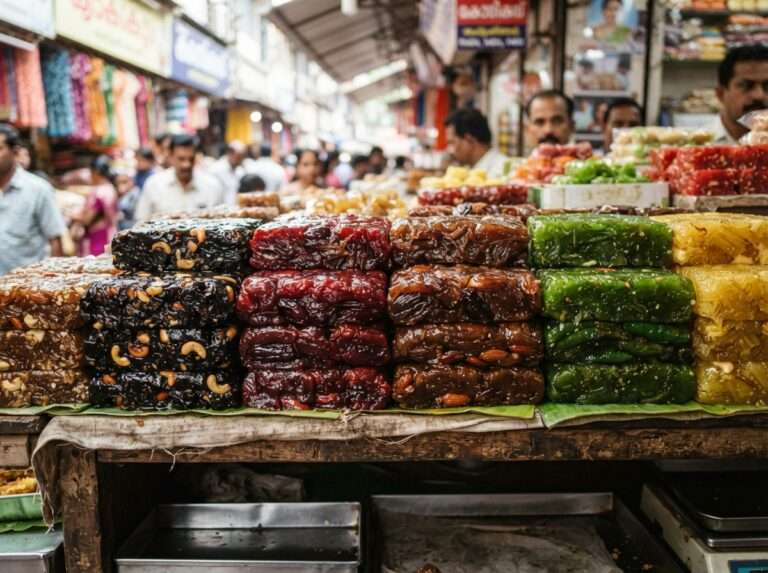
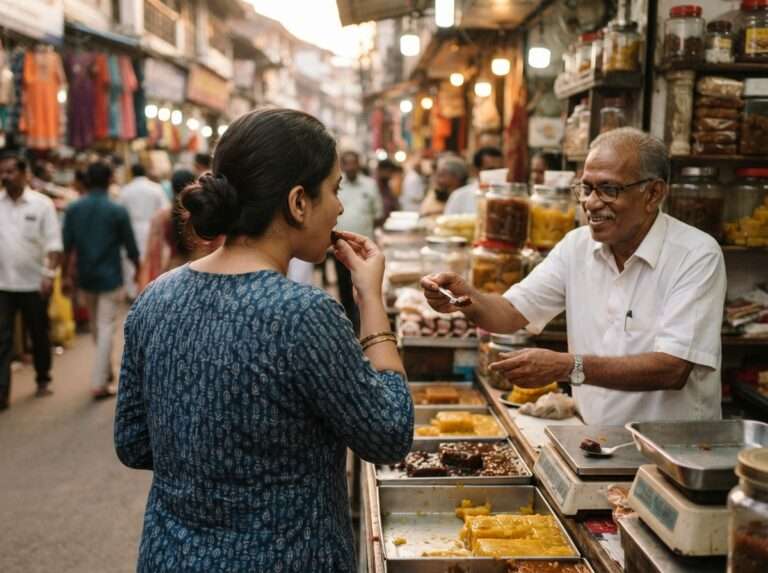
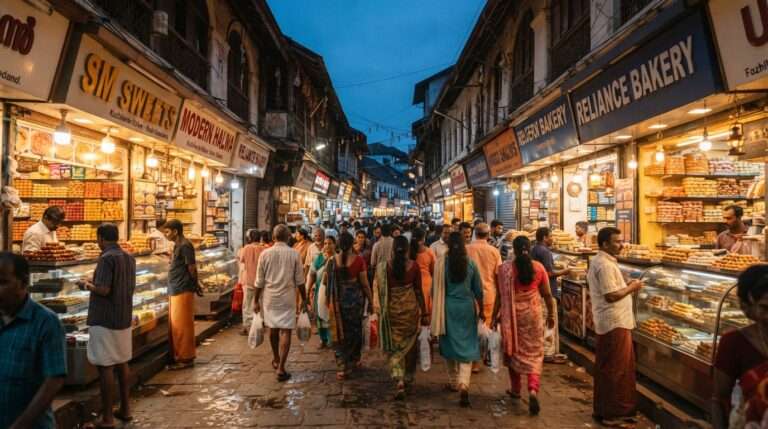
Kozhikode (Calicut) halwa is a dense, glossy sweet made from refined flour, coconut oil and sugar, cut into bricks and sold by weight. SM Street, known locally as Mittai Theruvu or “Sweet Meat Street”, has lined its pavements with halwa shops for generations. The flavours run well past the classic black and red. You’ll find pineapple, dates, carrot, green chilli and even a tender-coconut version. Halwa keeps for about two weeks unrefrigerated, which makes it one of the easier sweets to take home. Read more about Kerala’s sweets in our Kerala sweets guide and the city’s other markets in shopping in Calicut.
| Typical price | Where to buy | How to check it’s genuine |
| ₹300 to 600 per kg | SM Street (Mittai Theruvu), Kozhikode | Ask to taste. Fresh halwa is soft and slightly springy. Hard, sugary edges mean it is old |
| Typical Price | Sold by weight. Varies by shop, flavour and loose vs packaged |
| Where to Buy | SM Street (Mittai Theruvu), Kozhikode |
| How to Check It's Genuine | Ask to taste. Fresh halwa is soft and slightly springy. Hard, sugary edges mean it is old |

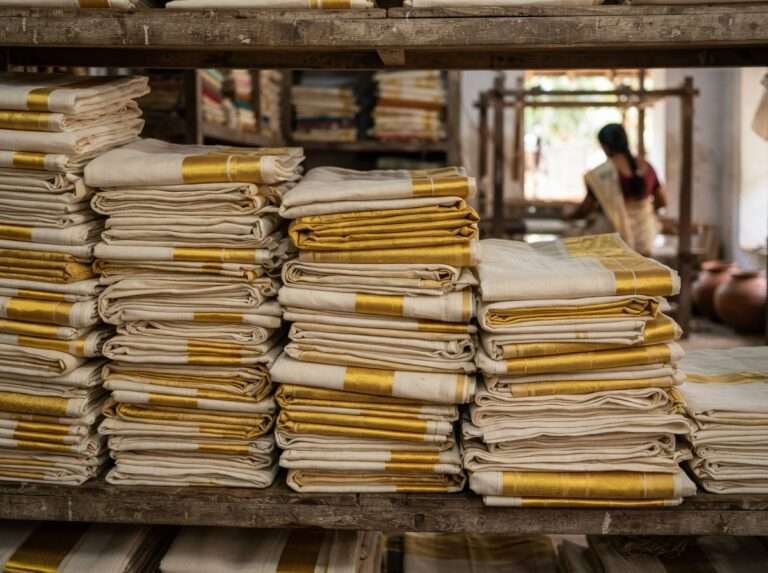
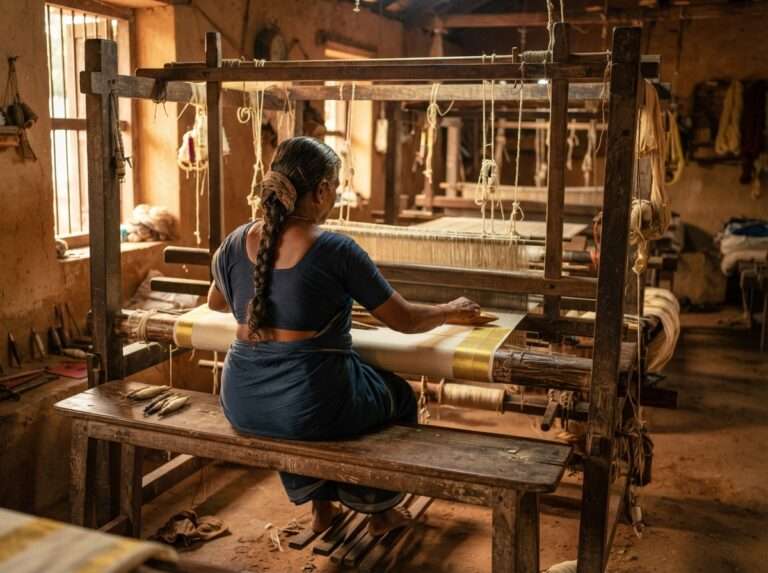
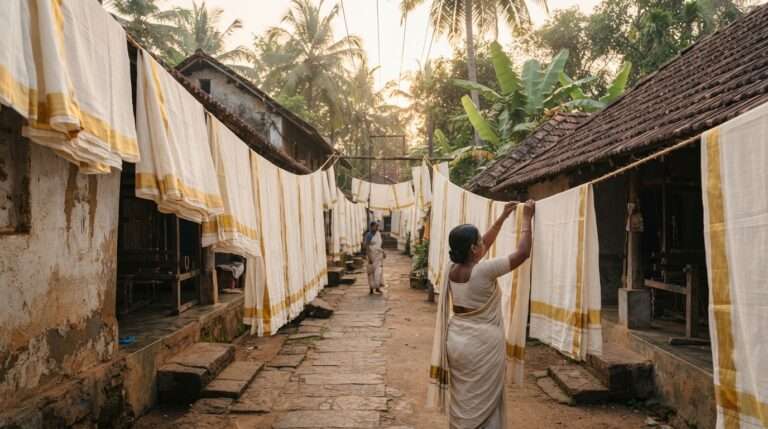
The Kasavu saree is Kerala’s signature garment. It is off-white handloom cotton with a gold zari border, worn for Onam, Vishu, weddings and temple visits. Its menswear partner is the mundu, and the two-piece “set mundu” is the version many women prefer for festivals. Three weaving centres hold GI tags. Balaramapuram near Trivandrum is known for fine, tight cotton. Kuthampully in Thrissur is known for bold borders and newer designs. Chendamangalam near Kochi, which rebuilt its looms after the 2018 floods, is known for dhotis and set mundu. Buying from the weaving village or a Hantex showroom gets you real handloom at a fair price.
| Typical price | Where to buy | How to check it’s genuine |
| ₹1,500 to 15,000 and up (set mundu from about ₹800) | Balaramapuram and Kuthampully looms, Chendamangalam, Hantex showrooms | Look for the Handloom Mark. Real handloom shows small irregularities in the weave, and real zari does not flake when scratched |
| Typical Price | ₹1,500 to 15,000 and up (set mundu from about ₹800) |
| Where to Buy | Balaramapuram and Kuthampully looms, Chendamangalam, Hantex showrooms |
| How to Check It's Genuine | Look for the Handloom Mark. Real handloom shows small irregularities in the weave, and real zari does not flake when scratched |

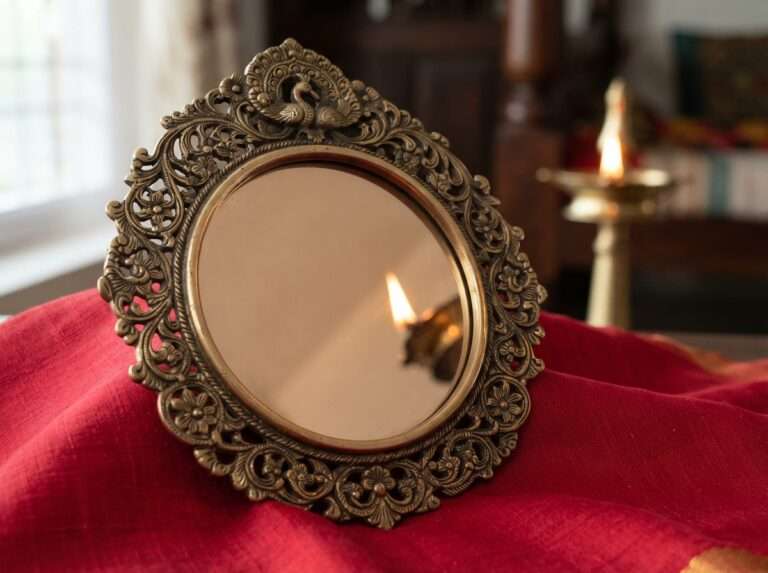
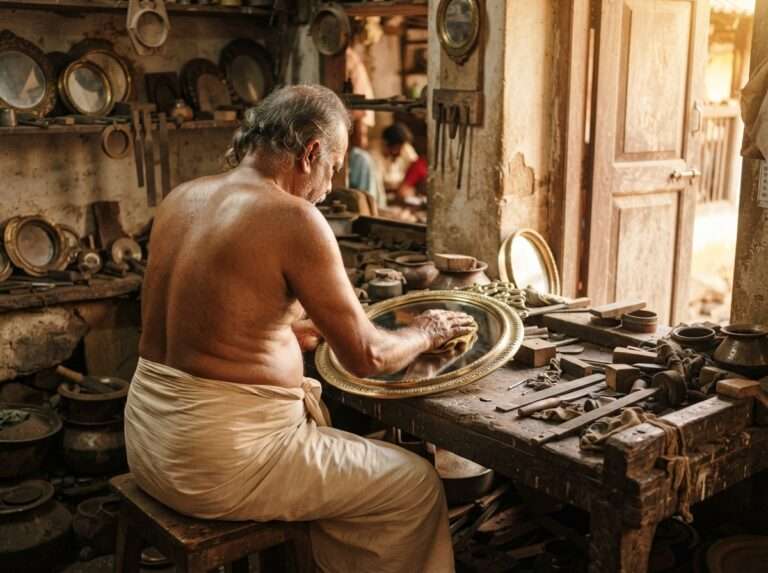

Ask a Malayali for the one souvenir that could only come from Kerala and most will name the Aranmula Kannadi. It was among the first products in India to receive in India, 2004–05 . It is a mirror with no glass. A bronze alloy of copper and tin is cast and hand-polished for days until the metal itself reflects, a formula kept by a few families of Vishwakarma craftsmen in Aranmula, Pathanamthitta district. Because the reflection comes off the front surface, there’s no double image like you see in glass. It is one of the eight auspicious objects in a Kerala home, which is why it is a common wedding gift.
| Typical price | Where to buy | How to check it’s genuine |
| ₹2,500 and up for a small hand mirror, and large pieces pass ₹1,00,000 | Aranmula workshops, Kairali and SURABHI emporia | Hold a fingertip to the surface. On a real Kannadi there is no gap between the finger and its reflection. Ask for the GI certificate |
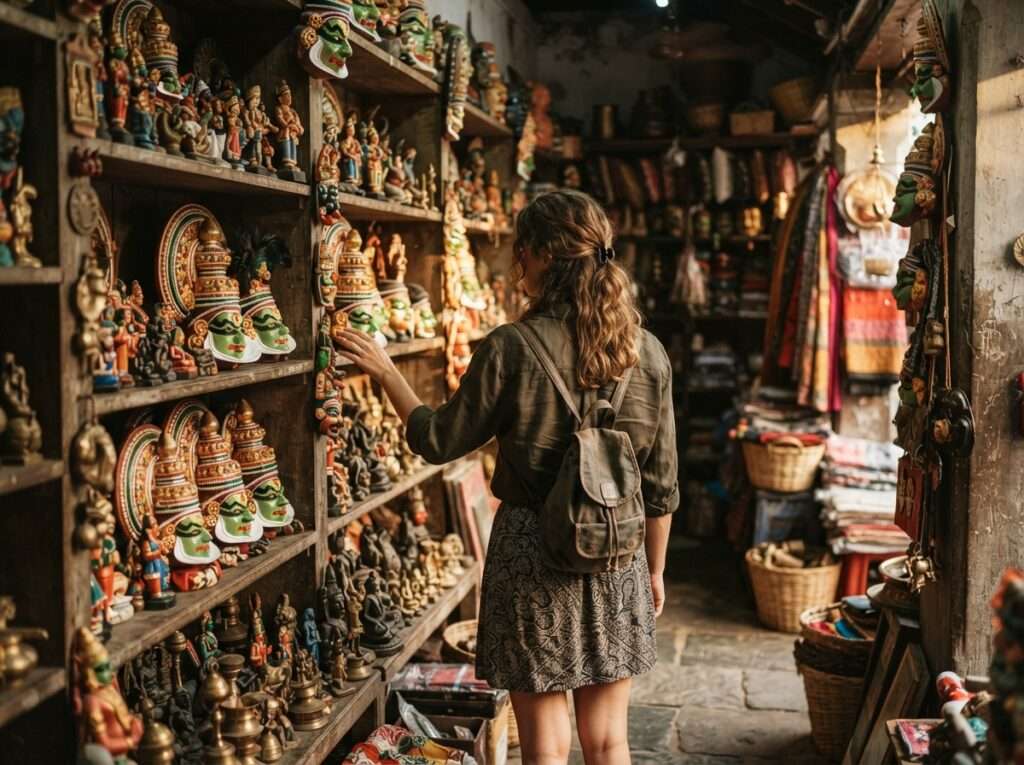

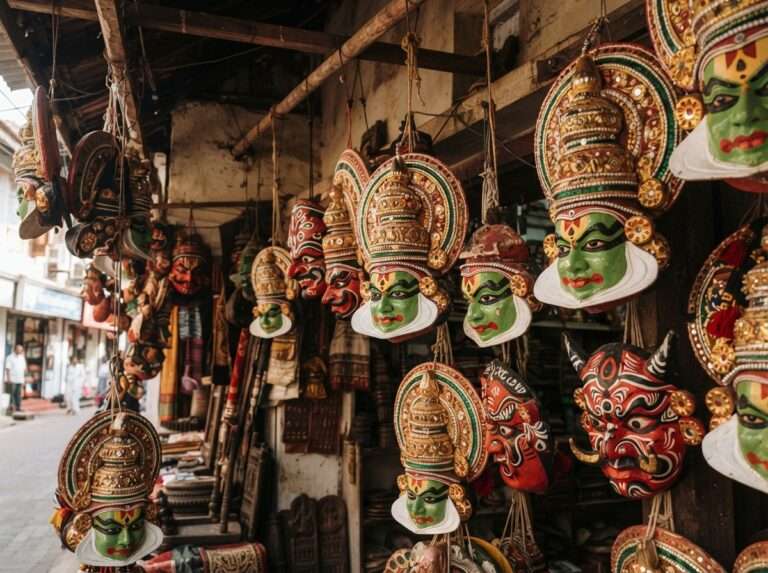
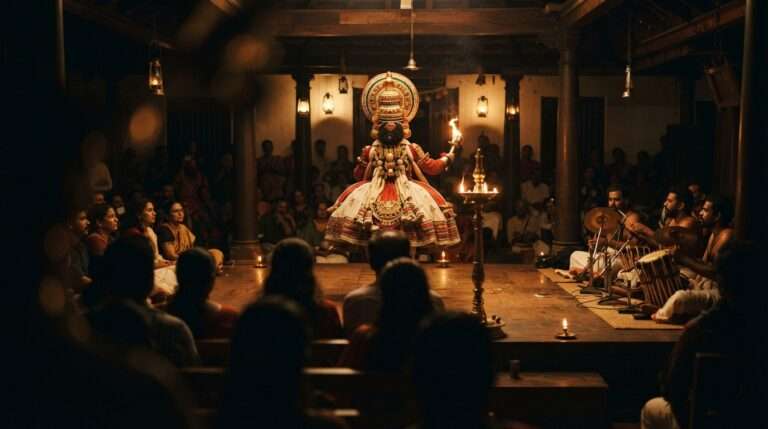
Kathakali is Kerala’s classical dance-drama, and its painted faces (green for heroes, red and black for villains) are the state’s most recognisable image. The masks sold as souvenirs are carved in wood or moulded in papier-mâché and painted by hand. Figurines of dancers in full costume make good shelf pieces. For a stronger connection to the art form, watch an evening performance in Fort Kochi first, then buy. The shops around Princess Street carry masks from fridge-magnet size up to wall pieces.
| Typical price | Where to buy | How to check it’s genuine |
| ₹300 to 5,000 | Fort Kochi, Kairali, SMSM Institute (Trivandrum) | Carved wood is heavy and shows chisel marks inside. Light, smooth-backed masks are resin castings |

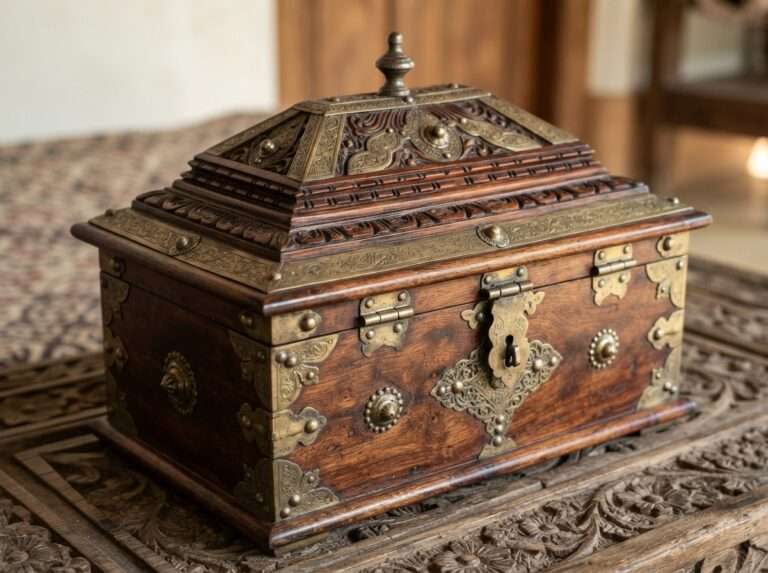
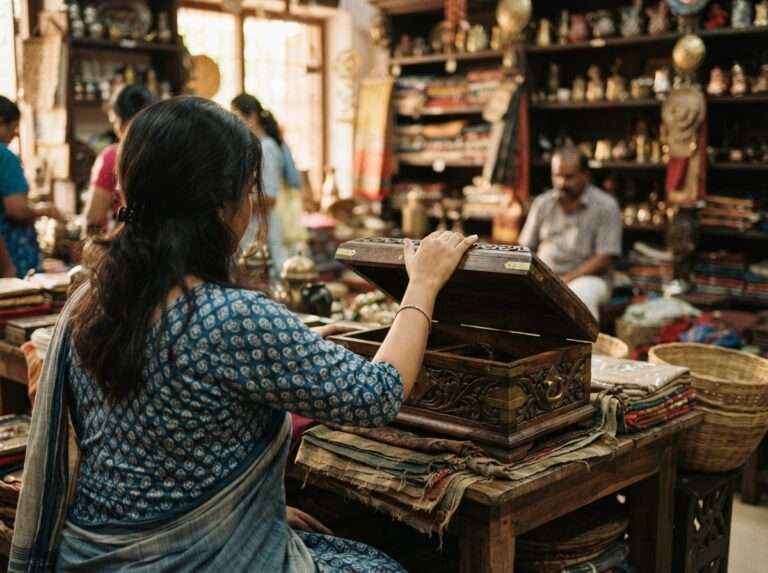
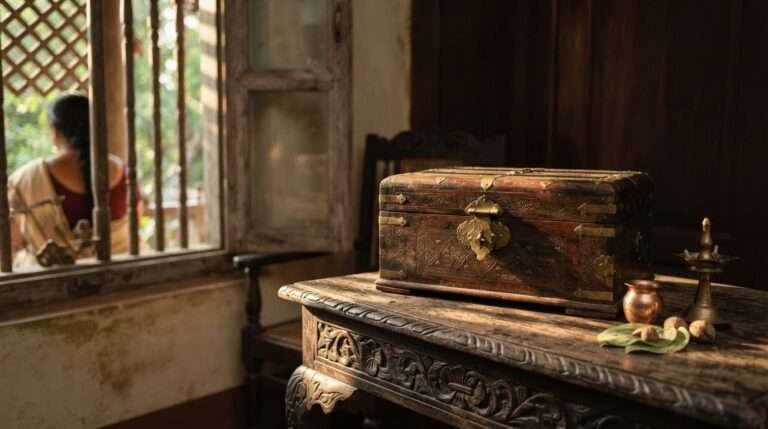
The Nettur Petti is the traditional Kerala jewel box. It is a small wooden chest with a sloped lid, shaped like a temple roof and fitted with brass corner plates, hinges and bosses. Families once kept gold in it, and brides still receive one. The best are made of rosewood or jackfruit wood. Smaller versions work as keepsake boxes and are one of the few souvenirs that are both decorative and useful. Kerala Tourism lists the Nettur Petti among the state’s signature buys.
| Typical price | Where to buy | How to check it’s genuine |
| ₹2,000 to 20,000 and up | Kairali, SURABHI, Mattancherry antique shops | Open the lid. Brass fittings should be riveted, not glued, and the wood grain should run through the corners |
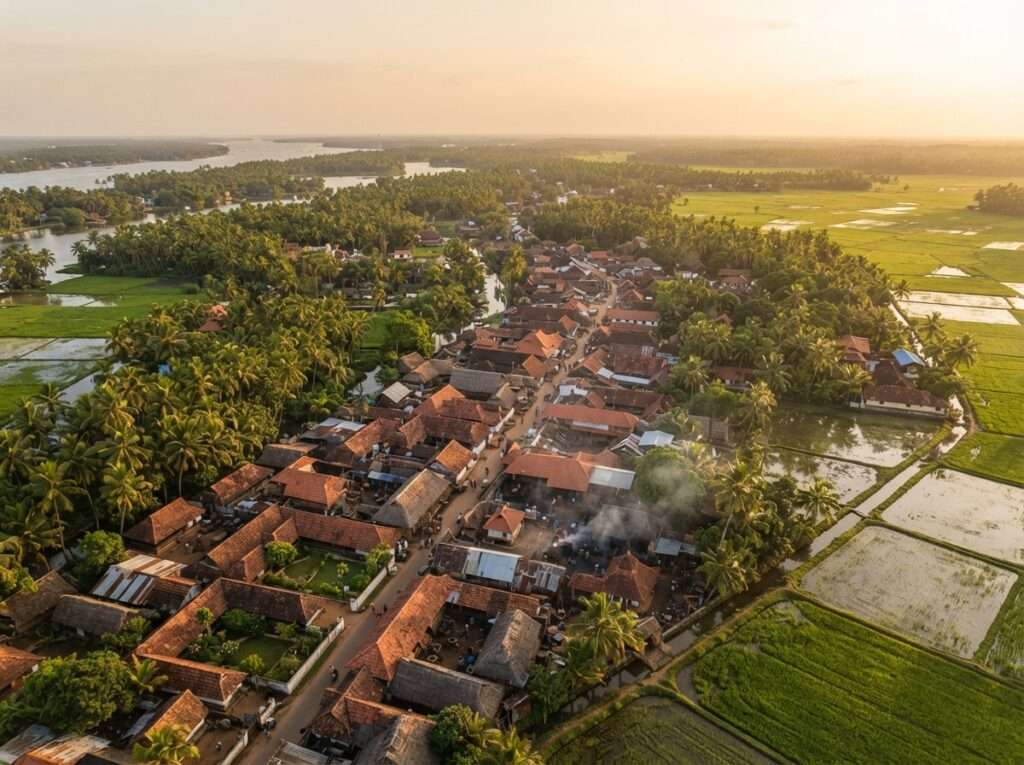
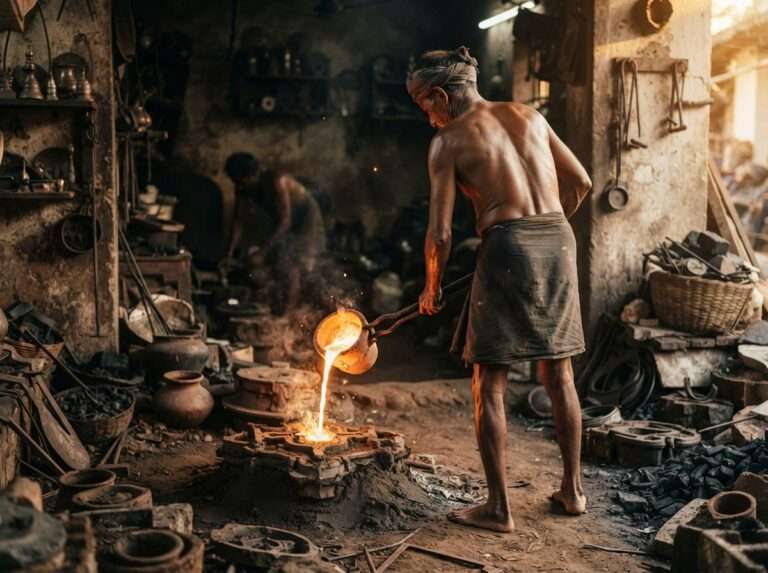
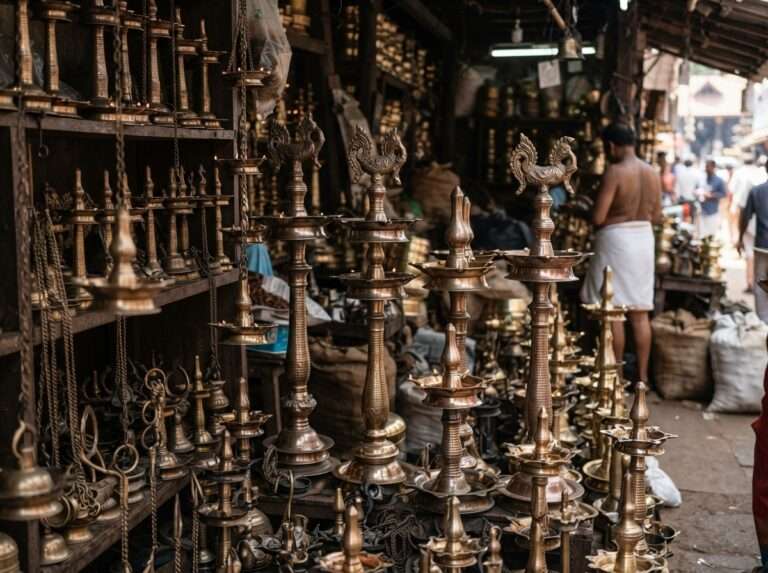
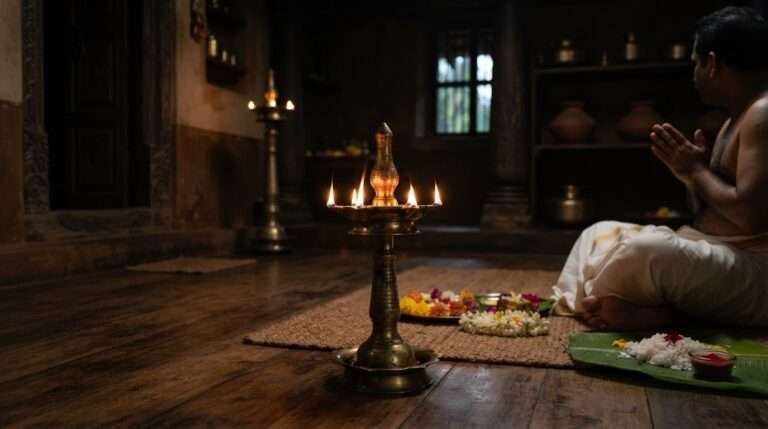
The Nilavilakku is the tall standing lamp lit at the start of every Kerala ceremony, from temple festivals to school events. It is cast in bell metal, a heavy alloy of copper and tin that rings when tapped. Mannar in Alappuzha district is the traditional casting village, and its workshops still pour metal by hand. Guruvayur’s temple street sells lamps of every size, along with the hanging and five-wicked versions. Bell metal is heavy, so buy a small lamp if you are flying, or ask the shop to courier a large one.
| Typical price | Where to buy | How to check it’s genuine |
| ₹500 to 20,000 and up (priced by weight) | Mannar workshops, Guruvayur temple street, Thrissur | Tap it. Bell metal gives a long, clear ring. Brass sounds duller and is lighter for its size |
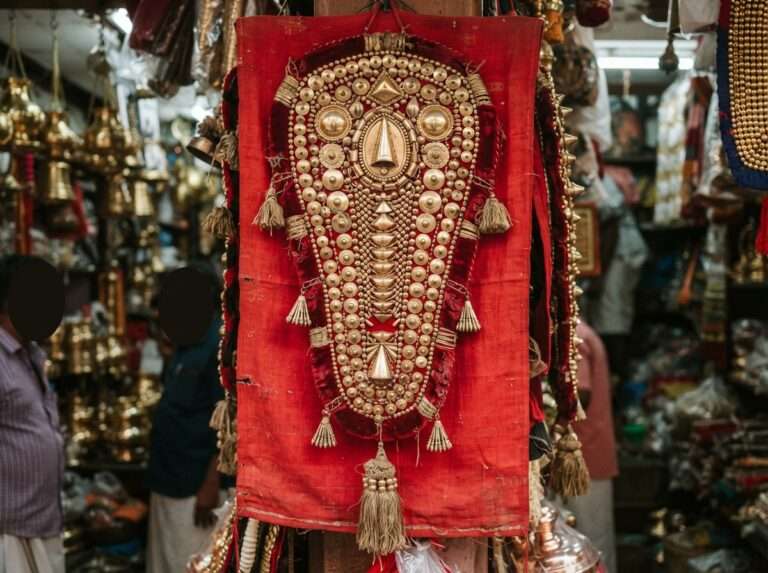
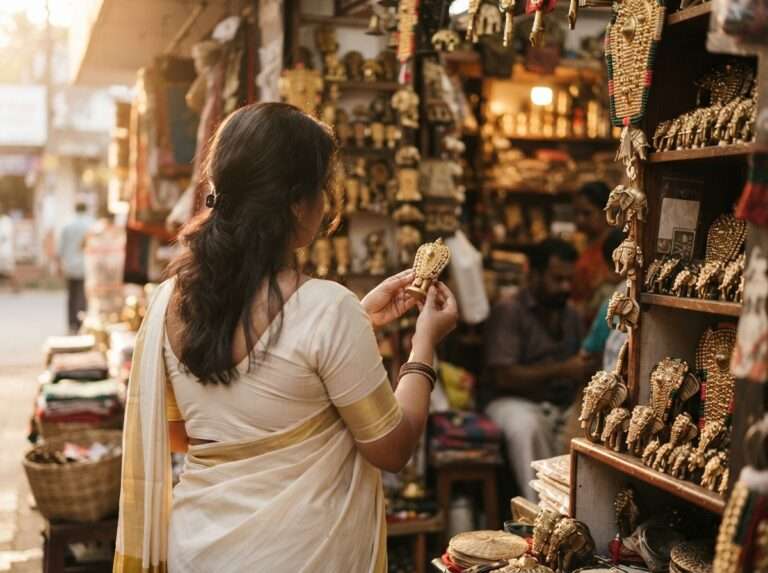
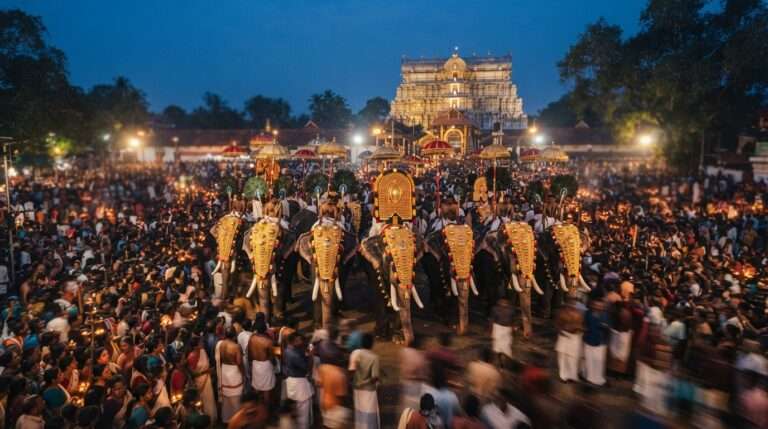
Nettipattam is the gold-plated caparison hung on a temple elephant’s forehead during festivals like Thrissur Pooram. The full-size pieces are made of hundreds of small brass or copper discs stitched onto cloth. Souvenir versions come in sizes from a palm-sized hanging to a two-foot wall piece. They are hung at house entrances for good luck. Thrissur and Guruvayur, both elephant-temple towns, have the widest range. Our guide to shopping in Thrissur points to the shops around the Round.
| Typical price | Where to buy | How to check it’s genuine |
| ₹500 to 10,000 | Thrissur (around Swaraj Round), Guruvayur | Count the discs on the back. Hand-stitched pieces show thread on every disc. Glued ones shed discs within a year |

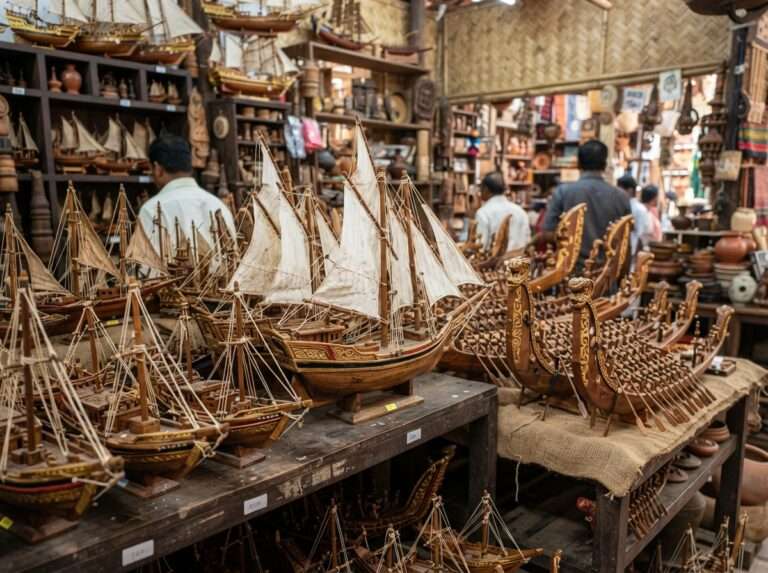
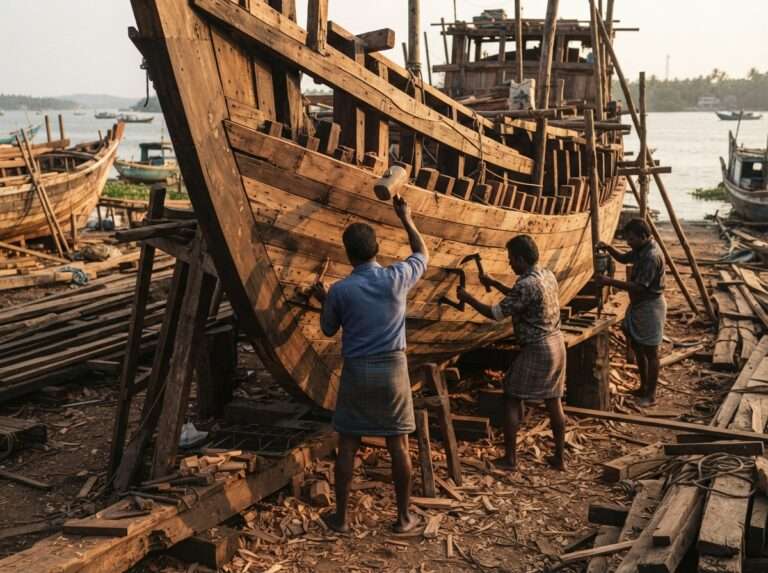

The Uru is the wooden sailing ship that Beypore, near Kozhikode, has built for Arab traders for centuries. Full-size urus are still built there by hand, without blueprints. Model urus in teak and rosewood are sold near the yards and in emporia. The chundan vallam, the long snake boat raced on the backwaters during the Nehru Trophy Boat Race in August, is the other favourite model, sold widely in Alappuzha. Kerala Tourism names the Uru as a signature Kerala buy.
| Typical price | Where to buy | How to check it’s genuine |
| ₹500 to 5,000 | Beypore (Kozhikode), Alappuzha, SMSM Institute | Solid teak or rosewood models are heavy and have pegged joints. Painted softwood is lighter and cheaper |

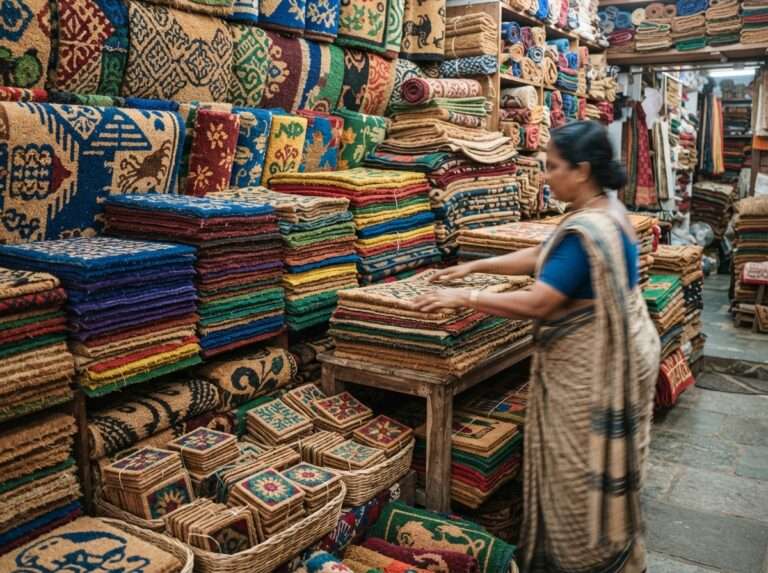
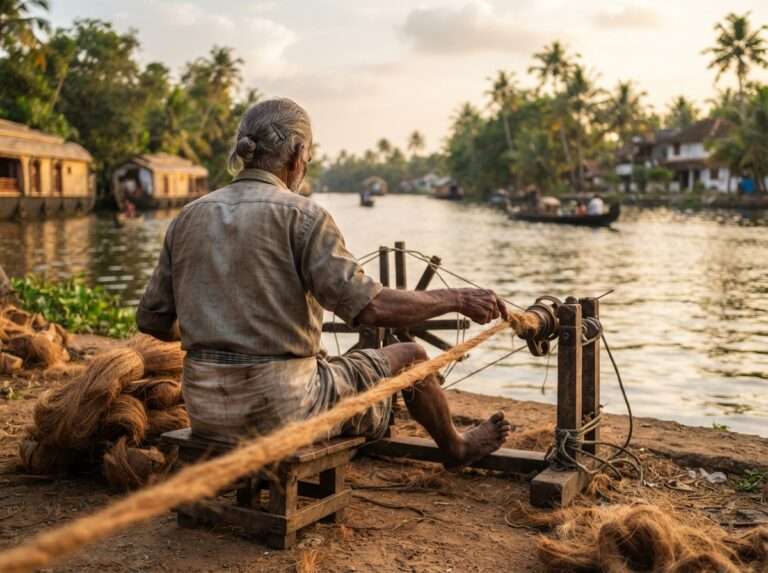
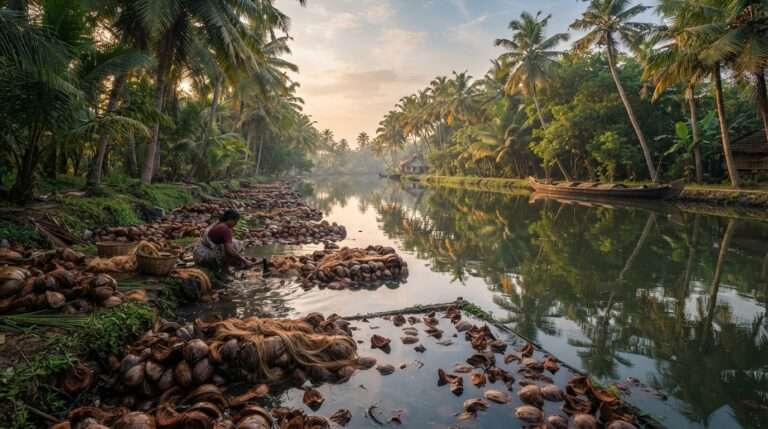
Coir is the fibre spun from coconut husks, and Alleppey Coir is a registered GI. Alappuzha’s coir showrooms sell doormats, rugs, carpets, bags and wall hangings. Many are woven on handlooms and dyed in patterns you won’t find in city stores. Coir is light, tough and water-resistant, so a mat survives a suitcase well. Small coasters and table mats are the easiest gift. Larger rugs can be shipped home from most showrooms.
| Typical price | Where to buy | How to check it’s genuine |
| ₹100 to 3,000 | Alappuzha coir showrooms and cooperatives | Press it. Good coir is tightly woven and springs back. Loose or shedding fibre wears out fast |

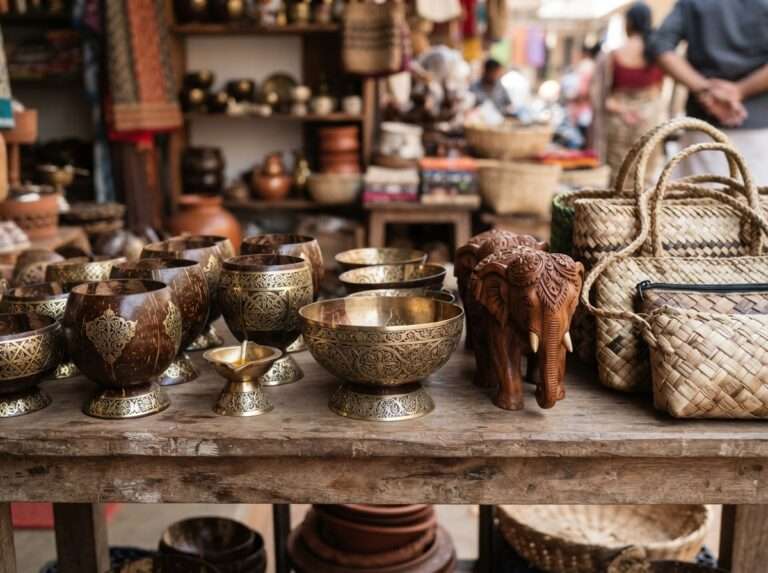
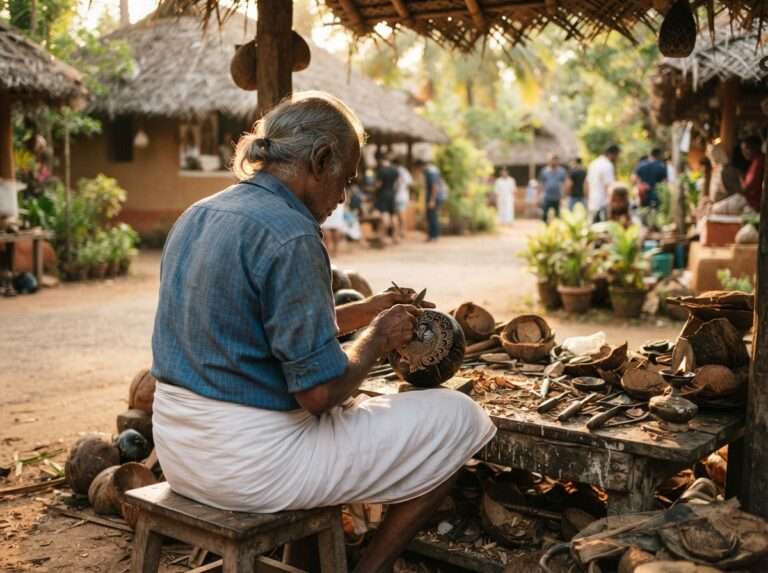
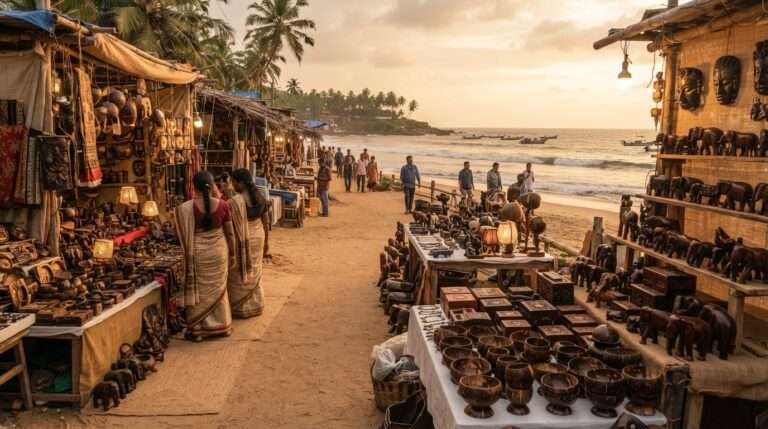
Kerala turns every part of the coconut palm into something useful, and “Brass Broidered Coconut Shell Crafts of Kerala” is a registered GI. Polished shells become cups, lamps, bowls, jewellery and keyrings, often inlaid with thin brass. Rosewood elephants, carved in sizes from a thumb to a coffee table, are the other classic. Screwpine craft, another GI, weaves the dried leaves of the screwpine plant into mats, bags and boxes. Kovalam’s beach road and the Vellar Crafts Village near Kovalam are good places to see artisans at work. Our shopping in Kovalam guide lists the stalls.
| Typical price | Where to buy | How to check it’s genuine |
| ₹100 to 2,000 (shell and screwpine) · rosewood ₹500 to 5,000 and up | Kovalam, Vellar Crafts Village, Fort Kochi, SURABHI | Rosewood is dark, heavy and has a faint sweet smell when scratched. Stained white wood is light and pale inside |
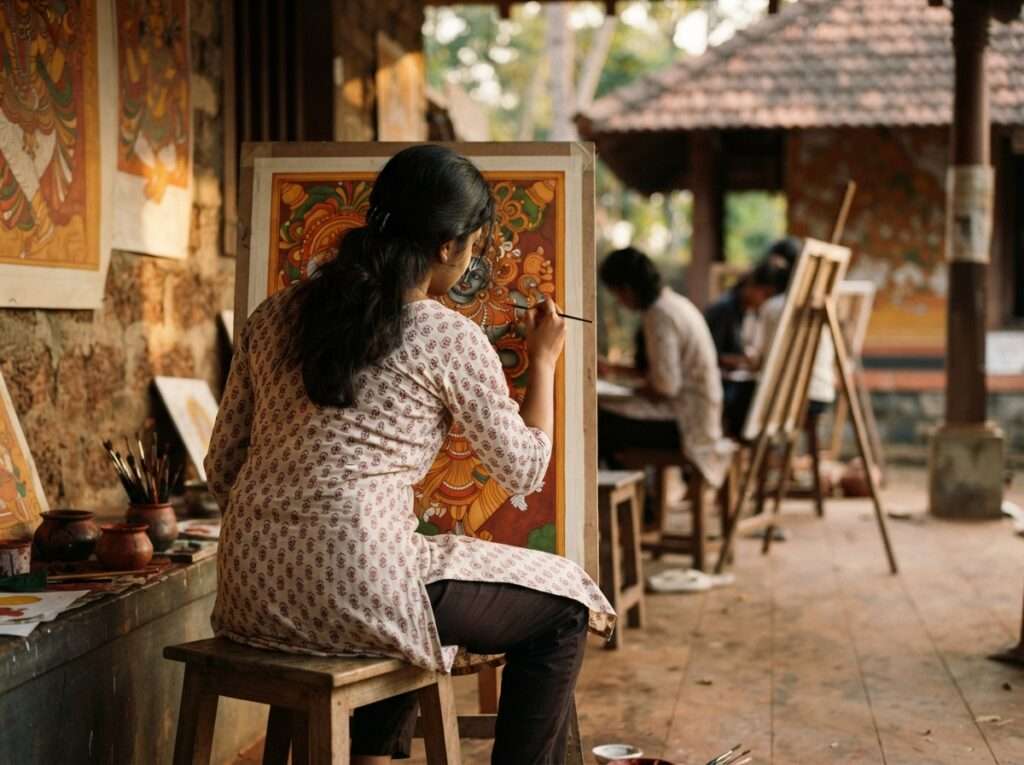
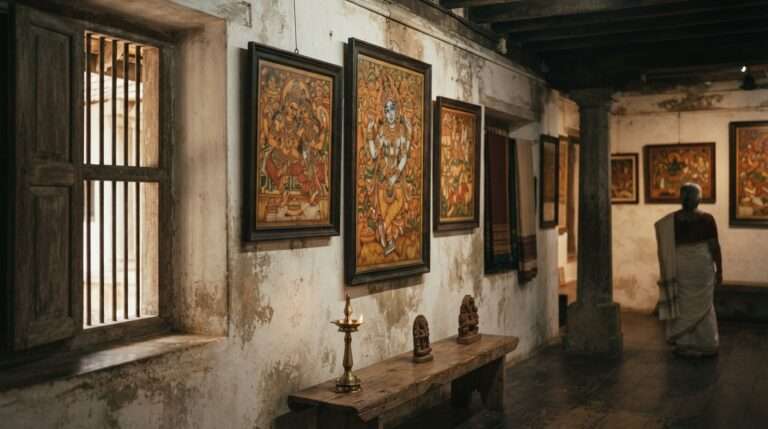
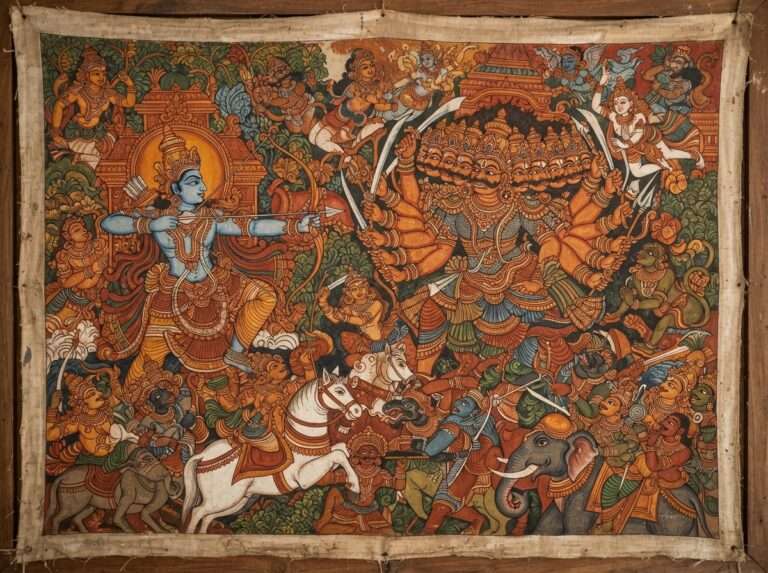

Kerala murals are the temple wall paintings of the state, done in five natural colours (red, yellow, green, black and white) with bold outlines and scenes from the epics. Today artists paint the same style on canvas, cloth and even sarees and stoles. The Guruvayur Devaswom Institute of Mural Painting trains artists in the classical method. Its students and graduates sell work that is far better than the printed copies common in tourist shops. Fort Kochi’s galleries also stock originals.
| Typical price | Where to buy | How to check it’s genuine |
| ₹1,500 to 50,000 and up | Guruvayur Devaswom Institute of Mural Painting, Fort Kochi galleries | Look at the edges of the lines. Hand-painted murals show brushstrokes and slight variations. Prints have a flat, dotted texture under close light |

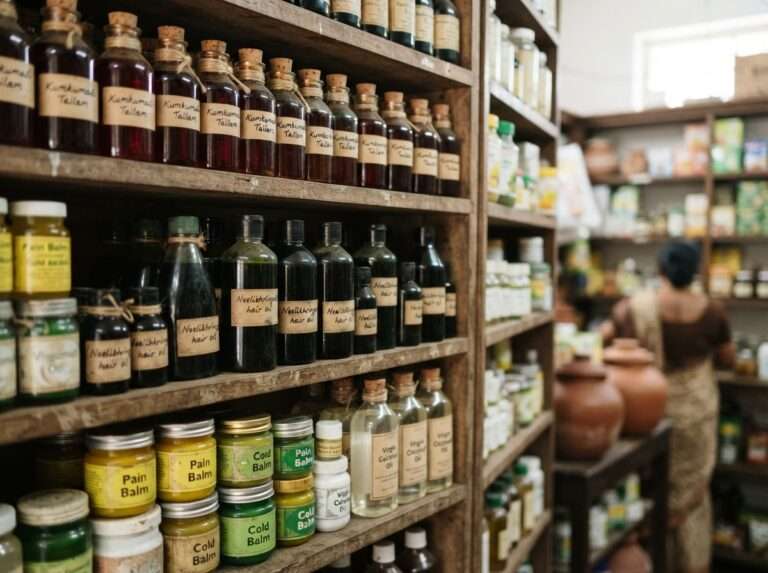
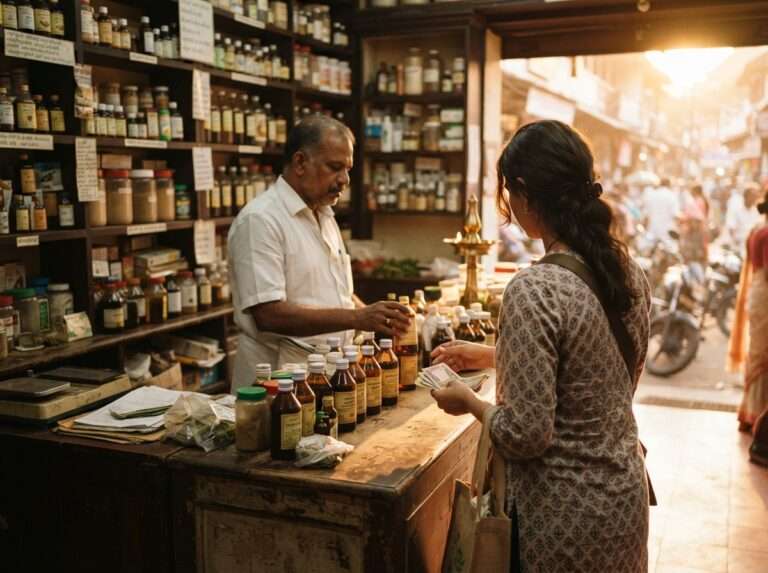
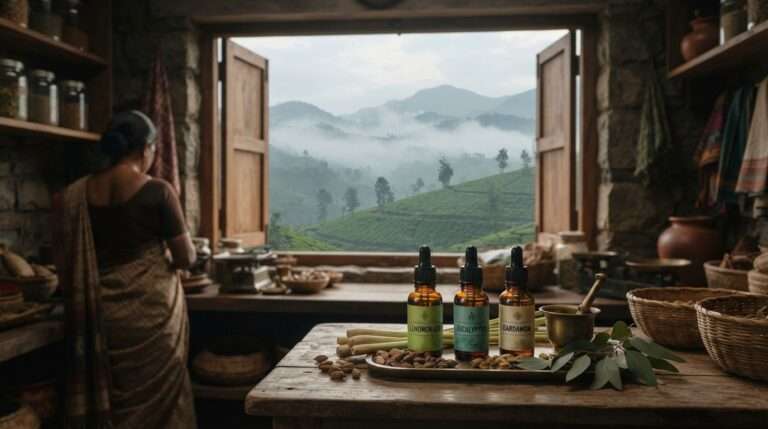
Kerala is the home of Ayurveda, and its oils, balms and herbal soaps are one of the most practical things to buy in Kerala. Kottakkal Arya Vaidya Sala, founded in 1902, and Oushadhi, the Kerala Government’s Ayurvedic medicine company, both run outlets across the state. Common buys include kumkumadi oil for skin, neelibhringadi oil for hair, and pain balms. Kerala’s own essential oils are lemongrass, eucalyptus, clove and cardamom, sold in small bottles at Munnar and Kumily. Virgin coconut oil, cold-pressed in small mills, rounds out the list.
| Typical price | Where to buy | How to check it’s genuine |
| ₹100 to 1,000 | Kottakkal Arya Vaidya Sala, Oushadhi outlets, licensed pharmacies | Check for a drug licence number, batch number and expiry on the label. Loose oils sold in unlabelled bottles are not regulated |
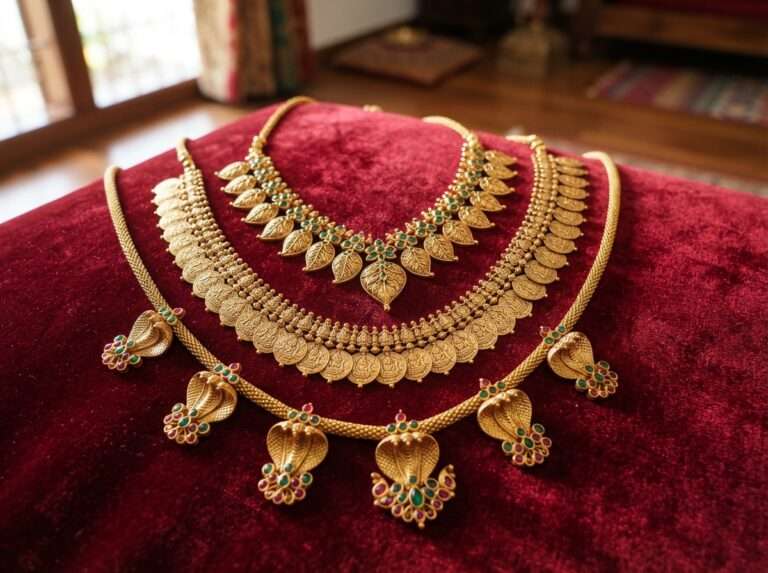
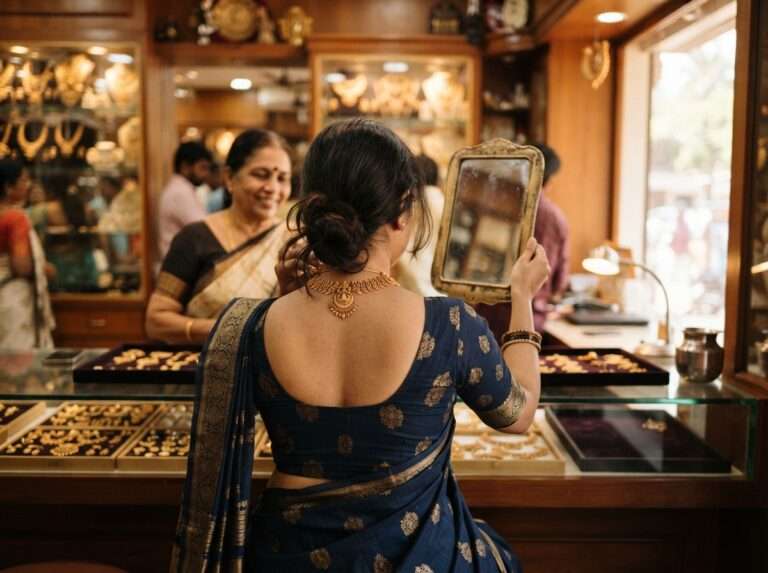
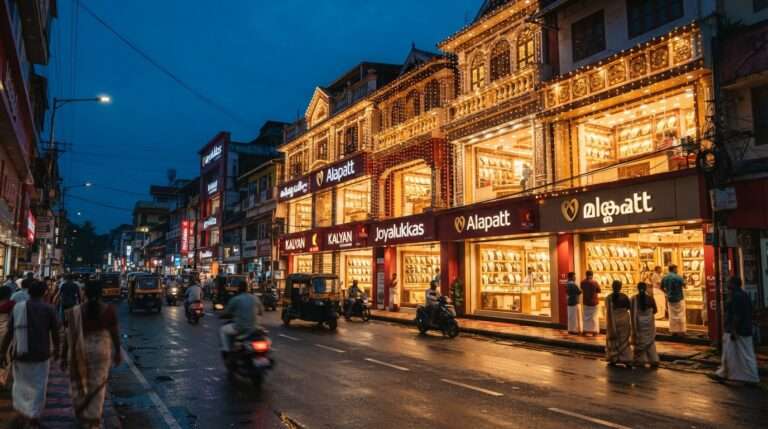
Kerala buys more gold per person than almost anywhere in India and Thrissur is known as the state’s gold capital. Traditional Kerala designs include the palakka mala (a necklace of green-stone leaf pendants), the mango mala, the kasu mala (coin necklace) and the nagapadam. The price is the day’s gold rate plus making charges. In September 2026, 22K gold in Kerala traded at about ₹14,000 a gram ( Goodreturns), and making charges run from about 8 to 25 percent depending on the design. Gold is not cheaper in Kerala than elsewhere in India. What you gain is choice and design.
| Typical price | Where to buy | How to check it’s genuine |
| About ₹14,000 per g (22K, Sept 2026) plus making | Thrissur Round, Kochi, Kozhikode | Buy only BIS-hallmarked pieces with a HUID code. Ask for a bill that lists gold weight, rate, making charge and GST separately |
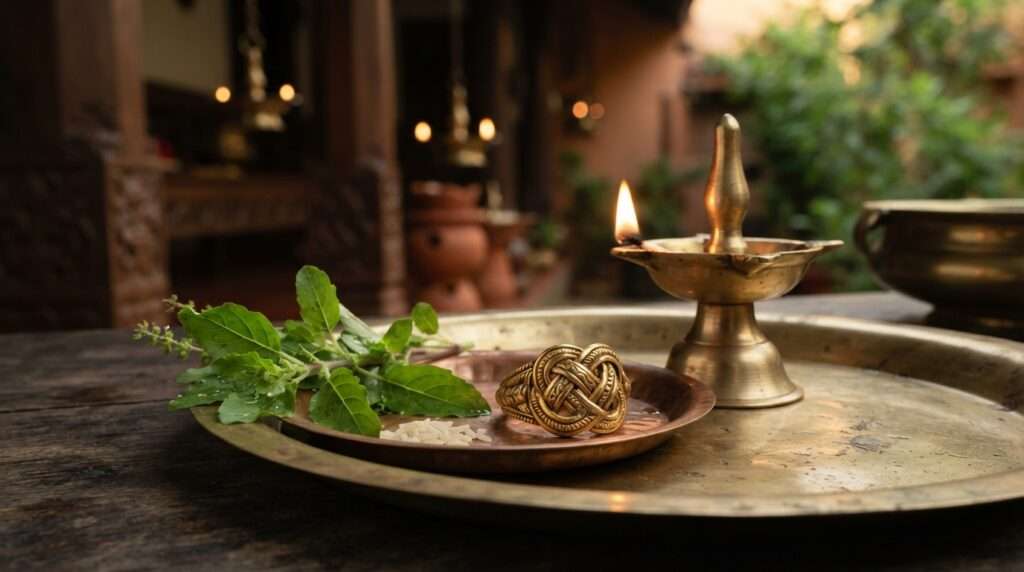
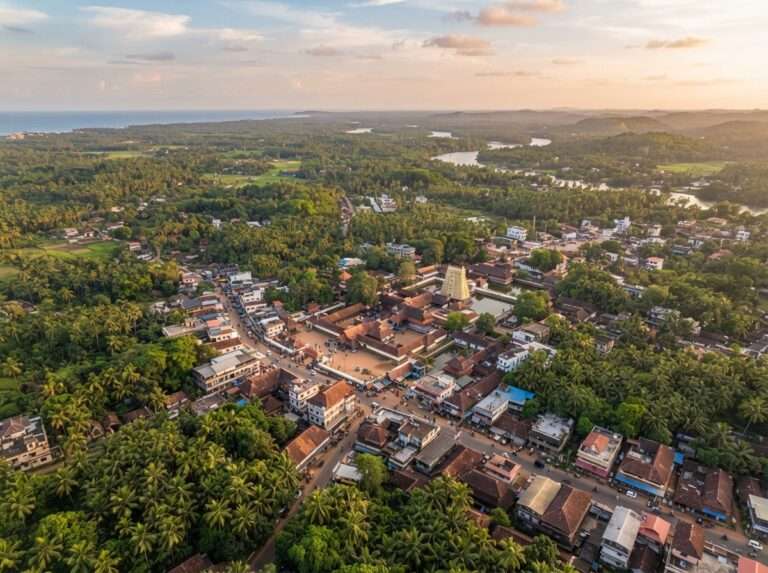
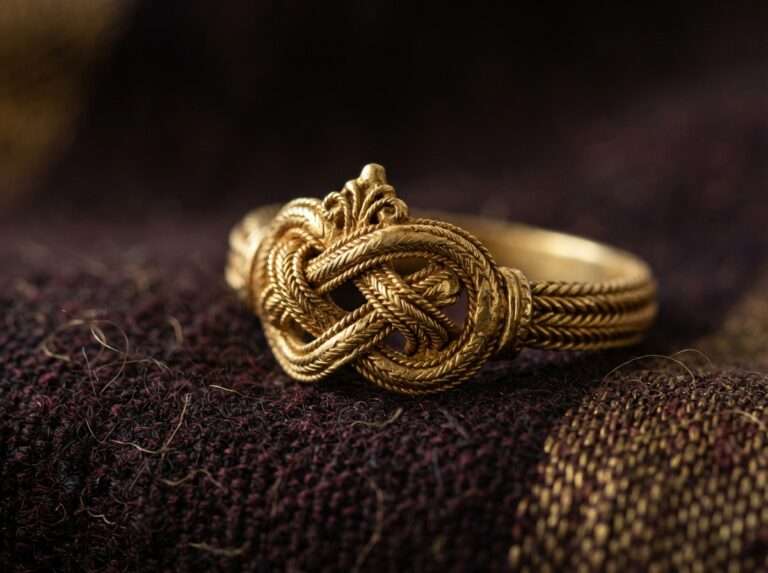
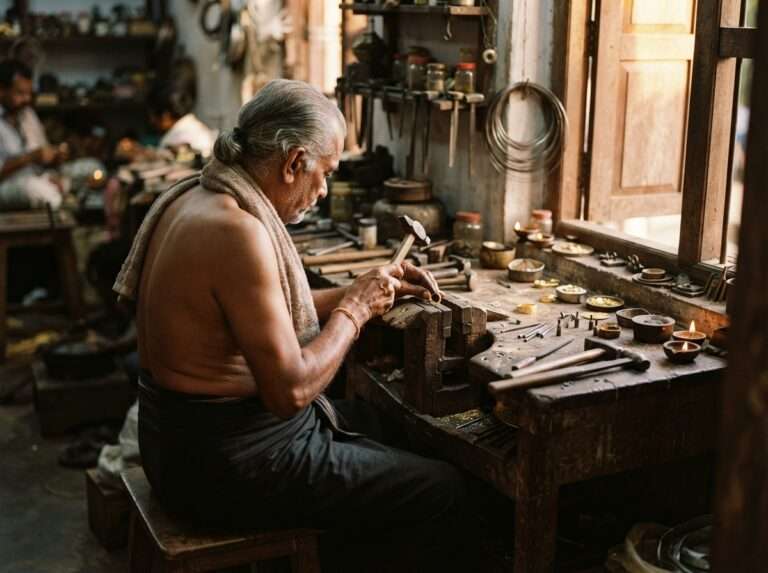
The Pavithra Ring (Pavithra Mothiram) of Payyannur, in Kannur district, is a gold ring with a distinctive knotted crest, traditionally worn for rituals and prayers. It holds a GI tag, and only a few goldsmith families in Payyannur make it by the traditional method. Kerala Tourism lists it first among the state’s things to buy. Because it is gold, the price follows gold weight plus a high making charge for the handwork. It is a buy for a special occasion rather than a casual souvenir. See our shopping in Kannur guide for the town’s jewellers.
| Typical price | Where to buy | How to check it’s genuine |
| Gold weight plus making (a light ring runs well above ₹25,000 at September 2026 rates) | Payyannur goldsmiths (Kannur district) | Ask for the GI authorisation of the maker and a hallmark on the gold |
| Typical Price | ₹2,500 and up for a small hand mirror, and large pieces pass ₹1,00,000 |
| Where to Buy | Aranmula workshops, Kairali and SURABHI emporia |
| How to Check It's Genuine | Hold a fingertip to the surface. On a real Kannadi there is no gap between the finger and its reflection. Ask for the GI certificate |
If you want something that only Kerala makes, buy one of the state’s GI-tagged products. A GI tag means the product’s name is legally tied to a region and a method, and only registered producers can use it. The Kerala Bureau of Industrial Promotion’s GI register lists 30 products . These are the ones a traveller can actually carry home.
| GI product | Region | What to check before you pay |
| Aranmula Kannadi | Aranmula, Pathanamthitta | No gap between fingertip and reflection. Maker’s certificate |
| Payyanur Pavithra Ring | Payyannur, Kannur | Hallmark plus maker’s GI authorisation |
| Balaramapuram Sarees and Fine Cotton Fabrics | Thiruvananthapuram | Handloom Mark, uneven selvedge |
| Kuthampully Sarees, Dhoties and Set Mundu | Thrissur | Handloom Mark, weaver society tag |
| Chendamangalam Dhoties and Set Mundu | Ernakulam | Handloom Mark, society label |
| Alleppey Green Cardamom | Idukki and the Cardamom Hills | Bold green pods, strong smell when crushed |
| Alleppey Coir | Alappuzha | Tight weave, springs back when pressed |
| Brass Broidered Coconut Shell Crafts | Statewide | Real brass inlay, not paint |
| Screw Pine Craft of Kerala | Statewide | Hand-plaited, not machine-pressed |
| Wayanad Robusta Coffee | Wayanad | Estate name and roast date on the pack |
| Marayoor Jaggery | Marayoor, near Munnar | Dark brown, no chemical whitening |
Kerala Tourism’s own list of things to buy names six heritage items. They are the Pavithra ring, Aranmula Kannadi, Nilavilakku, Uru, Nettur Petti and Nettipattam. All six are in the 20 above.
For women, the most loved Kerala buys are a Kasavu saree or set mundu, temple jewellery, and Ayurvedic skincare. Here is what to shortlist, roughly from lowest to highest spend.
Honeymooning couples often buy a matching Kasavu saree and mundu set, which is also the outfit for a Kerala temple visit.
The best cheap buys in Kerala are the edible ones. Banana chips, pepper, tea, cashews, jaggery and halwa all cost under ₹500 in a small pack and are what people back home actually want. Kerala me sabse sasta kya milta hai? Mostly spices, chips and coconut products, bought at the source.
| Item | What ₹500 or less gets you | Where it’s cheapest |
| Banana chips | 500 g to 1 kg | Thrissur, Broadway (Kochi) |
| Black pepper | 250 g to 500 g | Mattancherry, Kumily |
| Munnar tea | 250 g to 500 g of estate tea | Munnar bazaar |
| Cardamom | 100 g of good grade | Kumily |
| Marayoor jaggery | 1 kg | Marayoor road, Munnar |
| Kozhikode halwa | About 1 kg, mixed flavours | SM Street, Kozhikode |
| Coir coasters and small mats | A set of 4 to 6 | Alappuzha |
| Coconut-shell keyrings and cups | 3 to 5 pieces | Kovalam, Fort Kochi |
| Kathakali magnets and mini masks | 2 to 4 pieces | Fort Kochi |
| Herbal soaps | 4 to 6 bars | Oushadhi, Kumily |
The famous thing to buy at Sabarimala is Aravana payasam, the dark, sweet rice-and-jaggery prasadam sold in sealed tins at the Travancore Devaswom Board counters at the Sannidhanam. Unniyappam, small fried sweets of rice, banana and jaggery, is the second prasadam. Buy both only at the official counters, since tins sold outside the temple or online by third parties cost several times more and are not always genuine. Pilgrims also buy black and blue mundu, irumudi kettu bags and brass Ayyappa idols at Pamba and Erumeli. The counters sell only while the temple is open, which means the Mandalam and Makaravilakku season from mid-November to mid-January and the first five days of each Malayalam month verified .
Guruvayur is a better shopping stop. The streets around the Sri Krishna temple sell bell-metal Nilavilakku lamps, Nettipattam hangings, Kasavu sets for the temple dress code, and Krishna murals from the Institute of Mural Painting next door. Palpayasam from the temple counter is the edible prasadam here. Our guide to shopping in Guruvayur maps the temple street shop by shop.
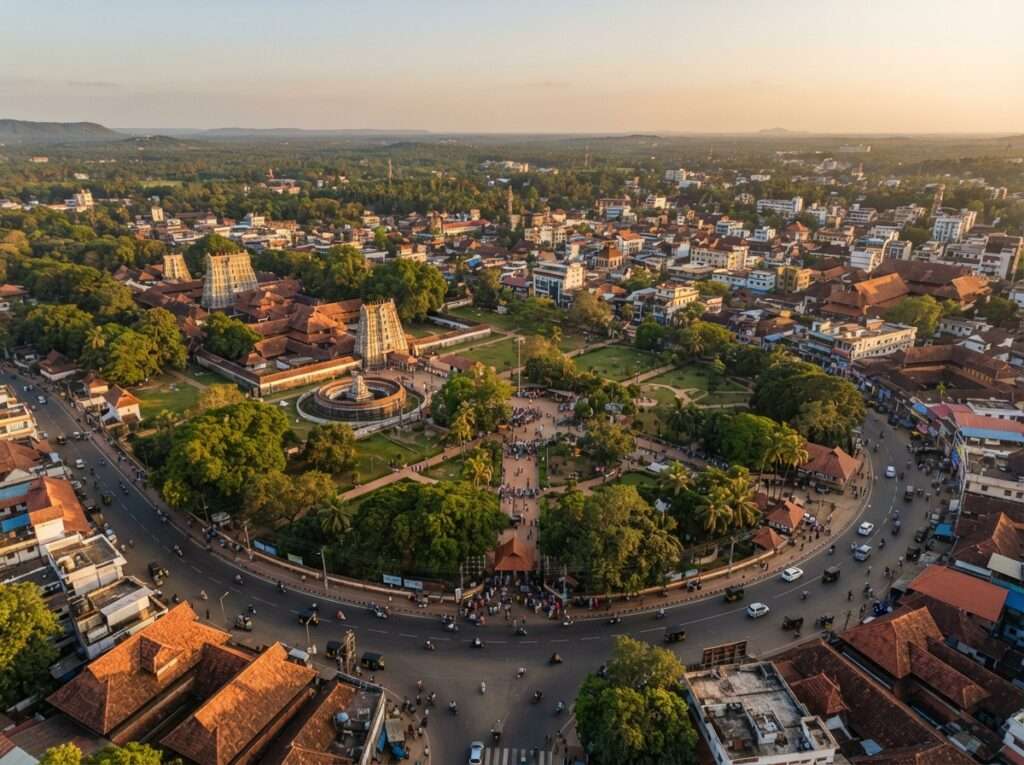
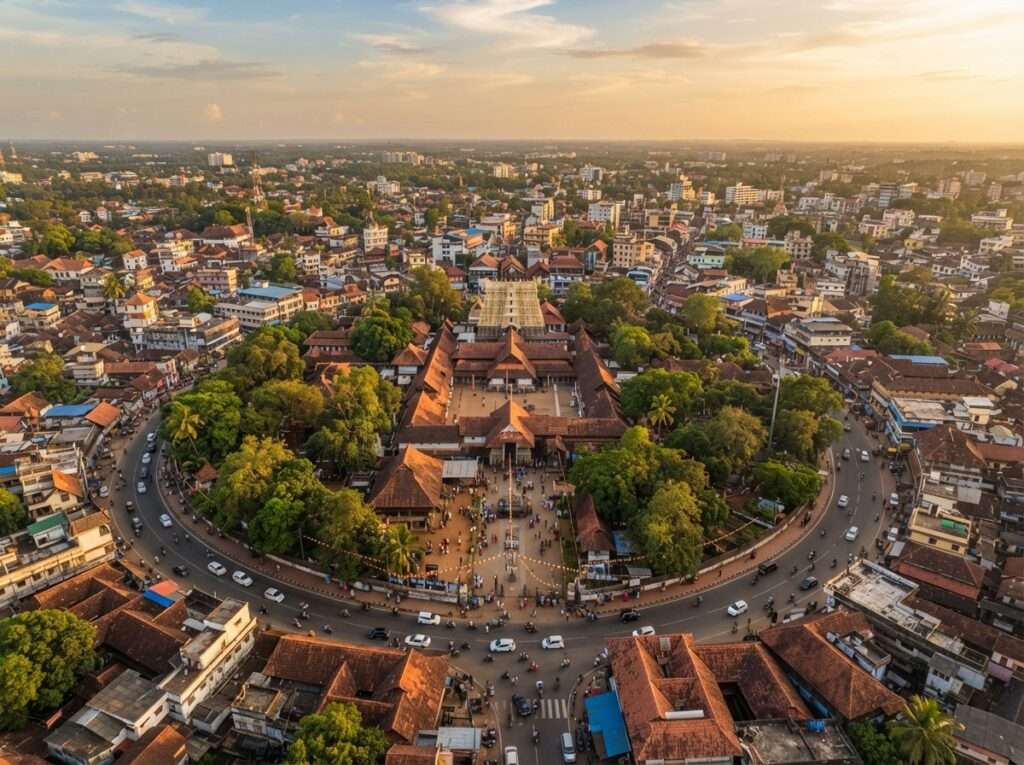
Kochi is the best all-round city for shopping in Kerala, with spices, antiques, handloom and malls in one place. Trivandrum and Kozhikode have the best traditional markets. Each city below links to our full shopping guide for that town.
Start in Mattancherry, where the spice market and Jew Town’s antique lanes sell pepper, cardamom, old brass and Nettur Pettis. Fort Kochi, a short walk away, is the place for Kathakali masks, mural galleries and cafés. Across the water in Ernakulam, Broadway is a long, crowded market for chips, spices and household goods, and MG Road has the textile showrooms. Branded shopping is at Lulu Mall in Edappally and Forum Kochi at Maradu. Our shopping in Kochi guide goes shop by shop.
Chalai Bazaar, near East Fort, is the city’s oldest market and the cheapest place for spices, brassware, kitchen goods and fabric. Connemara Market at Palayam sells fresh produce and household basics. MG Road has the big textile shops, and the Balaramapuram weaving streets are a 30-minute drive south. Lulu Mall Thiruvananthapuram covers brands. Our shopping in Trivandrum guide maps every market in the city.
Munnar is for tea, homemade chocolate, spices and essential oils. The KDHP Tea Museum shop has the widest estate range, and the town bazaar sells loose tea by weight. Marayoor jaggery is sold along the Marayoor road. Our shopping in Munnar guide lists the best tea and chocolate shops.
Kumily’s main road is Kerala’s best spice street. Shops here buy straight from nearby plantations, so cardamom, pepper, cloves and nutmeg are fresh and fairly priced. Many offer plantation walks. Our shopping in Thekkady guide covers the spice street store by store.
Alappuzha is the coir town. Showrooms and cooperatives sell mats, rugs and wall hangings, and snake-boat models are everywhere around the boat jetty. Kumarakom, across Vembanad Lake, has fewer shops but good handicraft stores near the resorts.
Thrissur is Kerala’s gold capital, with dozens of jewellers around the Swaraj Round. It is also the place for Kuthampully handloom, Nettipattam and fresh banana chips. Our shopping in Thrissur guide has the jewellers and handloom stores we rate.
SM Street (Mittai Theruvu) is the reason to shop here, for halwa, fabric and footwear. Beypore, 10 km south, builds the wooden urus sold as models. Sargaalaya Arts and Crafts Village at Iringal is an hour north. Our shopping in Calicut guide covers SM Street and the malls.
Wayanad sells coffee, pepper, forest honey and bamboo craft. Buying from tribal cooperatives in Kalpetta and Sulthan Bathery means the money goes straight to the makers. Our shopping in Wayanad guide lists the cooperatives worth a stop.
Kovalam’s beach road and the Vellar Crafts Village sell coconut-shell craft, rosewood elephants and handloom. Varkala’s clifftop is lined with stalls selling Kashmiri and Tibetan goods alongside Kerala spices and Ayurvedic oils, so check where things are made. Read our guides to shopping in Kovalam and shopping in Varkala for the stall-by-stall detail.
Kollam is the place for cashews, bought from the Cashew Development Corporation outlets, and for coir and handloom near the Chinnakada market. Our shopping in Kollam guide has the market streets and outlet addresses.
Guruvayur is for lamps, murals and Kasavu. Kannur is for handloom (Cannanore Home Furnishings is a GI) and the Payyannur Pavithra ring. Palakkad sells Palakkadan matta rice and brass vessels. We have separate shopping guides for Guruvayur, Kannur and Palakkad.
The biggest malls are Lulu Mall at Edappally in Kochi, Lulu Mall Thiruvananthapuram, Forum Kochi at Maradu and Lulu Mall Kozhikode. They are good for brands, food courts and air conditioning, not for local crafts. See the full list in our guide to malls in Kerala
Government emporiums are the safest place for crafts and handloom, markets are cheapest for spices and snacks, and malls are for brands. Here is how the three compare.
| Street markets | Government emporiums | Malls | |
| Examples | Mattancherry, Chalai, Broadway, SM Street | Kairali, SURABHI, Hantex, Khadi Gramodyog | Lulu (Kochi, Trivandrum, Kozhikode), Forum Kochi |
| Prices | Lowest, negotiable | Fixed, fair | Fixed, highest |
| Authenticity | Varies shop to shop | Certified crafts and handloom | Branded goods only |
| Best for | Spices, chips, halwa, household goods | Aranmula, Kathakali, Nettur Petti, Kasavu | Clothes, electronics, food courts |
| Payment | UPI and cash | Cards and UPI | Cards and UPI |
Kairali is run by the Handicrafts Development Corporation of Kerala, and SURABHI by the Kerala State Handicrafts Apex Co-operative Society. Both buy directly from artisans and have showrooms in Thiruvananthapuram, Kochi and Thrissur, according to Kerala Tourism. Hantex, the state handloom weavers’ cooperative, runs handloom showrooms in every district.
Spices are the one thing almost every visitor buys, and the one most often sold stale or mixed.
The best time to shop in Kerala is the Onam season in August and September, when textile, handloom and appliance sales run across the state. Here is the full shopping calendar.
| Months | What’s happening | Best buys |
| August to September | Onam sales, government handloom rebates at Hantex | Kasavu sarees, set mundu, handloom |
| October to February | Peak travel season, Christmas and New Year sales in Kochi | Everything, especially crafts and spices |
| March to April | Vishu, the Malayalam new year, gold-buying season | Gold jewellery, Kasavu |
| June to July | Monsoon, the quietest markets and best bargaining | Crafts and handloom. The new cardamom crop reaches the shops from August |
If you are also planning when to visit for the weather, see our guide to the best time to visit Kerala.
Most Kerala buys fly home without trouble if you pack them right. These are the rules that catch people out.
Buy spices, tea and handloom where they are made, and crafts from government emporiums. Pay attention to GI tags on the pieces that matter. A Kerala trip that takes in Kochi, Munnar, Thekkady and Alleppey covers 15 of the 20 things on this list without a detour. If you’d like help putting that route together, our Kerala tour packages can be customised around the markets you want to see, and the Kerala travel guide has everything else you need to plan.
Quick answers on what to buy, prices, the best markets, gold, Sabarimala and carrying buys home
Kerala is famous for spices (cardamom and black pepper), Munnar tea, Kasavu sarees, banana chips, Kollam cashews, Ayurvedic oils, coir products, Kathakali masks and the GI-tagged Aranmula Kannadi metal mirror. Heritage crafts like the Nilavilakku lamp, Nettur Petti jewel box, Nettipattam and Uru boat models are the state's signature souvenirs. For edible gifts, cardamom, cashews and Kozhikode halwa travel best.
Cardamom costs ₹250 to ₹450 per 100 g, black pepper ₹80 to ₹150 per 100 g, Munnar tea ₹150 to ₹600 per 250 g, Kollam cashews ₹900 to ₹1,400 per kg and banana chips ₹350 to ₹600 per kg. Kasavu sarees start near ₹1,500, Kathakali masks at ₹300, and Aranmula mirrors at about ₹2,500. These are September 2026 prices at the source markets named in this guide.
Banana chips, black pepper, Munnar tea, Marayoor jaggery, coir coasters, coconut-shell keyrings and herbal soaps all cost under ₹500. They are cheapest at the source. Buy chips in Thrissur, pepper in Mattancherry, tea in Munnar and coir in Alappuzha. Street markets are cheaper than emporiums for edible buys, and bargaining 10 to 20 percent is normal there.
Girls and women most often buy a Kasavu saree or set mundu, temple jewellery like the palakka mala, mural-painted stoles, coconut-shell earrings and Ayurvedic skincare such as kumkumadi oil. A set mundu from Balaramapuram or Kuthampully starts near ₹800, and gold-plated temple jewellery costs ₹1,500 to ₹5,000. Buy handloom at Hantex or the weaving villages for the genuine article.
Kochi is the best all-round place for shopping in Kerala. Mattancherry and Jew Town sell spices and antiques, Fort Kochi sells Kathakali masks and murals, Broadway sells chips and household goods, and Lulu Mall in Edappally covers brands. Trivandrum's Chalai Bazaar and Kozhikode's SM Street are the best traditional markets, and Kumily is the best place for spices.
The best Kerala souvenirs are the Aranmula Kannadi mirror, a small Nilavilakku lamp, a Nettur Petti jewel box, a Kathakali mask, a Nettipattam hanging and an Uru boat model. Kerala Tourism lists these, with the Payyannur Pavithra ring, as the state's signature buys. For something light and cheap, coconut-shell crafts and coir coasters travel well.
Buy spices in Kumily near Thekkady, where shops source from the plantations around them, and in the Mattancherry spice market in Kochi. Munnar and Wayanad also have estate shops. Test before paying. A crushed cardamom pod should smell strong at once, and real peppercorns sink in water. Ask for sealed 100 g packs and a bill.
No. Gold in Kerala follows the national rate, which was about ₹14,000 a gram for 22K in September 2026. Kerala's advantage is choice and design, especially traditional pieces like the palakka mala and kasu mala, and competitive making charges in Thrissur. Buy only BIS-hallmarked jewellery with a HUID code and a bill that lists weight, rate and making charge separately.
The famous buy at Sabarimala is Aravana payasam, a sweet rice-and-jaggery prasadam sold in sealed tins, along with Unniyappam. Buy both only at the Travancore Devaswom Board counters at the Sannidhanam, since third-party sellers charge far more. Pilgrims also buy black mundu, irumudi bags and Ayyappa idols at Pamba and Erumeli.
Yes. Spices, tea, cashews and banana chips are allowed in cabin and checked bags on Indian flights. Dry coconut is banned in both since March 2022, and liquids over 100 ml such as coconut oil must go in check-in. Abroad, declare all food at customs. Sealed commercial packs with a bill clear most easily, and Australia and New Zealand inspect food most strictly.
Yes, in street markets. A polite request for 10 to 20 percent off is normal at Mattancherry, Chalai, Broadway and beach-road stalls, especially on crafts. Government emporiums like Kairali, SURABHI and Hantex, jewellery shops, pharmacies and malls have fixed prices. Compare two or three shops before you start negotiating.
Kerala's special items are the things only the state makes. Look for the Aranmula Kannadi mirror, the Payyannur Pavithra ring, Kasavu handloom from Balaramapuram or Kuthampully, a Nettur Petti jewel box, a Nilavilakku lamp and an Uru boat model. The special food items are Alleppey green cardamom, Kozhikode halwa, Nendran banana chips and Marayoor jaggery, all cheapest where they are made.
Real reviews from real travelers who booked with us.
View All Reviews